YoLink FlowSmart Control Review: Smart Water Monitor With Automatic Shutoff and Usage Tracking
A smart water monitor can do more than warn you that something is wrong. The more advanced systems also track how much water your home uses, identify unusual flow patterns, and automatically close the main valve when usage exceeds limits you define.
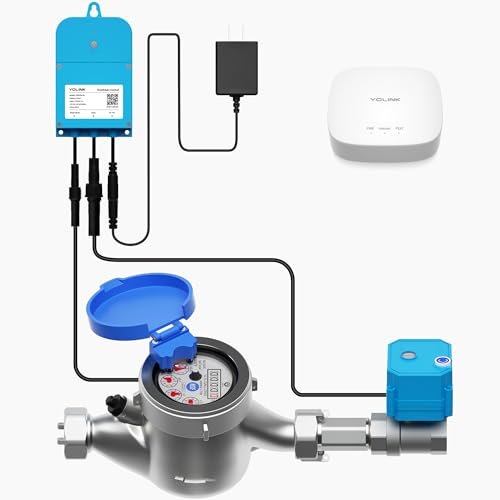
The YoLink FlowSmart Control is designed around that broader approach. Rather than acting as a simple floor-mounted leak sensor, it monitors water flow through the plumbing system and can trigger an automatic shutoff when configured conditions are met. It also provides detailed consumption reports through the YoLink app, allowing users to review hourly, daily, weekly, and monthly water usage.
One of its more distinctive features is local functionality during network or power interruptions. According to the supplied product information, previously configured shutoff limits can continue operating even when Wi-Fi, internet service, or AC power is unavailable. The included YoLink hub adds remote app access and smart-home integrations such as Amazon Alexa and Google Assistant.
What Is the YoLink FlowSmart Control?
The FlowSmart Control is a smart water-monitoring and shutoff system intended for installation on a home's water supply.
Its main functions include:
- Real-time mobile notifications
- Automatic water shutoff
- Flow monitoring
- Water-consumption reporting
- Custom leak-detection parameters
- Configurable maximum water volumes
- Multiple monitoring time periods
- Offline local operation
- YoLink hub connectivity
- Smart-home integrations
This places it in a different category from inexpensive point leak detectors that only react when water physically touches a sensor.
How Flow-Based Leak Detection Works
A flow-monitoring system looks at water moving through the pipe.
That makes it possible to detect unusual usage even when the leaking water never reaches a floor sensor.
For example, unexpected continuous flow may indicate:
- Running toilet
- Broken supply line
- Outdoor plumbing leak
- Faucet left running
- Pipe failure
The system can then compare that usage with limits configured in the app.
Why Flow Monitoring Can Be More Comprehensive
Point sensors only protect the location where they are installed.
A sensor under a sink may detect a cabinet leak but know nothing about a pipe failure elsewhere in the house.
A whole-home flow monitor observes water passing through the monitored supply line.
That gives it broader coverage, although it also introduces a different challenge: determining which water use is normal and which is abnormal.
Automatic Water Shutoff
The system can automatically close the water valve when configured conditions are met.
This is one of the most important differences between a simple leak alarm and a smart shutoff system.
A notification tells you there may be a problem.
A shutoff valve can actively limit the amount of additional water entering the plumbing system.
That can be particularly useful when the home is unoccupied.
Automatic Shutoff Is Not the Same as Guaranteed Damage Prevention
A shutoff system can significantly reduce continued water flow, but it cannot eliminate every source of water damage.
For example, water already inside:
- A water heater
- Appliance reservoir
- Pipe section
may still escape after the main valve closes.
The system should therefore be viewed as a risk-reduction tool rather than a guarantee against flooding.
Real-Time Mobile Notifications
The FlowSmart system can send alerts through the YoLink mobile app.
This allows users to receive information while away from home instead of relying only on an audible alarm.
Remote alerts can be valuable when:
- Traveling
- At work
- Managing a vacation property
- Monitoring an unoccupied home
An early notification gives the homeowner an opportunity to investigate or confirm an automatic shutoff.
Detailed Water Consumption Reports
The FlowSmart Control also functions as a water-use monitoring tool.
The supplied description states that consumption data can be viewed by:
- Hour
- Day
- Week
- Month
This can help users understand when and how much water the household consumes.
Why Water-Usage Data Is Useful
Consumption data can reveal patterns that are difficult to notice from a monthly utility bill.
For example, you may identify:
- Persistent overnight flow
- High irrigation use
- Repeated consumption spikes
- Unexpected baseline usage
These patterns can help identify both waste and potential plumbing problems.
Exportable Consumption Data
The source states that usage reports can be saved and exported.
That can be useful for:
- Tracking household conservation efforts
- Comparing seasonal water consumption
- Reviewing suspected leaks
- Keeping records for properties
The exact export format and app functionality should be confirmed in the current YoLink software documentation.
Customized Leak Detection
One of the more flexible features is the ability to define custom water-usage limits.
According to the supplied information, users can configure up to six different time slots and apply separate leak-detection parameters.
This is useful because normal water use is not identical throughout the day.
Why Time-Based Rules Matter
A flow rate that is normal at 7:00 a.m. may be suspicious at 3:00 a.m.
Morning periods may include:
- Showers
- Dishwasher use
- Laundry
Overnight periods may normally have almost no water use.
Different monitoring windows can therefore reduce false shutoffs while maintaining stricter protection during low-use periods.
Maximum Volume Limits
The system can also be configured around maximum water volumes.
For example, a user may define how much continuous water use is acceptable before the valve should close.
This can help detect events such as:
- Faucet accidentally left running
- Hose failure
- Large plumbing leak
The correct threshold will vary significantly from one household to another.
Customization Requires Thoughtful Setup
A smart shutoff system is only as useful as its configuration.
Thresholds that are too strict can result in nuisance shutoffs.
Thresholds that are too permissive may allow more water to flow before intervention.
Initial setup should account for normal household activities such as:
- Long showers
- Washing machine cycles
- Irrigation
- Filling a bathtub
Offline Operation
One of the more notable claims is that the FlowSmart meter can continue monitoring water use when internet or Wi-Fi connectivity is unavailable.
According to the supplied information, previously configured volume limits can still trigger automatic valve closure locally.
This is important because a safety system that becomes useless whenever the internet fails would have a significant weakness.
Operation During Power Outages
The source also states that shutoff functionality can continue during a power interruption.
The exact mechanism, backup power requirements, and duration should be confirmed for the specific FlowSmart model.
Buyers should not assume unlimited operation during an extended blackout without checking the product's power architecture.
Why Local Automation Matters
Cloud-dependent smart-home systems rely on multiple external components:
- Router
- Internet service
- Cloud servers
A local automation path can reduce dependence on these services for critical actions.
For water protection, that is a meaningful advantage.
Hub Included
The package includes a YoLink hub.
The hub enables the connected features required for:
- Remote app access
- Notifications
- Third-party integrations
- Broader YoLink ecosystem automation
Including the hub is useful for first-time YoLink users because they do not need to purchase the core gateway separately.
YoLink Ecosystem Integration
The FlowSmart system can be incorporated into a larger YoLink smart-home environment.
Potentially connected devices may include compatible:
- Leak sensors
- Valves
- Environmental sensors
- Other automation devices
This allows users to build more layered water-protection logic than flow monitoring alone.
Flow Monitor Plus Point Leak Sensors
One of the strongest possible configurations is combining whole-home flow monitoring with point leak sensors.
The flow meter can identify abnormal water usage at the main supply.
Point sensors can identify actual water where it should not be.
Together, they provide two different forms of detection.
Amazon Alexa and Google Assistant Integration
The supplied description lists compatibility with Amazon Alexa and Google Assistant through the YoLink ecosystem.
Voice integration can be useful for basic status or control functions where supported.
However, critical leak-protection automation should not depend on voice assistants.
Automatic safety rules should operate independently whenever possible.
FlowSmart vs. Basic Water Leak Sensor
These devices solve different problems.
Basic Leak Sensor
Detects water at a specific physical location.
Advantages include:
- Low cost
- Easy installation
- Precise location detection
Limitations include narrow coverage.
FlowSmart Control
Monitors water moving through the plumbing system.
Advantages include:
- Whole-line visibility
- Water-use analytics
- Automatic shutoff
- Detection without floor contact
Its disadvantages are higher cost, more installation complexity, and more configuration.
FlowSmart vs. Smart Water Meter Without Shutoff
Some systems only measure consumption.
The FlowSmart adds an active valve.
That makes it more useful for protection because it can respond to abnormal water use rather than simply report it.
For homeowners primarily interested in reducing flood risk, automatic shutoff is a significant feature.
Installation Considerations
Unlike a portable leak sensor, a flow meter and shutoff valve must be integrated with plumbing.
Installation planning should consider:
- Main water line location
- Pipe size
- Valve orientation
- Service access
- Power requirements
Professional plumbing installation may be appropriate depending on the specific configuration.
Install Where the System Can Protect the House
The device should generally be positioned where closing the valve will stop water flow to the areas you intend to protect.
For whole-home protection, that typically means the main domestic water supply.
However, irrigation systems and other branches may affect the preferred installation location.
Keep the Valve Accessible
Do not install the system where it becomes impossible to inspect or service.
Future maintenance may involve:
- Valve access
- Power connections
- Manual override
- Device replacement
Accessibility is especially important for a device attached to the main water line.
Understand Normal Water Use Before Tightening Rules
A good setup strategy is to observe household consumption before creating aggressive shutoff thresholds.
Pay attention to:
- Shower duration
- Bath filling
- Laundry cycles
- Dishwasher use
- Irrigation
This baseline makes it easier to distinguish unusual consumption from legitimate high-volume use.
Common Causes of False Shutoffs
Poorly configured rules may interpret normal activities as leaks.
Potential examples include:
- Filling a large bathtub
- Running sprinklers
- Multiple simultaneous showers
- Long appliance cycles
Custom time slots and volume limits are intended to reduce this problem.
Water Monitoring for Conservation
Although leak protection is the primary safety benefit, usage analytics can also support conservation.
Households can compare consumption before and after changes such as:
- Repairing leaking fixtures
- Installing low-flow devices
- Adjusting irrigation
- Changing household habits
The value comes from measurement rather than assumptions.
Can It Detect Every Leak?
No flow-monitoring system should be assumed to detect every possible leak under every condition.
Very small leaks may be difficult to distinguish from normal low-level use depending on the system's sensitivity and settings.
Likewise, a leak downstream of a closed branch may not produce measurable flow.
Point sensors remain useful in high-risk locations.
Best Locations for Additional Leak Sensors
If building a broader system, consider adding sensors near:
- Water heater
- Washing machine
- Dishwasher
- Refrigerator water line
- Sinks
- Toilets
- Sump pump
These devices can provide location-specific confirmation alongside whole-home flow monitoring.
Common Buying Mistakes
Assuming It Is a Simple DIY Sensor
This is a plumbing-integrated system.
Setting Thresholds Too Aggressively
Normal household use can trigger unnecessary shutoffs.
Ignoring Water-Usage Baselines
Observe normal consumption first.
Depending Only on Cloud Connectivity
Understand which protections continue locally.
Treating Voice Assistant Integration as a Safety Feature
Critical shutoff logic should not rely on voice control.
Who Is the YoLink FlowSmart Best For?
The FlowSmart Control may be a strong choice for:
- Homeowners wanting automatic shutoff
- Frequent travelers
- Vacation-property owners
- Households interested in water analytics
- Existing YoLink users
- Buyers who want protection that can continue during connectivity interruptions
It may be excessive for someone who only needs a basic leak alarm under one appliance.
Advantages and Considerations
Advantages
- Automatic water shutoff
- Real-time app notifications
- Hourly water-use reports
- Daily reports
- Weekly reports
- Monthly reports
- Exportable consumption data
- Customizable leak thresholds
- Up to six configurable monitoring periods
- Offline monitoring claims
- Local automatic shutoff capability
- Hub included
- Alexa and Google Assistant integration
- YoLink ecosystem compatibility
Potential Considerations
Requires plumbing installation.
Threshold setup takes some experimentation.
Flow-based monitoring may not identify the exact leak location.
The precise backup-power behavior should be verified.
Remote features depend on the hub and connected infrastructure.
Frequently Asked Questions
Does the FlowSmart Control automatically shut off water?
Yes, according to the supplied product information, it can automatically close the valve when configured conditions are met.
Does it send phone notifications?
Yes. Alerts are delivered through the YoLink app when the connected system is operating normally.
Can it track water consumption?
Yes.
What reporting periods are available?
The supplied description lists hourly, daily, weekly, and monthly usage reports.
Can water-use data be exported?
Yes, according to the supplied information.
Can I customize leak-detection rules?
Yes. The app supports configurable parameters and maximum water-volume limits.
How many monitoring time slots can be created?
The source states up to six.
Does it still work without internet?
The supplied information states that local water monitoring and configured automatic shutoff can continue without internet connectivity.
Does it work during a power outage?
The product description states that protection can continue during power loss, but the exact backup-power behavior and duration should be confirmed for the specific model.
Is a YoLink hub required?
Yes, and the supplied package includes one.
Does it work with Alexa?
The product information lists Amazon Alexa integration.
Does it work with Google Assistant?
Yes, according to the supplied description.
Does the system identify exactly where a leak is?
Flow monitoring detects abnormal water usage but does not necessarily identify the physical leak location. Point sensors can complement it.
Final Thoughts
The YoLink FlowSmart Control is more than a smart leak alarm. It combines whole-home water-flow monitoring, usage analytics, configurable leak thresholds, app alerts, and automatic shutoff into a single water-management system.
Its most compelling feature is the ability to act rather than simply notify. When configured limits are exceeded, the valve can close automatically, potentially limiting continued water flow even when nobody is home. The detailed consumption reports also make the system useful for understanding everyday water usage and identifying unusual patterns.
Its local operation during connectivity interruptions is another important advantage, assuming the specific installation and backup-power configuration support the behavior described by the manufacturer.
The tradeoff is complexity. A flow-based shutoff system requires plumbing installation and thoughtful configuration, and it may work best when complemented by point leak sensors in high-risk locations.
For homeowners looking for a smart whole-home water monitor with automatic shutoff, detailed consumption reports, customizable leak thresholds, offline protection, and YoLink smart-home integration, the FlowSmart Control offers a considerably more comprehensive approach than a basic water leak detector.