WOODBRIDGE 71-Inch Freestanding Acrylic Bathtub Review: Deep Soaking Comfort With Oil-Rubbed Bronze Details
A freestanding bathtub can become the visual centerpiece of a bathroom while also creating a more comfortable place for long, relaxing soaks. Compared with a standard alcove tub, a freestanding model offers more design flexibility and can make a primary bathroom feel more open, contemporary, and spa-inspired.
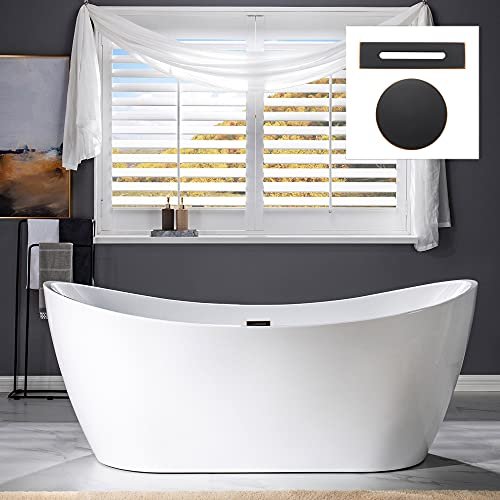
The WOODBRIDGE 71-inch freestanding acrylic bathtub is aimed at homeowners who want a larger soaking tub with a clean white finish and distinctive oil-rubbed bronze hardware. Its long 71-inch body, gently sloped interior, reinforced acrylic shell, double-wall construction, and slip-resistant floor are intended to balance comfort, durability, and everyday practicality.
This model is especially appealing for larger bathrooms where a 59- or 67-inch tub may feel too compact. At the same time, its increased size makes careful planning essential. Floor space, drain location, faucet placement, hot-water capacity, and delivery access should all be evaluated before installation.
What Is the WOODBRIDGE 71-Inch Freestanding Bathtub?
This WOODBRIDGE model is a white acrylic freestanding soaking tub with oil-rubbed bronze drain and overflow hardware.
The supplied specifications list exterior dimensions of approximately 71 inches long, 31.5 inches wide, and 28.375 inches high. Water depth to the overflow is approximately 14.125 inches.
The tub is constructed from high-gloss LUCITE acrylic reinforced with resin and fiberglass. A metal support structure underneath is rated by the manufacturer for up to 1,000 pounds, while the double-wall design is intended to improve rigidity and reduce heat loss during longer baths.
Why Choose a 71-Inch Freestanding Bathtub?
A 71-inch bathtub is considerably more spacious than many compact freestanding models.
For taller bathers, the extra length can make a noticeable difference because it provides more room to stretch out and recline comfortably.
It may also be attractive to homeowners who want the bathtub to make a stronger visual statement in a large primary bathroom.
Bigger Is Not Automatically Better
The extra size is useful only if the bathroom can accommodate it properly.
A large freestanding tub needs more than a simple 71-inch gap.
You should also consider:
- Walking clearance around the tub
- Access for cleaning
- Faucet position
- Drain placement
- Door swing
- Nearby vanity or shower clearance
A bathtub that technically fits can still make a bathroom feel cramped if circulation space is ignored.
Measure the Full Installation Area
Before ordering, mark the bathtub footprint on the floor with painter's tape.
This gives a much better sense of scale than reading dimensions on a product page.
Then check whether there is enough room to move comfortably around the tub and reach the faucet controls.
Do Not Forget Delivery Access
A large bathtub must also physically reach the bathroom.
Measure:
- Entry doors
- Interior doorways
- Hallways
- Staircases
- Tight turns
This is especially important in renovations where the bathroom is located upstairs or at the end of a narrow hallway.
Contemporary Freestanding Design
The WOODBRIDGE bathtub uses a smooth, modern silhouette with gently sloping lines.
Rather than looking heavily ornamental, the design is intended to feel clean and understated.
That makes it suitable for a wide range of bathroom styles, including:
- Contemporary
- Transitional
- Spa-inspired
- Minimalist
- Modern farmhouse
The oil-rubbed bronze hardware can add a warmer, more traditional accent to the otherwise modern white tub.
Oil-Rubbed Bronze Drain and Overflow
One of the defining visual details of this version is the oil-rubbed bronze finish.
The supplied package includes a solid brass drain and stainless-steel overflow with an oil-rubbed bronze finish.
This can coordinate well with bathroom fixtures such as:
- Tub fillers
- Vanity faucets
- Shower trim
- Cabinet hardware
- Lighting
especially when the room uses warm metallic finishes rather than chrome or brushed nickel.
Matching Finishes Creates a More Cohesive Bathroom
If the tub drain is oil-rubbed bronze but every other fixture in the bathroom is polished chrome, the contrast may look intentional—or mismatched.
For a more cohesive appearance, consider coordinating the tub hardware with at least some other fixtures in the room.
Exact finish tones can vary between manufacturers, so perfect color matching is not guaranteed.
High-Gloss LUCITE Acrylic Construction
The tub is made from high-gloss white LUCITE acrylic.
Acrylic is widely used in freestanding bathtubs because it offers a useful combination of:
- Lower weight
- Smooth surfaces
- Flexible shapes
- Easier maintenance
compared with heavier materials such as cast iron.
Fiberglass and Resin Reinforcement
The acrylic shell is reinforced with fiberglass and resin.
This reinforcement is intended to increase structural rigidity and help the tub maintain its shape during use.
A reinforced acrylic construction can provide a good compromise between the light weight of acrylic and the stronger feel expected from a permanent bathroom fixture.
Metal Support Structure
The manufacturer states that the tub includes a metal support bracket rated for up to 1,000 pounds.
That internal support helps distribute loads through the bottom of the tub.
However, the bathroom floor must still support the combined weight of:
- Bathtub
- Water
- Bather or bathers
The tub's own weight rating does not replace the need for an adequately constructed floor.
Consider the Total Filled Weight
Water is heavy.
One gallon weighs roughly 8.34 pounds.
Although the source does not provide an effective gallon capacity for this exact listing, a large 71-inch soaking tub can place substantial load on the floor once filled.
If the bathroom is in an older home, on an upper floor, or has unusual framing, it may be prudent to confirm structural suitability during the renovation.
14.125-Inch Water Depth
The water depth to the overflow is listed at approximately 14.125 inches.
That is a useful specification because external tub height alone does not tell you how deeply you can actually soak.
A deeper waterline can provide better torso coverage and a more immersive bathing experience.
Deep Soaking vs. Easy Entry
A deeper tub also creates a taller step-over.
That is worth considering for:
- Older adults
- Users with knee problems
- Anyone with limited mobility
A deep freestanding tub may be excellent for soaking but less convenient to enter and exit than a lower-profile bathtub.
Gently Sloped Interior
The tub's sloping sides are designed to support a more reclined position.
Comfort in a bathtub depends heavily on geometry.
Important factors include:
- Backrest angle
- Interior length
- Basin width
- Footwell shape
The 71-inch exterior size provides more room than smaller models, but actual comfort still depends on the internal basin dimensions and the bather's height.
Better for Taller Users
The longer shell makes this model particularly interesting for taller adults who find compact freestanding tubs restrictive.
A 59-inch tub may look elegant but can force some users into a more upright or curled position.
A 71-inch tub generally offers more freedom to stretch out.
Double-Wall Construction
The tub uses a double-walled design.
This creates an additional barrier between the bathwater and ambient room temperature.
The intention is to slow heat loss and keep the bath warm longer.
Why Heat Retention Matters
A large soaking tub can require a lot of hot water.
If the tub loses heat quickly, a long soak may require repeated hot-water top-ups.
Better insulation can make the bathing experience more comfortable and potentially reduce the need to add hot water as frequently.
Check Your Water Heater Before Buying
A large freestanding tub can demand significantly more hot water than a typical shower.
Before installation, consider whether the existing water heater can deliver enough hot water for the desired bathing depth.
This is especially important with:
- Small tank heaters
- Older water heaters
- Homes with multiple simultaneous hot-water demands
A beautiful deep tub is far less enjoyable if the hot water runs out halfway through filling it.
Slip-Resistant Bottom
The manufacturer states that the tub's slip-resistant surface meets applicable ASTM slip-resistance standards.
That is an important feature because bathtub surfaces become naturally slippery when wet.
A textured or slip-resistant base can improve footing when entering or exiting the bath.
Slip Resistance Does Not Eliminate Risk
Even with a slip-resistant surface, users should still be cautious.
Additional bathroom safety measures can include:
- Non-slip floor mats
- Adequate lighting
- Grab bars where appropriate
- Dry flooring around the tub
This is especially important with a deep bathtub.
Easy-Care Surface
The manufacturer describes the acrylic surface as resistant to stains and scratches and designed to maintain its high-gloss appearance.
Acrylic is generally easy to clean when maintained regularly.
For routine care, mild cleaners and soft cloths are typically preferable to aggressive abrasives.
Avoid Harsh Abrasive Cleaning
To preserve the finish, avoid using tools such as:
- Steel wool
- Coarse scouring pads
- Highly abrasive powders
unless specifically approved by the manufacturer.
Gentle cleaning is usually sufficient for soap residue and normal bathroom buildup.
Prevent Mineral Buildup
In areas with hard water, mineral deposits may accumulate around the waterline, overflow, and drain.
Wiping the tub regularly can make those deposits easier to control.
Allowing heavy scale to build up usually requires more aggressive cleaning later.
Freestanding Bathtub Installation
A freestanding tub does not need a conventional wall surround, but the plumbing installation still requires careful planning.
You need to account for:
- Drain location
- Waste connection
- Faucet supply
- Floor level
- Tub stabilization
Professional plumbing installation is often worth considering for a large freestanding tub.
Plan the Drain Before Installation
The bathtub drain must align correctly with the waste plumbing.
A small error in location can create significant installation difficulty.
Use the current installation manual and exact model dimensions rather than relying solely on generalized measurements.
Choosing a Tub Filler
Freestanding tubs are often paired with either a:
- Floor-mounted filler
- Wall-mounted filler
The right option depends on how close the bathtub sits to a wall and where water lines can be routed.
Floor-Mounted Faucet
A floor-mounted tub filler creates a dramatic freestanding appearance.
It requires water supply lines through the floor and should be anchored securely.
The spout should extend far enough over the tub to avoid splashing outside the basin.
Wall-Mounted Faucet
A wall-mounted tub filler can be a cleaner solution if the bathtub sits relatively close to a wall.
However, spout reach becomes critical.
Make sure the water stream lands comfortably inside the tub rather than hitting the rim.
Protect the Tub During Renovation
If the bathtub is installed before all construction is complete, protect the surface carefully.
Tile fragments, tools, grout, and construction debris can damage a glossy acrylic finish.
Keep the tub covered until surrounding work is finished.
Level the Bathtub Carefully
A freestanding bathtub should rest level and securely on the finished floor.
An uneven installation can affect:
- Stability
- Drainage
- Visual alignment
Follow the manufacturer's leveling and support instructions before final plumbing connections are completed.
Included Drain and Overflow
According to the supplied description, the package includes:
- Solid brass oil-rubbed bronze drain
- Stainless-steel oil-rubbed bronze overflow
- User manual
- Installation instructions
These included components help simplify finish coordination.
Additional plumbing components may still be required depending on the home's drain configuration.
Acrylic vs. Cast Iron
Acrylic and cast iron serve different priorities.
Acrylic
Acrylic is typically:
- Lighter
- Easier to transport
- Easier to shape
- More practical for many remodels
Cast Iron
Cast iron is extremely solid and durable, but it is much heavier.
That additional weight can complicate delivery, floor loading, and installation.
For many freestanding bathroom renovations, acrylic is the easier material to work with.
Acrylic vs. Solid Surface
Solid-surface tubs often feel heavier and more substantial and can offer excellent thermal performance.
However, they are typically much heavier and may cost more.
A reinforced acrylic model like this WOODBRIDGE offers a more accessible way to achieve a large freestanding look.
Who Is This Tub Best For?
This model is particularly well suited to buyers who want:
- A large 71-inch bathtub
- Extra room for taller bathers
- A modern freestanding design
- Warm oil-rubbed bronze accents
- Double-wall acrylic construction
- A relatively easy-care finish
It is especially appropriate for larger primary bathrooms where the bathtub is intended to serve as a focal point.
Who Might Prefer a Different Bathtub?
A different model may be more suitable if you need:
- A compact tub for a small bathroom
- Lower entry height
- Built-in whirlpool jets
- Integrated shower capability
- Dedicated accessibility features
The best bathtub is the one that fits both the room and the people who will use it.
Common Buying Mistakes
Choosing by Exterior Length Alone
Interior bathing space can be significantly smaller than the outside dimensions.
Ignoring Faucet Placement
Tub filler plumbing should be planned before the floor and walls are finished.
Forgetting Hot-Water Demand
Large tubs require substantial hot-water capacity.
Measuring the Bathroom but Not the Delivery Route
A large bathtub still has to get through the house.
Placing the Tub Too Close to a Wall
Cleaning behind a freestanding bath can become difficult without enough clearance.
How Much Space Should You Leave Around the Tub?
There is no single ideal clearance for every bathroom.
However, leave enough room to:
- Walk comfortably
- Clean behind the tub
- Access faucet controls
- Reach plumbing where necessary
A visually balanced installation usually benefits from some open floor around the bathtub.
Certifications
The supplied description states that the tub complies with CSA B45.5-17/IAPMO Z124-2017 and meets Massachusetts Plumbing & Gas Code requirements.
Certification can be important for ensuring that fixtures meet applicable plumbing standards.
Local requirements can vary, so confirm acceptance for the exact project and jurisdiction.
Warranty
WOODBRIDGE states that this bathtub includes a one-year limited warranty against defects in materials and workmanship.
Warranty terms should be reviewed in the documentation supplied with the current product.
Keep:
- Purchase receipt
- Model number
- Installation records
in case service is needed.
Advantages and Considerations
Advantages
- Large 71-inch freestanding design
- Approximately 14.125-inch water depth
- High-gloss LUCITE acrylic
- Fiberglass and resin reinforcement
- Double-wall insulation
- Metal support structure
- Slip-resistant surface
- Oil-rubbed bronze drain and overflow
- Contemporary styling
- Easy-care finish
Potential Considerations
- Requires substantial bathroom space
- Taller step-over than many standard tubs
- Hot-water capacity should be evaluated
- Installation requires accurate drain and faucet planning
- Large size can complicate delivery
- Oil-rubbed bronze may not match every fixture finish exactly
Frequently Asked Questions
What are the dimensions?
Approximately 71 inches long, 31.5 inches wide, and 28.375 inches high.
How deep is the water to the overflow?
Approximately 14.125 inches according to the supplied specifications.
What is the tub made from?
High-gloss LUCITE acrylic reinforced with resin and fiberglass.
Is the bathtub insulated?
It uses a double-wall design intended to improve heat retention.
Is the bottom slip resistant?
Yes. The supplied description states that it meets applicable ASTM slip-resistance standards.
What finish are the drain and overflow?
Oil-rubbed bronze.
Is the drain included?
Yes, according to the supplied product information.
How much weight can the bathtub support?
The manufacturer lists a maximum support rating of up to 1,000 pounds.
Is this a good bathtub for tall users?
The 71-inch exterior length provides more room than compact freestanding tubs and may be more comfortable for taller bathers.
Is a faucet included?
The supplied description lists the drain and overflow but does not mention a tub filler. A compatible faucet should therefore be planned separately unless the current package states otherwise.
Is professional installation required?
Not necessarily, but professional plumbing installation can be a good choice because drain alignment, faucet plumbing, and leveling need to be accurate.
What warranty does it include?
The source states a one-year limited warranty against defects in materials and workmanship.
Final Thoughts
The WOODBRIDGE 71-inch freestanding acrylic bathtub with oil-rubbed bronze drain and overflow is designed for homeowners who want a large soaking tub that combines modern styling with warmer traditional hardware accents.
Its 71-inch length, sloped interior, reinforced acrylic shell, double-wall insulation, metal support structure, and slip-resistant bottom give it a strong practical foundation beneath the decorative design. The extra length is particularly attractive for taller users or anyone who finds smaller freestanding tubs restrictive.
The main challenge is space planning. A bathtub this large requires careful attention to room clearance, delivery access, drainage, faucet placement, floor loading, and hot-water capacity.
For buyers looking for a 71-inch white freestanding acrylic bathtub with deep soaking dimensions, double-wall insulation, reinforced construction, non-slip flooring, and oil-rubbed bronze hardware, this WOODBRIDGE model offers a compelling combination of spacious comfort and upscale bathroom design.