WOODBRIDGE 67-Inch Freestanding Acrylic Bathtub Review: Deep Soaking Comfort, Double-Wall Insulation, and Modern Bathroom Style
A freestanding bathtub can completely change the look and feel of a bathroom. Unlike a traditional alcove tub that is framed by walls, a freestanding model becomes a visual centerpiece while also creating a more open, spa-like bathing experience.
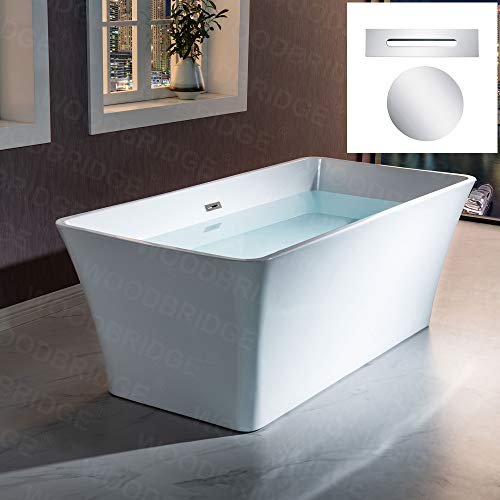
The WOODBRIDGE 67-inch freestanding acrylic soaking bathtub is designed for homeowners who want that upscale appearance without moving into extremely oversized dimensions. With a glossy white acrylic body, chrome drain and overflow, double-wall construction, a 60-gallon effective capacity, and gently sloped interior lines, it is positioned as a comfortable soaking tub for modern bathroom renovations.
Its appeal goes beyond appearance. The tub combines reinforced acrylic construction, a stainless-steel support structure, a slip-resistant floor, and an easy-care glossy surface. For buyers comparing freestanding soaking tubs, those practical details matter just as much as the shape.
What Is the WOODBRIDGE 67-Inch Freestanding Bathtub?
This WOODBRIDGE model is a white freestanding soaking tub with a contemporary profile and chrome-finished drain and overflow components.
According to the supplied specifications, the tub measures approximately:
- 67 inches long
- 31.5 inches wide
- 23.625 inches high
The stated effective water capacity is approximately 60 gallons.
The bathtub is built from high-gloss white LUCITE acrylic reinforced with resin and fiberglass. A stainless-steel support structure underneath helps strengthen the tub, while the double-wall design is intended to improve insulation and help bathwater retain heat longer.
A 67-Inch Size That Balances Space and Comfort
Bathtub dimensions are one of the first things to evaluate before choosing a freestanding model.
At 67 inches long, this tub sits in a useful middle ground. It offers considerably more bathing room than compact 55- or 59-inch tubs while remaining easier to fit than some oversized 70-plus-inch designs.
For many primary bathrooms, 67 inches can provide enough space for a comfortable soak without overwhelming the room.
Measure More Than the Tub Itself
The exterior dimensions tell only part of the installation story.
A freestanding bathtub also needs clearance around it for:
- Cleaning
- Plumbing access
- Faucet placement
- Walking space
Before purchasing, map out the full footprint in the bathroom rather than simply checking whether a 67-inch rectangle fits between two walls.
Consider Doorways and Hallways
One frequently overlooked issue is delivery access.
A bathtub that fits perfectly in the finished bathroom may still be difficult to move through:
- Doorways
- Hallways
- Staircases
- Tight corners
Measure the delivery path before installation day.
This is especially important in remodels where the bathroom may be on an upper floor.
Modern Freestanding Design
The WOODBRIDGE tub uses a clean, contemporary silhouette with gently sloping sides.
That style works particularly well in bathrooms with:
- Modern fixtures
- Minimalist vanities
- Large-format tile
- Walk-in showers
- Matte black or chrome accents
Because the tub is freestanding, it has more visual presence than a built-in bath and can become one of the defining design elements in the room.
Glossy White Finish
The high-gloss white surface gives the tub a bright, polished appearance.
White remains one of the easiest bathtub colors to coordinate because it works with a broad range of bathroom materials, including:
- Marble-look tile
- Natural stone
- Wood cabinetry
- Concrete-style finishes
- Metallic fixtures
The supplied version includes chrome drain and overflow hardware, which gives the bath a classic polished-metal accent.
Chrome Drain and Overflow
Chrome is a versatile finish that pairs naturally with many bathroom faucets and shower fixtures.
If the rest of the room already uses polished chrome, matching the bathtub hardware can create a more coordinated design.
If you are using another finish such as brushed nickel or matte black, decide whether you want the tub hardware to match or act as a contrasting accent.
Acrylic Construction
The tub is made from LUCITE acrylic reinforced with resin and fiberglass.
Acrylic is widely used in modern freestanding bathtubs because it offers several practical advantages.
It is generally lighter than cast iron and easier to shape into smooth contemporary forms.
Its surface also tends to feel less cold initially than many metal tubs.
Fiberglass Reinforcement
The acrylic shell is reinforced with fiberglass and resin.
This reinforcement is intended to improve rigidity and help the bathtub maintain its shape under normal use.
A reinforced acrylic tub can offer a good balance between:
- Weight
- Durability
- Ease of installation
- Thermal performance
compared with much heavier traditional materials.
Stainless-Steel Support Structure
The supplied description states that the bottom uses a stainless-steel support bracket.
That internal structure helps distribute weight and reinforce the tub.
The manufacturer lists a maximum supported load of up to 1,000 pounds.
That figure should be interpreted as a stated product specification rather than an invitation to ignore floor-loading requirements.
The weight of the tub, water, and bathers still needs to be supported by the bathroom floor.
Water Is Heavy
A 60-gallon tub can hold a substantial amount of water.
At roughly 8.34 pounds per gallon, 60 gallons of water alone weighs about 500 pounds before adding:
- Tub weight
- Bather weight
For most properly constructed residential bathrooms this may not be unusual, but structural adequacy should still be confirmed during a remodel, especially in older buildings or unusual floor systems.
Double-Wall Insulation
The bathtub uses a double-wall construction.
This creates an additional layer between the bathing surface and the room.
The design is intended to reduce heat transfer and help bathwater stay warm longer than it might in a thin single-wall shell.
Why Heat Retention Matters
A soaking bath is more enjoyable when the water does not cool quickly.
Better insulation can be especially valuable for:
- Long evening baths
- Cooler bathrooms
- Larger volumes of water
No bathtub will keep water hot indefinitely, but construction that slows heat loss can improve the overall soaking experience.
A 60-Gallon Effective Capacity
The supplied capacity is approximately 60 gallons.
That gives the tub enough volume for deeper soaking while still remaining within the range of many residential freestanding baths.
Actual water usage will usually be lower than maximum capacity because:
- The bather displaces water
- The tub is not normally filled to the absolute top
Still, the water-heating system should be considered.
Check Your Water Heater Capacity
A deep soaking tub can consume much more hot water than a standard shower.
Before installation, consider whether the home's water heater can comfortably provide enough hot water for the desired fill temperature.
This is especially relevant with:
- Small tank water heaters
- Older water heaters
- Homes where several fixtures are used simultaneously
A beautiful soaking tub is less useful if the water heater runs cold halfway through filling it.
Comfort-Oriented Interior Shape
The tub's sides slope gradually instead of using harsh vertical walls.
That allows the body to recline more naturally while soaking.
Comfort depends heavily on geometry, not simply external dimensions.
The angle of the backrest, interior width, and usable floor length all affect how relaxed the tub feels.
Suitable for One or Possibly Two Bathers
The source describes the tub as suitable for one or two people.
Whether two adults will actually find it comfortable depends on:
- Body size
- Desired personal space
- Interior dimensions
A 67-inch bathtub is generally generous for one person, while two-person use may feel more intimate.
Buyers specifically seeking a true two-person bathtub should pay close attention to internal basin dimensions rather than relying only on total exterior length.
Non-Slip Floor Design
The bathtub includes a slip-resistant floor treatment that the source states is designed to meet applicable ASTM slip-resistance criteria.
A textured or slip-resistant base can improve footing when entering, standing, or leaving the tub.
This is particularly important in deep freestanding baths because the step-over height may be higher than in some conventional bathtubs.
Slip Resistance Does Not Eliminate Fall Risk
A non-slip surface improves traction but cannot make a wet bathroom completely risk-free.
Other safety considerations include:
- Bath mats
- Proper lighting
- Grab bars where appropriate
- Clear floor space around the tub
Users with limited mobility should evaluate entry and exit height carefully.
Easy-Care Acrylic Surface
The manufacturer describes its surface as stain resistant and scratch resistant.
A smooth acrylic finish is generally easy to maintain with regular cleaning.
For routine care, a mild non-abrasive bathroom cleaner and soft cloth are usually more appropriate than aggressive scouring products.
Avoid Abrasive Cleaners
Acrylic surfaces can be damaged by overly harsh cleaning methods.
Avoid using:
- Steel wool
- Rough abrasive pads
- Highly abrasive powders
unless specifically approved by the manufacturer.
Gentle cleaning helps preserve the glossy finish.
Clean Regularly Instead of Waiting for Buildup
Soap residue and mineral deposits are easier to remove when they are cleaned before becoming heavy.
After bathing, occasional rinsing and wiping can reduce buildup around:
- Waterline
- Drain
- Overflow
That helps keep the tub looking brighter with less intensive cleaning.
Freestanding Bathtub Installation
Freestanding tubs look simple because they do not require a traditional surround, but installation still involves important plumbing considerations.
A typical installation needs:
- Properly positioned drain
- Hot and cold supply lines
- Compatible tub filler
- Level floor
- Secure drain connection
Professional installation is often a sensible choice for a major bathroom renovation.
Plan the Tub Filler Beforehand
Freestanding tubs do not usually include a built-in faucet deck.
You may need:
- Floor-mounted tub filler
- Wall-mounted filler
depending on the bathroom design.
Faucet placement should be planned before plumbing is finalized.
Floor-Mounted Tub Fillers
A floor-mounted filler can create a dramatic freestanding look.
However, it requires plumbing through the floor and needs to be positioned carefully.
The filler should be close enough to fill the tub without splashing while still leaving enough room for comfortable entry.
Wall-Mounted Tub Fillers
A wall-mounted filler may work well when the tub sits relatively close to a wall.
This can reduce the amount of visible hardware around the tub.
The spout reach must still be long enough for water to land safely inside the basin.
Leveling Is Important
A freestanding bathtub must sit securely and level.
An uneven installation can affect:
- Drainage
- Stability
- Appearance
Before final connection, verify that the tub rests evenly on the floor according to the installation instructions.
Protect the Finish During Installation
Bathroom remodels generate:
- Dust
- Tools
- Tile fragments
- Construction debris
Keep the acrylic surface protected until surrounding work is complete.
A scratch caused during renovation can be frustrating on a new high-gloss tub.
Drain and Overflow Included
The supplied product information identifies a chrome drain and overflow as part of the tub configuration.
Having those components selected for the tub can simplify finish coordination.
Still, verify exactly what comes in the current package and what additional drain plumbing is required for your installation.
Freestanding Acrylic vs. Cast-Iron Bathtub
Acrylic and cast iron offer very different ownership experiences.
Acrylic Advantages
Acrylic tubs are typically:
- Lighter
- Easier to move
- Available in more sculpted shapes
- Less demanding during installation
Cast-Iron Advantages
Cast iron is exceptionally rigid and durable, but it is much heavier.
For many remodels, acrylic is easier to work with when structural loading and delivery access are concerns.
Acrylic vs. Solid-Surface Bathtubs
Solid-surface tubs often provide a heavier, more substantial feel and may offer excellent heat retention.
However, they can also be:
- More expensive
- Much heavier
A reinforced acrylic bath such as the WOODBRIDGE can be a more practical compromise for homeowners who want a modern freestanding look without extreme weight.
Who Is This Bathtub Best For?
This model is particularly well suited to homeowners who want:
- A contemporary freestanding tub
- A generous single-person soaking experience
- A 67-inch size
- Glossy white acrylic
- Chrome hardware
- Easier maintenance
- Reinforced construction
It may work particularly well in a primary bathroom renovation where the bathtub is meant to serve as a focal point.
Who Might Prefer Another Tub?
Another design may be better if you need:
- A very compact bathtub
- Built-in jets
- An integrated shower
- Accessibility-oriented low entry
- A larger dedicated two-person basin
The right bathtub depends on how it will actually be used, not just how it looks in photos.
Common Buying Mistakes
Measuring Only the Floor Area
Remember clearance and delivery access.
Ignoring Water-Heater Capacity
A large soaking tub can require substantial hot water.
Choosing the Tub Before Planning the Faucet
Tub filler location affects plumbing.
Assuming Exterior Length Equals Interior Space
Wall thickness and slope reduce usable basin length.
Overlooking Floor Loading
Water and bathers add considerable weight.
Planning a Better Freestanding Tub Installation
Before ordering, map out:
- Tub location
- Drain center
- Faucet position
- Walking clearance
- Cleaning access
Then verify those measurements against the actual installation documentation.
This is much easier than trying to adapt plumbing after the tub arrives.
Leave Enough Space for Cleaning
Freestanding tubs look best when there is visible floor around them, but that space also has a practical purpose.
If the tub is placed extremely close to a wall, cleaning behind it can become difficult.
A small amount of extra clearance may make routine maintenance much easier.
Think About Entry and Exit
The tub height is approximately 23.625 inches.
A deep freestanding bath therefore requires a relatively substantial step-over.
Consider whether all expected users can enter and exit comfortably.
For households where mobility is a concern, accessibility may be more important than the deep-soaking design.
Certifications and Standards
The supplied description states that the tub complies with CSA B45.5-17/IAPMO Z124-2017 and is approved for applicable Massachusetts plumbing requirements.
These certifications can be important during bathroom construction because plumbing fixtures may need to comply with local codes.
Still, always verify that the exact current model is acceptable under the codes applicable to your project.
Warranty
WOODBRIDGE states that the bathtub includes a one-year limited warranty covering defects in materials and workmanship.
Warranty terms can change, so buyers should review the documentation included with the current product.
It is also useful to keep:
- Purchase receipt
- Model information
- Installation records
in case warranty support is needed.
Advantages and Considerations
Advantages
- Spacious 67-inch freestanding design
- Approximately 60-gallon effective capacity
- High-gloss LUCITE acrylic
- Fiberglass and resin reinforcement
- Stainless-steel support structure
- Double-wall insulation
- Slip-resistant floor
- Chrome drain and overflow
- Contemporary appearance
- Easy-care surface
Potential Considerations
- Requires substantial bathroom floor space
- Deep tub may be harder to enter for some users
- Water heater capacity should be checked
- Freestanding faucet may require additional plumbing
- Two-person comfort depends on actual interior dimensions
- Professional installation may be preferable
Frequently Asked Questions
How large is the WOODBRIDGE bathtub?
The supplied exterior dimensions are approximately 67 inches long, 31.5 inches wide, and 23.625 inches high.
How much water does it hold?
The stated effective capacity is approximately 60 gallons.
What material is the tub made from?
High-gloss LUCITE acrylic reinforced with resin and fiberglass.
Is it insulated?
The tub uses a double-wall reinforced construction designed to improve heat retention.
Is the tub floor slip resistant?
Yes. The supplied description states that the design meets ASTM slip-resistance requirements.
What finish are the drain and overflow?
Chrome.
How much weight can the tub support?
The supplied description lists a support capacity of up to 1,000 pounds.
Is it suitable for two people?
The manufacturer describes it as suitable for one or two bathers, although actual comfort depends on body size and interior space.
Is the surface easy to clean?
Yes. The acrylic surface is intended for relatively easy routine maintenance.
Does it include the faucet?
The supplied information mentions a drain and overflow but does not state that a tub filler is included. Plan for a compatible faucet separately unless the current package explicitly includes one.
Does it require professional installation?
The source does not state that professional installation is mandatory, but professional plumbing installation is often sensible for a freestanding tub because drain alignment and water-supply placement must be accurate.
What warranty is provided?
The supplied description states a one-year limited warranty against defects in materials and workmanship.
Final Thoughts
The WOODBRIDGE 67-inch freestanding acrylic soaking bathtub is a strong option for homeowners who want a modern, deep-soaking centerpiece without moving into an unusually oversized tub.
Its combination of reinforced acrylic, double-wall insulation, stainless-steel support, a slip-resistant floor, and a 60-gallon effective capacity provides a practical foundation beneath the contemporary styling. The gently sloped profile should appeal especially to buyers prioritizing relaxation and a spa-inspired bathroom aesthetic.
The most important considerations come before installation: verify bathroom dimensions, floor support, hot-water capacity, drain positioning, and tub-filler placement. A freestanding tub is as much a plumbing and space-planning decision as a design choice.
For homeowners looking for a 67-inch white freestanding acrylic bathtub with a deep soaking design, chrome drain and overflow, double-wall insulation, reinforced construction, and modern styling, this WOODBRIDGE model offers a balanced combination of comfort, appearance, and everyday practicality.