Apolo 24kW Electric Tankless Water Heater Review: 5.6 GPM, Whole-House Hot Water and Smart WiFi Control
A 24kW electric tankless water heater sits in a very different category from small point-of-use models. Instead of serving one bathroom sink or vanity, it is intended to support much larger hot-water loads across a home or apartment. That can make it attractive for buyers who want to eliminate a bulky storage tank while still supplying showers, faucets, and appliances from one central heater.
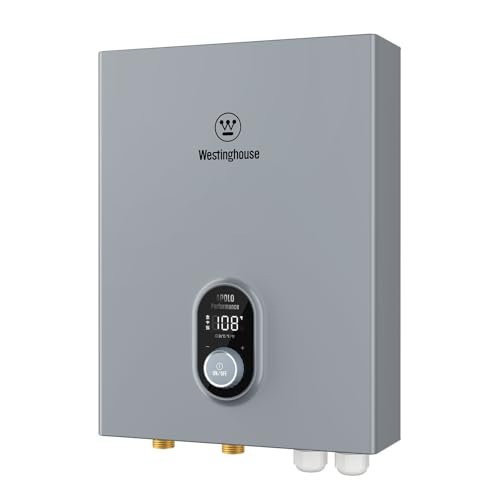
The Apolo 24kW electric tankless water heater is marketed as a whole-house solution with up to 5.6 gallons per minute, 240V operation, WiFi connectivity, Alexa and Google Home support, 1°F temperature adjustment, and 3/4-inch NPT plumbing connections. It also includes a local rotary control, LED display, multiple safety protections, and a compact wall-mounted enclosure.
Its electrical requirements are substantial: the supplied specifications call for three 40-amp double-pole breakers and three runs of 8 AWG wiring. That means installation feasibility depends as much on your electrical service and panel capacity as it does on plumbing.
The biggest point to understand, however, is that the advertised 5.6 GPM is not a universal hot-water output. Actual capacity depends heavily on incoming water temperature and the temperature rise you need. A 24kW heater can be an excellent whole-house option in the right climate and usage pattern, but it needs to be sized carefully.
What Is the Apolo 24kW Tankless Water Heater?
The Apolo is a 240V whole-house electric tankless water heater rated at 24 kilowatts.
Unlike a conventional storage heater, it does not maintain a large tank of hot water. Instead, it heats water as it flows through the unit.
When the system detects sufficient flow, the heating elements activate. When demand stops, active heating shuts down.
That eliminates the problem of emptying a storage tank during long or back-to-back showers, but it replaces that limitation with another one: finite instantaneous heating capacity.
Key Specifications
The supplied product information lists the following major specifications:
- Heating power: 24kW
- Voltage: 240V
- Maximum advertised flow: 5.6 GPM
- Activation flow: approximately 0.79 GPM
- Temperature range: 86°F to 140°F
- Adjustment: 1°F increments
- Electrical requirement: 3 × 40A double-pole breakers
- Wiring: 3 × 8 AWG
- Water connections: 3/4-inch NPT
- Dimensions: approximately 17 inches high × 13 inches wide × 4.3 inches deep
- Controls: rotary knob, LED display, app, Alexa, and Google Home
- Water protection: IPX4
- Certification: ETL, according to the supplied description
These are serious whole-house specifications, particularly on the electrical side.
24kW Is a Large Electrical Load
A 24kW heater can draw roughly 100 amps at 240 volts when operating at full output.
That is a substantial load for a residential electrical service.
The fact that the unit is physically compact should not create the impression that installation is simple.
Three separate high-current circuits are required according to the supplied specifications.
Three 40-Amp Double-Pole Breakers
The Apolo calls for three 40A double-pole breakers.
That means the electrical panel needs enough capacity and physical breaker space for three 240V circuits.
Depending on the panel design, that can consume six standard breaker positions.
This alone may rule out installation in some homes unless the panel is upgraded.
Three Runs of 8 AWG Wiring
The source specifies three runs of 8 AWG wiring.
The exact conductor requirements should be verified against the current installation manual and local electrical code.
Wire size can be affected by conductor material, insulation type, installation method, run length, ambient temperature, and code requirements.
A unit this powerful should not be wired based on assumptions or generic rules.
Electrical Service Capacity Matters
A 24kW heater can become one of the largest electrical loads in the house.
At the same time, the home may already be using:
- Electric range
- Clothes dryer
- Air conditioning
- Heat pump
- EV charger
- Pool equipment
- Electric heating
- Other major appliances
Whether the service can support the heater should be determined through a proper load calculation.
A 200-Amp Service May Still Need Evaluation
Even if the home has a 200A main service, that does not automatically mean there is enough spare capacity for a roughly 100A water-heating load.
Existing household demand matters.
A qualified electrician should evaluate service capacity, panel condition, breaker space, conductor routing, and local code before installation.
For many buyers, this is the single most important pre-purchase check.
Understanding the 5.6 GPM Rating
The heater is advertised at up to 5.6 gallons per minute.
That sounds like enough for several fixtures, but tankless flow ratings always depend on temperature rise.
The heater has a fixed amount of power: 24kW.
If the incoming water is warm, it can heat more gallons per minute to a comfortable outlet temperature.
If the incoming water is cold, it must add more heat to every gallon, so the available flow drops.
Temperature Rise Determines Real Performance
Suppose incoming water is 75°F and you want 105°F water.
That requires a 30°F rise.
A 24kW heater can support a relatively high flow under those conditions.
Now imagine incoming water is 40°F and the desired outlet is still 105°F.
That requires a 65°F rise.
The available flow will be much lower.
This is why the 5.6 GPM figure should be treated as a best-case or favorable-condition rating, not guaranteed whole-house performance.
Can It Really Run Three Showers and Two Sinks?
The product is marketed for three showers plus two sinks.
That claim should be interpreted carefully.
Three efficient 1.5 GPM showers already total 4.5 GPM.
Add two sinks at 0.5 GPM each, and total demand becomes 5.5 GPM.
That is essentially the heater's entire advertised maximum before accounting for temperature rise.
In warm incoming-water conditions, that may be feasible.
In winter in a cold climate, it may not be.
Fixture Count Is Less Important Than Combined Flow
A better way to size the system is to add up actual fixture flow rates.
For example:
- Shower 1: 1.8 GPM
- Shower 2: 1.8 GPM
- Bathroom sink: 0.5 GPM
- Kitchen sink: 1.0 GPM
Total demand = 5.1 GPM.
Then determine how much temperature rise is required.
That calculation provides a much more realistic picture than simply counting fixtures.
Warm Climates Favor the Apolo 24kW
A 24kW electric tankless heater is much more capable in warm regions because groundwater starts at a higher temperature.
If inlet water is 70°F or above, the unit has less heating work to do.
That allows more simultaneous flow.
In colder regions with winter inlet temperatures in the 40s or lower, the same heater may perform more like a two-shower system than a three-shower system.
Endless Hot Water Does Not Mean Unlimited Hot Water
The tankless design means you do not run out of stored hot water.
As long as water continues flowing within the heater's capacity, the Apolo can keep heating.
However, it cannot deliver unlimited flow.
If demand exceeds what 24kW can heat to the set temperature, outlet temperature may drop.
The correct interpretation of "endless hot water" is endless duration within the unit's capacity.
Activation Flow of 0.79 GPM
The heater requires approximately 0.79 GPM before it activates.
That is an important specification for low-flow fixtures.
Some bathroom faucets may operate below that threshold when barely opened.
If the flow is too low, the heater may not activate consistently.
This makes the unit more naturally suited to normal shower and faucet loads than ultra-low-flow handwashing situations.
Whole-House Use
The Apolo is designed as a centralized whole-house or large-apartment heater.
Its 3/4-inch NPT connections support higher flow than smaller point-of-use units with 1/2-inch plumbing.
That makes it more appropriate for feeding several fixtures from one location.
Correct pipe sizing throughout the home still matters.
A high-output heater cannot compensate for undersized or restricted plumbing.
3/4-Inch NPT Connections
The 3/4-inch connections are well suited to central water-heating installations.
Larger piping helps reduce pressure drop at higher flow.
If the existing home uses smaller hot-water trunk lines, flow performance may still be limited elsewhere in the system.
Plumbing layout should be evaluated as part of the installation plan.
Temperature Range From 86°F to 140°F
The heater allows temperature adjustment between approximately 86°F and 140°F.
The 1°F adjustment increments provide precise control.
For ordinary showers and handwashing, most users will choose settings well below the maximum.
Higher temperatures increase scald risk and may require additional precautions.
Precise 1°F Temperature Adjustment
Fine control is useful because tankless heaters can often be set directly to a comfortable delivery temperature.
That can reduce the need to mix large amounts of cold water downstream.
It may also improve comfort when several fixtures are used at different times.
However, users should avoid unnecessarily high settings.
WiFi App Control
The heater includes WiFi connectivity for remote temperature adjustment and restart functions.
This can be convenient when the unit is installed in a garage, utility room, basement, or mechanical closet.
Users can make changes without standing in front of the heater.
App control is useful, but it should remain secondary to correct sizing and electrical compatibility.
Alexa and Google Home Support
The source states that the Apolo works with both Alexa and Google Home.
Voice control can add convenience for checking or changing temperature settings.
That may be useful in a smart-home environment.
Still, a water heater should be chosen primarily for thermal performance and serviceability, not voice-assistant integration.
Rotary Knob for Local Control
The front-mounted rotary knob provides direct physical control.
That is a strong design choice.
A water heater should remain easy to operate even if the app is unavailable, WiFi goes down, or the smart-home platform changes.
Local control improves long-term usability.
LED Display
The LED display provides operating information directly on the unit.
This helps with temperature adjustment, monitoring, and troubleshooting.
A clear local interface is especially important on a whole-house appliance that may need to be serviced years after installation.
ETL Certification
The source states that the unit is ETL certified.
That indicates evaluation against applicable safety standards by a recognized testing laboratory.
Buyers should verify the exact certification for the model being installed.
Local permitting authorities may also require specific listing information.
IPX4 Water Resistance
The Apolo is rated IPX4 according to the supplied specifications.
That indicates resistance to splashing water under defined conditions.
It does not make the heater waterproof.
The unit should still be installed in an approved location with appropriate clearances and protection from flooding or direct sustained water exposure.
Electrical Leakage Protection
One of the listed safeguards is leakage protection.
This is intended to reduce risk from abnormal electrical current paths.
It supplements proper grounding, correctly sized breakers, and any required ground-fault protection.
Built-in safety electronics do not replace code-compliant installation.
Overheat Protection
Overheat protection is designed to shut down or limit the heater if internal temperatures exceed safe limits.
That is essential in a high-output tankless unit.
The exact reset procedure should be reviewed in the owner's manual.
Dry-Fire Protection
Dry-fire protection helps prevent the heating elements from operating without adequate water flow.
Without sufficient flow, heating elements can overheat rapidly.
This safeguard is especially important during installation, plumbing service, or low-flow conditions.
High-Voltage Protection
The source also lists high-voltage protection.
Power-quality problems can damage heating elements and control electronics.
A protective circuit can help shut down the unit when electrical supply conditions move outside its safe operating range.
Proper electrical infrastructure remains necessary regardless.
Separated Water and Electrical Pathways
The design uses separated water and electricity paths according to the supplied information.
This is a sensible safety and durability concept.
The manufacturer also associates it with reduced corrosion and scaling.
That may help protect certain internal components, but no tankless heater should be considered immune to mineral buildup.
Hard Water Can Still Cause Scale
Mineral deposits can accumulate inside water passages and heat-transfer surfaces.
Over time, that can reduce flow and heating performance.
Homes with hard water may need periodic descaling.
Following the manufacturer's maintenance schedule is particularly important on a high-output whole-house heater.
Why Descaling Matters
Scale acts as an insulating layer.
It can reduce heat-transfer efficiency and create hot spots.
It may also restrict internal waterways.
Regular maintenance can help preserve both performance and service life.
Consider Isolation and Service Valves
When approved by the manufacturer and local plumbing practice, installing service valves can make future maintenance much easier.
They allow the heater to be isolated from the home's plumbing and flushed with a descaling solution.
Planning maintenance access during initial installation is far easier than retrofitting it later.
Compact Wall-Mounted Design
The unit measures approximately 17 inches high, 13 inches wide, and 4.3 inches deep.
That is dramatically smaller than a traditional 40- or 50-gallon storage tank.
The heater mounts on the wall and uses no floor space.
This can free up valuable room in closets, garages, utility areas, and compact apartments.
Space Saving Is a Major Advantage
Traditional tank heaters require significant floor area and vertical clearance.
The Apolo's slim wall-mounted form can open up storage space or make installation possible where a large tank would not fit.
The tradeoff is that the electrical infrastructure may be more demanding than the physical installation suggests.
Tankless Does Not Eliminate Plumbing Delay
The heater begins heating on demand, but hot water still has to travel through the home's pipes.
A distant bathroom may still experience a wait.
Tankless technology eliminates tank recovery time, not pipe travel time.
If instant delivery at distant fixtures is important, recirculation or local point-of-use solutions may still be worth considering.
Electric Tankless vs. Storage-Tank Heater
A conventional electric tank heater stores a large volume of hot water and can supply high short-term flow even with a smaller electrical circuit.
Its disadvantages are floor space, standby heat loss, and finite stored capacity.
The Apolo avoids storage and provides continuous heating, but demands roughly 100 amps at full output.
The right choice depends on the home's electrical infrastructure and hot-water pattern.
Electric Tankless vs. Gas Tankless
A gas tankless heater can often support high whole-house flow without placing a massive load on the electrical service.
However, it requires gas piping, combustion air, and venting.
The Apolo avoids combustion entirely.
That can simplify placement where strong electrical infrastructure already exists.
Electric Tankless vs. Heat Pump Water Heater
A heat pump water heater is typically much more energy efficient but requires a storage tank and physical floor space.
It may also cool and dehumidify the room where it is installed.
The Apolo takes the opposite approach: compact size, no tank, but very high instantaneous electrical demand.
These are fundamentally different solutions.
Can It Supply a Dishwasher?
Potentially, yes.
Dishwashers use hot water intermittently rather than drawing several gallons per minute continuously.
As long as total simultaneous demand remains within the heater's capacity, dishwasher use should be manageable.
Actual appliance behavior varies, so it should be considered as part of total household demand.
Can It Supply a Washing Machine?
Potentially.
Many modern washing machines use relatively modest amounts of hot water and mix hot and cold internally.
Again, the key issue is simultaneous demand.
A washing machine running while three showers are active could push the system beyond its capacity.
Can It Fill a Bathtub?
Yes, but bathtub fillers can be demanding.
A high-flow tub spout may exceed the heater's ability to maintain the target temperature, especially in colder incoming-water conditions.
Reducing faucet flow can help, but that increases filling time.
Large soaking tubs may justify a higher-capacity system.
Can It Handle Three Showers?
Possibly, especially in warm climates with efficient showerheads.
For example, three 1.5 GPM showerheads total 4.5 GPM.
That leaves some margin beneath the 5.6 GPM advertised maximum under favorable temperature-rise conditions.
Three 2.0 GPM showers would total 6.0 GPM, already above the advertised maximum before temperature rise is considered.
Real fixture flow matters.
Can It Handle Two Showers Comfortably?
Two modern showers are a much more conservative use case.
At 1.8 GPM each, total flow is 3.6 GPM.
A 24kW heater is far more likely to maintain a useful temperature at that demand, even with a larger temperature rise.
This illustrates why "maximum number of showers" claims are less useful than actual flow calculations.
Installation Is Not a Typical DIY Project
The plumbing connections may be straightforward for an experienced installer, but the electrical work is substantial.
Three 40A 240V circuits involve high current and panel modifications.
For most homeowners, professional electrical installation is appropriate.
A plumber may also be advisable for whole-house piping changes.
Check Panel Space Before Purchasing
Three double-pole breakers can require considerable panel space.
If the panel is already crowded, a subpanel or replacement panel may be necessary.
That can add significant cost.
It is wise to inspect the electrical system before ordering the heater rather than discovering the limitation after delivery.
Check Service Capacity Before Purchasing
Panel space and electrical capacity are different issues.
A panel can have empty breaker slots but still lack sufficient service capacity.
A load calculation should account for all major appliances.
This is especially important when adding a roughly 100A water-heating load.
Common Buying Mistakes
The biggest mistake is assuming 5.6 GPM is guaranteed in every climate.
Another is taking the "three showers plus two sinks" marketing claim literally without checking actual fixture flow.
Buyers also commonly underestimate the electrical installation cost.
Another mistake is assuming tankless means no maintenance.
Finally, WiFi and voice control should not distract from thermal sizing and electrical service requirements.
What to Check Before Buying
Before choosing the Apolo 24kW, verify:
- Incoming groundwater temperature
- Desired outlet temperature
- Showerhead flow rates
- Faucet flow rates
- Simultaneous appliance demand
- Electrical service capacity
- Panel breaker space
- Feasibility of three 40A circuits
- 8 AWG conductor requirements
- 3/4-inch plumbing compatibility
- Water hardness
- Service clearances
- Local permit requirements
These checks determine whether the heater is genuinely appropriate for the home.
Main Advantages
The strongest advantage is high output in a very compact package.
A 24kW heater with up to 5.6 GPM can provide substantial whole-house capacity under favorable conditions.
The 3/4-inch connections support higher flow.
Precise temperature control, WiFi, Alexa and Google Home integration, local rotary control, an LED display, and multiple safety systems add convenience.
The wall-mounted design also frees substantial floor space compared with a storage tank.
Potential Drawbacks
The electrical requirements are substantial.
Three 40A double-pole circuits can make installation expensive or impossible without upgrades.
The 5.6 GPM rating varies with temperature rise.
The 0.79 GPM activation threshold may also be noticeable at very low-flow faucets.
Hard-water maintenance remains necessary.
Finally, the system may still be undersized for large households in cold climates that use several high-flow fixtures simultaneously.
Who Should Consider the Apolo 24kW?
This model may be a strong fit for:
- Medium-size homes
- Large apartments
- Warm and moderate climates
- Homes with strong electrical service
- Households using efficient showerheads
- Buyers replacing a bulky electric storage heater
- Smart-home users
- Properties where floor space is valuable
It may be less suitable for cold-climate homes with heavy simultaneous hot-water demand or properties with limited electrical capacity.
Frequently Asked Questions
How powerful is the Apolo water heater?
It is rated at 24kW.
What voltage does it require?
240V.
What is the maximum advertised flow?
Approximately 5.6 GPM.
Will it always deliver 5.6 GPM?
No. Actual hot-water flow depends on incoming water temperature and required temperature rise.
Can it supply three showers?
Possibly under favorable conditions with efficient showerheads, but actual combined flow and temperature rise must be calculated.
Can it supply three showers and two sinks?
That is the advertised use case, but it should not be treated as universal performance in all climates.
What is the minimum activation flow?
Approximately 0.79 GPM.
What breakers are required?
The supplied specifications call for three 40A double-pole breakers.
What wire size is specified?
Three runs of 8 AWG wiring are listed.
How much electrical current can the heater use?
A 24kW load at 240V is approximately 100 amps at full output.
Does it require a large electrical service?
It may. A professional load calculation is strongly recommended.
What size are the water connections?
3/4-inch NPT.
What temperature range does it support?
Approximately 86°F to 140°F.
Can temperature be adjusted in 1°F increments?
Yes.
Does it have WiFi?
Yes.
Does it work with Alexa?
The supplied information states Alexa compatibility.
Does it work with Google Home?
Yes.
Can it be controlled without WiFi?
Yes. A rotary knob and LED display provide local control.
Is it ETL certified?
The supplied description states that it is ETL certified.
Is it waterproof?
It carries an IPX4 splash-resistance rating, not full waterproofing.
Does it require maintenance?
Yes. Inspection and periodic descaling may be necessary, particularly in hard-water areas.
Is it truly whole-house?
It can be, provided household flow demand and temperature rise stay within its 24kW capacity.
Final Verdict
The Apolo 24kW electric tankless water heater is a powerful compact option for homeowners who want centralized on-demand hot water without a bulky storage tank.
Its standout features are the 24kW heating capacity, advertised 5.6 GPM maximum flow, 3/4-inch plumbing connections, precise 86°F-to-140°F temperature control, WiFi connectivity, Alexa and Google Home support, and compact wall-mounted design.
The most important caveat is sizing. The claim of three showers plus two sinks can be realistic under favorable conditions, but actual performance depends on incoming water temperature and total simultaneous flow. In colder climates, available hot-water flow can be substantially lower.
Electrical infrastructure is the other major consideration. Three 40A double-pole breakers and three 8 AWG circuits represent a very large residential load.
For a properly equipped home with moderate-to-high hot-water demand, particularly in a warm or temperate climate, the Apolo 24kW can be a compelling whole-house tankless solution. For properties with limited electrical service or very high cold-climate demand, a larger system or different water-heating technology may be the better choice.