Watts IntelliFlow Washing Machine Smart Water Shutoff Valve Review: Automatic Leak Detection and WiFi Alerts
Washing machines are one of the most water-intensive appliances in a home, and much of that water reaches the machine through pressurized supply hoses hidden behind the appliance. If one of those hoses fails, water can continue flowing until someone notices the problem and manually shuts off the supply.
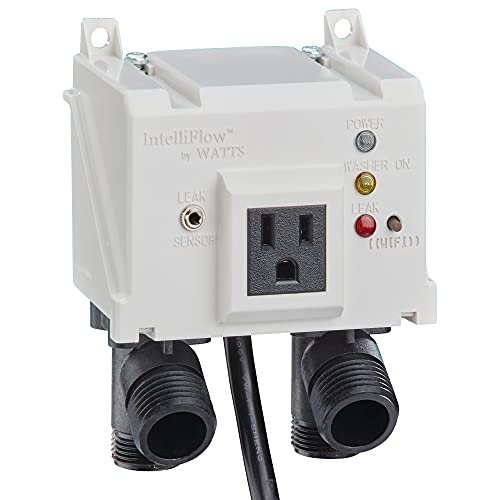
The Watts IntelliFlow Washing Machine Smart Water Shutoff Valve is designed to reduce that risk. Rather than leaving the hot and cold supply lines continuously pressurized, the system controls water flow based on whether the washing machine is actually operating. It also uses a floor-mounted leak sensor to detect water behind the appliance and automatically close the inlet valves when a leak is detected.
This model also adds WiFi connectivity for text and email notifications, making it more useful when the laundry room is unattended. It is not a whole-house water shutoff system, but for homeowners, landlords, laundry rooms, and commercial properties concerned specifically about washing-machine leaks, it offers a focused layer of protection.
What Is the Watts IntelliFlow?
The IntelliFlow is an appliance-specific automatic water-control system for washing machines.
Its main functions include:
- Controlling hot and cold washing-machine water supplies
- Detecting when the washing machine is drawing electrical current
- Opening the water valves only when the machine is operating
- Closing the water valves when the machine is inactive
- Detecting water behind the washing machine
- Automatically shutting off water when a leak is detected
- Sending text and email alerts through WiFi
- Monitoring a dedicated washing-machine installation
The supplied model includes a leak sensor and power cord but does not include the wall box.
Why Washing Machine Supply Hoses Are a Risk
A washing machine normally connects to permanently pressurized hot and cold water lines.
Even when the machine is off, the hoses can remain under full household water pressure.
Potential failure points include:
- Rubber supply hoses
- Braided hoses
- Threaded connections
- Valves
- Internal washing-machine components
If a pressurized hose ruptures, water may continue flowing until the home's supply is shut off.
That is the problem IntelliFlow is designed to address.
About the “500 Gallons Per Hour” Claim
The source states that a burst washing-machine connection can discharge 500 gallons of water in one hour.
That figure should be treated as a product-marketing scenario rather than a universal flow rate. Actual discharge depends on factors such as:
- Supply pressure
- Pipe diameter
- Valve restriction
- Hose size
- Failure type
The important point is that a pressurized washing-machine hose can release a large amount of water quickly if a major failure occurs.
Water Only When the Washer Is Running
One of IntelliFlow's most distinctive features is current sensing.
The valve monitors electrical current to determine whether the washing machine is operating.
When the washer draws current, the system allows water to flow.
When the machine is not running, the valves close.
This means the supply hoses do not need to remain continuously pressurized while the machine sits unused.
Why Current-Sensing Control Is Useful
Many leak-prevention products wait until water reaches a sensor before acting.
IntelliFlow adds a preventive layer by limiting when water is available in the first place.
The operating logic is essentially:
- Washing machine starts.
- Electrical current is detected.
- Hot and cold water valves open.
- Machine completes its cycle.
- Water supply closes again.
This reduces the amount of time the appliance hoses remain under pressure.
Automatic Leak Detection
The system also includes a floor-mounted water sensor.
The sensor is positioned behind or near the washing machine where escaping water is likely to collect.
If water reaches the sensor, IntelliFlow can close the supply valves automatically.
That means the system provides both:
- Preventive valve control
- Reactive leak shutoff
Why the Floor Sensor Still Matters
Current-based control cannot prevent every type of failure.
For example, a hose may rupture while the washing machine is actively running and the valves are legitimately open.
In that situation, the floor sensor provides the second line of defense.
Once water reaches the detector, the system can close the valves.
Real-Time Text and Email Alerts
This model supports WiFi connectivity for remote notifications.
According to the supplied description, users can receive:
- Text alerts
- Email alerts
when a leak event occurs.
That can be particularly useful if the laundry room is:
- In a basement
- In a rental property
- In a business
- Far from occupied rooms
An automatic shutoff is valuable, but a notification also tells you that the appliance needs attention.
WiFi Setup
The supplied setup process involves scanning a QR code, registering the IntelliFlow online, and connecting it to the local WiFi network.
That enables connected alert features.
Before relying on remote alerts, test:
- WiFi connection
- Text delivery
- Email delivery
- Leak-trigger behavior
A safety-related device should never be assumed to be connected simply because setup appeared successful.
Remote Alerts Depend on Connectivity
The automatic valve and leak-sensor behavior are the most important protective functions.
Text and email alerts additionally depend on:
- Local WiFi
- Internet connection
- Remote service availability
That distinction matters because connected notifications and local shutoff are not the same function.
Hot and Cold Water Control
The IntelliFlow controls both hot and cold water supplies to the washing machine.
That is necessary because most washing machines have two inlet lines.
A leak-prevention system that only closes one side would leave the other supply pressurized.
1/2-Inch Sweat Connections
The supplied specification lists 1/2-inch sweat inlet adapters for the hot and cold supply lines.
Sweat connections generally refer to soldered copper plumbing.
That makes compatibility an important consideration.
Before purchase, verify whether the existing laundry supply uses:
- Copper
- PEX
- CPVC
- Threaded connections
- Another material
Additional adapters or plumbing changes may be required.
Professional Installation May Be Appropriate
This is more involved than installing a battery-powered leak detector.
The valve assembly becomes part of the washing machine water supply.
Installation may involve:
- Shutting off household water
- Cutting pipe
- Soldering or adapting fittings
- Pressure testing
- Electrical connection
- Leak sensor placement
For many installations, a plumber or other qualified professional is the safer choice.
Maximum Pressure Rating
The supplied description lists a maximum pressure of 150 psi / 10 bar.
That is significantly above normal operating pressure in many residential plumbing systems.
However, the product's pressure rating does not mean a home should operate at 150 psi.
Residential plumbing should still remain within appropriate local code and fixture requirements.
High Water Pressure Should Be Addressed Separately
If household water pressure is unusually high, do not rely on the IntelliFlow rating as a solution.
High pressure can contribute to:
- Hose stress
- Valve wear
- Fixture damage
A pressure-reducing valve or other plumbing correction may be appropriate.
15-Amp Washing Machine Current Rating
The source lists a maximum washing-machine current rating of 15 amps.
This is important because IntelliFlow uses electrical current sensing to determine whether the appliance is running.
The washing machine's electrical requirements must therefore fall within the product's supported specifications.
Always compare:
- Appliance nameplate rating
- Circuit rating
- IntelliFlow documentation
before installation.
Compatibility With 220V Appliances
The supplied information mentions an optional A-2 IntelliTimer for applications involving a 220 VAC washing machine or washer/dryer combination.
That means the standard current-sensing arrangement may not be appropriate for every appliance configuration.
Owners of:
- 220V washers
- Washer/dryer combination units
- Unusual laundry equipment
should verify compatibility carefully.
This Model Does Not Include the Wall Box
The source explicitly states that this model does not include the wall box.
That is an important purchasing detail.
Some IntelliFlow configurations may be designed as recessed or integrated laundry-box assemblies, while this specific package includes the control components without that enclosure.
Check exactly what installation hardware is included before ordering.
Where to Place the Leak Sensor
The floor sensor should be positioned where water would likely collect first.
Good locations may include:
- Directly behind the washer
- Beneath supply-hose connections
- Near the lowest point of the floor
- Close to the wall valves
Avoid placing it where routine cleaning water will trigger nuisance alarms.
Think About Floor Slope
Water rarely spreads perfectly evenly.
Laundry-room floors may slope toward:
- Floor drain
- Wall
- Doorway
- Low corner
The sensor should be placed along the likely water path.
Test the Sensor After Installation
After installation, perform the manufacturer's recommended test.
Confirm that:
- Water detection works
- Hot and cold valves close
- Washing-machine operation opens the valves
- Text notification arrives
- Email notification arrives
Testing the complete chain is much more useful than testing only the app.
IntelliFlow vs. Manual Washing Machine Valves
Many homes rely on standard manual shutoff valves behind the washing machine.
In theory, homeowners could close those valves after every load.
In practice, many people do not.
IntelliFlow automates that process.
Manual Valve Advantages
- Simple
- Inexpensive
- No electronics
IntelliFlow Advantages
- Automatic opening and closing
- Leak detection
- Remote alerts
- No need to remember manual valve operation
IntelliFlow vs. Basic Leak Sensor
A basic water alarm only detects water.
The IntelliFlow also controls the appliance supply valves.
Basic Sensor
- Detects water
- Sounds alarm
IntelliFlow
- Controls water availability
- Detects leaks
- Automatically shuts off supply
- Sends remote alerts
That makes IntelliFlow substantially more proactive.
IntelliFlow vs. Whole-Home Smart Shutoff
A whole-home water shutoff valve controls the main supply to the entire property.
The IntelliFlow protects only the washing-machine lines.
Appliance-Specific Advantages
- Targets one high-risk appliance
- Does not interrupt water to the entire home
- Current sensing can keep hoses depressurized when washer is off
Whole-Home Advantages
- Covers leaks elsewhere in the plumbing system
- Protects multiple fixtures and appliances
The two strategies can complement one another.
Why Appliance-Specific Shutoff Can Be Better in Some Situations
A whole-home valve may shut off every faucet and fixture because of one leak.
IntelliFlow only interrupts the washing machine.
That can be useful in:
- Multi-unit properties
- Businesses
- Households where uninterrupted water elsewhere is desirable
Washing Machines on Upper Floors
Laundry rooms are increasingly located on upper floors.
A significant leak there can affect:
- Flooring
- Ceilings below
- Walls
- Electrical systems
For upstairs laundries, an automatic washing-machine shutoff may be particularly worth considering.
Laundry Rooms Without Floor Drains
A floor drain can reduce the consequences of some leaks, but many laundry rooms do not have one.
In those environments, automatic shutoff and leak detection become more valuable because water has nowhere intentionally designed to go.
Additional Protection Strategies
The IntelliFlow should be one part of a broader laundry-room risk strategy.
Other useful practices include:
- Inspecting supply hoses
- Replacing damaged hoses
- Using quality connectors
- Keeping valves accessible
- Maintaining proper household pressure
- Using a drain pan where appropriate
Technology works best when combined with basic plumbing maintenance.
Common Buying Mistakes
Assuming It Protects the Whole House
It is designed specifically for the washing machine supply.
Ignoring Plumbing Connection Type
The listed adapters are 1/2-inch sweat connections.
Ignoring Appliance Electrical Rating
The standard configuration is designed around specific current limits.
Assuming the Wall Box Is Included
This specific model does not include one.
Skipping Leak-Sensor Placement Planning
The sensor should be located where escaping water will actually reach it.
Never Testing the Shutoff Function
Automation should be verified after installation.
Who Is the Watts IntelliFlow Best For?
It may be a strong choice for:
- Upstairs laundry rooms
- Homes without laundry floor drains
- Rental properties
- Commercial laundry areas
- Homeowners who leave washers running unattended
- Properties where washing-machine hose failure is a major concern
It may be unnecessary for users who already have a comprehensive whole-home shutoff system with dedicated appliance sensors, depending on how that system is configured.
Advantages and Considerations
Advantages
- Controls hot and cold washing-machine water supplies
- Opens water only when washer operation is detected
- Automatically closes valves when leak is detected
- Floor leak sensor included
- WiFi connectivity
- Text alerts
- Email alerts
- 150 psi listed maximum pressure
- 15A listed washing-machine current rating
- Dedicated washing-machine protection
Potential Considerations
Protects only the washing machine.
Requires plumbing installation.
Uses 1/2-inch sweat adapters according to the supplied description.
Wall box is not included in this model.
WiFi is required for remote alerts.
220V equipment may require the optional IntelliTimer or a different configuration.
Frequently Asked Questions
What does Watts IntelliFlow do?
It automatically controls the hot and cold water supply to a washing machine and can close the valves when a leak is detected.
Does it keep the washing-machine hoses pressurized all the time?
No. The system is designed to allow water flow when it detects that the washing machine is operating.
Does it detect water on the floor?
Yes. A floor-mounted leak sensor is included.
Can it automatically shut off water?
Yes, it can close the washing-machine supply valves when a leak is detected.
Does it shut off the entire house?
No. It controls the washing-machine hot and cold supply lines.
Does it send phone alerts?
The supplied description states that it can send real-time text alerts when connected to WiFi and properly configured.
Does it send email alerts?
Yes.
Is WiFi required for the valve to detect a leak?
WiFi is primarily associated with connected notification features. The exact local operating behavior should be confirmed in the product documentation.
What is the maximum pressure rating?
The supplied information lists 150 psi / 10 bar.
What is the electrical rating?
The washing-machine current rating is listed at 15 amps.
What plumbing connections does it use?
The supplied description lists 1/2-inch sweat inlet adapters.
Can it work with a 220V washer?
The source references an optional A-2 IntelliTimer for 220 VAC washing machines or washer/dryer combinations.
Does the package include a wall box?
No. The source explicitly states that this model does not include the wall box.
Final Thoughts
The Watts IntelliFlow Washing Machine Smart Water Shutoff Valve takes a more preventive approach to laundry-room leak protection than a basic sensor.
Its most distinctive feature is that it does not leave the washer's hot and cold supply lines continuously open. Instead, the system detects electrical current from the washing machine and allows water to flow when the appliance is operating. A separate floor sensor adds another layer by closing the valves if water is detected behind the machine.
WiFi-based text and email alerts extend that protection when nobody is home, while the appliance-specific design means a washing-machine leak can be isolated without necessarily shutting water off to the entire property.
The main considerations are installation and compatibility. Buyers need to verify plumbing connections, appliance electrical requirements, WiFi setup, and whether the optional accessories required for their laundry configuration are included.
For homeowners looking for a smart washing-machine shutoff valve with automatic leak detection, current-sensing water control, and remote WiFi alerts, the Watts IntelliFlow offers a specialized and practical way to reduce one of the most common appliance-related water risks in the home.