WiFi Water Leak Sensor Review: Real-Time Tuya Alerts Without a Hub
Water leaks often begin quietly. A loose supply line, leaking water heater fitting, overflowing sump area, or dishwasher connection can release water for hours before anyone notices. By the time visible damage appears, moisture may already have reached cabinets, flooring, drywall, or nearby rooms.
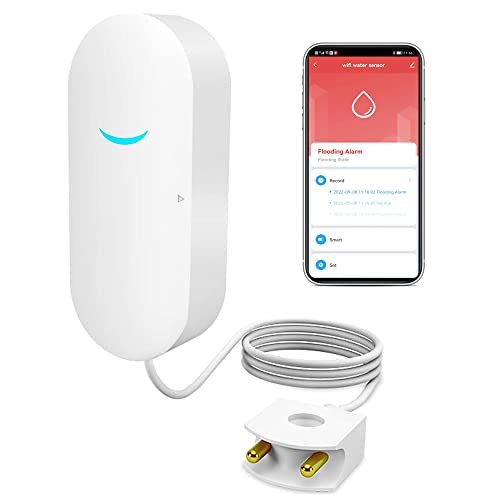
This smart WiFi water leak sensor is designed to provide early warning by detecting unwanted water and sending notifications directly to a smartphone through the Tuya app. Unlike many multi-device leak monitoring systems, it connects directly to a 2.4 GHz WiFi network and does not require a separate gateway or hub.
The compact battery-powered design makes it suitable for placing beneath sinks, near water heaters, beside washing machines, around toilets, and in other areas vulnerable to leaks. It can also be configured for certain water-level monitoring applications, making it more versatile than a basic floor alarm.
What Is a WiFi Water Leak Sensor?
A WiFi water leak detector is a small electronic sensor designed to identify the presence of water and alert the homeowner.
Traditional water alarms typically produce only a local audible warning. A connected detector adds remote notification through a mobile app.
When water reaches the sensor, the system can notify your phone so you can respond even when you are away from home.
This can be useful when you are:
- At work
- Traveling
- Sleeping
- Away for the weekend
- Monitoring a vacation property
The sensor does not stop the leak automatically, but faster awareness can reduce the amount of time a problem goes unnoticed.
Direct WiFi Connection Without a Hub
One of the main advantages of this device is its direct WiFi connectivity.
It does not require a separate Zigbee hub, proprietary gateway, or central receiver.
Instead, the sensor connects directly to your home network.
For users who only need one or several standalone leak detectors, this can simplify installation and reduce the number of smart-home components required.
2.4 GHz WiFi Is Required
The sensor works with 2.4 GHz WiFi only.
It does not support 5 GHz connections according to the product description.
This is common among smart-home devices because 2.4 GHz generally provides better range and wall penetration.
Before purchasing, verify that your router supports a 2.4 GHz network.
Most modern routers do, even when they also provide 5 GHz WiFi.
What If Your Router Uses One Network Name?
Many routers combine 2.4 GHz and 5 GHz under one SSID.
Sometimes the sensor will connect normally.
If setup fails, you may need to:
- Temporarily separate the WiFi bands
- Connect your phone to 2.4 GHz
- Disable band steering during setup
Follow the manufacturer's pairing instructions for your router configuration.
Real-Time Tuya App Notifications
The sensor works with the Tuya app to provide remote leak alerts.
When water is detected, the app is designed to send an alarm message to your smartphone within a short period.
This gives homeowners the opportunity to react before a leak continues for hours.
Possible responses include:
- Returning home
- Calling a plumber
- Contacting a neighbor
- Shutting off the main water supply
- Checking smart cameras
- Moving valuables away from the affected area
Monitor Sensor Status Remotely
The app can also be used to check the sensor status while away from home.
This can be helpful for:
- Vacation properties
- Rental homes
- Basements
- Remote utility rooms
- Second homes
Remote visibility gives users more confidence than relying solely on an alarm that must be heard locally.
Shared Alerts for Multiple Users
The Tuya ecosystem allows device access to be shared with other people.
This means leak notifications can potentially be received by:
- Spouse
- Partner
- Family member
- Property manager
- Maintenance person
Shared monitoring can be useful when more than one person may need to respond to an emergency.
For example, if one homeowner is traveling, another household member can still receive the leak alert.
Why Multiple Recipients Can Be Valuable
A notification is only helpful if someone sees it.
If one person's phone is:
- Turned off
- Out of coverage
- On silent
- Out of battery
another shared user may still receive the warning.
That redundancy can improve the practical value of a smart leak monitoring system.
Suitable for Many Leak-Prone Areas
The sensor can be positioned around many common plumbing and appliance locations.
Potential uses include:
- Sump pumps
- Toilets
- Water heaters
- Washing machines
- Dishwashers
- Kitchen sinks
- Bathroom vanities
- Fish tanks
- Basements
- Utility rooms
The compact wireless design makes it easier to install without running power cables through cabinets or behind appliances.
Water Heater Leak Monitoring
Water heaters can leak from:
- Supply connections
- Drain valves
- Pressure-relief plumbing
- Tank corrosion
- Nearby fittings
Placing a detector beside the heater or in a drain pan can provide early warning when water begins accumulating.
This can be particularly useful when the heater is located:
- Upstairs
- In a finished basement
- Inside a utility closet
Washing Machine Protection
Washing machines are another common leak source.
Potential problems include:
- Burst supply hoses
- Drain-hose failures
- Pump leaks
- Internal seals
A sensor positioned behind or beside the machine can detect water that reaches the floor.
This is especially useful in second-floor laundry areas where water could damage the ceiling below.
Under-Sink Monitoring
Kitchen and bathroom cabinets can conceal small leaks for long periods.
Common sources include:
- Faucet supply lines
- Shutoff valves
- P-traps
- Garbage disposals
- Drain connections
A compact leak detector placed at the bottom of the cabinet can identify water before it escapes into the room.
Toilet Leak Detection
Leaks around toilets may come from:
- Supply hoses
- Shutoff valves
- Tank bolts
- Fill-valve connections
- Base seals
A small sensor can be placed behind or beside the toilet without taking up meaningful floor space.
Avoid positioning it where routine mopping will constantly wet the contacts.
Dishwasher Monitoring
Dishwasher leaks can be difficult to notice because much of the plumbing is hidden.
If there is enough clearance, a sensor near the appliance can help detect:
- Supply leaks
- Drain failures
- Internal pump leaks
Placement depends on the dishwasher installation and cabinet layout.
Fish Tank and Aquarium Monitoring
The product description also lists fish tanks as a possible application.
A sensor can be placed near an aquarium to alert you to:
- Overflow
- Filter leaks
- Hose problems
- Tank-related water spills
However, it should be positioned carefully so ordinary maintenance splashes do not produce unnecessary alerts.
Water-Level Monitoring Applications
The source states that the sensor can also be used to monitor preset water-level limits in certain scenarios such as:
- Bathtubs
- Pools
- Tanks
This is different from simple floor leak detection.
When used for water-level monitoring, placement becomes especially important because the sensor must be positioned at the height corresponding to the level you want to monitor.
Always confirm whether the specific installation method is appropriate for the environment before relying on it.
Easy Installation Options
The sensor can reportedly be mounted using:
- Adhesive tape
- Included screws
For many leak-detection applications, permanent mounting may not even be necessary if the detector can simply sit on a stable dry surface.
The best installation method depends on whether you are monitoring:
- Floor leaks
- Wall-level water
- Tank level
- Appliance area
Where to Place the Sensor
Good sensor placement is more important than simply buying a detector.
Water flows toward low areas.
Place the sensor where leaking water is most likely to collect first.
For example, under a sink, that may be directly beneath the plumbing connections rather than near the cabinet door.
Near a washing machine, it may be behind the appliance close to the supply hoses.
Start With a Clean, Dry Surface
Before installation:
- Clean the area.
- Remove dust and debris.
- Dry the surface completely.
- Position the detector where water is likely to travel.
Starting with a dry installation area helps reduce nuisance alarms.
Battery-Powered Operation
The detector runs on two AAA batteries, which are not included.
Battery operation allows it to be positioned without needing a nearby electrical outlet.
That makes it convenient for:
- Under-sink cabinets
- Behind appliances
- Bathrooms
- Utility closets
The manufacturer states that battery life may reach approximately one year under typical conditions.
Actual runtime will depend on usage, network conditions, battery quality, and alert frequency.
Low-Battery Notifications
The app is designed to warn users when battery power becomes low.
This is an important feature because a dead leak detector provides no protection.
Do not rely solely on the notification, however.
It is sensible to inspect battery status periodically.
Battery Maintenance Tips
A useful maintenance routine includes:
- Checking battery level in the app
- Replacing batteries before extended travel
- Inspecting contacts for corrosion
- Testing the sensor after battery replacement
Using quality alkaline batteries may improve reliability.
Leak Detector vs. Automatic Shutoff Valve
This device is primarily a detection and notification system.
It does not physically stop the water supply by itself.
That distinction matters.
WiFi Leak Detector
It can:
- Detect water
- Send alerts
- Notify multiple users
Automatic Shutoff System
It can additionally:
- Close the water line
- Limit continued flow
For high-risk areas, some homeowners combine leak sensors with an automatic shutoff valve.
Why Early Detection Still Matters
Even without automatic shutoff, faster notification can make a significant practical difference.
A homeowner who learns about a leak within minutes can potentially:
- Shut off the main valve
- Contact someone nearby
- Stop an appliance
- Begin cleanup
A leak that remains undetected for many hours has more opportunity to spread.
WiFi Sensor vs. Zigbee Leak Detector
Both technologies are common in smart homes.
WiFi Advantages
- No separate hub required
- Simple for a small number of devices
- Direct connection to home network
Zigbee Advantages
- Low power consumption
- Better suited to large sensor networks
- Potential local automation through a hub
For one or several sensors, direct WiFi may be simpler.
For dozens of sensors, a hub-based system may be more efficient.
WiFi Sensor vs. Basic Audible Alarm
A basic alarm is inexpensive and does not require internet access.
Its limitation is range: somebody needs to hear it.
A WiFi model adds:
- Remote alerts
- App status
- Shared access
The tradeoff is dependence on batteries, WiFi, and internet connectivity.
What Happens If the Internet Goes Down?
Remote notifications require internet access.
If the home loses internet connectivity, the sensor may not be able to send Tuya cloud notifications until the connection returns.
Local alarm behavior depends on the exact product design.
For homes where internet-independent protection is critical, consider combining smart sensors with:
- Audible local alarms
- Automatic shutoff systems
- Local smart-home automation
Smartphone Settings Matter
After installation, verify that notifications are enabled.
Check:
- Tuya notification permissions
- Background activity permissions
- Phone battery optimization
- Do Not Disturb settings
A perfectly functioning leak sensor is less useful if the phone silently blocks its alerts.
Test the Sensor Before Relying on It
After setup, perform a controlled test according to the manufacturer's instructions.
Confirm that:
- The detector senses water
- The app receives the event
- Your phone shows the notification
- Shared users receive alerts
Testing should also be repeated periodically.
Common Installation Mistakes
Placing the Sensor Too Far From the Plumbing
Water may never reach it.
Ignoring the 2.4 GHz Requirement
The sensor will not work correctly if it cannot join the network.
Forgetting to Enable Phone Notifications
App pairing alone is not enough.
Never Replacing the Batteries
Low power can reduce reliability.
Installing on an Already Damp Surface
This may cause immediate alerts.
Assuming It Automatically Shuts Off the Water
It is a detector, not a motorized valve system.
How Many Sensors Does a Home Need?
The answer depends on the property.
Rather than placing one sensor centrally, prioritize areas where plumbing failures are most likely or most damaging.
A typical plan might include sensors near:
- Water heater
- Washing machine
- Kitchen sink
- Dishwasher
- Main bathroom
- Basement sump area
Additional detectors can be added depending on the home's plumbing layout.
Who Is This WiFi Leak Detector Best For?
This device may be suitable for:
- Homeowners
- Renters
- Apartment dwellers
- Vacation-home owners
- Landlords
- Aquarium owners
- People who want app alerts without a hub
It is particularly useful when simple installation and direct WiFi connectivity are priorities.
Advantages and Considerations
Advantages
- Direct WiFi connection
- No gateway required
- Real-time Tuya app alerts
- Remote status monitoring
- Shared access for multiple users
- Suitable for many leak-prone locations
- Water-level monitoring capability stated
- Adhesive or screw installation
- Battery powered
- Low-battery app reminder
- 24-month stated warranty
Potential Considerations
Only 2.4 GHz WiFi is supported.
Two AAA batteries are required and not included.
Remote notifications depend on internet access.
The device detects leaks but does not automatically shut off water.
Battery life varies with usage and network conditions.
Warranty and Support
The manufacturer states that the product includes a 24-month warranty and customer support.
Warranty conditions may vary by seller and region, so current terms should be checked when purchasing.
Frequently Asked Questions
Does this sensor require a hub?
No. It connects directly to 2.4 GHz WiFi.
Does it work with 5 GHz WiFi?
No, according to the product description.
What app does it use?
The Tuya app.
Can it send alerts when I am away?
Yes, provided the sensor and home internet connection are online.
Can other family members receive alerts?
Yes. Device access can be shared through the app according to the supplied description.
Where can it be used?
Common locations include sinks, toilets, washing machines, dishwashers, water heaters, sump areas, and aquariums.
Can it monitor water level?
The manufacturer states that it can be used for preset water-level monitoring in some applications.
What batteries does it use?
Two AAA batteries.
Are the batteries included?
No.
How long do the batteries last?
The manufacturer states up to about one year under normal use, although actual battery life can vary.
Does it shut off the water automatically?
No automatic shutoff function is described.
Is there a warranty?
The source lists a 24-month warranty.
Final Thoughts
This WiFi water leak detector with Tuya app notifications is a practical option for homeowners who want remote leak alerts without installing a separate smart-home hub.
Its biggest advantages are simplicity and flexibility. The battery-powered sensor can be positioned under sinks, near toilets, beside water heaters, behind washing machines, and around many other potential leak sources. Direct WiFi connectivity also makes it easier to deploy a few sensors without building a larger Zigbee or proprietary monitoring system.
The main limitation is that it provides detection rather than automatic intervention. If water is detected, someone still needs to shut off the supply or address the source unless another automated valve system is installed.
For users looking for a simple 2.4 GHz WiFi water leak sensor with Tuya smartphone alerts, shared notifications, and flexible placement, this type of device can provide a useful early-warning layer against unexpected leaks and flooding.