Tapo T300 Water Leak Sensor Review: Smart Leak Detection With App Alerts, 90 dB Alarm, and Dual-Side Sensing
A water leak can become expensive long before it becomes obvious. Slow drips beneath a sink, a leaking washing machine hose, or moisture gathering around a water heater may go unnoticed for hours or days if nobody is nearby to see them. A compact leak sensor helps close that gap by providing an early warning when water appears where it should not.
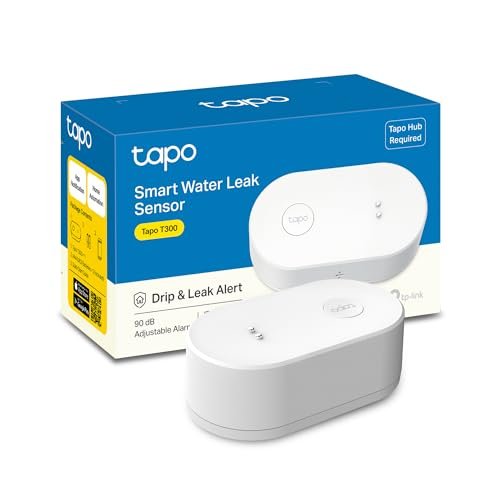
The Tapo T300 water leak sensor is designed for that role. It uses multiple sensing probes on both the top and bottom of the device, a built-in audible alarm, app notifications through the Tapo ecosystem, and a waterproof housing rated to IP67. It can also interact with other compatible Tapo smart-home devices through the Tapo hub.
Unlike a full automatic water-shutoff system, the T300 does not physically stop the leak. Its value lies in detection and notification: alerting you quickly enough to investigate the source, shut off water manually, or trigger other smart-home actions.
What Is the Tapo T300?
The Tapo T300 is a compact wireless water leak detector from TP-Link's Tapo smart-home ecosystem.
Its main features include:
- Dual-side water sensing
- Six sensing probes
- Rapid leak detection
- Built-in 90 dB alarm
- Tapo app notifications
- Low-battery notifications
- Tapo hub integration
- Smart-home automation support
- Replaceable AAA batteries
- IP67 water- and dust-resistance rating
The device is intended to be placed near areas where leaks are likely rather than connected directly to a pipe.
Important: A Tapo Hub Is Required
The T300 is designed to work with a compatible Tapo IoT Smart Hub.
That means the sensor is not simply a standalone Wi-Fi device that connects directly to your router.
The hub acts as the bridge between the sensor and the Tapo app.
This distinction matters because buyers who do not already own a compatible hub may need to purchase one separately before gaining access to remote notifications and smart-home automation features.
Why Water Leak Sensors Matter
Water leaks often begin in places that are difficult to monitor continuously.
Common examples include:
- Under kitchen sinks
- Beneath bathroom vanities
- Behind washing machines
- Near dishwashers
- Around water heaters
- Beside refrigerators with water lines
- Near sump pumps
- Around toilets
A leak sensor can provide an alert before enough water accumulates to become visually obvious.
The earlier the leak is detected, the more opportunity you have to investigate and limit further damage.
Rapid Leak Detection
The source states that the T300 can trigger an alert in as little as one second after water reaches its sensing probes.
That is useful because a leak detector has little value if it waits for a large puddle before reacting.
Rapid detection is particularly important near appliances that can release water quickly, such as:
- Washing machines
- Dishwashers
- Water heaters
Real-world response time can still depend on how quickly water physically reaches the probes.
Six Sensor Probes
The T300 uses six highly sensitive sensing probes.
These are positioned to detect water from more than one direction.
That gives the device broader coverage than a detector that only reacts when water reaches a single point underneath it.
Dual-Side Sensing
One of the more useful design features is sensing on both the top and bottom.
Bottom Sensors
The bottom probes are intended to detect water spreading across the floor.
This is the typical scenario for:
- Pipe leaks
- Appliance leaks
- Overflowing fixtures
Top Sensors
The upper sensors can detect water dripping down onto the device.
That may help with leaks originating from:
- Pipes above
- Sink plumbing
- Appliance connections
- Condensation points
This dual-direction design makes the sensor more flexible in cramped plumbing areas.
Built-In 90 dB Alarm
The sensor includes an audible alarm rated at up to 90 dB according to the supplied description.
That gives people inside the home a local warning even if they are not looking at their phone.
An audible alarm is useful because smart notifications alone can be missed if:
- Your phone is muted
- The battery is dead
- Notifications are disabled
- You are elsewhere in the house
Local sound and remote notifications complement each other.
Adjustable Alarm and Mute Function
The source describes the alarm as adjustable.
Once the leak has been located, the alarm can be silenced by pressing the sensor.
This is useful during cleanup because the device does not need to continue sounding while the cause is being addressed.
Hub Alarm for Additional Coverage
The T300 can also trigger an alarm through the connected Tapo hub.
That gives the system another audible alert location.
For example, a sensor in a basement may be difficult to hear upstairs, while the hub's alarm can provide additional warning elsewhere in the house.
Instant App Notifications
When paired with the Tapo ecosystem, the T300 can send a notification to the Tapo app when water is detected.
This is particularly useful when nobody is home.
Instead of discovering the leak several hours later, you may receive an alert while at:
- Work
- Shopping
- Traveling
- Visiting family
Remote notification does not stop the leak, but it gives you information earlier.
Low-Battery Notifications
The sensor can also notify you when battery power becomes low.
That is an important feature for a device designed to operate quietly for years.
Without battery monitoring, it would be easy to forget about a leak sensor until discovering that its batteries had already died.
Up to Three Years of Battery Life
The T300 runs on two replaceable AAA batteries.
TP-Link lists battery life of up to three years based on laboratory testing.
Actual battery life can vary depending on:
- Alarm frequency
- Wireless communication
- Temperature
- Battery quality
- Environmental conditions
The important practical advantage is that the batteries are replaceable rather than permanently built in.
Battery-Powered Placement Flexibility
Because the T300 does not need an electrical outlet at the sensing location, it can be positioned in places where running power would be inconvenient.
This is especially useful:
- Under cabinets
- Behind appliances
- In utility rooms
- Near water heaters
Battery operation also means the sensor itself does not depend on a nearby outlet.
IP67 Water and Dust Resistance
The T300 carries an IP67 rating according to the supplied description.
In practical terms, the rating indicates strong protection against dust and water exposure under the conditions covered by the IP standard.
That makes sense for a device expected to encounter leaks directly.
It also helps the sensor tolerate humid locations better than ordinary indoor electronics.
IP67 Does Not Mean Unlimited Waterproofing
An IP67 rating should not be interpreted as permission to leave the device permanently submerged.
The sensor is built to tolerate accidental water exposure associated with leak detection, but it should still be installed and maintained according to the manufacturer's instructions.
Smart Actions With Other Tapo Devices
One of the advantages of staying within the Tapo ecosystem is the ability to create automations involving other compatible Tapo devices.
For example, a water leak event may be used to trigger:
- Smart lighting
- Hub alarm
- Camera movement or monitoring
- Other supported smart-home actions
This can make a leak easier to notice and investigate.
Using a Camera During a Leak Alert
The supplied description mentions the possibility of connecting the leak sensor to compatible Tapo cameras.
In a properly configured smart-home setup, a leak event could prompt camera-related actions that help you inspect the affected area.
This can be especially useful if the sensor is installed:
- In a basement
- In a utility room
- Near an unattended appliance
The exact automation options depend on the Tapo devices and software features available in your setup.
Smart Lighting as a Visual Alarm
Another practical automation is using compatible lights as a secondary warning.
For example, a leak alert could trigger a light to turn on.
This can provide a visual signal in addition to:
- Sensor alarm
- Hub alarm
- Phone notification
Layered alerts are helpful because no single notification method is guaranteed to attract attention every time.
Best Places to Install a Tapo T300
Placement determines how useful any leak sensor will be.
Good locations include:
Under a Kitchen Sink
Leaks often begin around:
- Supply valves
- Faucet connections
- Drain fittings
Place the sensor where water would naturally collect first.
Near a Washing Machine
Washing machines have multiple potential leak points, including supply hoses and drain lines.
Position the sensor near the lowest likely collection point without interfering with the appliance.
Near a Water Heater
Water heaters can leak from:
- Connections
- Relief valves
- Tank failure
- Drain fittings
A floor-level sensor can provide early warning.
Under a Dishwasher
Dishwasher leaks may remain hidden beneath cabinetry.
If accessible, placing a sensor near the likely escape path of water can help detect problems earlier.
Near a Toilet
Potential leak sources include:
- Supply line
- Shutoff valve
- Tank
- Bowl seal
The sensor should not be placed where ordinary cleaning water will trigger frequent false alarms.
Think About Water Flow Before Placement
Do not simply place the sensor beside the appliance.
Imagine where water would actually travel if a connection failed.
Water tends to follow:
- Floor slope
- Cabinet edges
- Grout lines
- Low spots
Positioning the sensor in the likely path of water is more useful than placing it where it merely looks convenient.
Avoid Routine Splash Zones
A leak detector placed too close to normal water activity can produce unnecessary alerts.
Examples include:
- Directly beside a shower opening
- Under an area routinely mopped with excessive water
- Beside a sink where splashing is common
The goal is to detect abnormal water, not routine moisture.
Test the Sensor After Installation
A smart leak detector should be tested after setup.
Use the manufacturer's recommended testing procedure to confirm:
- Local alarm works
- Hub responds
- App notification arrives
- Automations trigger correctly
Testing is especially important after:
- Replacing batteries
- Moving the sensor
- Reconfiguring the hub
- Changing your Wi-Fi or smart-home setup
Tapo T300 vs. Standalone Water Alarm
A simple standalone water alarm usually sounds locally when it becomes wet.
The Tapo T300 adds smart-home connectivity.
Tapo T300 Advantages
- App alerts
- Hub integration
- Smart automations
- Low-battery notifications
- Dual-side sensing
Basic Water Alarm Advantages
- Lower complexity
- No smart hub required
- Often lower cost
If you only need an audible alarm in the room, a basic detector may be sufficient. If you want remote awareness, the T300 is more useful.
Tapo T300 vs. Automatic Water Shutoff System
This distinction is important.
The T300 detects leaks and alerts you.
A whole-home automatic shutoff system can physically close the main water valve when a leak is detected.
T300 Strengths
- Easy placement
- No pipe modification
- Lower installation complexity
- Multiple sensors can protect specific locations
Automatic Shutoff Strengths
- Can stop incoming water automatically
- Better suited to major leak mitigation
For higher-risk homes, the two approaches can potentially complement each other.
Does the T300 Stop Water Automatically?
Not by itself.
The sensor detects water and triggers alerts or supported smart actions.
It should not be confused with an automatic plumbing shutoff valve.
If preventing continued water flow automatically is your priority, you need a compatible shutoff system designed for that purpose.
Common Mistakes
Buying the Sensor Without a Compatible Hub
The Tapo hub is an important part of the system.
Installing It Too Far From the Likely Leak Path
Water has to reach the probes before the sensor can detect it.
Ignoring Low-Battery Alerts
Replace batteries promptly.
Assuming the Sensor Stops the Leak
It provides detection, not physical shutoff.
Never Testing the System
A leak detector should be tested periodically.
Who Is the Tapo T300 Best For?
The T300 may be a strong choice for:
- Existing Tapo smart-home users
- Homes with multiple leak-prone appliances
- Apartments
- Basements
- Utility rooms
- Homeowners who want remote leak notifications
It is especially attractive if you already own a compatible Tapo hub.
It may be less appealing for buyers who want a completely standalone device or automatic water shutoff.
Advantages and Considerations
Advantages
- Rapid water detection
- Six sensor probes
- Top and bottom sensing
- 90 dB built-in alarm
- Tapo app notifications
- Low-battery alerts
- Hub alarm integration
- Smart-home automation
- Replaceable AAA batteries
- Up to three years claimed battery life
- IP67-rated enclosure
- Compact wireless design
Potential Considerations
Requires a compatible Tapo hub for smart functionality.
Does not automatically shut off the home's water supply.
Battery-life claim varies with actual usage.
Placement must be chosen carefully.
Remote notifications depend on the associated smart-home infrastructure functioning correctly.
Frequently Asked Questions
Does the Tapo T300 detect both drips and floor leaks?
Yes. The supplied description states that sensors on the top and bottom are designed to detect both dripping water and water accumulating underneath.
How quickly does it detect water?
TP-Link states that it can respond in as little as one second once water reaches the sensing probes.
How loud is the alarm?
The built-in alarm is rated at up to 90 dB according to the product information.
Does it send notifications to a phone?
Yes, when properly connected through the Tapo ecosystem and compatible hub.
Does it notify you when the battery is low?
Yes.
What batteries does it use?
Two replaceable AAA batteries.
How long do the batteries last?
TP-Link claims up to three years under laboratory conditions. Actual battery life may vary.
Is it waterproof?
The sensor is rated IP67 according to the supplied description.
Does it require Wi-Fi?
The sensor communicates through the Tapo hub rather than operating as a conventional direct-to-Wi-Fi sensor.
Is a hub required?
Yes, a compatible Tapo IoT Smart Hub is required for the connected smart-home functions described.
Can it trigger other smart-home devices?
Yes, compatible Tapo devices can be incorporated into supported smart actions.
Can it automatically shut off the water?
The T300 itself is a leak detector, not a water shutoff valve.
Final Thoughts
The Tapo T300 smart water leak sensor is most compelling as part of an existing Tapo smart-home setup.
Its combination of rapid sensing, top-and-bottom detection, a 90 dB local alarm, remote app notifications, hub integration, and replaceable batteries makes it suitable for monitoring areas where plumbing leaks may otherwise remain unnoticed.
The IP67-rated enclosure is also appropriate for a device designed to encounter water directly, while the ability to trigger compatible Tapo automations gives it more flexibility than a basic standalone leak alarm.
Its main limitation is equally important: it detects and reports water, but it does not physically stop the leak. Homeowners who want automatic whole-house protection should consider pairing leak detection with an appropriate water-shutoff solution.
For anyone already using the Tapo ecosystem and looking for a compact smart water leak detector with dual-side sensing, app notifications, a loud local alarm, long battery life, and smart-home automation support, the Tapo T300 is a practical way to expand water-leak monitoring around the home.