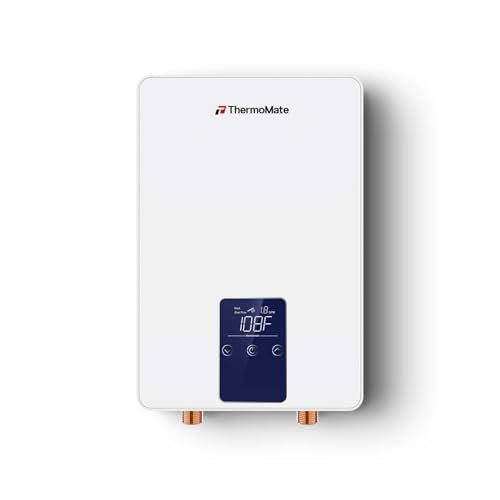
6kW Electric Tankless Water Heater Review: Compact 240V Point-of-Use Hot Water for Sinks
A compact electric tankless water heater can solve a very specific household problem: getting hot water quickly at a sink without relying on a distant central water heater or sacrificing cabinet space to a small storage tank.
This 6kW, 240V electric tankless water heater is designed for point-of-use applications such as bathroom sinks, kitchen prep areas, salons, bar counters, utility spaces, and other fixtures where hot water demand is relatively modest. According to the supplied specifications, it can deliver approximately 1.0 GPM at a 50°F temperature rise, with an adjustable outlet temperature from 85°F to 131°F.
Its compact size, self-modulating power control, digital touch interface, 1/2-inch NPT connections, and separated heating-element design make it appealing for tight installations. At the same time, its electrical requirements are substantial enough that buyers should verify their circuit capacity before purchase: the unit is 240V only, hardwired, and requires a 30A breaker with appropriately sized conductors.
What Is a 6kW Point-of-Use Tankless Water Heater?
This unit is an electric on-demand water heater designed to heat water as it passes through the appliance.
Unlike a mini-tank heater, it does not store a reserve of hot water. When a faucet opens and the heater detects sufficient flow, the heating system activates and raises the temperature of the moving water.
When the faucet closes, full heating stops.
This makes it especially well suited to locations where hot water is needed intermittently rather than continuously.
The Key Specification: 1.0 GPM at a 50°F Temperature Rise
The most useful performance figure in the supplied description is:
1.0 gallon per minute at a 50°F temperature rise
That tells buyers much more than a generic "instant hot water" claim.
If incoming water is 60°F, a 50°F rise would theoretically bring it to about 110°F at roughly 1.0 GPM.
If incoming water is 40°F, the same 50°F rise produces only around 90°F water.
If you want hotter water from colder inlet temperatures, the practical flow rate must generally be reduced.
Temperature Rise Matters More Than Maximum Temperature
The heater can be adjusted from approximately 85°F to 131°F, but that does not mean it can always maintain 131°F at full flow.
The achievable outlet temperature depends on:
- Incoming water temperature
- Flow rate
- Electrical supply
- Selected temperature
The colder the inlet water, the harder the heater has to work.
Why This Matters in Different Climates
A 6kW heater may perform very differently in Florida than in a colder northern state during winter.
If groundwater enters at 70°F, only a moderate temperature increase is needed for comfortable handwashing.
If inlet water is 40°F, achieving the same outlet temperature requires much more energy.
For compact electric tankless heaters, climate has a major effect on usable flow.
Best Applications for a 6kW Unit
This size of heater is most naturally suited to low- and moderate-flow fixtures.
Good potential uses include:
- Bathroom sinks
- Powder-room vanities
- Utility sinks
- Salon handwashing stations
- Bar sinks
- Office sinks
- Hotel service areas
- Remote sinks far from the central heater
It is much less suitable for applications with sustained high flow.
Bathroom Sink Use
Bathroom sinks are one of the strongest applications.
Handwashing typically requires relatively low flow, which allows a 6kW heater to provide a useful temperature increase without being overwhelmed.
A lower-flow faucet aerator can further improve performance.
Kitchen Sink Use
A small kitchen sink may also work well, especially for handwashing, rinsing, and light cleanup.
However, a full-flow kitchen faucet can exceed the heater's ideal operating range.
If hot water is not warm enough, reducing flow may be necessary.
Is It Suitable for a Shower?
A 6kW heater should generally be treated as a point-of-use sink heater unless the manufacturer specifically rates it for shower use.
Most showers require more sustained water flow than this heater can comfortably support while delivering a large temperature rise.
The supplied 1.0 GPM at 50°F rise specification strongly suggests sink-focused use.
How Self-Modulating Power Works
The heater uses self-modulating technology to adjust power consumption according to demand.
Instead of drawing the full 6kW constantly, it can reduce energy use when less heating is required.
For example, warming relatively mild inlet water by 20°F may require less power than raising cold water by 50°F.
This helps the heater match electrical consumption more closely to actual hot-water demand.
The 99.8% Efficiency Claim
The source states an efficiency figure of 99.8%.
For electric resistance heating, most electrical input can indeed be converted directly into heat at the appliance.
However, real-world system efficiency also depends on plumbing losses, usage habits, and installation.
The stated figure should be understood as a product efficiency claim rather than a guarantee of whole-home energy savings.
The “Save Up to 60%” Claim Needs Context
The manufacturer also claims potential savings of up to 60% compared with a traditional storage water heater.
That should be treated as a best-case marketing claim rather than an expected result for every household.
Actual savings depend on:
- Existing water heater
- Hot-water usage
- Electricity rates
- Standby losses
- Installation location
The clearest efficiency advantage is that the unit heats water only when needed instead of maintaining a stored tank at temperature.
No Storage-Tank Standby Losses
A conventional tank heater loses some heat through its insulated walls over time.
That heat must eventually be replaced.
A tankless unit largely avoids this problem because there is no large reservoir of hot water sitting unused.
For intermittent sink use, this can be especially practical.
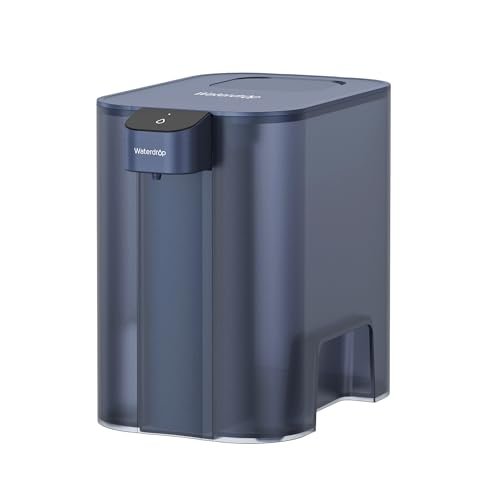
Compact Dimensions
The heater measures approximately:
10.95" × 7.4" × 2.52"
This very compact form allows installation in spaces that would not accommodate a conventional water heater.
Potential locations include:
- Under a sink
- Inside a vanity cabinet
- Behind a service panel
- Small utility areas
Its shallow depth is particularly useful where cabinet space is limited.
Wall-Mounted Installation
Because the heater is wall mounted, it does not consume floor space.
That can make it attractive in:
- Small apartments
- Commercial wash areas
- Salons
- Offices
- Hotel service areas
The installation location should still leave enough access for maintenance and wiring.
240V Hardwired Electrical Requirement
This is one of the most important details.
The heater is specified as:
240V only
and
hardwired
It is not intended to be connected to an ordinary 120V household outlet.
30A Circuit Requirement
The source states that the heater requires a 30A circuit breaker.
A 6kW load at 240V draws approximately 25 amps under nominal conditions, which aligns with the supplied operating-current figure.
Final circuit design should still follow the manufacturer's official installation documentation and local electrical code.
Wire Size Must Be Verified Carefully
The supplied listing mentions 12 AWG minimum wire size.
Because conductor sizing depends on appliance load, breaker size, conductor type, temperature rating, installation method, and applicable code, this specification should be verified against the current manufacturer manual.
Do not rely on marketplace copy alone for high-current electrical work.
A licensed electrician should confirm the correct conductor size for the actual installation.
Dedicated Circuit
A heater drawing around 25 amps should not share a circuit with general outlets or other appliances.
A dedicated branch circuit helps ensure:
- Stable voltage
- Proper overcurrent protection
- Reduced risk of overload
The electrical panel must also have enough available capacity.
Professional Electrical Installation Is Recommended
The appliance may be physically simple to mount, but the electrical requirements are not comparable to a plug-in countertop device.
A qualified electrician can verify:
- 240V availability
- Breaker sizing
- Conductor sizing
- Grounding
- Panel capacity
- Code compliance
This is especially important if a new branch circuit must be installed.
1/2-Inch NPT Connections
The heater uses standard 1/2-inch NPT water connections.
That is a common residential plumbing size and can simplify installation with compatible fittings.
The plumbing layout should include accessible shutoff valves where practical so the heater can be isolated for maintenance.
Pre-Wired Pigtail
The supplied description mentions a pre-wired pigtail.
This can simplify the final electrical connection compared with wiring directly into internal terminals.
However, it does not change the need for a correctly rated dedicated circuit.
Touch Control Panel
The front interface uses touch controls rather than a mechanical dial.
This gives the heater a more modern appearance and allows precise adjustment.
The temperature can reportedly be changed in 1-degree increments, which is useful when fine-tuning comfort.
Digital Temperature Display
The digital display makes it easy to see the selected water temperature.
This is especially helpful in installations where users want consistent settings rather than guessing with an unmarked control knob.
Temperature Range: 85°F to 131°F
The heater supports a broad temperature range.
Lower settings may be suitable for handwashing, while higher temperatures may be appropriate for specific utility tasks.
However, water above normal bathing temperatures can create scalding risk.
Higher settings should be used cautiously.
IP25 Rating
The heater is described as having an IP25 enclosure rating.
That indicates a degree of protection against object ingress and water exposure, but it does not mean the unit is waterproof.
It should not be installed where it can be:
- Submerged
- Continuously sprayed
- Exposed to uncontrolled leaks
The exact installation location should follow the manufacturer's environmental requirements.
Separated Heating Element
One of the more interesting construction features is the cast-aluminum heating system that is described as being separated from direct water contact.
The goal is to reduce:
- Scale
- Corrosion
- Mineral buildup
around the heating element itself.
This can potentially improve long-term reliability.
SUS 304 Stainless Steel Water Tube
The source states that the internal water path uses SUS 304 stainless steel tubing.
304 stainless steel is commonly used in plumbing and wet environments because of its corrosion resistance.
It is a sensible material choice for repeated hot-water exposure.
Scale Can Still Occur
Even with a separated heating element, hard water can still leave mineral deposits in the water passages.
This is especially relevant in areas with high calcium and magnesium content.
Periodic maintenance may still be necessary.
Hard-Water Maintenance
Depending on local water quality, owners may need to:
- Clean inlet screens
- Flush the heater
- Descale internal passages
- Use water treatment
Follow the manufacturer's maintenance guidance.
Why Point-of-Use Placement Can Reduce Water Waste
If a sink is far from the home's main water heater, users may run the faucet while waiting for hot water to arrive.
Installing a compact heater near the fixture reduces the amount of cooled water sitting in the hot line.
That can shorten the wait and reduce unnecessary water discharge.
Tankless vs. Mini-Tank Water Heater
A mini-tank stores a small reserve of hot water near the fixture.
A 6kW tankless heater heats continuously as water flows.
Tankless Advantages
A tankless design provides:
- No storage tank
- Smaller footprint
- No tank standby losses
- Continuous hot water within capacity
Mini-Tank Advantages
A mini-tank can provide:
- Higher short-term flow
- Less sensitivity to inlet temperature
- Potentially simpler electrical requirements on some models
Neither design is automatically better; they solve the problem differently.
Tankless vs. Central Water Heater
This 6kW heater can also be used as a localized solution rather than replacing the home's main hot-water system.
That makes sense when one distant sink has poor hot-water delivery but the central heater otherwise works well.
Instead of changing the entire plumbing system, the small heater addresses the problem at the fixture.
Commercial Point-of-Use Applications
The compact form factor may also suit light commercial installations such as:
- Hair salons
- Reception areas
- Bar counters
- Employee wash stations
- Small offices
The electrical and plumbing installation must still comply with applicable commercial requirements.
What “24 Hours Standby” Means
The product description states that the heater supports 24-hour standby.
That generally means the controls can remain powered and ready to activate when water flow is detected.
It does not mean the full 6kW heating load runs continuously.
The self-modulating system draws substantial power only when heating is required.
Does It Deliver Truly Instant Hot Water?
The heater begins warming water quickly, but "instant" should be interpreted realistically.
Water still has to travel from the heater to the faucet.
If the heater is mounted directly beneath the sink, this distance is short and the delay may be minimal.
The farther away the heater is installed, the longer delivery can take.
Lower Flow Produces a Larger Temperature Rise
This is one of the most useful practical tips for compact tankless heaters.
If the outlet water is not warm enough, reducing faucet flow can increase the temperature rise.
The heater then has more electrical energy available for each gallon of water.
Higher Flow Reduces Heating Performance
The reverse is also true.
Opening the faucet fully may produce more water than the 6kW heater can heat to the desired temperature.
This is normal behavior for a properly functioning undersized flow demand.
Low-Flow Faucets Pair Well With Small Tankless Heaters
Efficient faucet aerators can help keep water demand within the heater's capabilities.
A lower-flow fixture can improve:
- Outlet temperature
- Temperature stability
- Energy use
without necessarily reducing usability for handwashing.
Installation Planning
Before purchasing, verify:
- 240V electrical supply
- Dedicated 30A circuit availability
- Correct wire sizing
- 1/2-inch NPT plumbing compatibility
- Winter inlet-water temperature
- Required faucet flow
- Installation clearance
These checks are more important than the unit's compact appearance.
Common Buying Mistakes
Buying It for a High-Flow Shower
A 6kW unit is better suited to sinks and other point-of-use fixtures.
Ignoring Incoming Water Temperature
Cold winter water can reduce output dramatically.
Assuming 131°F Is Available at Any Flow
Maximum temperature and maximum flow cannot necessarily be achieved simultaneously.
Treating It Like a Plug-In Appliance
It requires 240V hardwiring and a dedicated circuit.
Relying Only on Marketplace Wire-Size Claims
Electrical sizing should be verified against official documentation and local code.
Ignoring Hard Water
Scale can still affect the internal water passages.
Who Is This 6kW Heater Best For?
This unit may be a good fit for users who need:
- Fast hot water at a sink
- Compact under-cabinet installation
- No storage tank
- Precise digital temperature control
- Low to moderate point-of-use flow
It is particularly useful where a fixture is far from the main water heater.
Who Should Consider a Larger Unit?
A more powerful tankless heater may be necessary for:
- Showers
- Multiple simultaneous fixtures
- High-flow kitchen faucets
- Very cold inlet water
Increasing heating capacity also increases electrical requirements.
Advantages and Considerations
Advantages
The heater combines a compact 10.95 × 7.4 × 2.52-inch body with 6kW of electric heating, self-modulating power control, precise touch temperature adjustment, 1/2-inch NPT plumbing, a stainless-steel water path, and a separated heating-element design intended to reduce scale and corrosion.
Its stated 1.0 GPM performance at a 50°F temperature rise also gives buyers a useful real-world reference for sizing.
Considerations
The unit requires 240V hardwired power and a dedicated 30A circuit. It should be treated primarily as a point-of-use heater rather than a whole-house or high-flow shower solution. Performance will vary significantly with inlet-water temperature and faucet flow.
The wire-size requirement should also be verified from official technical documentation before installation.
Frequently Asked Questions
How powerful is this tankless water heater?
It is rated at 6kW.
What voltage does it require?
240V only.
How much current does it draw?
The supplied information states approximately 25 amps at 240V.
What breaker does it require?
The listing specifies a 30A circuit breaker.
What wire size is required?
The source lists 12 AWG minimum, but conductor sizing for a 30A high-current appliance should be verified against the manufacturer's official manual and local electrical code before installation.
Is it plug-in or hardwired?
It is described as hardwired.
How much flow can it provide?
The supplied specification states approximately 1.0 GPM at a 50°F temperature rise.
What is the temperature range?
Approximately 85°F to 131°F.
Is it suitable for a bathroom sink?
Yes, that is one of its strongest use cases.
Can it be installed under a sink?
Yes, provided all electrical, plumbing, clearance, and moisture requirements are met.
Can it be installed above a sink?
The source describes both under- and over-sink point-of-use placement.
Is it suitable for a shower?
It should primarily be treated as a sink-oriented point-of-use heater unless the manufacturer explicitly approves the intended shower application.
Does it provide continuous hot water?
Yes, while demand stays within its 6kW heating capacity.
Does it have a storage tank?
No.
Does it save floor space?
Yes. The wall-mounted design eliminates the need for a storage tank.
Does it use full power all the time?
No. The self-modulating system adjusts power according to heating demand.
Does it have a digital display?
Yes.
Can the temperature be adjusted precisely?
The source states that it can be adjusted in 1-degree increments.
What plumbing connection does it use?
1/2-inch NPT.
What is the enclosure rating?
The supplied description states IP25.
Is it waterproof?
No. IP25 does not mean the heater can be submerged or exposed to uncontrolled water.
Does the heating element touch the water?
The source states that the cast-aluminum heating element is separated from the water.
Can it develop scale?
Yes. Mineral buildup may still occur inside the water passages, particularly in hard-water areas.
Final Thoughts
This 6kW 240V electric tankless water heater is best understood as a compact point-of-use solution rather than a replacement for a large central water heater.
Its most useful specification is the stated ability to provide approximately 1.0 GPM at a 50°F temperature rise, which makes it well suited to bathroom sinks, utility sinks, salons, bar counters, office fixtures, and other modest hot-water applications.
The combination of self-modulating power, 85°F–131°F temperature adjustment, digital touch controls, 1/2-inch NPT plumbing, a stainless-steel water path, and compact 10.95 × 7.4 × 2.52-inch dimensions makes it particularly appealing where installation space is limited.
The main consideration is electrical infrastructure. This is a 240V hardwired appliance requiring a dedicated 30A circuit, so the electrical installation should be verified before purchase. Buyers should also size the heater according to their actual winter inlet-water temperature and faucet flow rather than relying solely on claims of instant or endless hot water.
For the right sink application, it offers a practical combination of small size, on-demand heating, precise temperature control, reduced storage losses, and continuous hot water within its rated capacity.