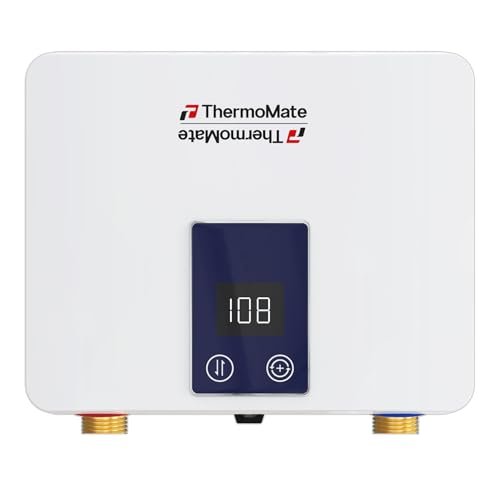
3500W 120V Electric Tankless Water Heater Review: Compact Point-of-Use Hot Water for Sinks
A compact electric tankless water heater can be a smart solution when you need hot water at a single sink but do not want to wait for a distant central water heater to deliver it. Installed close to the fixture, a point-of-use unit can reduce the amount of cold water that runs down the drain while you wait for hot water to travel through long pipes.
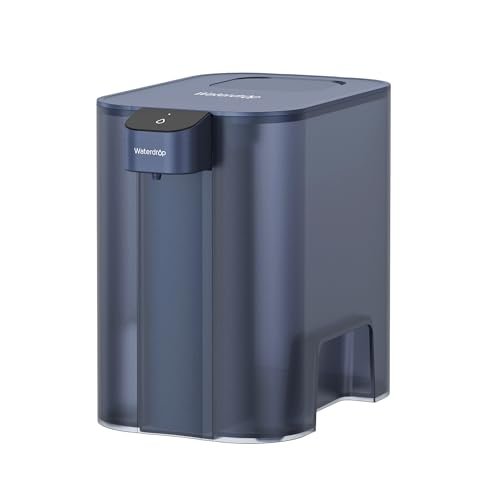
This 3500W, 120V electric tankless water heater is designed specifically for small point-of-use applications such as bathroom sinks, handwashing stations, salon sinks, bar counters, and similar low-flow fixtures. It offers adjustable water temperature from 86°F to 131°F, a compact wall-mountable body, digital controls, self-modulating power, and standard 1/2-inch NPT plumbing connections.
Its biggest limitation is also its most important sizing consideration: this is a 3.5kW heater with a listed flow range of about 0.4 to 0.66 GPM. That makes it suitable for low-flow sink use, not for showers, bathtubs, or high-demand whole-house applications.
This guide explains what the unit can realistically do, what the 120V electrical requirements mean, how flow affects outlet temperature, and what to check before installing it under or near a sink.
What Is This 3500W Electric Tankless Water Heater?
This is a 120V point-of-use electric tankless water heater rated at 3.5kW.
Instead of storing heated water in a small tank, it heats water as it flows through the unit.
When a faucet opens and sufficient flow is detected, the heating system activates. When the faucet closes, active heating stops.
This makes the heater useful in situations where only a modest amount of hot water is needed close to one fixture.
Typical applications include bathroom sinks, utility sinks, salons, bars, reception areas, offices, and other low-flow handwashing locations.
Key Specifications
The supplied product information lists the following main specifications:
- Power: 3.5kW
- Voltage: 120V
- Installation: hardwired
- Breaker: 32A double-pole, according to the supplied listing
- Minimum conductor size: 10 AWG, according to the supplied listing
- Temperature range: 86°F to 131°F
- Advertised flow range: approximately 0.4 to 0.66 GPM
- Water connections: 1/2-inch NPT
- Dimensions: approximately 7.9 x 6.4 x 2.5 inches
- Controls: touch panel with digital temperature display
- Adjustment: 1°F increments
- Water protection: IP25
- Heating structure: cast-aluminum heating element separated from the water path
- Water tube: SUS 304 stainless steel
These specifications reinforce that this is a small sink heater rather than a general-purpose whole-house appliance.
3500 Watts Is Modest for Water Heating
A 3.5kW heater can add useful heat to a small amount of flowing water, but water heating requires substantial energy.
That means the heater cannot maintain a large temperature rise at high flow.
The relationship is straightforward: the more water that passes through per minute, the less temperature increase the heater can provide.
That is why the stated operating flow is relatively low.
Understanding the 0.4 to 0.66 GPM Flow Range
The supplied listing describes a flow range of approximately 0.4 to 0.66 gallons per minute.
That is much lower than the flow of a typical shower and often lower than a standard unrestricted sink faucet.
In practical terms, this heater is best paired with a low-flow faucet or aerator.
At a higher flow rate, the water may still become warmer, but the unit may not be able to reach the selected outlet temperature.
Temperature Rise Matters More Than the Maximum Setting
The control panel allows a temperature setting as high as 131°F, but that does not mean the heater can always produce 131°F water at 0.66 GPM.
The actual outlet temperature depends on incoming water temperature.
If the inlet water is already warm, reaching a high outlet temperature requires less energy.
If the inlet water is very cold, the same heater may need significantly lower flow to reach the same target.
A Warm-Climate Example
Suppose incoming water is around 75°F and you want approximately 105°F water for handwashing.
That requires a temperature rise of about 30°F.
A 3.5kW point-of-use heater has a much easier job under those conditions than if inlet water were 45°F.
That is why small tankless heaters often perform much better in warm climates.
A Cold-Climate Example
If incoming water is 45°F and you want 105°F water, the required rise is about 60°F.
At that point, the heater must either reduce flow or accept a lower outlet temperature.
This is why buyers should not judge performance only by the 86°F-to-131°F control range.
The available heating power remains fixed at 3.5kW.
Best Use: Handwashing and Low-Flow Sinks
This heater is most naturally suited to point-of-use sink applications.
Examples include a bathroom vanity far from the main water heater, a small office washroom, a handwashing station, or a salon sink with controlled flow.
It can also make sense where installing a large hot-water storage system would be impractical.
Its compact dimensions allow it to fit in places where a conventional tank water heater would not.
Is It Suitable for a Kitchen Sink?
Potentially, but with limitations.
Kitchen sinks often use higher flow rates than bathroom handwashing faucets.
If you routinely run several gallons per minute for washing dishes, filling pots, or rinsing cookware, a 3.5kW heater may struggle to maintain high temperature.
A low-flow kitchen faucet and modest temperature rise can make it more workable, but this is not the same as a high-output whole-house heater.
Is It Suitable for a Shower?
No, not realistically.
Typical shower flow is far above the listed 0.4 to 0.66 GPM range.
A 3.5kW heater simply does not have enough power to deliver normal shower flow with a comfortable temperature rise.
Buyers should not attempt to use this type of point-of-use sink heater as a shower water heater.
Is It Suitable for a Bathtub?
No.
Bathtub fillers demand far more flow than this unit is designed to heat.
Even if the water eventually becomes warm, filling a tub at the heater's supported flow would be impractically slow.
Instant Hot Water Needs Context
The source describes hot water in seconds.
That is accurate in the sense that there is no storage tank that needs to preheat.
However, hot water still has to travel through whatever pipe length exists between the heater and faucet.
If the unit is installed directly under the sink, that delay may be very short.
If it is installed several feet away, there can still be a brief wait.
Why Point-of-Use Placement Helps
The closer the heater is to the fixture, the less cold water sits in the pipe between uses.
That can reduce both wait time and water waste.
This is one of the strongest reasons to use a small point-of-use heater rather than rely solely on a distant central water heater.
Self-Modulating Power
The unit is described as using self-modulating power control.
That means it is designed to adjust electrical input based on the amount of heating actually required.
If water flow is low or inlet water is already relatively warm, the heater may not need to operate at full output.
This can improve operating efficiency and help maintain a more stable outlet temperature.
Be Careful With the 99.8% Efficiency Claim
The source claims 99.8% efficiency.
Electric resistance heating is indeed very efficient at converting electricity into heat at the point of use, but a precise percentage should be treated as a manufacturer claim unless independently verified.
Actual system efficiency also depends on piping losses, flow, standby electronics, and installation.
The practical advantage is that there is no large tank continuously losing heat to the room.
No Tank Standby Heat Loss
A storage water heater keeps a reservoir of water hot even when no fixture is running.
This small tankless unit does not.
When there is no hot-water demand, the heating element is not actively heating water.
That can reduce standby heat losses compared with a continuously heated storage tank.
24-Hour Standby Does Not Mean 24-Hour Heating
The listing mentions 24-hour standby.
That should not be interpreted as the heater consuming 3.5kW continuously.
It means the electronics remain ready to activate when water flow is detected.
The heating element should only energize when there is demand, subject to the unit's operating logic.
Cast-Aluminum Heating Element
The heater uses a cast-aluminum heating structure that is separated from the water path.
This is intended to reduce direct contact between the heating element and the water.
That can help limit some forms of scaling and corrosion around the actual electrical heating component.
It may also simplify thermal transfer while keeping water isolated from electrical parts.
Stainless Steel Water Tube
The water path is described as using SUS 304 stainless steel.
304 stainless steel is commonly used in plumbing and food-contact applications because of its corrosion resistance.
That is a sensible material choice for the internal water tube.
However, even stainless systems can accumulate mineral deposits if the water is hard.
Scale Can Still Occur
The separated heating element may reduce direct scale formation on the element itself, but it does not make the entire water path scale-proof.
Hard water can still leave deposits in tubing, fittings, and narrow passages.
If flow decreases or heating performance changes over time, mineral buildup may be one possible cause.
Maintenance instructions should be followed accordingly.
Compact Size
The unit measures approximately 7.9 inches by 6.4 inches by 2.5 inches.
That is extremely compact compared with conventional water heaters.
It can potentially fit under a vanity, inside a cabinet, or on a small wall near a sink.
The small size is one of its clearest advantages.
Good Applications for the Compact Design
The product may be useful in:
- Bathroom vanities
- Hair salons
- Bar sinks
- Office washrooms
- Hotel reception areas
- Utility sinks
- Small retail spaces
- Workshop handwashing stations
The key requirement is modest hot-water flow.
Hardwired 120V Installation
One of the most important details is that this unit is 120V but must be hardwired.
It is not a normal plug-in appliance.
The source specifies a 32A breaker and minimum 10 AWG wiring.
That is a much heavier circuit than a typical 15A or 20A household outlet circuit.
Do Not Plug It Into a Standard Outlet
A standard 120V receptacle is generally not designed to supply the current required by a 3.5kW heater.
At 120V, 3.5kW corresponds to roughly 29 amps before allowing for circuit-design requirements.
That is why the product requires dedicated hardwiring.
Trying to use an ordinary outlet or undersized circuit would be unsafe.
About the 32A Double-Pole Breaker Claim
The supplied listing specifies a 32A double-pole breaker even though the heater is described as 120V.
That combination is unusual enough that the installation manual should be checked carefully before purchase.
In North American residential systems, 120V loads are typically supplied from a single pole rather than a two-pole breaker unless the product uses a special wiring arrangement.
Because the source itself provides this specification, it should not be silently changed—but it should be independently confirmed in the current manufacturer documentation before installation.
Use a Qualified Electrician
A 30-plus-amp hardwired water heater is not a casual DIY electrical project.
A qualified electrician should verify the correct breaker type, conductor size, grounding, local code requirements, and available panel capacity.
This is especially important because the supplied breaker specification appears atypical for a 120V appliance.
10 AWG Minimum Wire Size
The source calls for at least 10 AWG wiring.
Final conductor sizing should follow the installation manual and applicable electrical code.
Wire length, conductor material, insulation type, and ambient conditions can all affect proper sizing.
Do not substitute smaller wire because the heater is physically small.
Electrical load has nothing to do with cabinet size.
1/2-Inch NPT Water Connections
The heater uses 1/2-inch NPT plumbing connections.
That is well suited to point-of-use sink plumbing.
The connection size matches the relatively low-flow nature of the product.
Correct installation still requires compatible fittings and leak-free connections.
Touch Control Panel
The heater includes a touch control panel with a digital display.
This allows users to see the selected temperature and adjust it without opening a cabinet or using an external controller.
The ability to change the setpoint in 1°F increments offers more precision than simple low-medium-high controls.
Temperature Range From 86°F to 131°F
The advertised setpoint range runs from 86°F to 131°F.
For normal handwashing, the heater will usually be set well below the maximum.
High water temperatures can increase scald risk.
Households or workplaces with children, older adults, or people with reduced heat sensitivity should be especially conservative with temperature settings.
IP25 Water Resistance
The product is rated IP25 according to the source.
IP ratings describe protection against solid-object ingress and water exposure under specified conditions.
IP25 should not be interpreted as meaning the heater is waterproof or suitable for arbitrary wet locations.
Installation should follow the manufacturer's clearance and location requirements.
Under-Sink Installation
Under-sink placement is one of the most logical applications.
The heater can be mounted close to the fixture, reducing pipe distance and improving response time.
However, the cabinet still needs sufficient ventilation, service access, electrical routing, and protection from direct leaks or flooding.
A cramped cabinet should not prevent access to the unit after installation.
Over-Sink Installation
The source also mentions over-sink use.
That can work if the mounting location meets the manufacturer's requirements and electrical and plumbing connections can be routed safely.
Careful attention should be paid to splash zones and service access.
Installation Should Be Planned Around Serviceability
Do not mount the heater where valves, fittings, or the front control panel become inaccessible.
Even a compact unit may need future inspection or replacement.
It is better to sacrifice a little cabinet space than make maintenance impossible.
Leak Testing After Installation
Once plumbing is connected, restore water pressure slowly.
Inspect both the inlet and outlet connections.
Any leak should be corrected before the heater is energized.
Water and high-current electrical equipment should never be commissioned while plumbing connections are still questionable.
Flush the Line Before First Use
If the manufacturer recommends it, flush the water line before energizing the heater.
This helps remove installation debris that could enter the internal passages.
Small point-of-use units can be more sensitive to debris because their waterways are relatively narrow.
Common Buying Mistakes
The biggest mistake is assuming that 3.5kW is enough for a shower.
It is not.
Another mistake is ignoring the low 0.4-to-0.66 GPM flow range.
Buyers may also overlook the dedicated electrical circuit requirement because the unit is physically small.
Finally, the unusual breaker specification should be verified before purchasing installation materials.
Point-of-Use Tankless vs. Mini-Tank Heater
A small storage water heater is the main alternative.
A mini-tank may hold a few gallons of hot water under the sink.
Its advantage is higher short-term flow because stored hot water is ready immediately.
Its disadvantage is finite capacity and standby heat loss.
The 3.5kW tankless unit avoids storage but must heat water in real time, so flow is much lower.
Which Is Better for Handwashing?
For light handwashing, a small tankless heater can be ideal.
It takes little space and does not maintain a reservoir.
For tasks requiring several gallons of hot water quickly, a mini-tank may feel more powerful because it can deliver stored hot water at higher flow until the tank is depleted.
The right choice depends on how the sink is actually used.
Is It Good for a Salon?
Potentially, but only for low-flow applications.
If the salon needs a steady, higher-flow stream for frequent hair washing, 0.4 to 0.66 GPM may be too restrictive.
For a small handwashing sink, it may be much more appropriate.
Do not rely on the application list alone—measure real fixture flow.
Is It Good for a Bar Sink?
Yes, potentially.
A bar sink used for handwashing or light rinsing may be a good match.
A commercial bar sink used heavily for washing glassware at high flow may exceed the heater's practical capacity.
Is It Good for an Office Restroom?
Yes.
A low-flow handwashing faucet is one of the strongest use cases.
Installing the heater close to the sink can reduce wait time and avoid heating long stretches of pipe.
Main Advantages
The strongest advantages are its small size and focused point-of-use design.
At only about 7.9 x 6.4 x 2.5 inches, it can fit in very limited spaces.
The 3.5kW heating system provides on-demand hot water for low-flow sinks without a storage tank.
Digital 1°F temperature adjustment, a stainless steel water path, self-modulating power, and a separated heating structure add practical value.
Potential Drawbacks
The low flow rate is the main limitation.
This heater is not suitable for showers or high-demand fixtures.
The electrical requirement is substantial for a 120V product and requires dedicated hardwiring.
The supplied 32A double-pole breaker specification should be carefully verified because it is unusual for a 120V appliance.
Actual outlet temperature also depends heavily on incoming water temperature and flow.
Who Should Consider This Heater?
This model makes the most sense for buyers who need hot water at a single low-flow fixture.
It may be suitable for:
- Bathroom sinks
- Office handwashing stations
- Small salon sinks
- Bar sinks
- Hotel reception washrooms
- Workshops
- Remote fixtures far from the main heater
- Compact commercial spaces
It is not a good choice for showers, bathtubs, or high-flow whole-house applications.
Frequently Asked Questions
How powerful is this heater?
It is rated at 3.5kW.
What voltage does it use?
120V.
Is it plug-in?
No. The source specifies hardwired installation.
What breaker does it require?
The supplied listing states a 32A double-pole breaker. Because that is unusual for a 120V appliance, verify the current installation manual before wiring.
What wire size is specified?
At least 10 AWG, according to the source.
What is the flow range?
Approximately 0.4 to 0.66 GPM.
Can it run a shower?
No. The flow and power are far too low for a normal shower.
Can it supply a bathroom sink?
Yes. That is one of its intended uses.
Can it supply a kitchen sink?
Potentially, if flow is kept low. High-flow kitchen use may exceed its capacity.
What temperature range does it support?
Approximately 86°F to 131°F.
Can temperature be adjusted precisely?
Yes. The display allows adjustment in 1°F increments.
Does it heat water continuously?
It heats on demand while water is flowing and within the unit's capacity.
Does it have a tank?
No.
What size are the water connections?
1/2-inch NPT.
What are the dimensions?
Approximately 7.9 x 6.4 x 2.5 inches.
Does it have a stainless steel water path?
The source describes a SUS 304 stainless steel water tube.
Is the heating element directly in the water?
The supplied description says the cast-aluminum heating element is separated from the water path.
Is it waterproof?
It is listed as IP25, which provides limited ingress protection. It should still be installed only in approved locations.
Does it need maintenance?
Yes. Plumbing connections should be inspected, and hard-water buildup may need attention over time.
Final Verdict
This 3.5kW 120V point-of-use electric tankless water heater is best understood as a compact sink heater, not a miniature whole-house system.
Its biggest strengths are its small 7.9 x 6.4 x 2.5-inch size, on-demand heating, adjustable 86°F-to-131°F temperature range, 1°F digital control, self-modulating power, stainless steel water tube, and compact under-sink installation potential.
The biggest limitation is flow. At roughly 0.4 to 0.66 GPM, it is suited to low-flow handwashing and similar point-of-use tasks, not showers or bathtubs.
The electrical requirements also deserve careful attention. Despite running on 120V, it must be hardwired and draws close to 30 amps at full power. The listing's 32A double-pole breaker specification should be verified directly against the current manual before installation.
For a bathroom sink, office washroom, or other low-flow fixture located far from the main water heater, this type of compact tankless unit can be a useful space-saving solution. For anything requiring substantial hot-water flow, a larger tankless heater or small storage heater will be a better fit.