Classe Wall-Hung Toilet Review: Space-Saving Design, Elongated Comfort, and Easy-Clean Features
A wall-hung toilet can make a bathroom feel noticeably more open by moving the tank out of sight and lifting the bowl off the floor. Instead of occupying the same visual and physical footprint as a conventional floor-mounted toilet, the fixture becomes a cleaner, more integrated part of the room.
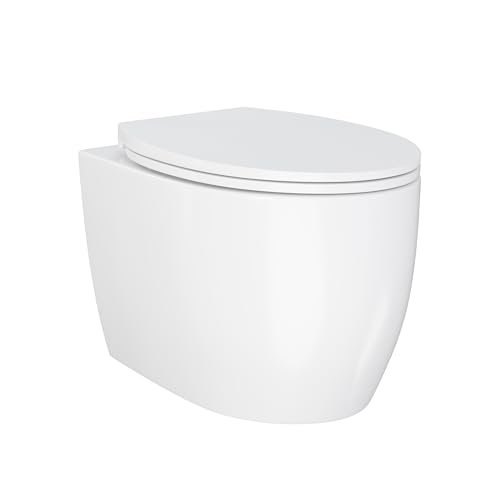
The Classe wall-hung toilet is designed around that minimalist approach. According to the supplied product information, it combines an elongated bowl, glossy white ceramic, a soft-close quick-release seat, a stated 500-pound weight capacity, and a concealed in-wall tank configuration.
Its strongest appeal is likely to be in bathrooms where space, visual simplicity, and easier floor cleaning matter as much as the toilet's basic function. Wall-hung toilets can work especially well in contemporary bathrooms, compact layouts, and renovation projects where the homeowner wants plumbing fixtures to blend into the architecture rather than dominate it.
What Is a Wall-Hung Toilet?
A wall-hung toilet mounts the bowl directly to a structural carrier concealed inside the wall.
Unlike a traditional toilet, the water tank is also hidden within the wall cavity. What remains visible is primarily the bowl and the flush plate or actuator.
This creates a much cleaner appearance and removes the bulky tank from the room.
According to the supplied description, this Classe model includes:
- Wall-hung installation
- Concealed in-wall tank configuration
- Glossy white finish
- Elongated bowl
- Standard-height seating
- Ceramic construction
- Non-porous surface
- Scratch-resistant finish
- Soft-close seat
- Quick-release seat
- Stated 500-pound weight capacity
These features make it substantially different from a conventional two-piece floor-mounted toilet.
Why Choose a Wall-Hung Toilet?
The main reasons to choose a wall-mounted toilet are usually space efficiency, aesthetics, and easier cleaning.
A conventional toilet places the bowl, trapway, tank, and plumbing footprint directly on the bathroom floor.
A wall-hung model removes much of that visual bulk.
The result can make even a modest bathroom appear more spacious.
Space-Saving Design
The supplied product information emphasizes the space-saving nature of the design.
Because the tank is hidden inside the wall, the visible fixture projects less bulky plumbing into the room.
This can be particularly useful in:
- Small bathrooms
- Powder rooms
- Narrow layouts
- Modern renovations
- Bathrooms where every inch of floor space matters
The amount of actual space saved depends on the wall construction, carrier system, and bowl projection, but the room usually feels less crowded because the tank is no longer visible.
Visual Space Matters Too
Even when the dimensional savings are modest, the visual effect can be significant.
Seeing uninterrupted flooring beneath the bowl can make the room feel larger.
That is one reason wall-hung toilets are common in:
- Contemporary hotels
- Modern apartments
- High-end residential bathrooms
- Minimalist interiors
The floating appearance creates a lighter look than a traditional floor-mounted toilet.
Concealed Tank for a Cleaner Bathroom Design
One of the defining characteristics of a wall-hung toilet is the hidden tank.
The tank sits behind the finished wall, typically within a metal carrier frame.
Only the flush actuator remains accessible from the room.
This can create a much more refined appearance because there is no exposed tank, supply hardware, or bulky base.
The In-Wall Tank Is a Separate System
A critical buying detail is that a wall-hung bowl generally requires a compatible in-wall carrier and concealed tank system.
The supplied description focuses on the toilet bowl itself and does not establish that a complete carrier, tank, flush plate, or installation frame is included.
Before purchasing, verify exactly what comes in the package.
A wall-mounted toilet cannot normally be installed like a conventional floor-mounted model.
The Carrier Supports the Toilet
The bowl does not simply hang from drywall.
A structural carrier frame is installed inside the wall and transfers the user's weight to the building structure.
This is one of the most important parts of a wall-hung toilet installation.
The carrier must be:
- Compatible with the bowl
- Properly anchored
- Correctly aligned
- Installed to local plumbing requirements
The strength of the installation depends heavily on the carrier and framing, not just the ceramic bowl.
Stated 500-Pound Weight Capacity
The product information lists a 500-pound weight capacity.
That figure indicates that the toilet is designed to support substantial loads when installed correctly.
However, the final installed capacity depends on more than the bowl.
It also depends on:
- Carrier strength
- Wall framing
- Fasteners
- Installation quality
A wall-hung toilet should therefore never be mounted using improvised brackets or unsupported wall materials.
Elongated Bowl for Added Comfort
The Classe toilet uses an elongated bowl.
Elongated toilets provide more front-to-back seating space than round-front models and are commonly preferred in primary bathrooms.
For many users, the shape feels more comfortable during everyday use.
The tradeoff is that elongated bowls generally project slightly farther into the room.
Elongated vs. Round Bowl
An elongated bowl usually offers:
- More seating room
- A larger opening
- Greater comfort for many adults
A round bowl usually offers:
- Shorter projection
- Better fit in extremely compact bathrooms
Because this toilet already saves visual space by using an in-wall tank, the elongated design can provide comfort without the room feeling as bulky as it might with a traditional elongated toilet.
Standard-Height Seating
The source describes the bowl as having a standard-height configuration in the range of roughly 15 to 17 inches.
However, wall-hung toilets have an important advantage: the final bowl height can often be influenced during carrier installation.
That means installation planning can be more flexible than with a fixed-height floor-mounted toilet.
Installation Height Should Be Planned Before the Wall Is Closed
The bowl height is determined largely by how the carrier is installed inside the wall.
Once the wall is finished, changing that height can be difficult.
Before installation, decide whether the bathroom should prioritize:
- Standard-height seating
- Slightly taller comfort-height seating
- Accessibility requirements
- User-specific preferences
This decision should be made early in the renovation.
Ceramic Construction
The toilet is made from ceramic according to the supplied information.
Ceramic remains the standard material for toilets because it combines durability, water resistance, and a smooth sanitary surface.
A properly glazed ceramic fixture can withstand years of routine bathroom use.
Non-Porous Surface
The surface is described as non-porous.
This matters because a toilet is repeatedly exposed to moisture and residue.
A smooth, low-porosity ceramic surface helps make regular cleaning easier and prevents material from readily absorbing water or staining substances.
Scratch Resistance
The supplied description also characterizes the ceramic as scratch resistant.
That can help the finish retain its appearance during normal use.
However, ceramic glaze can still be damaged by inappropriate tools or abrasive cleaning materials.
Use toilet-cleaning products and brushes that are compatible with glazed ceramic.
Glossy White Finish
The toilet is offered in a glossy white finish.
White remains one of the most versatile colors for bathroom fixtures because it coordinates easily with:
- White tubs
- White basins
- Marble
- Stone
- Concrete
- Wood
- Dark tile
A glossy finish also reflects more light than a matte surface, which can help smaller bathrooms feel brighter.
Part of the Classe Collection
The product is described as part of the Classe collection.
For homeowners planning a coordinated bathroom, a product collection can make it easier to match design details across multiple fixtures.
Depending on what else is available in the collection, that may include complementary:
- Toilets
- Basins
- Vanities
- Faucets
- Bathroom accessories
Using related products can help create a more consistent overall design.
Soft-Close Toilet Seat
The supplied information states that the toilet includes a soft-close seat.
A soft-close mechanism slows the lid and seat as they descend.
This prevents the familiar loud slam of a conventional toilet seat.
It can be particularly useful:
- At night
- In shared bathrooms
- In homes with children
The quieter operation also reduces repeated impact against the ceramic.
Quick-Release Seat
The seat can also be removed using a quick-release mechanism.
This is a practical cleaning feature.
The area around toilet-seat hinges often collects dust and residue, but conventional seats can make that space difficult to access.
A quick-release design allows the seat to be removed more easily so the ceramic can be cleaned thoroughly.
Why Wall-Hung Toilets Are Easier to Clean Around
One of the biggest practical benefits is floor access.
Because the bowl does not sit on the floor, there is no pedestal base to clean around.
A mop or cloth can pass directly underneath.
This eliminates many of the difficult-to-clean areas found around a traditional toilet base.
Fewer Exterior Crevices
A conventional toilet typically has several areas where dust and residue can collect:
- Around the base
- Behind the tank
- Around exposed plumbing
- Between tank and bowl
A wall-hung design removes many of these exterior surfaces from the bathroom.
That can make routine maintenance faster.
Wall-Hung Toilet vs. Floor-Mounted Toilet
A standard floor-mounted toilet remains the simplest option for most bathrooms.
It is usually less expensive to install and easier to replace.
A wall-hung toilet offers different advantages.
Wall-Hung Toilet Advantages
- Cleaner appearance
- More visible floor space
- Easier floor cleaning
- Hidden tank
- Potentially adjustable installation height
Floor-Mounted Toilet Advantages
- Simpler installation
- Lower installation complexity
- Easier access to the tank
- More compatible with existing bathroom plumbing
The better choice depends heavily on the renovation scope.
Wall-Hung Toilets Make the Most Sense During Renovation
Installing a wall-hung toilet often requires opening the wall.
That makes it much easier to install during:
- New construction
- Full bathroom renovation
- Major plumbing remodels
Replacing an existing floor-mounted toilet with a wall-hung model can require significant work because the waste connection and supply configuration may need to change.
Installation Is More Complex Than a Conventional Toilet
A wall-mounted toilet installation generally involves:
- Opening or constructing the wall.
- Installing the structural carrier.
- Connecting the concealed tank.
- Connecting the waste line.
- Connecting the water supply.
- Setting the carrier height.
- Testing plumbing before closing the wall.
- Finishing the wall surface.
- Mounting the ceramic bowl.
- Installing the flush actuator.
- Testing the completed system.
This is not usually the same type of weekend replacement as swapping one floor-mounted toilet for another.
Professional Installation Is Often Worthwhile
Because the carrier becomes part of the wall structure, accurate installation matters.
A professional plumber or experienced bathroom installer can help ensure:
- Correct carrier alignment
- Proper waste connection
- Leak-free plumbing
- Correct bowl height
- Structural support
- Appropriate access for future servicing
Mistakes inside a finished wall can be much more disruptive to repair later.
How Is the Concealed Tank Serviced?
One of the most common concerns about wall-hung toilets is access to the tank.
Modern concealed systems are generally designed so common service components can be reached through the flush-plate opening.
This can provide access to components such as:
- Fill valve
- Flush mechanism
- Internal adjustments
However, serviceability depends on the specific carrier and tank system used.
Before installation, confirm how maintenance access works.
Do Not Seal Critical Components Permanently Behind the Wall
The installation should follow the carrier manufacturer's instructions so normal service items remain accessible.
A properly designed concealed tank should not require destroying the wall for routine maintenance.
Poor installation, however, can make future repairs unnecessarily difficult.
Check Carrier Compatibility Before Buying
Not every wall-hung bowl automatically fits every concealed carrier.
Compatibility can depend on:
- Mounting-bolt spacing
- Waste outlet position
- Water connection
- Bowl geometry
The bowl and carrier should be confirmed as compatible before installation begins.
Flush Plate Compatibility Matters Too
The flush actuator is usually linked to the in-wall tank system rather than the toilet bowl itself.
That means the flush plate must generally match the carrier or tank manufacturer.
The plate can also become an important design feature because it remains visible above the toilet.
Single Flush or Dual Flush?
The supplied source does not specify whether the final system uses a single- or dual-flush actuator.
That functionality often depends on the concealed tank and flush plate selected.
If water-saving dual flush is important, confirm that the compatible carrier provides it.
Measure Bowl Projection
Even though wall-hung toilets are known for saving space, the bowl still extends into the room.
Before installation, measure:
- Wall-to-bowl projection
- Door swing
- Vanity clearance
- Walkway clearance
A wall-mounted toilet can improve space efficiency, but it cannot overcome a layout that is simply too tight.
Good Choice for Small Bathrooms
The hidden tank and suspended bowl can be especially effective in compact rooms.
The bathroom gains a more open floor area visually, and the fixture appears less bulky.
This can make the toilet a strong option for:
- Small urban bathrooms
- Guest bathrooms
- Narrow powder rooms
The exact carrier depth should still be factored into the wall design.
Wall Thickness Is a Key Planning Detail
The concealed tank and carrier require space inside or behind the wall.
Depending on the building construction, the installer may need:
- A suitable wall cavity
- A deeper framed wall
- A false wall
This can offset some of the apparent space savings if the existing wall cannot accommodate the carrier.
Plan the Entire Wall Assembly
Do not evaluate the bowl by itself.
The complete installation includes:
- Carrier
- Tank
- Plumbing
- Wall framing
- Wall finish
- Flush plate
The finished bathroom dimensions should be calculated using the complete system.
Weight Capacity and User Confidence
A properly installed wall-hung toilet should feel solid.
There should be no obvious movement when a user sits down.
If the bowl shifts or flexes, the installation should be inspected.
The stated 500-pound capacity is meaningful only when the carrier and mounting structure are correctly installed.
Common Mistakes to Avoid
Buying the Bowl Without a Compatible Carrier
A wall-hung toilet requires an in-wall support and tank system.
Assuming the Concealed Tank Is Included
Always verify package contents.
Closing the Wall Before Testing Plumbing
Leaks are much easier to fix before tile or drywall is finished.
Setting the Bowl Height Without Planning
Final seating height should be determined during carrier installation.
Forgetting Flush-Plate Compatibility
The actuator normally needs to match the concealed tank system.
Assuming Wall-Hung Means Zero Maintenance
The toilet still requires routine cleaning and occasional mechanical service.
Ignoring Structural Requirements
The carrier must be installed into an appropriate structural assembly.
Best Practices Before Installation
Before construction begins, confirm the entire system rather than purchasing components individually without checking compatibility.
Verify:
- Toilet-bowl dimensions
- Carrier compatibility
- Concealed tank
- Flush plate
- Final seat height
- Wall depth
- Waste-line location
- Water-supply connection
Planning all of these together reduces the risk of expensive changes during installation.
Test Before Finishing the Wall
Once the carrier and plumbing are installed, test the system before closing the wall.
Check for:
- Supply leaks
- Waste leaks
- Proper tank operation
- Correct flush operation
- Structural stability
Only after the system passes testing should the finished wall be completed.
Who Is the Classe Wall-Hung Toilet Best For?
This toilet is particularly suitable for homeowners who want:
- A modern bathroom appearance
- A concealed toilet tank
- Easier floor cleaning
- An elongated bowl
- A compact visual footprint
- A soft-close quick-release seat
It makes the most sense in a renovation or new-build project where the wall can be configured for a concealed carrier.
Who May Prefer a Conventional Toilet?
A floor-mounted toilet may be a better choice when:
- The bathroom is not being renovated
- Installation cost needs to remain low
- Existing plumbing should remain untouched
- Easy tank access is a priority
Wall-hung toilets provide important design benefits, but they require more planning and installation work.
Advantages and Considerations
The strongest advantages of the Classe wall-hung toilet are its space-conscious design, concealed tank configuration, elongated bowl, glossy ceramic construction, stated 500-pound capacity, soft-close seat, quick-release mechanism, and easier floor cleaning.
The floating design can make a bathroom feel larger and more refined while reducing many of the exterior crevices associated with conventional toilets.
The major consideration is installation complexity. The bowl requires a compatible in-wall carrier and tank, proper structural support, correctly planned plumbing, and access for future maintenance. Buyers should also verify which components are included before ordering.
Frequently Asked Questions
What type of toilet is this?
It is a wall-hung ceramic toilet from the Classe collection.
What color is it?
Glossy white according to the supplied description.
Is the bowl elongated?
Yes.
Why choose an elongated bowl?
It generally provides more seating room and comfort than a round-front bowl.
Is this toilet space saving?
Yes. The tank is concealed inside the wall, reducing the visible footprint.
Does the toilet touch the floor?
No. A wall-hung bowl is suspended above the finished floor.
Does that make cleaning easier?
Yes. The floor beneath the toilet remains accessible.
What is the stated weight capacity?
500 pounds, according to the supplied product information.
Does the bowl hold 500 pounds by itself?
The final capacity depends on correct installation with a suitable structural carrier and wall system.
What material is the toilet made from?
Ceramic.
Is the ceramic non-porous?
The source describes it as non-porous and scratch resistant.
Does it include a toilet seat?
The supplied description specifies a soft-close quick-release seat.
What does soft close mean?
The seat lowers gradually instead of slamming shut.
What is a quick-release seat?
It can be detached more easily for thorough cleaning around the hinge area.
What is the toilet's seat height?
The source refers to standard height, approximately 15–17 inches. The exact finished height should be confirmed because wall-hung carrier installation can influence bowl height.
Is the water tank visible?
No. It is installed inside the wall.
Is the in-wall tank included?
The supplied information does not clearly establish this, so package contents should be checked before purchase.
Do I need a carrier?
Yes, a wall-hung toilet requires a compatible structural in-wall carrier.
Is the carrier the same thing as the tank?
Many systems integrate the carrier and concealed tank, but this depends on the specific product.
Does it include a flush plate?
The source does not specify one.
Can I choose a dual-flush plate?
Potentially, if the selected compatible concealed tank supports dual-flush operation.
Can I install it on ordinary drywall?
The bowl must be supported by a structural carrier behind the finished wall, not drywall alone.
Can I install it myself?
Experienced remodelers may be able to, but professional installation is often recommended because of the concealed plumbing and structural carrier.
Is it good for small bathrooms?
Yes, wall-hung toilets can create more visible floor space and a less bulky appearance.
Is it suitable for new construction?
Yes. New construction is one of the easiest times to install an in-wall carrier.
Can it replace a standard floor-mounted toilet?
Yes in some renovations, but plumbing and wall modifications may be substantial.
How do you repair a concealed tank?
Routine service is generally performed through the flush-plate opening when the carrier is properly designed and installed.
Should I confirm compatibility before buying the bowl?
Absolutely. The bowl, carrier, tank, and actuator should be treated as one complete system.
Final Thoughts
The Classe wall-hung toilet is aimed at homeowners who want a cleaner, more architectural bathroom design than a conventional floor-mounted toilet can provide.
Its most attractive features are the concealed tank, floating bowl, elongated seating area, glossy ceramic finish, soft-close quick-release seat, and unobstructed floor underneath. Together, these features can make a bathroom look more spacious while also simplifying everyday cleaning.
The stated 500-pound capacity also suggests a robust fixture when paired with the correct structural carrier and installed properly.
The key consideration is that a wall-hung toilet is not just a ceramic bowl purchase. It is part of a complete concealed plumbing system. The carrier, tank, flush actuator, wall structure, drain placement, and final bowl height all need to be planned together.
For a new bathroom or substantial renovation where space efficiency, contemporary styling, easy floor maintenance, and an integrated concealed-tank appearance are priorities, the Classe wall-hung toilet can be a compelling alternative to a traditional floor-mounted fixture.