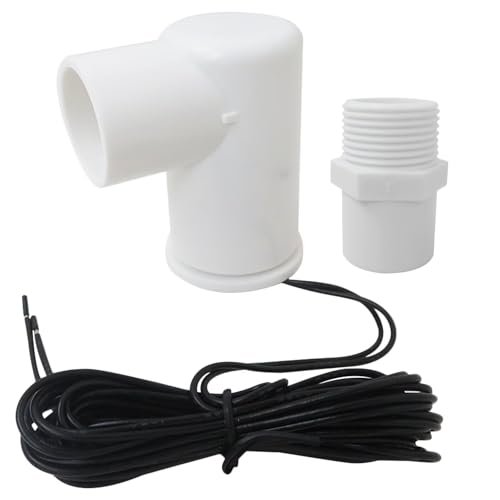
SS2 Condensate Drain Float Switch Review: Automatic HVAC Overflow Protection
A clogged air-conditioning condensate drain may seem like a minor maintenance issue, but the resulting overflow can damage ceilings, walls, flooring, insulation, and nearby equipment. Because many HVAC systems are installed in attics, closets, or other concealed spaces, a blocked drain may continue leaking long before anyone notices visible water.
The SS2 condensate float switch is designed to reduce that risk by monitoring rising water inside a drain pan or compatible condensate line. When the water reaches the switch’s activation point, the internal float rises and signals the connected equipment to shut down. This stops the air-conditioning system from producing additional condensate while the drainage problem is investigated.
Constructed from white PVC and designed around a 3/4-inch NPT connection, the switch offers a compact safety upgrade for compatible HVAC systems, pumps, aquariums, and other applications where rising liquid levels may indicate a drainage failure.
What Is an SS2 Float Switch?
An SS2 float switch is a liquid-level safety device commonly used with HVAC condensate drainage systems.
During normal operation, water produced by the air conditioner flows through the condensate drain and away from the equipment. If the drain becomes blocked, water begins accumulating in the pipe or auxiliary drain pan.
The float switch contains a small buoyant component that rises with the water level. Once the float reaches its activation position, the switch changes the connected electrical circuit and can interrupt the HVAC system’s operation.
The exact wiring arrangement depends on the equipment and installation design. In many systems, the switch is connected to the low-voltage thermostat or control circuit so that the air conditioner shuts down before the pan overflows.
Why Condensate Drain Protection Matters
Air-conditioning systems remove moisture from indoor air. That moisture collects on the evaporator coil and drains into a condensate pan.
Under normal conditions, the water exits through a drain line. Problems arise when the line becomes restricted by:
- Algae
- Slime
- Dust
- Mold growth
- Rust
- Insects
- Mineral deposits
- Pipe damage
- Improper slope
- Frozen components
- Installation debris
When water cannot drain properly, it may spill from the equipment or overflow the secondary pan.
Depending on the installation location, the resulting damage may include stained ceilings, swollen drywall, damaged flooring, wet insulation, wood deterioration, or microbial growth.
A float switch provides an additional layer of protection by stopping the equipment before the accumulating water reaches the edge of the containment area.
How the Vertical Float Mechanism Works
The SS2 uses vertical float movement to detect a rising liquid level.
During normal operation, the float remains near the bottom of the switch body. As water accumulates, buoyancy lifts the float upward. At a defined point, the switch changes state and activates the connected safety circuit.
The operating sequence is straightforward:
- Condensate drains normally.
- The float remains in its resting position.
- A blockage causes water to rise.
- The rising water lifts the float.
- The switch signals the connected equipment to stop.
- The system remains disabled while the high-water condition continues.
- Once the water recedes, the float returns to its normal position.
Some installations may allow the equipment to restart automatically after the float drops. However, an automatic restart should not be treated as proof that the drainage problem has been permanently resolved. The blockage should still be identified and corrected.
Automatic HVAC Shutoff
The primary purpose of the switch is to interrupt HVAC operation when condensate reaches an unsafe level.
Stopping the air conditioner prevents the evaporator coil from continuing to generate water. This can limit the volume entering an already blocked drain or overflowing pan.
Automatic shutoff is particularly useful for systems installed:
- In attics
- Above finished ceilings
- In utility closets
- On upper floors
- Near wood flooring
- Near electrical equipment
- In rental properties
- In infrequently inspected buildings
A float switch does not remove the blockage or drain the water. It simply creates an early response that may help prevent a small maintenance problem from becoming extensive property damage.
3/4-Inch NPT Connection
The switch uses a 3/4-inch NPT connection.
NPT, or National Pipe Taper, is a common threaded plumbing standard. The tapered threads are designed to tighten progressively and create a sealed connection when installed correctly.
The 3/4-inch size is commonly encountered in HVAC condensate drain assemblies, but compatibility should never be assumed solely from the nominal dimension.
Before installation, verify:
- Thread type
- Female or male orientation
- Drain-pan adapter size
- Pipe material
- Available clearance
- Required switch position
- Manufacturer installation instructions
Garden-hose threads, straight pipe threads, and NPT threads are not interchangeable even when they share a similar nominal size.
Designed for Vertical Installation
The float mechanism is intended to move vertically. Correct orientation is therefore essential.
If the switch is installed at an angle or horizontally, the float may bind, activate too late, or fail to reset properly.
The mounting location should allow the float to rise freely before water reaches the overflow point. It should also remain accessible for inspection and cleaning.
A poorly positioned switch may provide little protection even when the component itself functions correctly.
Installation in an Auxiliary Drain Pan
One common installation method places the switch directly in a secondary condensate drain pan beneath the HVAC equipment.
The auxiliary pan is intended to catch water if the primary pan or drain line fails. The float switch monitors the water level and shuts down the system before the pan fills enough to overflow.
When installed in a drain pan, confirm that:
- The pan is level
- The switch sits at the correct height
- The float is unobstructed
- Water will reach the switch before the pan overflows
- The switch body is securely mounted
- The pan has no cracks or corrosion
- The wiring is protected from moisture
The pan itself should also be inspected regularly. A float switch cannot provide protection if water escapes through a damaged pan before reaching the sensor.
Installation in a Condensate Drain Line
The switch may also be installed in a compatible condensate pipe or adapter.
In this configuration, rising water inside the drain assembly activates the float before the backup reaches the HVAC cabinet or surrounding area.
Drain-line installation may provide faster detection because the switch responds directly to water backing up inside the pipe.
However, the installation must preserve proper drainage. The switch should not create an unnecessary restriction, trap debris, or interfere with cleanout access.
Electrical Connection Requirements
Although the physical plumbing connection may be straightforward, a float switch generally must also be connected to the HVAC control circuit.
The exact wiring method depends on:
- HVAC equipment type
- Thermostat circuit
- Control-board design
- Switch configuration
- Local electrical code
- Manufacturer instructions
The device may be wired to interrupt the cooling call, power to the condenser contactor, or another approved low-voltage safety circuit.
Because incorrect wiring can disable equipment protection, cause operational problems, or create an electrical hazard, installation should be performed or verified by a qualified HVAC technician.
The phrase “plug and play” should not be interpreted as meaning that no electrical connection is required unless the specific package includes a compatible prewired connector.
Removable Cap for Maintenance
The switch includes a removable cap intended to simplify cleaning and inspection.
Condensate systems often accumulate organic residue over time. Slime, algae, dust, and sediment can interfere with float movement if maintenance is neglected.
Removing the cap allows access to the internal float area so debris can be cleared without replacing the complete device.
The recommended maintenance interval in the supplied information is approximately every three months. Actual frequency may vary depending on humidity, equipment usage, indoor air quality, and how quickly the drain system develops buildup.
Cleaning the Float Switch
A typical cleaning process may include:
- Turn off power to the HVAC system.
- Confirm that the equipment cannot start unexpectedly.
- Remove the switch cap according to the instructions.
- Inspect the float and internal chamber.
- Remove slime, dirt, or mineral residue.
- Clean with an approved mild solution.
- Rinse carefully if permitted.
- Confirm that the float moves freely.
- Reinstall the cap securely.
- Restore power.
- Test switch operation.
Avoid using harsh chemicals that may damage the PVC body, seals, float, or nearby drain materials.
Testing the Safety Function
A float switch should be tested after installation and during routine HVAC maintenance.
The technician may manually lift the float or simulate a high-water condition while observing the system response.
A successful test should confirm that:
- The switch moves freely
- The HVAC system shuts down
- The control circuit responds correctly
- The switch resets as intended
- The equipment resumes only under safe conditions
- No water leaks around the connection
Testing is essential because a switch that is installed but never verified may provide false confidence.
White PVC Construction
The switch body is made from white PVC.
PVC is commonly used in condensate drainage because it is lightweight, resistant to many forms of corrosion, and compatible with standard drain components.
Its smooth surface is also relatively easy to inspect and clean.
However, PVC has limitations. It should be protected from:
- Excessive heat
- Direct flame
- Strong impact
- Incompatible chemicals
- Ultraviolet exposure where not rated
- Mechanical stress from unsupported pipework
The float switch should not be used outside the manufacturer’s temperature, pressure, and chemical-compatibility limits.
HVAC Applications
The most common use for the SS2 switch is protecting air-conditioning and heat-pump equipment from condensate overflow.
Compatible installations may include:
- Residential air handlers
- Furnace evaporator coils
- Heat pumps
- Fan-coil units
- Ductless-system drain arrangements
- Commercial HVAC equipment
- Dehumidifiers with drain pans
Compatibility depends on the drain design and electrical control system.
A technician should verify that the switch is appropriate for the particular appliance.
Aquarium and Pump Applications
The product description also identifies aquariums, pumps, and other liquid-containment systems as possible applications.
In these settings, the float switch may help control equipment when a liquid reaches a specified level.
Potential uses could include:
- Overflow protection
- Pump shutdown
- Sump monitoring
- Reservoir level control
- Auxiliary containment systems
However, the electrical rating, material compatibility, operating orientation, and liquid type must match the application.
A switch designed for HVAC control circuits should not automatically be assumed suitable for switching high-current pumps directly. A relay or control module may be required.
What the Float Switch Does Not Do
The device provides high-water detection and shutoff control, but it does not replace drainage maintenance.
It does not:
- Clear clogged pipes
- Pump water out of a pan
- Repair a cracked drain
- Remove algae
- Detect every possible leak
- Replace an auxiliary drain pan
- Provide remote alerts by itself
- Shut off the building’s main water supply
- Diagnose the cause of the overflow
The switch should be part of a broader condensate-management strategy.
A Layered Approach to Condensate Protection
Reliable overflow protection may include several complementary measures:
- Properly sized primary drain piping
- Correct pipe slope
- Accessible cleanout fittings
- A secondary drain pan
- A float switch
- Regular drain cleaning
- Periodic testing
- A water-leak alarm where appropriate
Some properties may also benefit from remote monitoring or a smart leak sensor near the HVAC system.
Each layer addresses a different failure mode.
Common Causes of Repeated Float-Switch Activation
A switch that frequently shuts down the HVAC system is indicating a recurring drainage problem.
Possible causes include:
- Algae growth
- Improper drain slope
- Partially blocked trap
- Collapsed tubing
- Disconnected drain
- Frozen evaporator coil
- Dirty air filter causing coil icing
- Cracked primary pan
- Drain outlet positioned too high
- Faulty condensate pump
- Poor equipment leveling
Repeatedly resetting the system without correcting the cause may lead to further damage or equipment problems.
Troubleshooting an HVAC System That Will Not Start
When a float switch has activated, the air conditioner may appear completely unresponsive.
Before assuming the equipment has failed:
- Check the thermostat.
- Inspect the condensate pan.
- Look for standing water.
- Examine the drain line.
- Confirm whether the float is raised.
- Turn off power before servicing.
- Clear the blockage safely.
- Verify that the float drops.
- Test the system.
Do not bypass the switch merely to restore cooling. Doing so removes the overflow protection while the drainage fault may still be present.
Common Installation Mistakes
Installing the Switch Too High
If the activation point is above the pan’s safe capacity, water may overflow before the switch responds.
Installing It at an Angle
The float requires correct vertical movement.
Failing to Test the Circuit
Physical installation alone does not confirm that the HVAC equipment will shut down.
Using the Wrong Threads
Forcing incompatible fittings may crack the PVC or create leaks.
Applying Excessive Thread Sealant
Too much sealant can enter the drain path or interfere with assembly.
Blocking the Float
Nearby piping, debris, or pan walls may prevent free movement.
Skipping Routine Cleaning
Slime buildup may cause the float to stick.
Bypassing the Switch After Activation
This may allow the HVAC system to continue producing condensate into a blocked drain.
Maintenance Schedule
The switch should be inspected as part of routine heating and cooling service.
A practical schedule may include:
Every One to Three Months
Inspect the pan and confirm that the float area is clean.
At the Start of Cooling Season
Test the shutoff function and clean the condensate line.
During Filter Changes
Look for standing water, stains, or signs of previous overflow.
After Any Shutoff Event
Determine and repair the cause before returning the system to normal operation.
Homes in humid climates or systems that operate nearly year-round may require more frequent maintenance.
Advantages and Considerations
Advantages
- Automatically responds to rising condensate
- Can shut down compatible HVAC equipment
- Helps reduce overflow-related water damage
- Uses a standard 3/4-inch NPT connection
- Vertical float design
- Removable cap simplifies cleaning
- White PVC construction
- Suitable for drain pans and compatible drain lines
- Can support certain pump or liquid-level applications
- Low routine maintenance when kept clean
- Resets when the water level recedes, depending on system wiring
Potential Considerations
The switch generally requires electrical connection to the equipment’s control circuit. Professional installation may be necessary.
It does not remove water, clear blockages, or provide remote alerts. The float may also fail to operate correctly if installed at the wrong angle, placed too high, or allowed to accumulate debris.
The source description does not specify electrical ratings, maximum temperature, wiring configuration, or certification information. These details should be confirmed before use, especially outside standard HVAC applications.
Frequently Asked Questions
What does an SS2 float switch do?
It detects rising water in a drain pan or condensate system and signals compatible equipment to shut down.
What connection size does it use?
The listed connection is 3/4-inch NPT.
Does it install vertically?
Yes. The float is designed to move vertically and should be mounted in the specified orientation.
Does it automatically restart the HVAC system?
The switch may reset when the water recedes, depending on how the circuit is wired. The underlying drainage problem should still be repaired before normal operation continues.
Does installation require wiring?
In most HVAC applications, yes. The switch must be connected to a compatible control circuit. Follow the manufacturer’s diagram or use a qualified technician.
Can it be installed in a drain pan?
Yes, when used with a compatible adapter and positioned below the pan’s overflow level.
Can it be installed in a drain line?
Potentially, provided the drain arrangement, thread size, and manufacturer instructions support that configuration.
How often should it be cleaned?
The supplied description recommends cleaning approximately every three months. More frequent inspection may be necessary in humid or dusty environments.
What material is it made from?
The housing is described as white PVC.
Can it clear a clogged condensate drain?
No. It detects rising water and can stop the equipment, but the blockage must be cleared separately.
Can it control a pump?
Possibly, but electrical ratings and control requirements must be verified. It may need to operate through a relay rather than switching the pump directly.
Is it suitable for aquariums?
The source identifies aquariums as a possible application, but material compatibility and electrical ratings should be confirmed first.
Can I bypass it if the air conditioner stops?
Bypassing the switch is not recommended because it removes the overflow protection. Identify and repair the drainage issue instead.
Does it replace a secondary drain pan?
No. Where a pan is required, the float switch complements it rather than replacing it.
Final Thoughts
The SS2 condensate drain float switch provides a simple but important layer of protection for HVAC systems installed above ceilings, inside closets, or near moisture-sensitive surfaces. By detecting rising water and interrupting compatible equipment, it can help stop continued condensate production before an auxiliary pan or drain system overflows.
Its 3/4-inch NPT connection, vertical float mechanism, removable cleaning cap, and PVC body make it suitable for many condensate-management setups. The device may also support selected pump, aquarium, or liquid-level applications when its electrical and material specifications are appropriate.
The switch is not a substitute for proper drainage design or maintenance. It must be installed at the correct height, wired properly, tested regularly, and kept clean.
When combined with a properly sloped drain, an intact secondary pan, and routine HVAC servicing, an SS2 float switch can reduce the risk that a clogged condensate line turns into costly water damage.