SONOFF Zigbee Sprinkler Timer Review: Smart Garden Irrigation With App, Voice, and Home Assistant Control
A smart irrigation timer can make outdoor watering far easier to manage, especially when your garden, lawn, or drip system needs a predictable schedule. Instead of manually opening a hose bibb every morning or relying on a basic mechanical timer, a connected controller can automate watering, log usage, alert you to abnormal conditions, and integrate with a broader smart-home system.
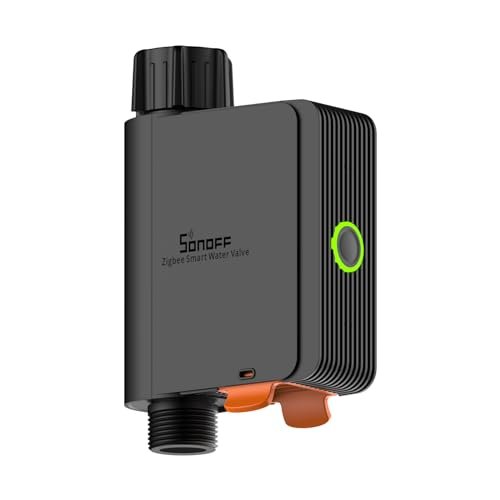
The SONOFF Zigbee Sprinkler Timer SWV-NH is designed for that role. It uses the Zigbee 3.0 protocol, supports app-based remote control, offers both time-based and volume-based watering schedules, records irrigation history, and includes protective alerts for low flow and potential leaks.
Because it is a Zigbee device, it requires a compatible gateway rather than connecting directly to WiFi on its own. That makes it particularly attractive for users who already operate a Zigbee smart-home network or want to build irrigation automation through platforms such as Home Assistant.
What Is the SONOFF SWV-NH?
The SONOFF SWV-NH is a smart outdoor water controller intended for applications such as:
- Garden irrigation
- Lawn watering
- Drip irrigation
- Hose-connected sprinklers
- Outdoor plants
- Selected pool or water-management tasks
The supplied product information highlights:
- Zigbee 3.0 connectivity
- App-based remote control
- Time-based watering schedules
- Volume-based irrigation
- Single and recurring cycle modes
- Watering-history records
- Low-flow alerts
- Leak alerts
- Automatic protection when water flow is absent
- Alexa and Google Home compatibility through a suitable smart-home setup
- Home Assistant integration potential
- Gateway requirement
Unlike a simple hose timer, the system is intended to become part of a connected irrigation and home-automation environment.
Why Zigbee Instead of Direct WiFi?
One of the most important characteristics of the SONOFF timer is its use of Zigbee 3.0.
Zigbee is a low-power wireless protocol commonly used for sensors, switches, smart plugs, and other connected devices.
Rather than every device connecting independently to the home router, Zigbee devices generally communicate through a compatible coordinator or gateway.
Potential Advantages of Zigbee
A gateway-based Zigbee setup can offer several practical advantages.
It can reduce the number of individual devices connected directly to WiFi, while also making it easier to build automations between products in the same ecosystem.
For example, a smart irrigation system could potentially interact with:
- Soil-moisture sensors
- Weather automations
- Smart switches
- Temperature sensors
- Home Assistant routines
depending on the compatible devices and software involved.
A Gateway Is Required
The sprinkler timer should not be treated as a standalone WiFi device.
A compatible Zigbee gateway or coordinator is required for connected features.
This is an important buying consideration because the gateway may need to be purchased separately unless you already have a compatible system.
Before ordering, verify compatibility with the exact gateway or smart-home platform you plan to use.
Remote App Control
Once connected through the appropriate Zigbee gateway and software, the timer can be controlled remotely from an app.
That can be useful when:
- You are away from home
- Rain makes scheduled irrigation unnecessary
- A garden needs an extra cycle
- You want to stop watering early
Remote control removes the need to walk to the outdoor faucet every time the schedule changes.
Time-Based Watering Schedules
The controller supports irrigation based on time.
This is the traditional way to program a garden timer.
For example, you might configure the system to:
- Water for 15 minutes in the morning
- Run every second day
- Irrigate on selected recurring cycles
Time-based scheduling is straightforward and works well when water flow is relatively consistent.
Volume-Based Watering
A more distinctive feature is support for volume-based irrigation.
Instead of simply opening the valve for a fixed amount of time, a volume-based schedule is designed around a specified amount of water.
This can be useful when the goal is to control the quantity delivered rather than assuming that a certain number of minutes always produces the same amount.
Why Volume-Based Irrigation Can Be Useful
Water flow can vary because of:
- Pressure changes
- Hose restrictions
- Different emitters
- Partially closed valves
A volume-oriented approach may provide more direct control over total water use when the device can measure flow accurately.
That can be especially interesting for gardeners who want more detailed control over irrigation consumption.
Time vs. Volume Scheduling
Neither scheduling method is automatically better for every situation.
Time-Based Scheduling
Works well when:
- Flow is predictable
- Irrigation layout is simple
- Ease of setup matters most
Volume-Based Scheduling
Can be useful when:
- Water consumption matters
- Flow varies
- You want more measurable irrigation targets
For many users, having both options is more useful than being limited to only one.
Single and Cycle Watering Modes
The supplied product information indicates support for both single and cycle watering modes.
Single mode is useful for a one-time irrigation event.
Cycle mode is more appropriate for recurring schedules.
This allows the controller to handle both temporary watering needs and ongoing garden routines.
Where Cycle Scheduling Helps
Recurring irrigation is useful for:
- Vegetable gardens
- Drip systems
- Flower beds
- Lawn zones
- Patio planters
Once configured properly, the timer can reduce the chance of missing routine watering.
However, schedules should still be adjusted seasonally rather than left unchanged all year.
Watering History Records
The SONOFF timer can track irrigation history over different periods.
The supplied description references:
- Daily history
- Monthly history
- Six-month history
This can make the device more useful than a basic timer because users can review how often and how much they have been watering.
Why Watering History Matters
Historical information can help answer practical questions such as:
- Is the garden being watered too frequently?
- Did irrigation increase during hotter weather?
- Has a change in schedule reduced water use?
- Was a zone actually watered while you were away?
This data can be valuable when fine-tuning an irrigation routine.
Use Data to Improve Irrigation, Not Just Monitor It
A watering log is most useful when it leads to better decisions.
Compare irrigation history with:
- Plant condition
- Rainfall
- Soil moisture
- Seasonal temperature
If plants remain healthy with less irrigation, the schedule may be reduced.
If soil repeatedly dries too quickly, the watering duration, frequency, or system design may need adjustment.
Low-Flow Alerts
The controller can issue an app alert when it detects unusually low flow according to the supplied description.
Low flow could indicate several possible issues.
Examples include:
- Closed upstream faucet
- Kinked hose
- Blocked filter
- Clogged drip line
- Low household water pressure
An alert can help identify an irrigation problem before plants go without water for an extended period.
Leak Alerts
The timer also includes abnormal-flow or leak-related alerts.
A leak in a hose-connected irrigation system can waste significant water if it continues unnoticed.
Potential leak locations include:
- Faucet connection
- Hose fitting
- Damaged tubing
- Split drip line
- Loose connector
Receiving an alert can provide an opportunity to inspect the system before the problem gets worse.
Automatic No-Water Protection
The supplied description states that the controller automatically shuts off after approximately 30 minutes of no water.
This is intended as a protective feature.
If the controller is open but water is not actually flowing, the system can stop rather than remaining indefinitely in an abnormal state.
The exact protection logic should be confirmed in the current product documentation before relying on it for critical applications.
Why Flow Monitoring Is Valuable
A conventional timer only knows whether it has commanded the valve to open.
A flow-aware controller can potentially distinguish between:
- Valve open with normal water flow
- Valve open with little or no flow
- Abnormal water behavior
That provides a more informative irrigation system.
Smart-Home Integration
The SONOFF SWV-NH uses Zigbee 3.0 and is designed to integrate with compatible smart-home ecosystems.
The supplied listing specifically references Home Assistant compatibility.
This is particularly attractive for users who want irrigation to become part of broader automation logic.
Home Assistant Possibilities
Depending on the integration and gateway used, advanced users may be able to create automations involving conditions such as:
- Weather forecast
- Soil moisture
- Temperature
- Time of day
- Occupancy
- Water-use rules
For example, an automation could potentially suspend irrigation when another sensor indicates that watering is unnecessary.
Exact capabilities depend on the supported integration and should be verified for the current firmware and software stack.
Alexa and Google Home Voice Control
The product is also marketed for use with Alexa and Google Home through a compatible smart-home configuration.
Voice control can be convenient for simple actions such as starting or stopping irrigation.
However, detailed schedule configuration is usually better handled in an app because irrigation often involves durations, quantities, and recurring rules.
Voice Control Is a Convenience Feature
Voice commands should not be the main reason to choose an irrigation controller.
More important considerations include:
- Scheduling flexibility
- Connectivity reliability
- Flow monitoring
- Outdoor durability
- Gateway compatibility
Voice support is best viewed as an extra convenience.
Best Uses for the SONOFF Sprinkler Timer
The controller can fit several outdoor watering setups.
Drip Irrigation
One of the strongest applications.
A timer can automate a drip network for:
- Vegetables
- Shrubs
- Raised beds
- Flowers
Garden Hose Sprinklers
The device can also automate conventional hose-connected sprinklers.
Lawn Watering
It may work well for a single hose-fed lawn watering circuit.
For large multi-zone in-ground irrigation systems, a dedicated multi-station sprinkler controller is generally more appropriate.
Patio and Balcony Plants
Where a hose or drip circuit is available, automated watering can help keep container plants on a consistent routine.
Using It for Pool Applications
The title also references pool-related watering applications.
That should be interpreted carefully.
A hose timer may be useful for certain water-fill or outdoor-water tasks, but it should not be assumed to control pool filtration, chemical management, or other specialized pool equipment.
Always verify suitability for the exact application.
Smart Hose Timer vs. Traditional Mechanical Timer
A basic mechanical or digital hose timer remains sufficient for simple irrigation.
Traditional Timer Advantages
- Simpler
- No gateway
- No smart-home setup
SONOFF Smart Timer Advantages
- Remote control
- Water-volume scheduling
- Watering history
- Abnormal-flow alerts
- Smart-home integration
The SONOFF makes more sense when connected features provide real value.
Zigbee Timer vs. WiFi Timer
Both approaches have strengths.
Zigbee Timer
Advantages may include:
- Smart-home ecosystem integration
- Lower network overhead
- Compatibility with automation platforms
Tradeoff:
- Gateway required
WiFi Timer
Advantages:
- May connect directly to router
- Fewer components in simple installations
Tradeoff:
- Each device relies directly on WiFi coverage
The better choice depends on whether you already have a smart-home ecosystem.
Gateway Placement Matters
Because the timer communicates with a Zigbee gateway, distance and building materials can affect connectivity.
Outdoor faucet locations may be separated from the gateway by:
- Exterior walls
- Concrete
- Metal siding
- Garages
Test the wireless connection before relying on unattended watering.
Zigbee Mesh Considerations
Some Zigbee devices can act as repeaters, potentially extending network coverage.
Battery-powered devices typically do not always function as routers in the same way as mains-powered Zigbee equipment.
The actual network behavior depends on your ecosystem.
If the outdoor faucet is far from the coordinator, a compatible mains-powered Zigbee router positioned closer to the exterior may improve coverage.
Installation Planning
Before attaching the timer, inspect the faucet and hose connections.
Make sure:
- Threads are clean
- Washers are present
- Connections are not cracked
- Hose does not place excessive weight on the timer
After installation, open the faucet and inspect for leaks before configuring unattended schedules.
Keep the Upstream Faucet Open Carefully
Most automated hose timers require the upstream faucet to remain open so the controller can regulate water flow.
That means every connection upstream of the controlled valve remains pressurized.
Small leaks should therefore be repaired before leaving the system unattended.
Consider a Filter for Drip Systems
Drip emitters can clog easily.
If the irrigation system uses small emitters, consider an appropriate filter if one is not already part of the setup.
Sediment can reduce flow and may also trigger low-flow warnings.
Pressure Regulation May Be Necessary
Many drip irrigation systems require lower pressure than a household hose bibb can provide.
The source does not state that a pressure regulator is included.
If your irrigation components specify a pressure limit, use an appropriate regulator.
Seasonal Watering Adjustments
A schedule that works in midsummer may be excessive in cooler weather.
Adjust irrigation according to:
- Rain
- Temperature
- Plant maturity
- Soil moisture
Automation should make seasonal adjustments easier, not encourage a fixed year-round routine.
Avoid Watering Only by Calendar
A perfectly executed schedule can still waste water if the soil is already wet.
When possible, combine scheduled irrigation with environmental information such as:
- Soil moisture
- Rainfall
- Weather forecast
This is where integration with a wider smart-home platform can become especially useful.
Common Mistakes
Buying Without a Compatible Gateway
The timer requires a Zigbee coordinator or gateway.
Assuming Zigbee Means Direct WiFi
It does not.
Automating Before Testing Water Flow
Run the system manually first.
Ignoring Low-Flow Warnings
They may indicate a real irrigation problem.
Leaving the Same Schedule All Year
Seasonal adjustment is still necessary.
Assuming Smart Alerts Prevent Every Leak
Flow alerts can help, but physical inspection and proper installation remain essential.
Advantages and Considerations
Advantages
- Zigbee 3.0 connectivity
- App-based remote control
- Time-based irrigation
- Volume-based watering
- Single and cycle modes
- Daily, monthly, and longer-term watering history
- Low-flow alerts
- Leak-related alerts
- Automatic protective shutoff behavior
- Home Assistant compatibility potential
- Alexa and Google Home support through compatible setups
Potential Considerations
A Zigbee gateway is required.
Not designed as a replacement for a large multi-zone irrigation controller.
Connected features depend on gateway and platform compatibility.
Outdoor wireless range should be tested.
Drip systems may still require pressure regulation and filtration.
Frequently Asked Questions
Does the SONOFF sprinkler timer connect directly to WiFi?
No. It uses Zigbee 3.0 and requires a compatible Zigbee gateway or coordinator for connected control.
Can I control it from my phone?
Yes, through the compatible app and gateway setup.
Does it support scheduled watering?
Yes.
Can it water based on volume instead of time?
Yes, according to the supplied product information.
Does it track irrigation history?
Yes. The listing describes daily, monthly, and up-to-six-month historical records.
Can it detect low water flow?
The product description states that low-flow alerts are supported.
Does it provide leak alerts?
Yes, abnormal water-flow and leak-related alerts are listed.
Does it work with Home Assistant?
The supplied description specifically identifies Home Assistant ecosystem compatibility through Zigbee.
Does it work with Alexa?
It is marketed as compatible through an appropriate gateway and smart-home configuration.
Does it work with Google Home?
Yes, according to the supplied listing, through a compatible setup.
Can I use it for drip irrigation?
Yes. Drip irrigation is one of its main intended applications.
Can it control multiple independent zones?
This product is a single water-valve controller rather than a conventional multi-zone irrigation controller.
Final Thoughts
The SONOFF Zigbee Sprinkler Timer SWV-NH is most compelling for gardeners who already use Zigbee or want their irrigation system integrated into a broader smart-home platform.
Its key advantages go beyond simple scheduled watering. Time- and volume-based irrigation, watering-history records, low-flow monitoring, leak alerts, and Home Assistant compatibility give users more insight and automation potential than a basic hose timer can provide.
The biggest consideration is the gateway requirement. Anyone looking for a completely standalone device should account for the additional Zigbee infrastructure. For users who already have a compatible coordinator, however, that same architecture can be an advantage because the timer can participate in more sophisticated home-automation routines.
For homeowners looking for a Zigbee 3.0 smart sprinkler timer with app control, volume-based irrigation, flow monitoring, Home Assistant integration, and Alexa or Google Home compatibility, the SONOFF SWV-NH offers a flexible approach to automating a single hose-fed garden, lawn, or drip-irrigation circuit.