TUYA WiFi Water Leak Detector Review: Smart Alerts, Gateway Support and Multi-Sensor Protection
A small water leak can become a much larger problem if it goes unnoticed. Slow drips under a sink, a leaking washing machine hose, condensation around plumbing, or water beginning to spread across a basement floor may not be discovered until visible damage has already occurred.
That is where a smart water leak detector can be useful. Instead of relying only on an audible alarm inside the home, a connected system can send a notification to your phone when a sensor detects moisture.
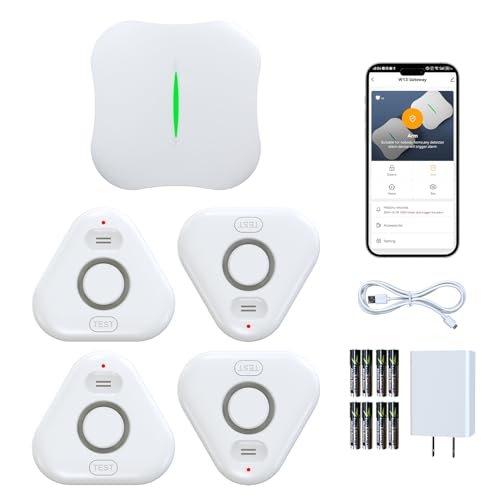
This TUYA-compatible water leak detection system combines individual leak sensors with a W13 2.4GHz WiFi gateway, allowing compatible sensors to communicate with the TUYA app. The system supports remote push alerts, customizable sensor names, adjustable alarm volume, top and bottom water detection, low-battery notifications, and connection of multiple sensors through one gateway.
For homeowners who want to monitor several potential leak locations at once, the concept is practical. However, compatibility requirements, WiFi limitations, paid notification options, battery maintenance, and sensor placement all deserve attention before buying.
What Is This TUYA WiFi Water Leak Detector System?
This system is designed to detect water in areas where leaks are likely to occur and alert the user both locally and through a smartphone app.
The setup consists of compatible water sensors and a W13 gateway. The individual sensors detect moisture, while the gateway connects the system to a home's 2.4GHz WiFi network and communicates with the TUYA app.
According to the supplied product information, a single gateway can support up to 24 compatible sensors.
That makes the system suitable not only for one sink or appliance but potentially for multiple areas throughout a home.
For example, sensors could be positioned beneath a kitchen sink, near a dishwasher, behind a washing machine, beside a water heater, under a bathroom vanity, and in a basement.
Instead of treating each location as an independent alarm, the app can help identify which specific sensor has detected water.
Why Smart Water Leak Detection Is Useful
Traditional standalone leak alarms are simple devices. They detect water and sound an alarm.
That can work well when someone is nearby.
The limitation appears when the house is empty.
If a leak begins while you are at work, traveling, sleeping far from the affected room, or simply unable to hear the alarm, a local siren may provide little practical protection.
A smart leak detector adds remote notification.
When the system is properly connected, the gateway can send an alert through the TUYA app so that you can investigate even when you are away from home.
This does not stop the leak automatically, but it can significantly shorten the time between detection and response.
2.4GHz WiFi Connectivity
The W13 gateway connects to 2.4GHz WiFi.
It is important to note that the supplied product information specifically states that the gateway is not compatible with 5GHz-only WiFi networks.
This is fairly common among smart-home sensors because 2.4GHz WiFi generally provides broader indoor coverage and is well suited to low-bandwidth connected devices.
However, the limitation can still cause setup problems if it is overlooked.
Check Your Router Before Buying
Many modern routers broadcast both 2.4GHz and 5GHz networks, sometimes using the same network name.
In that situation, setup may work normally, but certain routers or mesh WiFi systems can make onboarding more complicated.
Before purchasing, make sure your router provides an active 2.4GHz network that smart-home devices can join.
If your network is configured exclusively for 5GHz operation, this gateway will not be suitable without changing the network configuration.
The W13 Gateway Can Support Multiple Sensors
One of the strongest features of this system is scalability.
The W13 gateway is specified to support up to 24 compatible sensors.
That allows one gateway to serve multiple leak-prone locations throughout the property.
This is more efficient than purchasing a completely independent WiFi device for every room.
The sensors can communicate through the same gateway, while the app can assign each one a descriptive name.
For a larger home, this creates a basic water-leak monitoring network rather than a collection of isolated alarms.
Sensor Compatibility Is Critical
This is probably the most important detail in the supplied product information.
The manufacturer states that, following a technology update, the WD77 sensor is compatible with the W13 WiFi gateway, while the older WD76 model does not have the required WiFi/Bluetooth functionality and cannot connect to the gateway.
That distinction can easily be missed because the two products may appear similar.
If you want smartphone notifications through the W13 gateway, make sure you are purchasing the compatible model.
WD77 vs. WD76
The WD77 is the model intended for use with the connected gateway system described here.
The WD76 is described as a classic standalone model without the connectivity required to pair with the W13.
This means a WD76 sensor may still function as a local water alarm, but it should not be purchased with the expectation that it will join this TUYA gateway setup.
Model compatibility should be checked carefully when adding replacement or expansion sensors later.
TUYA App Notifications
The system uses the TUYA app to provide smart alerts and sensor management.
According to the supplied specifications, standard app push notifications are available without an additional notification fee.
When a compatible sensor detects water and the gateway has connectivity, the app can send an alert to the user's phone.
This is the core advantage of choosing a connected leak detector over a conventional audible alarm.
Free Push Notifications vs. Paid Alert Services
The notification structure deserves clarification.
The product information states that TUYA app push notifications are free, while SMS, phone call, and email notifications may require a subscription.
That means users who are satisfied with ordinary smartphone push alerts may not need a paid plan.
However, people who want alerts delivered through additional channels should review the current TUYA subscription terms before enabling those services.
This distinction is important because smart-home products are sometimes advertised as providing several notification methods without clearly separating free features from subscription-based ones.
Custom Sensor Names Help Locate Leaks Faster
A smart leak detector becomes more useful when you have multiple sensors.
If every notification simply says "water detected," you still have to determine where the problem is.
The TUYA app allows sensors to be assigned individual names.
You might label them:
- Kitchen Sink
- Dishwasher
- Washing Machine
- Water Heater
- Basement
- Upstairs Bathroom
- Refrigerator
- Utility Room
When an alert occurs, the sensor name can immediately indicate where the problem was detected.
That can save valuable time, especially in a larger property.
Dual Water Detection: Flooding and Drips
The sensor is designed to detect water in two different ways.
It includes four probes on the bottom for detecting water accumulating on the floor and a top drip sensor for detecting water that falls directly onto the device.
This combination makes the sensor more versatile than a design that only reacts after standing water reaches the underside.
Bottom Flood Probes
The bottom contacts are intended to detect water spreading across the surface where the sensor is placed.
This is useful near appliances and plumbing fixtures where water is likely to pool on the floor.
For example, if a washing machine supply hose begins leaking, water may spread underneath or around the appliance and reach the sensor's bottom probes.
Top Drip Sensor
The upper detection area provides another path for triggering an alarm.
This can be useful under pipes, valves, sink plumbing, or other locations where water may drip directly onto the sensor before enough moisture accumulates on the floor.
Having both detection methods can provide earlier warning in certain leak scenarios.
Where Should You Place Water Leak Sensors?
Sensor placement is one of the most important factors in how useful a leak detection system becomes.
A detector only works when water actually reaches its sensing contacts.
Placing a sensor somewhere in the same room as a potential leak is not always enough.
For better coverage, position sensors near the most likely source or path of escaping water.
Good locations may include areas:
- Under kitchen and bathroom sinks
- Near washing machines
- Beside dishwashers
- Near water heaters
- Under refrigerators with water connections
- Around toilets
- Near sump pumps
- In basements
- Near plumbing manifolds
- Beneath vulnerable pipe joints
Think about where water would naturally travel if a fitting or appliance failed.
Under-Sink Placement
Kitchen and bathroom cabinets are common locations for slow leaks.
A supply connection, drain trap, filter system, or faucet hose can drip for a surprisingly long time before water becomes visible outside the cabinet.
Placing a detector on the cabinet floor near the plumbing can provide earlier warning.
Make sure the sensor is not blocked by cleaning products or other stored items.
Washing Machine Areas
Washing machines involve several potential sources of leakage, including supply hoses, drain connections, pumps, and door seals.
A sensor placed near the low point behind or beside the machine can help detect escaping water before it spreads far across the floor.
Make sure the device remains accessible enough for battery replacement and testing.
Water Heaters
Water heaters are another sensible monitoring location.
Leaks can occur from fittings, valves, corrosion, drain components, or the tank itself.
The sensor should generally be positioned where water would first collect if a leak developed.
A leak detector does not replace periodic water-heater inspection, but it can provide another layer of early warning.
Basements and Utility Rooms
Basements may contain water heaters, pumps, HVAC equipment, plumbing lines, and other systems capable of producing leaks.
They may also be less frequently visited than kitchens or bathrooms.
That makes remote notification particularly valuable.
A sensor in an isolated utility area can alert you without requiring someone to hear the alarm from another floor.
Adjustable Alarm Volume Up to 120 dB
The supplied specifications describe four volume levels ranging from 0 to 120 dB.
This allows the local alarm to be adapted to the environment.
A louder setting may make sense in a basement or utility room where the sensor needs to be heard from another part of the home.
A lower setting may be preferable beneath a nearby bathroom sink or in a bedroom-adjacent area.
There is also the option to reduce or disable audible output where smartphone notification is the primary alert method.
However, relying entirely on remote notifications has drawbacks, so retaining some local audible warning can provide useful redundancy.
One-Touch Mute
Once a leak has been discovered, a continuing alarm can quickly become distracting while you are trying to stop the water.
The sensor can be muted either through the app or using its physical button.
That is a simple but practical feature.
The important point is to mute the alarm only after the cause has been identified. Silencing a detector without investigating the alert defeats the purpose of having the system installed.
Multiple Ringtone Options
The TUYA app offers 32 ringtone options according to the source information.
This is primarily a customization feature, but it can also help make leak notifications recognizable.
Using a distinctive alert tone can help differentiate a water-leak warning from ordinary phone notifications.
That may be useful for an alert that deserves immediate attention.
Battery-Powered Sensors
The individual detectors use a low-power battery design.
The supplied product information claims up to three years of battery life under intended operating conditions.
Real battery life can vary depending on usage, temperature, signal conditions, alarm frequency, and battery quality, so the figure should be treated as an expected maximum rather than a guarantee.
The important advantage of battery operation is placement flexibility.
Sensors do not need nearby electrical outlets, which makes them much easier to position under cabinets, behind appliances, or on basement floors.
Low-Battery Notifications
A battery-powered safety device is only useful while the battery has adequate charge.
The system therefore includes a low-battery warning function.
This helps reduce the chance of a detector silently becoming inactive.
However, low-battery alerts should supplement routine testing rather than replace it.
It is good practice to periodically check that sensors are still communicating correctly and can trigger an alarm.
IP66 Water-Resistance Rating
The sensors are described as having an IP66-rated enclosure.
An IP66 rating generally indicates strong protection against dust and powerful water jets under defined test conditions.
That makes the design appropriate for humid and leak-prone areas where occasional exposure to water is expected.
However, IP66 should not be interpreted as permission to permanently submerge the device.
The detector is intended to survive the environment in which it detects leaks, not function as an underwater sensor.
Why Water Resistance Matters
A leak detector will inevitably be placed close to water.
Without an appropriately protected enclosure, the very event the sensor is designed to detect could damage its electronics.
A water-resistant design helps the device continue operating when exposed to splashes, damp flooring, and high humidity.
This is particularly relevant in basements, laundry rooms, bathrooms, and utility areas.
Smart Leak Detector vs. Basic Audible Water Alarm
A simple audible leak alarm can be inexpensive and effective if someone is always nearby.
Its greatest weakness is range.
If the alarm sounds in an empty house, nobody may hear it.
A connected system addresses that limitation by sending a remote notification through an app.
The tradeoff is additional complexity.
A smart system depends on batteries, gateway communication, WiFi, internet access, app configuration, and sometimes cloud services.
A basic alarm may continue sounding locally even if the internet is unavailable.
For this reason, a device that combines both local sound and remote alerts offers useful redundancy.
Smart Leak Detector vs. Automatic Water Shutoff System
A smart leak detector alerts you to a problem.
An automatic shutoff system can go further by physically stopping water flow.
These should not be confused.
If this TUYA sensor detects water, you still need to locate the leak and shut off the relevant water supply yourself unless another compatible shutoff device has been integrated separately.
For homeowners primarily concerned with catastrophic leaks when nobody is home, an automatic whole-house shutoff valve can provide a higher level of protection.
However, those systems are generally more involved and expensive to install.
Leak sensors remain useful because they can provide targeted monitoring at many specific locations.
App-Based Systems Have Dependencies
Remote alerts depend on several parts of the system working correctly.
The sensor must have battery power. It must communicate with the gateway. The gateway needs electricity. The gateway must connect to WiFi. The router must have internet access. The cloud service and app notification system must also be functioning.
This does not make smart leak detectors unreliable, but it does mean they should not be treated as infallible.
A strong setup combines local audible alarms with remote notifications and periodic manual testing.
Common Setup Mistakes
One of the easiest mistakes is buying the wrong sensor model.
If smartphone connectivity is required, make sure you are purchasing a WD77 sensor compatible with the W13 gateway, rather than the incompatible WD76 model.
Another common issue is attempting to connect the gateway to a 5GHz-only network.
Poor sensor placement is equally problematic. A detector positioned several feet away from where water actually accumulates may not trigger until the leak has become much larger.
Users should also avoid assuming that app alerts guarantee immediate awareness. Smartphone notification permissions, battery optimization settings, Do Not Disturb modes, and internet outages can all affect how notifications are delivered.
Best Practices for Installation
Before installing all the sensors permanently, pair and test them near the gateway.
Once communication is confirmed, move each sensor to its intended location and test again.
Give every sensor a descriptive app name immediately. Generic labels become confusing once several detectors have been installed.
Place sensors flat and ensure the detection probes are positioned where leaking water can reach them.
After installation, deliberately test each sensor with a small amount of water according to the manufacturer's instructions.
Confirm both the audible alarm and TUYA notification.
Test Your Sensors Periodically
A leak detector should not be installed and forgotten.
Periodically verify that each sensor:
- Still has sufficient battery power
- Communicates with the gateway
- Appears correctly in the TUYA app
- Produces an audible warning
- Triggers a push notification
How often you test depends on your needs and the manufacturer's recommendations, but periodic testing is especially important for sensors installed in rarely visited areas.
Advantages of This TUYA Water Leak Detector System
The main advantage is remote monitoring.
A compatible WD77 sensor can alert users through the TUYA app even when they are away from home, provided that the gateway and internet connection are working correctly.
The ability to connect as many as 24 sensors to one gateway also makes the system suitable for whole-home monitoring.
Dual detection through bottom probes and a top drip sensor expands the types of leaks that can be detected.
Adjustable alarm volume, app-based muting, sensor naming, low-battery alerts, and an IP66-rated enclosure add useful everyday functionality.
Battery operation also allows detectors to be placed where electrical outlets are unavailable.
Potential Drawbacks
The biggest limitation is compatibility.
Only specified sensors work with the W13 gateway, so buyers need to distinguish between the WD77 and older WD76 models.
The gateway also requires 2.4GHz WiFi and will not work with a 5GHz-only network.
Remote notifications depend on internet and cloud connectivity, while certain notification methods such as SMS, email, or phone alerts may require a paid subscription.
The sensors detect water but do not independently shut off the supply.
Finally, even with an advertised multi-year battery life, batteries eventually need replacement and the system should be tested periodically.
Who Should Consider This System?
This type of smart water leak detector is particularly useful for homeowners who spend significant time away from home or who have several areas where leaks could develop unnoticed.
It also makes sense for larger houses where an alarm in a basement or utility room may not be heard immediately upstairs.
Owners of vacation properties, rental properties, or second homes may find remote alerts particularly useful, although internet reliability becomes even more important in those settings.
For a small apartment where every room is easily audible and someone is usually home, a basic standalone leak detector may be sufficient.
Frequently Asked Questions
Does this water leak detector connect directly to WiFi?
The compatible sensors communicate through the W13 gateway, which connects to a 2.4GHz WiFi network.
Does it work with 5GHz WiFi?
No. The supplied product information states that the W13 gateway supports 2.4GHz WiFi and is not compatible with 5GHz-only networks.
Which sensor works with the W13 gateway?
The product information identifies the WD77 model as compatible with the W13 gateway.
Is the WD76 compatible?
No. The source information states that the WD76 lacks the connectivity required to pair with the W13 gateway.
How many sensors can one gateway support?
The W13 gateway is specified to support up to 24 compatible sensors.
Are TUYA app notifications free?
Standard app push notifications are described as free.
Additional SMS, email, or phone notification services may require a subscription.
Can I name each sensor separately?
Yes. Custom sensor names can be configured in the TUYA app, making it easier to identify exactly where water has been detected.
Can the sensor detect both leaks and drips?
Yes. It includes bottom probes for detecting water on a surface and an upper sensor intended to detect drips.
How loud is the alarm?
The product information lists four adjustable volume levels from 0 to a maximum of approximately 120 dB.
Can the alarm be muted remotely?
Yes. The alarm can be muted through the app or using the button on the sensor.
How long do the batteries last?
The manufacturer claims up to approximately three years of battery life under expected operating conditions.
Actual battery life can vary.
Does it warn me when the battery is low?
Yes. A low-battery alert is included.
Is the sensor waterproof?
It is described as IP66 water resistant, making it suitable for humid and wet environments. It should not be assumed to be designed for permanent submersion.
Will it automatically stop a leak?
No. This product is a leak-detection and notification system.
Unless paired with a separate compatible shutoff mechanism, you must still stop the water manually.
Final Verdict
This TUYA-compatible WiFi water leak detector system offers a practical way to monitor multiple leak-prone areas around a home from one app.
Its strongest features are the W13 gateway's support for up to 24 compatible sensors, remote TUYA push notifications, customizable sensor names, dual drip and floor-water detection, adjustable audible alarms, low-battery alerts, and battery-powered placement flexibility.
The system is particularly attractive if you want to monitor locations such as sinks, washing machines, bathrooms, water heaters, basements, and utility rooms while you are away from home.
The most important caveats are equally clear. The gateway requires 2.4GHz WiFi, the connected system requires the compatible WD77 sensor, and additional SMS, phone, or email alerts may involve subscription fees. Remote monitoring also depends on power, WiFi, internet access, and correct app configuration.
Used properly, a smart water leak detector should be considered an early-warning tool rather than complete water-damage prevention. It cannot repair plumbing or automatically stop a leak by itself, but detecting a problem sooner can give you the opportunity to respond before a small amount of escaping water becomes a much more serious issue.