Two-Zone Sprinkler Timer Review: Independent Automatic Watering for Lawns and Gardens
Managing two outdoor watering areas from a single faucet can quickly become inconvenient. A lawn may need a long sprinkler cycle every few days, while raised beds, containers, or flower borders may require shorter and more frequent irrigation. Running both areas on the same schedule can waste water and leave some plants overwatered while others remain too dry.
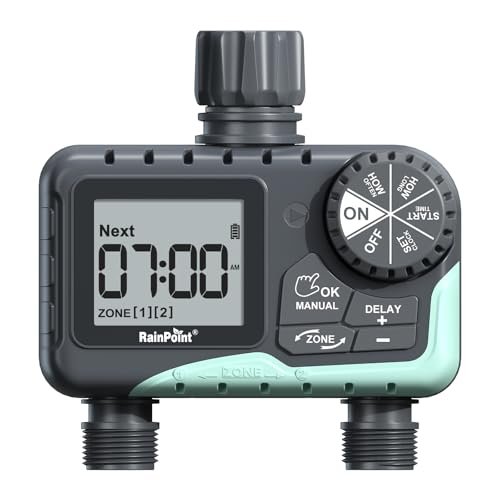
This two-zone sprinkler timer is designed to solve that problem by dividing one outdoor water source into two independently programmable outlets. Each zone can operate on its own start time, watering duration, and repeat interval, allowing homeowners to create separate schedules for different parts of the yard.
The timer also includes automatic watering, manual operation, rain delay, a large display, low-battery protection, and a weather-resistant housing. Its updated valve design is intended to improve water flow while supporting regular outdoor use.
What Is a Two-Zone Sprinkler Timer?
A two-zone hose timer connects directly to an outdoor faucet and provides two controlled water outlets.
Each outlet functions as a separate irrigation zone. One side might supply a lawn sprinkler, while the other operates a drip irrigation network, soaker hose, greenhouse line, or group of patio containers.
The timer controls when each outlet opens and how long it remains active. This makes it possible to manage two areas without installing a permanent underground irrigation controller.
A typical setup could use:
- Zone 1 for the front lawn
- Zone 2 for flower beds
- Zone 1 for a rotating sprinkler
- Zone 2 for a drip system
- Zone 1 for vegetables
- Zone 2 for shrubs or containers
The exact layout depends on available water pressure, hose routing, and the demands of the connected equipment.
Independent Programming for Two Watering Zones
The main advantage of this timer is that each outlet can follow a different watering plan.
Plants do not all require the same amount of water. Turf, vegetables, trees, flowers, and container plants often perform best under different schedules.
Independent programming allows each zone to have its own:
- Start time
- Watering duration
- Watering frequency
- Manual operation
- Active or inactive status
For example, a lawn sprinkler could run for 30 minutes every three days, while a drip line waters raised beds for 20 minutes every morning.
This flexibility helps users avoid the compromise of applying one schedule to two very different landscapes.
Why Separate Watering Zones Matter
A single schedule can be inefficient when garden areas have different soil, sun exposure, plant density, or irrigation equipment.
A sunny lawn may dry quickly, while a shaded flower bed stays damp for much longer. Similarly, a conventional sprinkler releases water far faster than a low-flow drip system.
Two-zone control can help account for differences in:
- Plant type
- Root depth
- Soil drainage
- Sun exposure
- Irrigation flow rate
- Slope
- Seasonal demand
- Shade
- Mulch coverage
The result can be more targeted watering and less unnecessary runoff.
Adjustable Watering Duration
Each watering cycle can reportedly be set from one minute to three hours and 59 minutes.
This range supports both brief and extended irrigation sessions.
Short cycles may work well for:
- Patio containers
- Seedlings
- Greenhouse misting
- Small flower beds
- Newly planted areas
Longer cycles may suit:
- Large lawn sprinklers
- Soaker hoses
- Tree watering
- Slow drip irrigation
- Extensive raised beds
- Low-flow irrigation networks
The correct duration depends on the actual volume of water released. A sprinkler may apply more water in 15 minutes than a drip line provides in an hour.
Users should test each zone and inspect the soil before relying on a permanent schedule.
Flexible Watering Frequency
The timer supports repeat intervals from one to 12 hours or from one to seven days.
This allows watering plans such as:
- Every two hours
- Every six hours
- Every 12 hours
- Once per day
- Every other day
- Every three days
- Once per week
Hourly scheduling is generally intended for specialized applications such as propagation or misting rather than established lawns.
Most mature plants benefit from watering schedules based on root depth, weather, and soil condition rather than frequent shallow cycles.
Automatic Watering Mode
Automatic mode follows the saved schedule for each zone.
Once the start time, duration, and repeat interval are configured, the timer opens and closes the selected outlet without daily input.
This can reduce the time spent manually moving hoses and operating faucets. It is especially useful during:
- Busy workweeks
- Hot weather
- Short vacations
- Early-morning irrigation
- Regular greenhouse maintenance
- Seasonal dry periods
Automatic watering should still be monitored. Plant needs change with rainfall, temperature, growth, and seasonal conditions.
Manual Watering for Zone 1, Zone 2, or Both
The timer includes separate manual controls for the first zone, second zone, or both outlets.
This allows users to start additional watering without deleting or changing the automatic schedules.
Manual mode can be helpful when:
- A dry area needs extra water
- A sprinkler needs testing
- New plants have just been installed
- A drip line needs flushing
- Both zones need immediate irrigation
- The hose is required for another outdoor task
The zone-selection button allows users to switch among Zone 1, Zone 2, and both zones.
When running both outlets simultaneously, available water pressure and flow are divided between them. Some sprinklers or large irrigation systems may perform better when the zones operate separately.
Rain Delay for Wet Weather
The rain-delay feature can pause watering for 24, 48, or 72 hours.
After the selected delay period ends, the timer automatically returns to its saved schedule. This prevents users from having to delete and recreate programs whenever rain is expected.
Rain delay can help reduce:
- Unnecessary irrigation
- Saturated soil
- Runoff
- Water bills
- Root stress
- Fungal pressure caused by excessive moisture
The supplied description does not indicate automatic rain sensing or internet-based weather control. The delay must therefore be activated manually.
Upgraded Valve Design
The manufacturer describes the current valve design as reducing flow resistance by approximately 40% compared with an earlier version.
Lower internal resistance may help preserve more of the faucet’s available water flow, which can be important when operating sprinklers or long hose runs.
Actual performance will still depend on:
- Household water pressure
- Faucet output
- Hose diameter
- Hose length
- Elevation
- Number of fittings
- Sprinkler requirements
- Whether both zones run simultaneously
The stated improvement should be treated as a manufacturer claim unless supported by independent comparative testing.
Why Water Flow Matters
Every fitting installed between the faucet and sprinkler introduces some resistance.
If the timer restricts flow too heavily, users may notice:
- Reduced sprinkler coverage
- Weak spray patterns
- Uneven drip output
- Poor performance at the far end of a hose
- Longer watering times
A more open valve path may improve usability, but it cannot compensate for a low-output faucet, undersized hose, or excessive simultaneous demand.
Before installation, estimate the flow requirements of both zones.
IP65 Weather-Resistant Housing
The timer is described as having an IP65-rated housing.
An IP65 rating generally indicates that an enclosure is protected against dust ingress and low-pressure water jets from multiple directions.
This level of protection is appropriate for normal outdoor exposure, such as rain and sprinkler splash. It does not mean the device can be submerged or left in standing water.
Avoid installing the timer where it may experience:
- Flooding
- Deep puddles
- Continuous direct spray
- Pressure washing
- Pool submersion
- Freezing water
- Severe physical impact
A faucet cover or shaded location may provide additional protection from heavy weather and direct sunlight.
Durability and Cycle Testing
The product is described as having completed 20,000 operating cycles in laboratory testing.
Cycle testing can provide useful information about repeated valve operation, but it does not guarantee a specific lifespan in every installation.
Real-world durability may also be affected by:
- Water pressure
- Sediment
- Mineral buildup
- Freezing temperatures
- Sun exposure
- Battery quality
- Installation stress
- Frequency of use
Routine inspection and seasonal storage remain important even when a device has undergone endurance testing.
Large 2.5-Inch Display
The timer includes a 2.5-inch display designed to show scheduling and status information clearly.
Depending on the active screen, users may be able to view:
- Current watering status
- Selected zone
- Next irrigation time
- Watering duration
- Repeat frequency
- Battery level
- Rain-delay status
A large display can make setup easier for users who find small digital controls difficult to read.
The interface is also described as using large buttons and simplified menus, which may benefit older homeowners or anyone who prefers direct controls over app-based programming.
Low-Battery Warning
The display provides a low-battery notification when the power level approaches replacement range.
This is particularly important for an irrigation timer because weak batteries can interrupt watering during hot weather or while the homeowner is away.
The timer is also described as closing its valve automatically when battery power becomes too low. A fail-closed design helps reduce the risk of a valve remaining open and allowing water to run continuously.
Before a vacation or prolonged absence:
- Check the battery indicator.
- Replace weak batteries.
- Test both valves.
- Confirm the schedules.
- Inspect all connections for leaks.
360-Degree Rotating Faucet Interface
The faucet connection can rotate through 360 degrees, which is intended to simplify installation.
A rotating connector can make it easier to position the timer upright without twisting the housing or applying stress to the faucet.
This is useful when:
- The faucet is close to a wall
- The spigot points at an awkward angle
- Hoses need to exit in different directions
- The display must remain visible
- Space is limited
The rotating joint should not be used as a handle for pulling or supporting heavy hoses. Hose strain should be reduced with proper routing or support.
Installing the Two-Zone Timer
A typical installation involves the following steps:
- Insert the required fresh batteries.
- Inspect the faucet washer and inlet.
- Attach the timer to the outdoor faucet.
- Rotate the body into a readable position.
- Connect a hose to Zone 1.
- Connect a second hose to Zone 2.
- Open the faucet slowly.
- Inspect every connection for leaks.
- Set the clock.
- Program Zone 1.
- Program Zone 2.
- Test each outlet manually.
- Confirm that both valves close correctly.
- Activate automatic mode.
The faucet normally remains open so that the timer can control each zone through its internal valves.
Planning Two Irrigation Zones
Good zone design improves water distribution and makes programming easier.
Group Similar Plants Together
Place plants with comparable moisture needs on the same outlet.
Separate High-Flow and Low-Flow Equipment
A lawn sprinkler and drip line should usually operate as different zones because their output rates are very different.
Consider Sun and Shade
A sunny section of the yard may need more frequent irrigation than a shaded area.
Account for Elevation
Uphill lines may receive lower pressure than downhill sections.
Limit Simultaneous Demand
If both zones require substantial flow, schedule them at different times.
Keep Hose Runs Reasonable
Long, narrow hoses create pressure loss, especially when several fittings are used.
Zone 1 for Lawn Irrigation
One outlet can be dedicated to a lawn sprinkler.
A lawn zone may use:
- Oscillating sprinklers
- Rotary sprinklers
- Impact sprinklers
- Portable sprinkler networks
- Above-ground irrigation kits
The correct runtime depends on coverage, wind, pressure, and soil absorption.
Measure sprinkler output using several straight-sided containers placed across the lawn. Uneven collection may indicate poor placement or insufficient pressure.
Zone 2 for Drip Irrigation
The second outlet can operate a drip network for garden beds, shrubs, or containers.
Drip irrigation typically requires:
- A pressure regulator
- A fine filter
- Main tubing
- Distribution tubing
- Emitters
- End caps
- Flush points
Because drip systems use lower flow than lawn sprinklers, they usually require a different runtime.
Separate programming allows each system to operate according to its actual delivery rate.
Running Both Zones at the Same Time
The timer supports manual operation of both zones, but simultaneous use may not be ideal for every property.
When both valves open, the available flow is divided. This can reduce pressure at each outlet.
Potential signs of insufficient combined flow include:
- Reduced sprinkler radius
- Weak misting
- Uneven drip distribution
- Sprinklers that fail to rotate
- Poor performance at distant emitters
When pressure drops noticeably, schedule the zones sequentially rather than concurrently.
Watering While Away from Home
The timer can maintain regular irrigation during a short trip, but the complete system should be tested thoroughly beforehand.
Before leaving:
- Install fresh batteries
- Test each schedule
- Inspect hoses for damage
- Tighten leaking connections
- Confirm that sprinklers cannot move
- Clean drip filters
- Check the weather forecast
- Activate rain delay if appropriate
- Ensure the faucet remains open
- Verify that water drains away safely
Automatic irrigation reduces daily effort, but unattended pressurized hoses still carry some leak risk.
Best Practices for Efficient Watering
Water Early in the Morning
Morning watering generally reduces evaporation and allows foliage to dry before night.
Use Different Schedules for Different Zones
Do not give a lawn and drip garden identical runtimes without measuring their output.
Apply Rain Delay Promptly
Pause scheduled watering when rainfall has already supplied enough moisture.
Check Soil Moisture
Inspect below the surface before increasing frequency.
Adjust Seasonally
A schedule created during peak summer may apply too much water in cooler weather.
Avoid Watering Pavement
Adjust sprinklers so water reaches soil rather than driveways and sidewalks.
Common Programming Mistakes
Confusing Hours and Days
A program set every three hours is very different from one set every three days. Review the display carefully.
Programming Both Zones Identically
Separate zones provide the most value when schedules reflect actual plant and equipment needs.
Overlapping High-Flow Cycles
Running two demanding sprinklers at once may reduce performance.
Setting Excessive Duration
A maximum duration of nearly four hours can severely overwater small areas if entered incorrectly.
Forgetting Rain Delay
The timer does not appear to pause automatically based on weather.
Ignoring the Battery Warning
Replace weak batteries before the system becomes unreliable.
Common Installation Mistakes
Overtightening the Faucet Connection
Excessive force can damage washers, threads, or the rotating inlet.
Allowing Heavy Hoses to Pull on the Timer
Support or route hoses so their weight does not stress the housing.
Installing in Standing Water
IP65 protection does not make the timer suitable for submersion.
Leaving the Timer Installed During Freezing Weather
Water trapped inside the valves can freeze and crack internal components.
Skipping Manual Tests
Each zone should be tested before automatic operation begins.
Assuming Every Faucet Provides Enough Flow
Two-zone performance depends on available pressure and volume.
Maintenance and Seasonal Care
Routine maintenance helps preserve reliable operation.
Periodically:
- Inspect the faucet connection
- Check hose washers
- Clean inlet screens
- Review battery status
- Test both valves
- Confirm rain-delay operation
- Wipe dirt from the display
- Check hoses for cracks
- Verify that the rotating joint moves normally
- Update schedules for the season
Before freezing weather:
- Turn off the faucet.
- Disconnect both hoses.
- Remove the timer.
- Drain all internal water.
- Remove the batteries.
- Dry the unit.
- Store it indoors.
Advantages and Considerations
Advantages
- Two independently programmable outlets
- Separate schedules for different plant zones
- Watering duration from one minute to three hours and 59 minutes
- Frequency from hourly intervals to every seven days
- Automatic watering mode
- Manual operation for Zone 1, Zone 2, or both
- Rain delay for 24, 48, or 72 hours
- Large 2.5-inch display
- Low-battery warning
- Fail-closed behavior at low battery, according to the description
- 360-degree rotating faucet interface
- IP65-rated weather resistance
- Updated valve design intended to reduce flow restriction
- Suitable for lawns, drip systems, gardens, and greenhouses
Potential Considerations
The timer does not appear to include Wi-Fi, app control, automatic weather adjustment, or a rain sensor.
Running both zones simultaneously may reduce pressure. The claimed flow-resistance reduction, laboratory cycle count, and durability improvements are manufacturer claims that may not reflect every installation.
The device should also be removed before freezing weather and must not be submerged despite its IP65 enclosure rating.
Frequently Asked Questions
Can each outlet follow a different schedule?
Yes. Zone 1 and Zone 2 can be programmed independently.
What watering duration is available?
Each cycle can reportedly run from one minute to three hours and 59 minutes.
How often can watering repeat?
Intervals can be set from one to 12 hours or from one to seven days.
Can both zones operate manually?
Yes. Manual mode can be selected for Zone 1, Zone 2, or both zones.
Can both zones run simultaneously?
The description indicates that both can be activated manually. Actual performance depends on available water pressure and flow.
Does the timer have rain delay?
Yes. Watering can be paused for 24, 48, or 72 hours.
Does it detect rain automatically?
No automatic rain detection is described. Rain delay must be activated manually.
What happens when the batteries are low?
The timer displays a low-battery warning and is described as automatically closing the valves when power is insufficient.
Is the timer waterproof?
It is described as IP65-rated, which supports outdoor use but not submersion.
Does it require Wi-Fi?
No Wi-Fi or app requirement is mentioned. Programming is performed directly on the timer.
Can it run a sprinkler and drip system?
Yes. Independent zones make that a practical configuration, provided each system receives appropriate pressure and filtration.
Will it reduce water pressure?
Any inline timer creates some resistance. The updated valve is claimed to reduce flow restriction, but actual performance depends on the complete installation.
Can I use it while on vacation?
Yes, after thoroughly testing both schedules, hoses, and connections and ensuring the batteries are in good condition.
Should both zones water at the same time?
Not necessarily. Sequential scheduling is often better when both systems require high flow.
Can it stay outside during winter?
It should be removed, drained, and stored before freezing temperatures.
Final Thoughts
This two-zone sprinkler timer offers a practical way to manage two distinct watering areas from one outdoor faucet. Independent programming allows lawns, garden beds, drip systems, greenhouses, and container plants to receive schedules based on their actual needs rather than sharing one compromise program.
The broad duration and frequency ranges provide considerable flexibility, while manual zone selection and 24-, 48-, or 72-hour rain delay make temporary adjustments straightforward. The large display, rotating inlet, low-battery warning, and weather-resistant housing also improve everyday usability.
Its main limitations are the lack of smart connectivity and the possibility of reduced pressure when both zones run simultaneously. Users must also monitor rainfall manually and remove the device before freezing weather.
For homeowners who want separate automatic irrigation schedules without installing a permanent multi-zone controller, this timer provides a useful balance of flexibility, direct operation, and outdoor convenience.