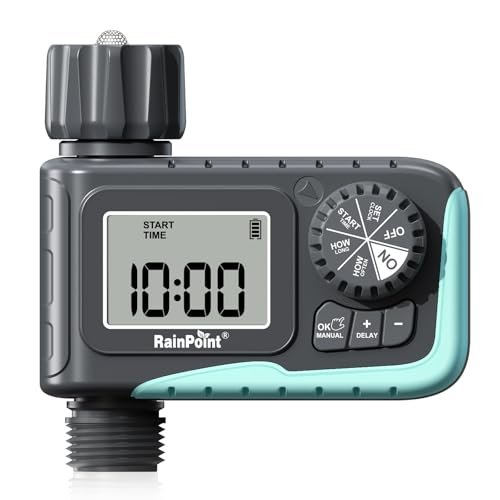
Programmable Sprinkler Timer Review: Flexible Automatic Watering with Rain Delay and Manual Control
Keeping a lawn or garden consistently watered can be difficult when daily schedules, changing weather, and different plant requirements all compete for attention. Turning a hose on manually may work for occasional watering, but it becomes inconvenient when plants need regular irrigation or when no one is home to manage the faucet.
This programmable sprinkler timer is designed to automate watering directly from an outdoor faucet. It allows users to select a start time, watering duration, and repeat interval, then operates the connected sprinkler, hose, or irrigation system according to that schedule.
With automatic watering, manual operation, rain delay, a large LCD screen, and a visible battery indicator, the timer offers a practical solution for lawns, flower beds, vegetable gardens, yards, and other outdoor watering applications.
What Is a Programmable Hose Timer?
A hose timer connects between an outdoor faucet and a garden hose, sprinkler, soaker hose, or drip irrigation system. The faucet remains open, while an internal valve inside the timer controls when water begins and stops flowing.
Unlike a mechanical countdown timer, this model can store a recurring watering program. Once configured, it can start irrigation automatically without someone turning a dial before every cycle.
The timer allows users to control three essential scheduling elements:
- When watering begins
- How long each cycle runs
- How often the cycle repeats
This makes it useful for maintaining consistent irrigation during busy workweeks, hot weather, or short trips away from home.
Easy Programming for Custom Watering Schedules
The timer is designed to let users create a watering schedule directly from the device.
Programming involves setting the preferred start time, choosing how long water should flow, and selecting the interval between watering cycles. Once the values are saved, the timer follows the schedule automatically.
A typical lawn program might begin early in the morning and run every two or three days. A greenhouse or container garden may require shorter cycles at more frequent intervals.
The broad scheduling range makes the timer adaptable to different plant types and irrigation equipment.
Adjustable Watering Duration
Each automatic watering cycle can run from one minute to three hours and 59 minutes.
Short watering periods may be appropriate for:
- Small patio containers
- Seedlings
- Greenhouse misting
- Recently planted flowers
- Small drip irrigation zones
Longer cycles may work better for:
- Soaker hoses
- Large lawn sprinklers
- Raised garden beds
- Trees and shrubs
- Low-flow drip irrigation systems
Watering duration should be based on actual water output rather than time alone. A conventional sprinkler can release much more water in 20 minutes than a low-flow drip system delivers during the same period.
Testing the connected equipment before creating a permanent schedule helps prevent both underwatering and oversaturation.
Flexible Watering Frequency
The watering interval can be set from one to 12 hours or from one to seven days.
This gives users several scheduling options, including:
- Every hour
- Every four hours
- Every 12 hours
- Once per day
- Every other day
- Twice per week
- Once every seven days
Frequent hourly watering may be useful for specialized misting or propagation applications, but it is rarely appropriate for established lawns or mature plants.
For most outdoor gardens, deeper and less frequent watering encourages roots to grow farther into the soil. Local climate, plant type, and soil drainage should guide the final schedule.
Automatic Watering for Everyday Convenience
Once programmed, the timer runs without requiring daily input.
Automatic operation is especially useful when:
- Watering must begin before sunrise
- You are away from home
- Plants require a consistent routine
- A lawn sprinkler needs to run on selected days
- A drip system serves several garden beds
- Daily hand watering is impractical
The automatic schedule continues until it is changed, paused, or disabled.
Although automation saves time, the program should still be reviewed regularly. Irrigation needs change with rainfall, temperature, plant growth, and the season.
Rain Delay for Wet Weather
The built-in rain-delay function temporarily pauses the automatic schedule for 24, 48, or 72 hours.
When the selected delay ends, the timer resumes its saved program automatically. There is no need to delete or recreate the schedule after every rainstorm.
Rain delay can help reduce:
- Unnecessary water consumption
- Oversaturated soil
- Surface runoff
- Root stress
- Watering expenses
- Moisture-related plant problems
The feature must be activated manually. The timer does not appear to contain a rain sensor or internet-based weather service, so users must check the forecast or soil conditions themselves.
Manual Watering Without Erasing the Program
Manual mode allows users to start an additional watering session without changing the stored automatic schedule.
Manual watering can be set from one minute to eight hours. This is useful when plants need extra water or when the hose is required for another outdoor task.
Common manual uses include:
- Testing a sprinkler
- Watering a newly planted area
- Flushing a drip irrigation line
- Washing gardening tools
- Filling a watering can
- Giving dry plants an additional cycle
Once the manual session ends, the timer returns to the original automatic program.
Large LCD Screen
The timer includes a large LCD screen intended to make programming and status checks easier.
The display can show information such as:
- Current watering duration
- Watering frequency
- Programmed start time
- Operating mode
- Remaining battery power
A clear screen reduces the likelihood of schedule errors and makes it easier to confirm whether the timer is in automatic, manual, or rain-delay mode.
Because the device is used outdoors, positioning it away from excessive direct sunlight may help preserve display visibility and reduce heat exposure.
Battery-Level Indicator
The screen displays the remaining battery status, allowing users to replace the batteries before they become too weak to operate the valve reliably.
This is especially important when the timer controls watering during a vacation or an extended period away from home.
Before relying on the timer unattended:
- Check the battery indicator.
- Replace weak batteries.
- Run a manual test.
- Confirm that the valve opens and closes.
- Inspect all hose connections for leaks.
Battery monitoring provides useful warning, but periodic physical testing remains important.
Powered by Two AAA Batteries
The timer requires two AAA alkaline batteries, which are not included.
Battery operation means the controller does not need:
- An electrical outlet
- An extension cord
- Wi-Fi
- A mobile app
- A smart-home hub
This allows it to operate on outdoor faucets located far from buildings or power sources.
For dependable performance, replace both batteries at the same time and use matching alkaline cells. Avoid mixing old and new batteries or different battery types.
Suitable for Lawns and Sprinklers
The timer can operate a standard hose-connected lawn sprinkler on a repeating schedule.
When determining the correct watering duration, consider the sprinkler’s flow rate and coverage pattern. Wind, household water pressure, hose diameter, and sprinkler placement can all affect how much water reaches the lawn.
A useful way to measure sprinkler output is to place several identical containers across the watering area. After one cycle, compare the amount collected in each container to identify dry or overwatered sections.
Useful for Garden Irrigation
Vegetable gardens and flower beds often benefit from consistent watering, especially during warm or dry periods.
The timer can be connected to:
- Drip irrigation tubing
- Soaker hoses
- Micro-sprinklers
- Raised-bed systems
- Individual plant emitters
- Garden hose sprinklers
A pressure regulator and filter may be required for drip irrigation, depending on the design of the connected system.
Greenhouse Applications
The timer’s short interval settings may support certain greenhouse irrigation or misting routines.
For example, a greenhouse system might use short cycles to maintain moisture around seedlings or propagation trays. However, frequent misting requires careful observation because excess humidity can encourage fungal problems.
Misting nozzles also have small openings that can clog easily, so clean water and appropriate filtration are important.
Yard and Landscape Watering
The timer can support general watering around residential landscapes, including:
- Shrubs
- Young trees
- Flower borders
- Groundcover
- Courtyard plants
- Patio containers
- Decorative garden areas
Plants with very different moisture requirements should ideally be placed in separate irrigation zones. One timer controlling a single outlet cannot independently provide different schedules to multiple branches unless additional valves or controllers are added.
Installing the Sprinkler Timer
Installation is generally straightforward.
- Insert two fresh AAA alkaline batteries.
- Inspect the faucet threads and sealing washer.
- Attach the timer to the outdoor faucet.
- Tighten the connection by hand.
- Connect the garden hose or irrigation line to the outlet.
- Open the faucet slowly.
- Check both connections for leaks.
- Set the current time.
- Enter the start time.
- Select the watering duration.
- Choose the watering frequency.
- Activate automatic mode.
- Run a short manual test.
The outdoor faucet normally remains open so the timer’s internal valve can control water flow.
Testing Before Unattended Use
A new watering schedule should be observed before the timer is left operating alone.
Confirm that:
- Water starts at the correct time
- The cycle runs for the intended duration
- The valve closes completely
- The hose remains securely connected
- The irrigation equipment receives enough pressure
- No water leaks around the fittings
- Rain delay pauses the schedule
- Manual mode does not erase the program
Several successful test cycles provide greater confidence than relying on the screen alone.
How to Choose an Effective Watering Schedule
Consider the Soil
Sandy soil drains quickly and may require more frequent irrigation. Clay soil holds moisture longer and may need shorter cycles to prevent runoff.
Match the Plant Type
Lawns, vegetables, flowers, seedlings, trees, and drought-tolerant plants have different water requirements.
Account for the Irrigation Method
A sprinkler, soaker hose, and drip line deliver water at very different rates.
Check the Weather
Hot, dry, and windy conditions increase evaporation. Rain, humidity, and cooler temperatures reduce irrigation demand.
Inspect the Root Zone
The top layer of soil may look dry while deeper soil remains moist. Check below the surface before increasing the schedule.
Follow Watering Restrictions
Some communities permit outdoor irrigation only on specific days or during certain hours.
Best Practices for Efficient Irrigation
Water Early in the Morning
Morning watering generally reduces evaporation and allows foliage to dry during the day.
Use Rain Delay Promptly
Pause irrigation when rain has already supplied enough moisture.
Avoid Excessive Frequency
Repeated shallow watering may encourage shallow root growth. Established plants often benefit from deeper, less frequent cycles.
Check for Leaks Regularly
Inspect the timer, faucet, hose, sprinkler, and downstream fittings.
Adjust the Schedule Seasonally
A summer watering program may be excessive during cooler months.
Group Plants by Water Needs
Plants with similar requirements are easier to manage on the same irrigation schedule.
Common Mistakes to Avoid
Leaving the Faucet Closed
The timer cannot release water unless the outdoor faucet remains open.
Programming the Wrong Interval
Confusing hourly intervals with daily intervals can result in far more watering than intended. Review the display carefully.
Setting Excessive Duration
A timer that supports nearly four-hour cycles can easily overwater a small garden if programmed incorrectly.
Forgetting Rain Delay
The timer does not detect rain automatically. Without manual intervention, it will continue following the stored schedule.
Relying on Weak Batteries
Low battery power may interrupt watering or prevent reliable valve operation. Replace batteries before extended travel.
Overtightening Hose Connections
Most garden hose fittings seal with a washer. Excessive force can damage the threads or timer housing.
Leaving the Timer Outside During Freezing Weather
Water trapped inside the valve may freeze and crack the device. Disconnect, drain, and store it before winter.
Maintenance and Seasonal Storage
Routine care helps maintain dependable operation.
Recommended maintenance includes:
- Inspecting for leaks
- Cleaning faucet threads
- Checking hose washers
- Monitoring battery level
- Testing manual operation
- Confirming automatic shutoff
- Wiping dirt from the display
- Reviewing the schedule regularly
Before freezing temperatures arrive:
- Turn off the faucet.
- Disconnect the timer.
- Drain all remaining water.
- Remove the batteries.
- Dry the device.
- Store it indoors.
Package Contents
The supplied package includes:
- One water timer
- One user manual
Two AAA alkaline batteries are required but not included.
The manual should be retained because button sequences and programming steps may vary between timer models.
Advantages and Considerations
Advantages
- Programmable automatic watering
- Watering duration from one minute to three hours and 59 minutes
- Frequency from hourly intervals to every seven days
- Manual watering from one minute to eight hours
- Manual mode preserves the automatic schedule
- Rain delay for 24, 48, or 72 hours
- Large LCD screen
- Visible battery indicator
- No Wi-Fi or app required
- Battery-powered installation
- Suitable for lawns, gardens, yards, greenhouses, and drip systems
- Straightforward faucet-mounted design
Potential Considerations
The timer does not provide remote access, automatic weather adjustment, or built-in rain sensing. Rain delay must be activated manually.
It uses AAA batteries, which are not included, and the exact weather-resistance rating is not provided in the source description.
Users should also verify connector compatibility, operating water pressure, and winter-storage requirements before installation.
Frequently Asked Questions
Does this timer start watering automatically?
Yes. Once the start time, duration, and frequency are programmed, it runs the schedule automatically.
What watering durations are available?
Automatic cycles can run from one minute to three hours and 59 minutes.
How often can it water?
The timer can repeat from every one to 12 hours or every one to seven days.
Can I water manually without deleting the schedule?
Yes. Manual mode runs an additional cycle without interrupting the programmed schedule.
How long can manual watering run?
Manual operation can be set from one minute to eight hours.
Does it have rain delay?
Yes. Automatic watering can be paused for 24, 48, or 72 hours.
Does rain delay resume automatically?
Yes. The stored schedule resumes after the selected delay period ends.
Does it detect rainfall by itself?
No automatic rain detection is described. The delay must be enabled manually.
What batteries are required?
The timer uses two AAA alkaline batteries, which are not included.
Does the screen show battery power?
Yes. The LCD displays the remaining battery status.
Can it be used with drip irrigation?
Yes, provided the drip system has suitable pressure regulation, filtration, and compatible hose connections.
Can it control a lawn sprinkler?
Yes. It can operate many standard hose-connected sprinklers, assuming adequate water pressure and flow.
Can it remain outdoors during winter?
It should be disconnected, drained, and stored before freezing temperatures unless the manufacturer specifically states that it is freeze-resistant.
Final Thoughts
This programmable sprinkler timer offers a practical way to automate routine watering without installing a complex irrigation controller. Its adjustable start time, duration, and frequency settings make it suitable for lawns, gardens, yards, greenhouses, sprinklers, soaker hoses, and basic drip systems.
The manual mode provides extra watering without deleting the main schedule, while the 24-, 48-, and 72-hour rain-delay options make it easier to pause irrigation after wet weather. The large LCD and battery indicator also simplify everyday operation.
Its main limitation is the absence of smart connectivity and automatic weather sensing. Users must continue monitoring rainfall, soil conditions, and seasonal changes themselves.
For gardeners who want flexible recurring schedules in a straightforward battery-powered device, this faucet timer provides a useful balance of programmability, simplicity, and irrigation control.