Rachio Smart Hose Timer Review: App-Controlled Watering, Rain Skips, Flow Monitoring, and Multi-Valve Expansion
A traditional hose timer can automate basic watering, but it usually leaves homeowners with limited control. Schedules must often be changed at the faucet, weather adjustments are manual, and there is little visibility into whether watering actually happened as expected.
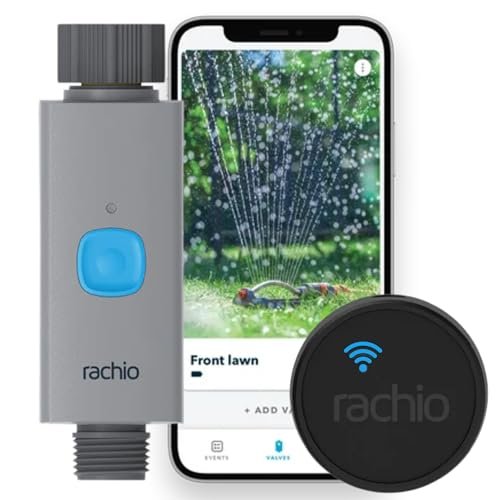
The Rachio Smart Hose Timer takes a more connected approach. It combines a battery-powered outdoor valve with a WiFi Hub and the Rachio app, allowing users to create watering schedules, start or stop irrigation remotely, monitor system conditions, and automatically skip watering when rain is expected.
The system is also designed to grow with a yard. A single WiFi Hub can support up to eight compatible Rachio hose timer valves, making it possible to manage several hose-connected sprinklers, drip lines, garden beds, and other watering areas from one platform.
For homeowners who want smart irrigation without installing a permanent in-ground sprinkler controller, the Rachio Smart Hose Timer offers an appealing middle ground between a mechanical faucet timer and a full residential irrigation system.
What Is the Rachio Smart Hose Timer?
The Rachio Smart Hose Timer is a connected outdoor watering valve designed to attach to a standard hose faucet.
The supplied package includes:
- One smart hose timer valve
- One Rachio WiFi Hub
The valve itself requires two AA batteries, which are not included. The WiFi Hub connects to a 2.4 GHz WiFi network and acts as the communication bridge between the outdoor valve and the Rachio app.
Once configured, the timer can be used for scheduled watering, manual watering, rain-based schedule skips, flow monitoring, and system alerts.
Why Smart Hose Watering Is Useful
A conventional timer can open a valve at 6:00 a.m. every Tuesday and Saturday, but it does not necessarily know whether those watering events still make sense.
Conditions change.
A garden may receive heavy rainfall. Temperatures may cool. A hose can become disconnected. Batteries can run low. A homeowner may want to add extra watering while away from home.
Smart control gives the watering system more flexibility.
Instead of treating every schedule as fixed, users can monitor and adjust watering from a phone.
Rachio App Control From Anywhere
One of the system's main advantages is control through the Rachio app.
Once the valve and hub are connected, users can manage watering without physically walking to the faucet.
This can be useful when:
- Adjusting schedules from indoors
- Traveling
- Checking irrigation while at work
- Starting temporary watering
- Stopping a sprinkler that no longer needs to run
For many users, remote access is the feature that most clearly distinguishes a smart timer from a traditional dial model.
Scheduling Your Watering
The Rachio app allows users to create automated watering schedules.
That means the timer can handle routine watering for areas such as:
- Lawns
- Flower beds
- Vegetable gardens
- Raised beds
- Shrubs
- Drip irrigation
- Patio plants
Once a schedule is established, the system can operate without requiring someone to manually turn the faucet on and off every day.
Different Parts of a Yard Need Different Schedules
One watering schedule rarely works perfectly for an entire property.
Grass may need deeper, less frequent watering. Container plants may dry more quickly. A vegetable garden may require a different routine than established shrubs.
The Rachio ecosystem becomes particularly useful when multiple valves are added because each watering area can be managed separately.
Up to Eight Valves Per WiFi Hub
The supplied information states that a single Rachio WiFi Hub can pair with up to eight hose timer valves.
This provides considerably more room for expansion than a basic one- or two-zone hose timer.
For example, one property might eventually use:
- Valve 1: front lawn
- Valve 2: backyard lawn
- Valve 3: vegetable garden
- Valve 4: flower beds
- Valve 5: greenhouse
- Valve 6: patio containers
Each valve can be attached to an appropriate hose or irrigation line.
Why Modular Expansion Matters
Not every homeowner needs eight watering zones immediately.
A modular design allows the system to begin with one valve and expand later.
That is useful for gardens that evolve over time.
You might begin by automating a vegetable bed and later add valves for lawn sprinklers or additional landscaping without replacing the original hub.
Rain Skips
One of the more important smart-watering features is Rain Skip.
The system can automatically skip scheduled irrigation when rain is expected.
This helps address one of the most obvious weaknesses of traditional hose timers: watering even when nature has already provided enough moisture.
How Rain Skips Can Reduce Waste
If a sprinkler is scheduled to run shortly before or during meaningful rainfall, much of that irrigation may be unnecessary.
Skipping a watering event can help reduce:
- Water waste
- Soil saturation
- Runoff
- Excess moisture around plants
It also reduces the need to manually disable the timer whenever rain enters the forecast.
Rain Skip Is Not the Same as Soil-Moisture Measurement
Weather-aware automation is helpful, but it does not necessarily measure the actual moisture level at every plant.
Forecasts can be imperfect, and rainfall can vary significantly over short distances.
For best results, occasional observation of soil and plant conditions is still worthwhile.
Flow Monitoring
The Rachio Smart Hose Timer includes flow-monitoring functionality according to the supplied description.
Flow data can help the system identify watering behavior that does not appear normal.
This gives users more visibility than a simple timer that merely assumes water is flowing whenever its valve opens.
Why Flow Monitoring Can Matter
Unexpected flow behavior may indicate problems such as:
- Disconnected hoses
- Leaks
- Restricted flow
- A sprinkler not operating normally
Receiving an alert can help a homeowner investigate before a minor problem turns into a large amount of wasted water.
Smart Alerts
The system can send alerts about irrigation-related conditions.
The two specific examples included in the supplied information are:
- Unexpected flow conditions
- Low battery levels
These alerts are useful because hose timers are often installed in parts of the property that homeowners do not inspect every day.
Low-Battery Notifications
Each timer valve requires two AA batteries.
Because the valve depends on those batteries to operate, low-battery notifications are more than a convenience.
A depleted battery could cause scheduled watering to be missed.
Checking battery status is especially important:
- Before going on vacation
- During hot weather
- At the beginning of the irrigation season
- Before relying on the timer for newly planted vegetation
Manual Quick Run
Automation does not eliminate the need for occasional manual watering.
The Rachio valve includes a physical button that can start watering directly at the device.
Users can also initiate watering through the app.
This is useful when you want to:
- Test a sprinkler
- Give plants extra water
- Fill a container
- Run irrigation after planting
- Check hose connections
without modifying the normal schedule.
Why a Physical Button Is Still Valuable
Smartphone control is useful, but a watering device should not require a phone for every simple action.
A physical button lets someone standing beside the faucet operate the valve immediately.
That can be particularly helpful for gardeners, contractors, family members, or anyone who does not have access to the app.
2.4 GHz WiFi Requirement
The Rachio WiFi Hub requires a 2.4 GHz WiFi network.
This frequency is common in smart-home devices because it generally provides better range through walls than 5 GHz networks.
Before purchasing, make sure the home's router or mesh system provides 2.4 GHz connectivity.
Why Hub Placement Matters
The WiFi Hub needs reliable communication with the network and the outdoor valve.
If the faucet is far from the house, wireless performance may depend heavily on where the hub is installed.
For better reliability, place the hub where:
- WiFi signal is strong
- The distance to outdoor valves is reasonable
- Large metal obstructions are minimized
If connectivity is weak, a mesh WiFi node or better access-point placement may help.
Rachio Smart Hose Timer vs. a Mechanical Hose Timer
A mechanical timer is inexpensive and easy to understand.
It may be perfectly adequate for a single watering area with an unchanging schedule.
The Rachio system adds capabilities such as:
- Remote app control
- Rain skips
- Flow monitoring
- Low-battery alerts
- Multi-valve expansion
- Smart-home integration
Those features become more valuable as the irrigation setup becomes larger or more dynamic.
Rachio Smart Hose Timer vs. an In-Ground Sprinkler Controller
A traditional irrigation controller typically operates electric valves connected to buried sprinkler pipes.
The Rachio Smart Hose Timer is different.
It is designed around hose-connected outdoor faucets.
That makes it suitable for users who want automated watering without installing:
- Underground irrigation lines
- Valve boxes
- Control wiring
- A permanent sprinkler controller
It can therefore be particularly attractive for existing gardens, rentals, or properties where excavation is undesirable.
Using It With Lawn Sprinklers
A Rachio hose timer can be connected to a compatible portable sprinkler.
The app can then automate when the sprinkler runs.
This approach can work well for modest lawn areas where a permanent underground system would be unnecessarily expensive or complicated.
Using It With Drip Irrigation
The system can also be useful for drip irrigation.
A timer can supply a drip line serving:
- Vegetable gardens
- Raised beds
- Shrubs
- Flower beds
Because drip systems typically operate at lower flow than large lawn sprinklers, users should make sure the complete irrigation setup meets the timer's operating requirements.
Using Multiple Valves for Different Plant Types
The ability to pair up to eight valves makes it possible to treat different landscape areas independently.
For instance, a homeowner could create separate watering systems for grass, herbs, tomatoes, roses, and container plants.
This can be more efficient than running several areas from one large sprinkler schedule.
Installation
The Rachio Smart Hose Timer is designed for relatively straightforward installation.
A typical setup involves:
- Installing the Rachio WiFi Hub indoors.
- Connecting the hub to 2.4 GHz WiFi.
- Installing two AA batteries in the valve.
- Connecting the valve to the outdoor faucet.
- Pairing the valve with the hub and app.
- Connecting the hose or irrigation line.
- Testing manual operation.
- Creating an automatic watering schedule.
Always inspect the hose washer and threaded connections for leaks before leaving the system pressurized.
Keep the Outdoor Faucet Open
For automatic watering to work, the faucet feeding the timer generally needs to remain open.
The smart valve controls when water passes through to the hose.
If someone closes the upstream faucet, the timer may activate normally but no water will reach the irrigation equipment.
This is an easy mistake to make after manually using the faucet for another purpose.
Check for Leaks After Installation
A smart irrigation system may remain connected to pressurized water for long periods.
Even a small leak can waste significant water over time.
Inspect:
- Faucet connection
- Timer outlet
- Hose fittings
- Drip connections
after installation and periodically during the watering season.
Water Pressure Still Matters
The timer can control water flow, but it cannot create additional pressure.
If a connected sprinkler requires more pressure or flow than the faucet provides, smart automation will not fix the hydraulic limitation.
This becomes especially important when several irrigation systems operate from different valves supplied by the same household plumbing.
Smart Irrigation and Water Conservation
The Rachio system's strongest water-saving feature is not simply scheduling.
It is the combination of scheduled watering with weather-aware skips and monitoring.
A timer that waters less intelligently may continue operating during rainy periods.
A smart system has more opportunities to avoid unnecessary cycles.
Do Not Assume Smart Means Automatically Optimal
The controller can automate watering, but homeowners still need to establish reasonable schedules.
Overwatering can still occur if a user programs excessive runtimes.
The best irrigation program depends on:
- Soil type
- Climate
- Plant species
- Sun exposure
- Sprinkler output
- Recent rainfall
Smart controls make adjustments easier; they do not replace basic landscape knowledge.
Sandy, Loamy, and Clay Soils Behave Differently
Soil type has a major influence on irrigation.
Sandy Soil
Sandy soil drains quickly and may require more frequent watering.
Clay Soil
Clay absorbs water more slowly and is more prone to runoff if irrigation is applied too quickly.
Loamy Soil
Loam generally provides a balance between drainage and moisture retention.
The watering schedule should be adapted accordingly.
Deep Watering vs. Frequent Surface Watering
Established lawns and shrubs often benefit from watering that penetrates deeper into the root zone.
Very short, frequent cycles may keep only the surface wet.
Vegetable seedlings and containers can have different requirements.
The flexibility of separate smart valves makes it easier to tailor watering to the actual application.
Water in the Early Morning When Practical
For many landscapes, early morning is a practical watering period.
Conditions are often cooler and less windy than during the middle of the day, reducing evaporation and spray drift.
The exact best time depends on climate and local watering restrictions.
Check Local Watering Rules
Some municipalities restrict:
- Which days irrigation can run
- What times watering is allowed
- How often landscapes may be irrigated
Smart scheduling should be configured to comply with local requirements.
A connected controller does not override local water regulations.
Smart-Home Compatibility
The supplied description states that the Rachio Smart Hose Timer works with platforms including:
- Alexa
- Google Home
- IFTTT
These integrations may allow watering to interact with a broader smart-home setup.
Exact functionality can change over time, so users who depend on a particular integration should confirm current support before purchasing.
Alexa and Google Home
Voice-assistant integration can be convenient for temporary watering.
For example, users may be able to start or stop supported irrigation actions without opening the Rachio app.
However, automated schedules and Rain Skips are generally more important than voice commands for everyday irrigation.
IFTTT and Automation
IFTTT compatibility can potentially allow irrigation to participate in broader automation workflows.
The exact triggers and actions available should be checked in the current Rachio and IFTTT integrations.
Smart-home integrations evolve, so they should be viewed as supplemental rather than the sole reason to choose a watering controller.
What Happens if WiFi Goes Down?
Connected features such as remote control and weather updates depend on network availability.
The exact behavior of stored watering schedules during a connectivity interruption should be confirmed in Rachio's current product documentation.
This is an important consideration for anyone relying on the system during extended travel.
Battery Maintenance
AA batteries make the valve easy to power without running electrical wiring outdoors.
The tradeoff is periodic battery replacement.
Keep spare batteries available during the irrigation season, and respond to low-power alerts before the batteries are fully depleted.
Remove Batteries During Long-Term Storage
If the timer is stored for an extended period, such as over winter, removing the batteries can help reduce the risk of damage from battery leakage.
Follow Rachio's storage recommendations for the valve and hub.
Winterization
Any hose-connected irrigation timer that contains water should be protected from freezing unless the manufacturer explicitly rates it for freeze exposure.
When freezing weather approaches, a sensible winterization process may include:
- Closing the water supply
- Disconnecting the timer
- Draining trapped water
- Removing hoses
- Storing the valve in a protected location
Weather-resistant electronics do not necessarily mean that internal plumbing can survive frozen water.
Common Mistakes to Avoid
Connecting to the Wrong WiFi Band
The hub requires 2.4 GHz WiFi.
Forgetting the AA Batteries
The timer valve requires two AA batteries, and they are not included.
Closing the Faucet After Programming
The timer needs an available upstream water supply.
Assuming Rain Skip Measures Soil Moisture
Weather-based skipping is not the same as a soil-moisture sensor.
Ignoring Low-Battery Alerts
A dead battery can result in missed irrigation.
Expecting Smart Controls to Fix Poor Sprinkler Coverage
The connected sprinkler still needs proper flow, pressure, and placement.
Leaving the Valve Outside During Freezing Conditions
Winterize hose-connected equipment unless explicitly rated otherwise.
Who Is the Rachio Smart Hose Timer Best For?
The system is particularly attractive for homeowners who:
- Use hose-based irrigation
- Want remote app control
- Need weather-aware watering
- Want to automate multiple areas over time
- Prefer not to install underground irrigation
- Already appreciate connected smart-home devices
It is especially compelling when several independent garden zones may eventually be required.
Who May Prefer a Basic Hose Timer?
A conventional timer may be sufficient if:
- Only one small watering area is involved
- The schedule rarely changes
- Remote control is unnecessary
- Weather-based adjustments are not important
The additional value of Rachio comes from connectivity, intelligence, and scalability.
Who May Prefer a Traditional Irrigation Controller?
A permanent controller may be better for properties that already have:
- Buried sprinkler pipes
- Wired valves
- Many established zones
- Large lawn areas
The Rachio Smart Hose Timer is primarily intended for hose-faucet watering rather than replacing every type of residential irrigation controller.
Advantages and Limitations
Advantages
The Rachio Smart Hose Timer combines app-based control, scheduled watering, Rain Skips, flow monitoring, low-battery notifications, manual Quick Run operation, smart-home compatibility, and expansion to eight valves per WiFi Hub.
Its modular design makes it particularly useful for homeowners who want to automate hose irrigation gradually rather than commit to a permanent multi-zone installation.
Limitations
The system depends on a compatible 2.4 GHz WiFi network, and every valve requires batteries. Additional valves must also be purchased separately if more zones are needed.
Weather-aware Rain Skips can reduce unnecessary watering, but they should not be treated as perfect substitutes for observing actual soil and plant conditions.
Frequently Asked Questions
What is the Rachio Smart Hose Timer?
It is a connected hose-faucet irrigation valve controlled through the Rachio app.
What comes with this version?
The supplied description states that it includes one valve and one WiFi Hub.
Are batteries included?
No.
What batteries does the valve use?
Two AA batteries.
Does it require WiFi?
The WiFi Hub requires a 2.4 GHz WiFi connection.
Does it support 5 GHz WiFi?
The source specifically lists 2.4 GHz, so a 5 GHz-only network should not be assumed compatible.
Can I control watering from my phone?
Yes.
Can I start watering manually?
Yes. Watering can be started from the app or using the physical button on the valve.
What is Quick Run?
Quick Run allows temporary manual watering without relying on the normal automatic schedule.
Does it automatically skip watering when rain is expected?
Yes, through the Rain Skip feature described in the supplied information.
Does Rain Skip measure soil moisture?
Not based on the information supplied. It is described as weather-based.
Does it monitor flow?
Yes.
Why is flow monitoring useful?
It can help identify unexpected watering conditions or other potential issues.
Does it send low-battery alerts?
Yes.
How many valves can one hub control?
Up to eight compatible valves, according to the supplied information.
Do I need eight valves?
No. You can start with one and expand later.
Can each valve water a different area?
Yes. That is one of the main reasons to use multiple valves.
Can it be used for a lawn sprinkler?
Yes, provided the sprinkler's flow and pressure requirements are compatible with the water supply.
Can it be used for drip irrigation?
Yes, with a properly designed compatible drip system.
Does it work with Alexa?
The supplied description says yes.
Does it work with Google Home?
Yes, according to the source.
Does it work with IFTTT?
The supplied product information lists IFTTT compatibility.
Is it suitable for permanent underground sprinkler valves?
It is primarily a hose-end irrigation product rather than a conventional wired valve controller.
Should it remain outside during freezing weather?
Hose-connected irrigation hardware should generally be disconnected and drained before freezing conditions unless explicitly rated for freeze exposure.
Final Thoughts
The Rachio Smart Hose Timer is a strong option for homeowners who want the intelligence of a connected irrigation controller without installing an underground sprinkler system.
Its most useful features are not flashy extras but practical irrigation tools: remote app control, automatic schedules, Rain Skips, flow monitoring, low-battery alerts, manual Quick Run watering, and the ability to expand to eight hose valves from a single WiFi Hub.
The system is particularly well suited to properties with several hose-fed watering areas, such as a lawn, raised beds, flower gardens, vegetable patches, and patio containers. Starting with one valve and expanding as needed also makes it more flexible than fixed multi-zone timers.
The main considerations are straightforward: the hub requires 2.4 GHz WiFi, each valve uses two AA batteries, and weather-aware automation still benefits from occasional observation of real soil conditions.
For homeowners who want smarter hose watering, scalable zone control, remote access, and automatic weather-based skipping, the Rachio Smart Hose Timer offers a practical bridge between a basic faucet timer and a full residential irrigation system.