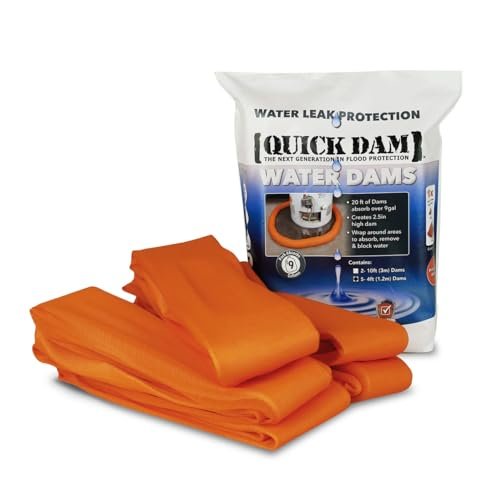
Quick Dam Indoor Water Dams Review: A Simple Way to Contain Leaks Before They Cause Costly Damage
Water damage doesn't always come from major floods or burst pipes. A slow leak under a dishwasher, a failing washing machine hose, an overflowing utility sink, or a dripping HVAC system can quickly damage flooring, drywall, cabinets, and personal belongings. Having a fast, easy-to-use containment solution on hand can help minimize cleanup and reduce repair costs.
Quick Dam Indoor Water Dams are designed specifically for indoor water emergencies. These water-activated barriers remain compact during storage and automatically expand when they come into contact with water, helping contain leaks before they spread throughout your home or business. Whether you're responding to an unexpected plumbing issue or preparing for routine maintenance, these reusable-style emergency barriers offer a practical first line of defense.
What Are Quick Dam Indoor Water Dams?
Quick Dam Indoor Water Dams are compact flood-control barriers that activate automatically when exposed to fresh water. Unlike traditional towels or improvised barriers, they contain super-absorbent materials that swell upon contact with water, forming a physical barrier that helps slow and redirect the flow of water.
Each 4-foot barrier expands to approximately 2.5 inches in height and can absorb up to 1.5 gallons of fresh water. Because they store flat until needed, they're easy to keep in utility closets, garages, maintenance rooms, or emergency preparedness kits.
How Water-Activated Barriers Work
The technology behind these barriers is straightforward but highly effective.
Inside each barrier are water-absorbing polymers that rapidly expand when exposed to fresh water. As the material absorbs moisture, the barrier grows in height and thickness, allowing it to contain and redirect shallow water before it spreads across surrounding floors.
This eliminates the need for filling sandbags or assembling temporary flood barriers during an emergency. Simply place the barrier where protection is needed and allow the incoming water to activate it naturally.
Common Indoor Uses
Although designed primarily for leak containment, these barriers can be useful in many situations around the home or workplace.
Appliance Leaks
Household appliances occasionally fail without warning. Water dams can help contain leaks from:
- Washing machines
- Dishwashers
- Refrigerators with ice makers
- Water dispensers
- Water heaters
- Utility sinks
Containing water early helps prevent damage to nearby flooring and cabinetry.
Basement Protection
Basements are particularly vulnerable to minor seepage and plumbing leaks.
Placing water barriers near vulnerable areas can help slow water movement while you identify and address the source of the problem.
HVAC and Air Conditioning Systems
Condensation drain failures and clogged HVAC lines can overflow unexpectedly.
Positioning barriers around HVAC equipment may help protect surrounding flooring until repairs can be made.
Doorways and Entry Points
During heavy rain, small amounts of water can enter through garage doors, patio doors, or low thresholds.
These barriers can help redirect shallow water away from finished interior spaces.
Easy to Store Until You Need Them
One of the biggest advantages of these indoor water dams is their compact design.
Unlike sandbags, which require storage space and preparation, these barriers:
- Store flat
- Require no filling
- Deploy in seconds
- Stay ready for emergency use
Keeping several barriers on hand provides peace of mind without taking up valuable storage space.
High-Visibility Design Improves Safety
Water leaks often occur in stressful situations where visibility is important.
The bright orange exterior makes the barriers easy to see, helping reduce accidental trips while clearly marking areas where water is present.
This can be especially useful in utility rooms, commercial buildings, workshops, or shared spaces where multiple people may be responding to the situation.
Environmentally Friendly Materials
The barriers are manufactured using biodegradable, non-toxic materials, making them suitable for indoor environments where children or pets may be present.
While they are designed for temporary water containment, they provide a more convenient alternative to storing large quantities of traditional sandbags for minor indoor emergencies.
Important Usage Considerations
Like many water-activated flood products, these barriers are designed specifically for fresh water.
They should not be used around:
- Salt water
- Chlorinated water
- Calcium-rich solutions
Exposure to these substances can interfere with the absorbent material and reduce the barrier's effectiveness.
They are best suited for plumbing leaks, appliance failures, rainwater intrusion, and other fresh-water situations.
Best Practices for Maximum Protection
To get the best performance from indoor water dams:
- Store them in a dry location where they can be accessed quickly.
- Place the barrier directly in the expected path of water.
- Use multiple barriers together when protecting larger areas.
- Combine them with leak alarms for earlier detection of hidden water leaks.
- Repair the source of the leak as soon as possible rather than relying on the barrier as a permanent solution.
Being prepared before an emergency occurs often makes the biggest difference.
Pros and Cons
Pros
- Automatically activates when exposed to fresh water
- Helps contain leaks before they spread
- Compact, lightweight, and easy to store
- No sand, tools, or assembly required
- Bright orange color improves visibility
- Suitable for homes, offices, and commercial buildings
- Non-toxic and biodegradable materials
- Useful around appliances, HVAC systems, basements, and doorways
Cons
- Intended for fresh water only.
- Not designed for deep or fast-moving floodwater.
- Each barrier has a limited absorption capacity, so multiple units may be needed for larger leaks.
Frequently Asked Questions
How much water can each barrier absorb?
Each 4-foot barrier absorbs approximately 1.5 gallons of fresh water while expanding to form a containment barrier.
Do I need to soak the barrier first?
No. The barrier activates automatically when it comes into contact with fresh water.
Can it replace sandbags?
For small indoor leaks and localized water problems, these barriers offer a faster and cleaner alternative. However, they are not intended to replace full-scale flood-control systems during major flooding.
Can they be used outdoors?
These water dams are primarily designed for indoor applications. For larger outdoor flood protection, dedicated flood barriers or water-activated outdoor products are generally more appropriate.
Are they reusable?
Once activated, the barriers gradually dry over time, but their long-term performance depends on storage conditions and the manufacturer's recommendations. Many homeowners keep unused barriers on hand for future emergencies rather than relying on previously activated ones.
Final Thoughts
Quick Dam Indoor Water Dams provide an easy, practical solution for containing fresh-water leaks before they turn into expensive repairs. Their water-activated design, compact storage, and simple deployment make them a valuable addition to any home's emergency preparedness supplies.
Whether you're protecting a laundry room, basement, utility closet, HVAC system, or kitchen appliance, these barriers can buy valuable time while you stop the leak and begin cleanup. For homeowners who want a simple way to reduce the risk of water damage, they're a smart preventive investment to keep within easy reach.