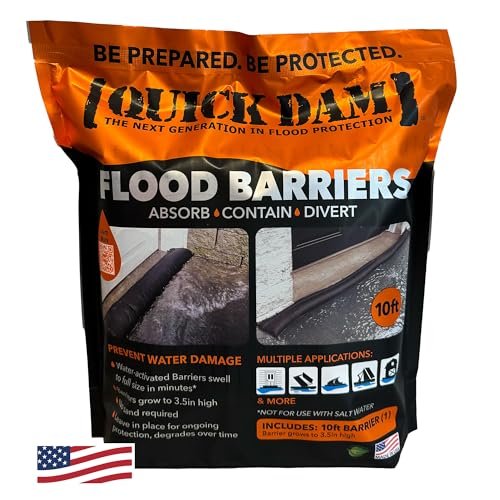
Quick Dam Flood Barriers Review: Fast, Water-Activated Protection Without Heavy Sandbags
Flooding can happen with little warning, whether it's caused by heavy rain, a burst pipe, a leaking water heater, or an overflowing appliance. When water begins entering your home or garage, every minute counts. Traditional sandbags can be effective, but they are heavy, messy, and time-consuming to fill and position.
Quick Dam Flood Barriers offer a simpler alternative. Instead of requiring sand or special equipment, these reusable-style emergency barriers activate automatically when they come into contact with fresh water. Within minutes, they expand to help contain, redirect, and absorb incoming water, making them a practical emergency preparedness tool for homeowners, businesses, and construction sites.
If you're looking for a lightweight flood control solution that's easy to store and deploy, here's what you should know.
What Are Water-Activated Flood Barriers?
Unlike traditional sandbags, Quick Dam Flood Barriers contain a highly absorbent material sealed inside a durable fabric casing.
When exposed to fresh water, the internal absorbent material expands into a gel-like barrier that increases the height and thickness of the product. Once fully activated, the barrier helps slow, redirect, and contain shallow moving water before it reaches vulnerable areas.
Because they remain compact until needed, they take up very little storage space and can be deployed much faster than filling dozens of sandbags during an emergency.
Fast Deployment During Water Emergencies
One of the biggest advantages of Quick Dam barriers is how quickly they can be put into service.
Simply place the barriers in the expected path of incoming water. As water reaches the fabric, the barrier begins absorbing moisture immediately and expands to its working height in approximately ten minutes when enough water is available.
This rapid deployment makes them useful when responding to:
- Flash flooding
- Heavy rain runoff
- Basement water intrusion
- Water heater leaks
- Washing machine failures
- Broken water pipes
- Overflowing air conditioning drain lines
- Construction site water management
Since no filling or assembly is required, almost anyone can deploy them with minimal effort.
No Sand, Shovels, or Heavy Lifting Required
Traditional sandbags often require:
- Purchasing sand
- Filling bags
- Moving heavy loads
- Significant cleanup afterward
Quick Dam barriers eliminate these extra steps.
Because they arrive ready to use, they can be stored in a garage, utility room, workshop, or emergency supply closet until they're needed.
Their lightweight design also makes them easier to transport than conventional sandbags, especially for homeowners who may not have access to heavy equipment or additional help.
Flexible Design for Multiple Applications
The long, narrow design allows the barriers to conform to different layouts and obstacles.
They can be positioned around:
Garage Doors
One of the most common applications is protecting garage entrances from shallow floodwater during heavy rain.
Exterior Doorways
Create a temporary water barrier across entrances where runoff may enter the home.
Water Heaters and Utility Rooms
Contain leaks from water heaters, pressure tanks, or plumbing failures before water spreads throughout the building.
Construction Sites
Help redirect unwanted water away from excavation areas or work zones.
Basements
Reduce water migration from small leaks or localized flooding around entry points.
Equipment and Storage Areas
Protect valuable equipment and stored belongings from minor flooding and water leaks.
Available in Multiple Lengths
Different flooding situations require different barrier sizes.
Quick Dam Flood Barriers are available in several lengths, allowing homeowners to choose the right configuration for their property.
Depending on the model, barriers are capable of absorbing varying amounts of water while expanding to approximately 3.5 inches in height after activation.
Longer barriers can also be combined to protect wider openings such as double garage doors or commercial entrances.
Designed to Help Control and Redirect Water
Rather than acting as an impenetrable wall, these barriers are intended to help:
- Slow moving water
- Absorb excess water
- Redirect runoff
- Contain localized flooding
- Reduce the spread of water into protected areas
Proper placement is essential for the best results. Positioning the wider side of the barrier toward incoming water helps improve stability and reduces the chance of movement as the barrier expands.
For situations involving fast-moving water or stacked barrier configurations, pre-soaking the barriers before deployment may provide additional stability.
Durable Construction for Indoor and Outdoor Use
The outer fabric is designed to withstand outdoor conditions while helping protect the absorbent material inside.
The durable black covering also offers resistance to sunlight during temporary outdoor use, making the barriers suitable for emergency response, seasonal storms, and construction projects.
Although designed for extended temporary use, they should be inspected periodically if left outdoors for prolonged periods.
Important Usage Considerations
Before purchasing, it's important to understand the intended application.
Quick Dam Flood Barriers work best for:
- Freshwater flooding
- Rainwater
- Plumbing leaks
- Appliance failures
- Minor flood control
- Water diversion
They are not designed for use with salt water, as exposure to salt can interfere with the activation material and reduce the barrier's effectiveness.
They also should not be considered a substitute for professionally engineered flood defenses during severe flooding events.
Advantages and Potential Limitations
Advantages
- Ready to use with no filling required
- Water-activated design simplifies deployment
- Lightweight and easy to store
- Helps absorb and redirect freshwater
- Flexible shape adapts to different spaces
- Useful indoors and outdoors
- Ideal for emergency preparedness
- Cleaner alternative to traditional sandbags
Potential Limitations
- Intended for freshwater only—not suitable for saltwater flooding.
- Designed primarily for shallow flooding and leak control rather than major flood events.
- Requires sufficient water to fully activate.
- Effectiveness depends on proper placement and expected water conditions.
Tips for Better Flood Preparedness
Flood barriers are most effective when they're part of a larger emergency plan.
Consider combining them with:
- Sump pumps
- Battery backup systems
- Water leak detectors
- Backflow prevention devices
- Emergency power supplies
- Waterproof storage containers
- Regular gutter and drainage maintenance
Keeping flood barriers stored in an accessible location allows for much faster response when water emergencies occur.
Frequently Asked Questions
How do Quick Dam Flood Barriers work?
The barriers contain a super-absorbent material that expands after contact with fresh water, creating a temporary barrier that helps absorb, contain, and redirect water.
Can they replace traditional sandbags?
For many minor flooding situations, leaks, and emergency water diversion tasks, they provide a faster and cleaner alternative. However, severe flood events may still require additional flood protection measures.
How long do they take to expand?
Under normal conditions and with adequate water exposure, they typically reach full size in about ten minutes.
Can they be used indoors?
Yes. They're commonly used around water heaters, washing machines, leaking pipes, basements, and utility rooms to help contain water before it spreads.
Can they be used with seawater?
No. These barriers are intended for freshwater applications only and should not be used with saltwater because it can affect their performance.
Final Thoughts
Quick Dam Flood Barriers provide a practical, lightweight alternative to traditional sandbags for homeowners and businesses looking to improve emergency flood preparedness. Their water-activated design eliminates the need for sand, making them quick to deploy during plumbing failures, heavy rainfall, appliance leaks, or localized flooding.
While they are not intended for every flood scenario, they can be an effective addition to an emergency preparedness kit, helping reduce water intrusion, protect valuable property, and simplify cleanup when unexpected water problems occur.