In-Ground Pop-Up Sprinkler System Review: A DIY Lawn Watering Kit Without Permanent Plumbing
Keeping a large lawn evenly watered can be difficult with a single portable sprinkler. Moving hoses from one section to another takes time, while above-ground sprinklers can become obstacles during mowing, landscaping, and everyday yard use. A permanent underground irrigation system solves many of these problems, but professional installation can be expensive and may require extensive trenching, valves, and dedicated plumbing.
This in-ground pop-up sprinkler kit offers a simpler alternative. The compact sprinkler heads are installed directly in the lawn and connected to standard garden hoses rather than a buried irrigation main. When water pressure is applied, the heads rise above the grass and begin watering. Once the water is turned off, they automatically retract below mowing height.
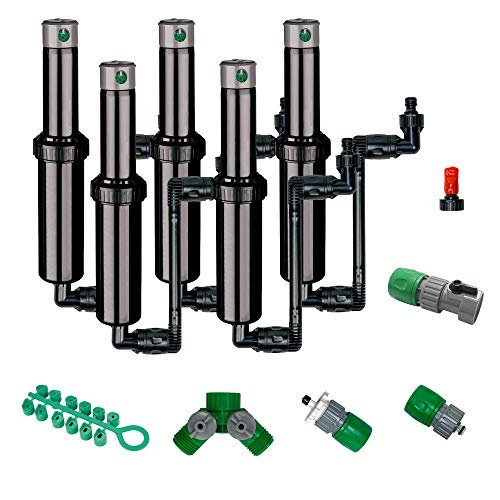
The complete package includes five sprinkler heads, hose connectors, Y-splitters, an air-purge fitting, a manual connector, protective caps, and interchangeable nozzles. For homeowners who want broader lawn coverage without committing to a fully automated underground system, it provides an accessible middle ground between portable sprinklers and professional irrigation.
What Is a Hose-Connected In-Ground Sprinkler System?
A hose-connected in-ground sprinkler system uses low-profile sprinkler heads placed permanently or semi-permanently in the lawn. Instead of connecting to buried supply pipes controlled by electric valves, the system receives water from ordinary garden hoses.
The sprinkler heads remain hidden when not in operation. Water pressure pushes the internal risers upward, allowing the nozzles to spray across the lawn. When the faucet is closed, the risers retract into the sprinkler bodies.
This design offers several practical benefits:
- Sprinklers remain below mowing height when inactive
- No need to reposition individual sprinklers before every watering
- Standard garden hoses provide the water supply
- Installation requires less excavation than traditional irrigation
- Spray patterns can be adjusted for different lawn shapes
- Multiple heads can water a larger area from one setup
The result is a more organized watering solution without the full cost and complexity of a contractor-installed system.
What Comes in the Kit?
The package includes the major components required to create a five-head watering network.
The listed contents are:
- Five pop-up sprinkler heads
- Four hose connectors
- Three Y-shaped hose splitters
- One air-purge fitting
- One manual connector
- Five orange protective caps
- One nozzle set
The exact layout will depend on the shape of the yard, available water pressure, hose lengths, and the location of the outdoor faucet.
Before installation, it is helpful to lay the components on the ground and plan where each head will sit. This reduces unnecessary digging and helps identify whether additional hoses, adapters, or anchors will be required.
Pop-Up Design Keeps Sprinklers Out of the Way
The retractable sprinkler design is one of the system's main advantages.
When water begins flowing, pressure lifts each sprinkler riser above the surrounding grass. The nozzle then distributes water across the selected area. After the water is turned off, the riser drops back into the housing.
Because the heads remain close to or below ground level when inactive, homeowners can generally mow over them without removing the system each time.
Proper installation depth is important. A sprinkler positioned too high may be struck by a mower blade or become a tripping hazard. A head installed too low may collect soil, grass clippings, and standing water that interfere with retraction or spray performance.
Potential Coverage of Up to 5,000 Square Feet per Sprinkler
The manufacturer states that each sprinkler may cover up to approximately 5,000 square feet under favorable conditions.
That figure should be treated as a maximum estimate rather than a guaranteed result. Actual coverage depends on:
- Available water pressure
- Water flow from the faucet
- Nozzle selection
- Spray pattern
- Hose diameter and length
- Elevation changes
- Number of sprinklers operating simultaneously
- Wind conditions
- Spacing between heads
Running several sprinkler heads at once divides the available flow among them. A home with modest outdoor water pressure may achieve better performance by operating fewer heads at one time or dividing the system into separate zones.
Adjustable Spray Patterns for Different Yard Shapes
Lawns are rarely perfect circles. They may include driveways, paths, patios, flower beds, fences, and building walls that should not be watered unnecessarily.
The included nozzle set allows the spray pattern to be adjusted to better match the intended coverage area.
Depending on the available nozzles and sprinkler settings, the system may support:
- Full-circle coverage
- Half-circle patterns
- Quarter-circle watering
- Narrow sections
- Custom partial arcs
Careful adjustment helps keep water on the lawn rather than spraying sidewalks, siding, parked vehicles, or neighboring property.
Overlap between adjacent heads is generally beneficial. Each area should receive water from more than one direction where possible, helping compensate for the lighter coverage that often occurs near the outer edge of a sprinkler's reach.
Garden Hose Connections Simplify Installation
Traditional underground irrigation systems usually require PVC or polyethylene supply lines buried across the yard. This kit instead uses hose connectors and splitters to distribute water.
The garden hose can approach the sprinkler network from different directions, giving homeowners more flexibility when working around landscaping and outdoor structures.
The Y-splitters allow one hose line to divide into multiple branches. This makes it possible to feed several sprinkler heads without creating a complete underground piping network.
However, every connector and splitter adds some resistance to water flow. Long hoses, narrow hoses, and numerous branch points can reduce sprinkler performance.
Basic Installation Process
The system is designed for DIY installation, but careful preparation improves the outcome.
Plan the Sprinkler Locations
Place the sprinkler heads temporarily on the lawn and observe the areas each one must cover. Try to create overlapping patterns rather than isolated circles with dry gaps between them.
Test the Water Supply
Before burying anything, connect the hoses and operate the sprinklers above ground. This reveals whether the faucet can provide enough pressure and flow for the planned number of heads.
Mark and Dig the Openings
Once satisfied with the layout, mark each sprinkler location. Dig only enough soil to place the sprinkler body upright with the top at the proper height.
Connect the Hose Network
Attach the supplied connectors and Y-splitters according to the planned layout. Ensure each joint is secure and correctly sealed.
Position the Sprinkler Heads
Set each head vertically in the soil. Pack the surrounding earth firmly enough to prevent movement while avoiding excessive pressure against the sprinkler body.
Select and Adjust the Nozzles
Install the appropriate nozzles and set the watering arcs to match the lawn boundaries.
Test for Leaks and Coverage
Turn on the water gradually. Inspect every fitting for leaks and observe whether each head rises, rotates, retracts, and waters the intended area.
Corrections are much easier before the hoses and connections are covered or concealed.
Why Water Pressure Matters
Pop-up sprinkler systems depend on both pressure and flow. Pressure raises the sprinkler heads and projects the water, while flow determines how much water can pass through the nozzles.
A faucet may show adequate static pressure while still delivering insufficient flow for multiple sprinklers. This often happens when the hose is very long, too narrow, kinked, or supplied through restrictive fittings.
Signs of inadequate water supply include:
- Sprinkler heads that do not rise completely
- Weak spray distance
- Heads that fail to rotate
- Uneven output between branches
- Sprinklers retracting during operation
- Poor coverage at the end of long hose runs
Testing the system before installation is the best way to determine whether all five heads can operate together.
Using the Y-Splitters to Create Watering Zones
The included Y-splitters can divide the system into branches or separate watering groups.
For example, one branch might serve the front section of the lawn while another serves the side yard. If water pressure is insufficient to run everything at once, each branch can be operated separately using suitable shutoff controls.
Creating zones can improve:
- Spray distance
- Watering uniformity
- Pressure at each head
- Control over different lawn areas
- Compatibility with irregular property layouts
A separate hose timer can also be added to automate each zone, provided it is compatible with the connectors and available flow.
Air Purge for Seasonal Maintenance
The kit includes an air-purge component intended to help remove residual water from the system.
This is especially important in climates where temperatures fall below freezing. Water trapped inside sprinkler bodies, hoses, or connectors can expand when frozen and crack the components.
Before winter storage or shutdown:
- Turn off the water supply.
- Disconnect the hoses from the faucet.
- Open the system to release pressure.
- Use the air-purge connection according to the manufacturer's instructions.
- Drain accessible hoses and fittings.
- Store removable parts in a protected location.
Compressed air must be used carefully. Excessive pressure can damage sprinkler components or create safety hazards.
Orange Caps Help Protect Installed Heads
The included orange caps can help mark or protect sprinkler locations during installation and maintenance.
Their bright color makes the heads easier to see while mowing, landscaping, aerating, or working around the lawn. They may also help keep dirt and debris out of exposed sprinkler openings when the nozzles are removed.
Once the system is fully installed and adjusted, the caps may be stored for future maintenance, depending on their intended use.
Watering Large Lawns More Evenly
A five-sprinkler network can distribute water more evenly than a single portable sprinkler placed at one edge of the lawn.
To improve uniformity:
Overlap the Spray Patterns
Sprinklers should generally reach neighboring heads rather than leaving the outer edges unsupported.
Avoid Excessive Spacing
Placing heads too far apart creates dry areas between them, even when each sprinkler appears to have a large maximum radius.
Account for Wind
Strong wind distorts spray patterns and reduces coverage. Watering during calm early-morning conditions usually produces better results.
Check Soil Absorption
Clay soil may require shorter cycles with breaks between them to prevent runoff. Sandy soil may need deeper or more frequent irrigation.
Measure Actual Output
Place identical containers across the lawn and run the system for a fixed period. Compare the collected water to identify areas receiving too much or too little.
Adding a Hose Timer for Automatic Watering
The included system is primarily a distribution network rather than a fully automated irrigation controller.
A separate hose timer can be attached at the faucet to start and stop watering on a schedule. Depending on the layout, multiple-outlet timers may also control separate branches.
When choosing a timer, confirm:
- Thread compatibility
- Maximum supported flow
- Water-pressure rating
- Number of required zones
- Manual override options
- Rain-delay functionality
- Freeze protection requirements
Automation can save time, but the schedule should still be adjusted for rainfall, seasonal temperatures, and local watering restrictions.
Common Problems and Troubleshooting
Sprinkler Heads Do Not Pop Up
Possible causes include low pressure, restricted flow, clogged nozzles, kinked hoses, or too many heads operating simultaneously.
Try running fewer sprinklers, shortening hose lengths, cleaning the components, or using a larger-diameter supply hose.
Heads Do Not Retract
Grass, dirt, mineral deposits, or damaged seals may prevent the riser from sliding freely. Turn off the water, clean around the riser, and inspect for debris.
Coverage Is Uneven
Check nozzle selection, spray arc, head spacing, and available pressure. Repositioning one or more heads may improve overlap.
Fittings Leak
Inspect washers, threads, and connector alignment. Hand-tighten securely without overtightening plastic components.
A Sprinkler Is Hit During Mowing
The head may be installed too high or the surrounding soil may have settled. Adjust the installation depth and compact the soil around the body.
The Last Sprinkler Has Weak Flow
Long hose runs and multiple splitters reduce pressure. Shorten the route, create smaller zones, or reduce the number of simultaneously active heads.
Common Installation Mistakes
Burying the System Before Testing
Always operate the full layout above ground first. This reveals pressure, coverage, and leakage problems before installation becomes difficult to modify.
Trusting Maximum Coverage Claims
Plan according to actual performance on your property, not only the published maximum.
Installing Heads at the Wrong Height
Incorrect depth can interfere with mowing, retraction, and water distribution.
Creating Too Many Branches
Every split reduces available flow. A complicated network may require zoning.
Ignoring Drainage and Winterization
Standing water and freezing conditions can damage the system if it is not properly drained.
Watering Buildings and Pavement
Use the adjustable patterns to avoid wasting water and creating moisture problems around structures.
Advantages and Considerations
Advantages
- Five low-profile pop-up sprinkler heads
- Retracts below mowing height when water is off
- Uses standard garden hoses instead of permanent buried plumbing
- Potential coverage of large lawn areas
- Adjustable spray patterns
- Can be installed without professional irrigation equipment
- Includes connectors, Y-splitters, caps, nozzles, and air purge
- Suitable for custom lawn layouts
- Easier to relocate or modify than a traditional underground system
- Can be paired with a separate hose timer
Potential Considerations
Performance depends heavily on the home's water pressure and available flow. All five heads may not operate effectively at the same time on every property.
The hose network may also require careful concealment or shallow placement to avoid damage. Although the system resembles contractor-installed irrigation above ground, it does not provide the same level of permanent piping, zoning, or automated valve control unless additional equipment is added.
Frequently Asked Questions
How many sprinkler heads are included?
The kit includes five pop-up sprinkler heads.
How much area can each sprinkler cover?
The manufacturer states that each head may cover up to approximately 5,000 square feet under favorable conditions. Actual coverage depends on pressure, flow, nozzle selection, and layout.
Can I mow over the sprinklers?
The heads are designed to retract when the water is turned off, allowing mowing over them when they are installed at the correct depth.
Does the kit require underground plumbing?
No. It uses garden hoses, connectors, and Y-splitters rather than a traditional buried irrigation main.
Is a timer included?
The listed package includes a manual connector but does not clearly identify an automatic watering timer. A compatible timer may need to be purchased separately.
Can all five sprinklers run simultaneously?
Possibly, but this depends on the available water pressure and flow. Many homes may achieve better results by dividing the system into zones.
Can the spray pattern be adjusted?
Yes. The included nozzle set allows the watering pattern to be configured for different areas.
What is the air-purge fitting used for?
It helps remove water from the system during maintenance or winterization, reducing the risk of freeze damage.
Are the hoses included?
The listed contents mention hose connectors and splitters, but not the garden hoses themselves. Buyers should verify the package contents and purchase suitable hoses if necessary.
Final Thoughts
This hose-connected in-ground sprinkler kit offers a practical option for homeowners who want the appearance and convenience of pop-up lawn irrigation without installing a complete underground plumbing system. The five retractable heads remain out of the way between watering sessions, while the adjustable nozzles and flexible hose layout allow the system to adapt to many yard shapes.
Its success depends on careful planning and realistic expectations. The maximum coverage figure will not apply to every property, and available water flow may require the system to be divided into smaller zones. Testing above ground before installation is essential.
For lawns where portable sprinklers are inconvenient but professional irrigation is unnecessary or too expensive, this kit provides a useful DIY alternative that can deliver broad, repeatable coverage with relatively little excavation.