Orbit Mechanical Hose Faucet Timer Review: Simple, Battery-Free Watering Control
Keeping a lawn, flower bed, vegetable garden, or drip irrigation system properly watered does not always require a complicated digital controller. For many homeowners, a simple device that runs water for a selected period and then shuts it off automatically is enough to make outdoor watering more convenient.
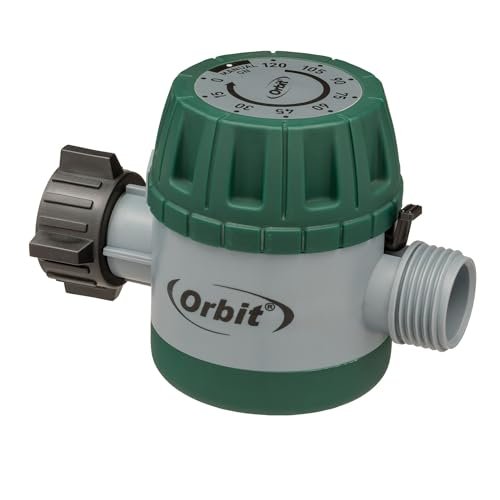
The Orbit Mechanical Hose Faucet Timer is designed for exactly that purpose. It connects directly to an outdoor faucet and uses a mechanical countdown dial instead of batteries, electronics, Wi-Fi, or an app. Turn the dial to the desired watering duration, and the timer automatically stops the flow when the selected period ends.
With watering times from 15 to 120 minutes, an oversized control dial, and a manual watering setting, it offers a straightforward way to operate sprinklers, soaker hoses, and basic drip irrigation systems without leaving the faucet running unattended.
What Is the Orbit Mechanical Hose Timer?
The Orbit mechanical timer is a faucet-mounted shutoff controller for garden hoses and outdoor irrigation equipment.
It installs between the outdoor spigot and the hose. Once connected, the user turns on the faucet, selects a watering duration, and allows the mechanical mechanism to count down. At the end of the selected period, the timer closes the internal valve and stops the water.
Unlike a programmable digital hose timer, it does not create recurring schedules. It must be activated manually each time watering is needed.
This makes it best suited to users who want automatic shutoff rather than fully automated irrigation.
Why Choose a Mechanical Water Timer?
Digital timers offer advanced schedules, but they also require batteries, programming, and periodic maintenance. A mechanical timer removes most of that complexity.
Its main advantages are simplicity and reliability. There is no clock to set, no display to read, and no battery that can fail unexpectedly.
A mechanical hose timer may be a good choice for:
- Occasional lawn watering
- Garden sprinklers
- Soaker hoses
- Basic drip irrigation
- Newly planted trees or shrubs
- Filling small ponds or containers
- Homeowners who do not need recurring schedules
- Properties without convenient access to power or Wi-Fi
It is particularly useful when you want to start watering immediately and avoid remembering to return later to close the faucet.
No Batteries or Electrical Power Required
The timer operates entirely through a mechanical countdown system.
Because it does not use batteries, there is no need to monitor charge levels or replace cells during the growing season. It also continues to function independently of household power, internet connectivity, or smart-home services.
This battery-free design reduces maintenance and makes the timer easy to store between uses.
It also means the device cannot support app control, automated weather adjustments, or scheduled watering at a future time. Its purpose is intentionally simpler: start watering now and stop automatically after a chosen duration.
Adjustable Watering from 15 to 120 Minutes
The timer allows users to select a watering period between 15 minutes and two hours.
This range is suitable for many common irrigation tasks.
Shorter settings may work well for:
- Small flower beds
- Patio containers
- Light sprinkler use
- Newly planted areas
- Quick manual watering sessions
Longer settings may be appropriate for:
- Soaker hoses
- Drip irrigation systems
- Large lawn sprinklers
- Deep watering around shrubs
- Trees with established root zones
The correct duration depends on the flow rate of the connected equipment. A high-output sprinkler can apply much more water in 30 minutes than a slow soaker hose or drip line.
Oversized Dial for Easy Operation
The large control dial is designed to remain easy to grip even when hands are wet, dirty, or covered by gardening gloves.
This is a practical feature because outdoor faucet controls are often handled during active yard work. Small buttons or narrow knobs can be difficult to turn when wearing gloves or when the device is damp.
The simple dial also makes the timer approachable for users who do not want to navigate digital menus.
To begin watering, turn the control to the desired duration. The timer then counts down mechanically and closes the valve when time expires.
Automatic Shutoff Prevents Forgotten Watering
One of the most useful features is the automatic shutoff.
It is easy to turn on a sprinkler and become distracted by another household task. A hose left running for several hours can waste water, flood planting areas, create runoff, or increase the water bill.
The Orbit timer reduces that risk by closing the water supply automatically after the selected duration.
This can be especially helpful when:
- Watering before leaving for work
- Running a sprinkler while completing other chores
- Irrigating during early morning or evening
- Using a slow soaker hose
- Watering newly planted landscaping
- Avoiding accidental overnight watering
The timer improves control, but hoses and irrigation fittings should still be inspected for leaks before being left unattended.
Manual Watering Without Removing the Timer
The manual watering setting allows the faucet to be used without disconnecting the timer.
This is convenient when you need continuous water for tasks that do not fit the countdown range, such as washing tools, rinsing a patio, filling containers, or hand watering different areas.
Instead of unscrewing the device each time, switch it to manual mode and use the hose normally.
Afterward, return the control to the timed setting or off position as appropriate.
Suitable for Lawn Sprinklers
The timer can be used with many standard hose-connected lawn sprinklers.
Simply connect the sprinkler hose to the timer, open the faucet, and choose the desired runtime. The timer will stop the water at the end of the cycle.
When determining the duration, consider:
- Sprinkler flow rate
- Lawn size
- Soil type
- Wind
- Temperature
- Recent rainfall
- Water pressure
Rather than guessing, place several straight-sided containers across the lawn during a test cycle. Differences in collected water can reveal uneven coverage or an unsuitable runtime.
Useful for Drip Irrigation Systems
Mechanical hose timers can also operate simple drip irrigation networks.
A drip system delivers water slowly, so longer timer settings may be necessary. Pressure regulation and filtration may also be required to protect small emitters and maintain consistent flow.
The timer is suitable for manually initiated drip watering, but it does not automatically repeat the cycle on selected days. Someone must turn the dial each time irrigation is needed.
For gardeners who visit their plants daily but want automatic shutoff, this may be entirely sufficient.
Effective with Soaker Hoses
Soaker hoses gradually release water along their length, making them useful for vegetable rows, shrubs, foundation plantings, and flower beds.
Because water exits slowly, sessions may need to run longer than they would with a conventional sprinkler. The timer’s two-hour maximum can support many soaker-hose applications.
Performance depends on hose length and water pressure. Very long soaker hoses may distribute water unevenly, with stronger output near the faucet and weaker flow at the far end.
Installation Process
Installing the timer is straightforward.
- Confirm that the faucet and timer threads are clean.
- Check that the inlet washer is seated correctly.
- Attach the timer to the outdoor faucet.
- Tighten the connection by hand.
- Connect the garden hose to the timer outlet.
- Attach the sprinkler or irrigation system.
- Open the faucet slowly.
- Inspect both connections for leaks.
- Turn the dial to the desired watering duration.
- Confirm that water begins flowing.
Avoid overtightening the fittings. Most garden hose connections seal with a rubber washer rather than excessive thread pressure.
How to Choose the Right Watering Duration
The timer controls runtime, but it does not measure soil moisture or water volume. Choosing the correct duration requires some observation.
Consider Soil Type
Sandy soil drains quickly and may need more frequent watering. Clay soil absorbs water slowly and may produce runoff during long continuous cycles.
Match the Irrigation Device
A sprinkler, drip line, and soaker hose deliver very different amounts of water during the same period.
Check the Root Zone
The soil surface may appear wet while deeper roots remain dry. After watering, inspect moisture several inches below the surface.
Account for Weather
High temperatures and wind increase water loss. Rain and cool weather reduce irrigation needs.
Follow Local Restrictions
Some municipalities limit outdoor watering to certain times or days.
Best Practices for Efficient Watering
Water Early in the Morning
Morning watering usually reduces evaporation and allows grass or leaves to dry before nighttime.
Avoid Watering Pavement
Adjust sprinklers so water lands on the lawn or garden rather than sidewalks, driveways, walls, and roads.
Use Deep, Appropriate Cycles
Established plants often benefit from deeper watering rather than frequent shallow applications.
Check for Leaks
Inspect the faucet, timer, hose, and irrigation connections before leaving the system running.
Adjust After Rain
A mechanical timer does not know when it has rained. Skip watering when the soil already contains sufficient moisture.
Common Mistakes to Avoid
Expecting Automatic Scheduling
The timer stops water automatically, but it does not start future cycles by itself. It must be set manually each time.
Overtightening the Connections
Excessive force can damage threads, washers, or the timer body. Hand-tighten only enough to create a reliable seal.
Choosing Duration Without Testing
A long cycle may overwater a small area, while a short cycle may not penetrate deeply enough. Test the actual system.
Leaving the Timer Outside During Freezing Weather
Water trapped inside can freeze and damage the internal valve. Disconnect, drain, and store it before freezing temperatures.
Ignoring Water Pressure
Sprinklers and drip systems require appropriate pressure and flow. The timer cannot compensate for a restricted faucet or kinked hose.
Using Manual Mode and Forgetting the Faucet
Automatic shutoff does not apply in continuous manual mode. Remember to turn the water off when the task is finished.
Maintenance and Seasonal Storage
The timer requires relatively little maintenance, but a few simple steps can extend its service life.
Periodically:
- Inspect hose washers
- Remove dirt from the threads
- Check for leaks
- Confirm that the dial turns smoothly
- Test the automatic shutoff
- Clean mineral deposits if necessary
- Protect the timer from impact
Before winter, disconnect the timer, allow all water to drain, and store it in a dry location protected from freezing temperatures.
Advantages and Considerations
Advantages
- No batteries required
- No app, Wi-Fi, or programming
- Simple mechanical countdown
- Watering duration from 15 to 120 minutes
- Automatic shutoff
- Large dial works well with wet or gloved hands
- Manual watering option
- Compatible with sprinklers, soaker hoses, and basic drip systems
- Easy faucet-mounted installation
- Useful for preventing forgotten watering
- Low-maintenance design
Potential Considerations
The timer does not create recurring schedules or start watering automatically at a particular time. It must be activated manually for each session.
It also lacks rain delay, soil-moisture sensing, remote control, and multiple watering programs. Users who need unattended daily irrigation may prefer a programmable digital timer.
The two-hour maximum may also be limiting for very slow irrigation systems.
Frequently Asked Questions
Does the Orbit mechanical timer need batteries?
No. It uses a mechanical countdown mechanism and requires no batteries or electrical power.
Can it start watering automatically?
No. The user must manually turn the dial to begin each cycle. The timer automatically stops the water at the end.
What watering durations are available?
Watering can be set from approximately 15 to 120 minutes.
Can it be used with a lawn sprinkler?
Yes. It is designed for hose-connected sprinklers and other outdoor watering equipment.
Does it work with drip irrigation?
Yes, provided the drip system has suitable pressure regulation and flow. The cycle must still be started manually.
Can I use the hose without removing the timer?
Yes. The manual watering setting allows continuous faucet use without disconnecting the device.
Does it have a rain-delay function?
No automatic rain-delay feature is described. Simply do not activate the timer when watering is unnecessary.
Is it suitable for vacations?
It can automatically stop a watering session, but it cannot start future sessions. It is not a complete vacation-watering solution unless someone is available to turn the dial.
Can it remain outside during winter?
It should be removed, drained, and stored before freezing weather.
Does the timer reduce water pressure?
Any inline device may create some flow resistance. Actual sprinkler performance depends on faucet pressure, hose size, and the connected watering equipment.
Final Thoughts
The Orbit Mechanical Hose Faucet Timer is a practical option for gardeners who want automatic shutoff without digital controls, batteries, or smart-home connectivity. Its oversized dial, 15- to 120-minute countdown, and manual watering setting make it simple to use with sprinklers, soaker hoses, and basic drip irrigation systems.
Its purpose is specific: it helps prevent a hose from running longer than intended. It does not create recurring schedules or start watering while you are away.
For homeowners who prefer uncomplicated equipment and manually decide when their garden needs water, the Orbit timer offers a reliable way to control each watering session with less risk of waste, runoff, or forgotten faucets.