YoLink 3/4-Inch Smart Water Shutoff Valve Review: Ultrasonic Leak Detection With Offline Protection
A smart water shutoff system goes beyond simply telling you that a leak exists. The more advanced models can monitor water flow continuously, identify abnormal usage, and automatically close the main valve when a potential leak is detected. That kind of active protection can be especially valuable when nobody is home to respond.
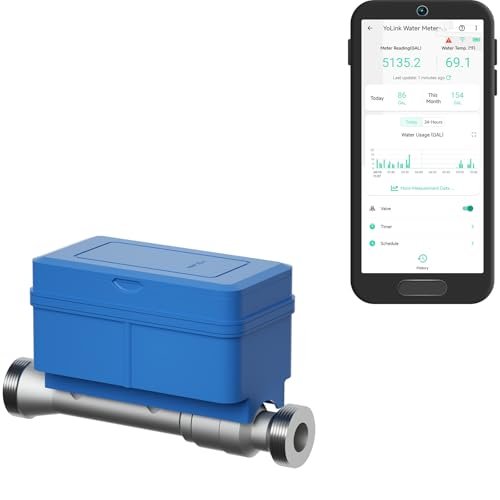
The YoLink 3/4-inch smart water shutoff valve is designed around that idea. It combines ultrasonic water metering, automatic valve control, long-range LoRa wireless communication, battery operation, and local device-to-device automation. According to the supplied information, its protective functions can continue during internet or power interruptions, making it less dependent on cloud connectivity than many conventional smart-home water systems.
It is also described as NSF certified for drinking-water applications and is designed to integrate with the broader YoLink ecosystem. For homeowners who want whole-home water monitoring and automatic shutoff rather than a simple floor sensor, this is a more comprehensive type of solution.
What Is the YoLink 3/4-Inch Smart Water Shutoff Valve?
This device is an inline smart plumbing valve that monitors water flow and can automatically stop the supply when configured leak conditions are detected.
Its key supplied features include:
- 3/4-inch valve size
- NSF certification for potable-water applications
- Ultrasonic flow monitoring
- Automatic leak detection
- Automatic water shutoff
- Local offline protection
- Manual valve override
- YoLink LoRa wireless connectivity
- Up to 1/4-mile open-air wireless range
- Long-life lithium battery operation
- Device-to-device control
- Radio wake-up technology
- YoLink ecosystem integration
- No subscription fees stated
- Hub required
This puts it in the category of whole-home smart water protection rather than simple leak alarms.
NSF Certification for Drinking Water
The supplied product information states that the valve is NSF certified for potable-water use.
That is an important consideration for any component installed directly into a home's drinking-water supply.
The valve may therefore be relevant for domestic lines feeding:
- Kitchen faucets
- Bathroom fixtures
- Showers
- Appliances
- Other potable-water outlets
For code-sensitive installations, confirm the current certification listing for the exact model before purchase.
Why Potable-Water Certification Matters
A smart valve installed directly in the main supply is continuously exposed to drinking water.
Materials and internal components should therefore be appropriate for that application.
This is different from an external valve actuator, which turns an existing handle but does not directly contact the water.
Ultrasonic Water Metering
One of the most notable features is ultrasonic flow measurement.
Rather than relying on mechanical moving parts inside a conventional meter, ultrasonic metering measures water movement electronically.
This can allow the system to track water flow and look for patterns that may indicate a leak.
What Flow-Based Leak Detection Can Identify
A whole-home flow monitor may detect unusual water consumption caused by problems such as:
- Running toilet
- Burst supply hose
- Pipe leak
- Faucet left running
- Appliance plumbing failure
- Unexpected continuous water use
Unlike a point sensor, it does not need leaking water to physically reach a probe before noticing that water is flowing.
Flow Monitoring vs. Floor Leak Sensors
These two technologies protect a home in different ways.
Flow Monitoring
Observes water moving through the main plumbing line.
Useful for identifying unusual use anywhere downstream.
Point Leak Sensor
Detects actual water at a specific location.
Useful for confirming that moisture has reached an area where it does not belong.
The strongest protection can come from using both together.
Automatic Water Shutoff
When abnormal conditions are detected, the system can automatically close the valve.
That is its most important safety feature.
A simple leak detector warns you.
A smart shutoff system can intervene.
This matters most when:
- The home is empty
- The leak occurs overnight
- The owner is traveling
- The property is rarely occupied
Why Automatic Shutoff Can Reduce Damage
If a pressurized pipe or appliance line fails, water can continue flowing until the supply is closed.
A smart valve can reduce that duration by shutting off automatically.
It cannot remove water already released, but it can prevent continued incoming flow.
Offline Protection
The supplied description states that protective operation can continue even during internet outages.
This is a meaningful distinction because many smart-home devices rely heavily on cloud infrastructure.
A water-protection system should ideally not become useless simply because the internet connection drops.
Protection During Power Outages
The source also states that the system can continue operating during power outages.
Battery operation is what makes that possible.
This can be useful during:
- Storms
- Grid outages
- Electrical failures
Actual runtime during an outage will depend on battery condition and the specific hardware configuration.
Device-to-Device Control
YoLink uses direct device-to-device functionality, often referred to as D2D.
This allows compatible devices to communicate locally without requiring every action to pass through the internet.
For example, a compatible leak sensor could potentially trigger the valve directly.
That architecture adds resilience to critical automations.
Why Local Automation Matters
A cloud-dependent system may require:
- Sensor detects problem.
- Sensor contacts hub.
- Hub contacts cloud service.
- Cloud runs automation.
- Valve receives command.
Any connectivity failure in that chain can interrupt the response.
Local D2D control shortens that path.
Manual Override
The valve includes a manual override according to the supplied description.
That is an important practical feature.
A smart plumbing valve should still be operable if:
- Electronics fail
- Battery becomes depleted
- Network is unavailable
- Manual service is needed
Manual control is especially important for a device installed on the main water supply.
YoLink LoRa Wireless Technology
The system uses YoLink's LoRa-based wireless communication.
LoRa is designed for long-range, low-power communication.
That makes it suitable for devices that only need to send small amounts of information such as:
- Flow status
- Valve state
- Leak event
- Battery level
Up to 1/4-Mile Open-Air Range
The supplied description states a maximum range of approximately 1/4 mile in open air.
That is significantly farther than typical residential WiFi.
Real-world range indoors will be lower because of:
- Walls
- Concrete
- Metal
- Soil
- Mechanical equipment
Even so, the architecture can be especially useful in difficult locations.
Better Coverage in Basements and Meter Areas
Smart plumbing hardware is often installed in places with poor WiFi.
Common examples include:
- Basements
- Meter pits
- Mechanical rooms
- Utility closets
- Metal enclosures
Long-range LoRa communication can make these installations more practical.
10-Year Battery Claim
The supplied information states a battery life of up to approximately 10 years.
That long runtime is attributed to:
- Ultra-low-power operation
- D2D communication
- Radio wake-up technology
As with any battery-life claim, actual results can vary.
What Affects Battery Life
Real-world battery life can depend on:
- Temperature
- Number of valve operations
- Wireless conditions
- Device activity
- Battery age
A long claimed service interval does not eliminate the need to monitor battery status.
No Wiring Required
Battery operation also simplifies installation because the valve does not necessarily need nearby permanent electrical wiring for basic operation.
That can be useful where the main water line is located far from outlets.
However, plumbing installation is still required.
3/4-Inch Valve Size
This model is designed for a 3/4-inch pipe connection.
That is a common residential size, but it is not universal.
Before ordering, confirm:
- Nominal pipe size
- Connection type
- Available installation space
Do not assume every home's main line is 3/4 inch.
Professional Plumbing Installation
Because this is an inline valve, installation normally involves modifying the plumbing.
That may require:
- Cutting pipe
- Adding fittings
- Sealing connections
- Pressure testing
- Checking flow direction
A licensed plumber may be appropriate, especially on a main potable-water line.
Where Should the Valve Be Installed?
For whole-home protection, the valve is typically installed where closing it will stop water to most or all of the domestic plumbing.
The correct location depends on the property's layout.
Important considerations may include:
- Irrigation branches
- Fire sprinkler lines
- Water treatment equipment
- Outdoor plumbing
A plumber can help identify the safest position.
Keep the Valve Accessible
Do not install a smart shutoff valve where it becomes impossible to inspect or service.
Future access may be needed for:
- Battery replacement
- Manual override
- Valve maintenance
- Electronics service
Accessibility should be part of the installation plan.
Hub Required
The supplied description states that a YoLink hub is required.
The hub provides access to features such as:
- App control
- Remote notifications
- Smart-home integration
- Broader ecosystem management
The critical local automation may still operate through D2D, but the hub is needed for full connected functionality.
Expanding the YoLink Ecosystem
The source states that the system can integrate with more than 80 compatible YoLink devices.
Potential additions may include:
- Leak sensors
- Smart valves
- Temperature sensors
- Thermostats
- Security devices
- Energy-monitoring products
That makes the shutoff valve useful as part of a broader smart-home platform.
Leak Sensors Can Add Location Awareness
A flow monitor can determine that water use is abnormal, but it may not identify the exact location.
Adding point sensors near:
- Water heater
- Washing machine
- Dishwasher
- Sink
can provide more specific confirmation.
No Subscription Fees
The supplied information states that core functionality is available without subscription fees.
That is useful because recurring service costs can significantly change the long-term price of a smart-home system.
Cloud-service policies can change, so current terms should still be verified before purchase.
Smart Valve vs. Basic Leak Detector
A basic detector is much simpler.
Basic Leak Detector
- Low cost
- Easy installation
- Detects local water
Smart Shutoff Valve
- Whole-home flow monitoring
- Automatic shutoff
- Remote control
- Broader protection
The smart valve requires more installation work but offers a much more active response.
Smart Valve vs. Retrofit Valve Operator
A retrofit operator attaches to an existing manual valve.
Retrofit Advantages
- May avoid cutting pipe
- Often easier installation
Inline Valve Advantages
- Purpose-built smart valve
- Integrated flow monitoring
- No dependence on condition of an old manual handle
The better choice depends on plumbing configuration.
Common Buying Mistakes
Choosing the Wrong Pipe Size
Verify the 3/4-inch connection requirement.
Assuming the Hub Is Optional
Full functionality requires the YoLink hub.
Ignoring Professional Installation
This is an inline plumbing component.
Treating Automatic Shutoff as Guaranteed Flood Prevention
Water already released can still cause damage.
Never Testing the System
Test both automatic and manual valve operation periodically.
Best Practices After Installation
After setup, verify that:
- Flow monitoring works
- Valve opens and closes correctly
- Automatic shutoff rules function
- D2D control works
- App notifications arrive
- Manual override is accessible
Periodic testing is worthwhile because this is a safety-oriented device.
Who Is This Valve Best For?
The YoLink 3/4-inch smart shutoff valve may be a strong choice for:
- Homeowners wanting whole-home leak protection
- Vacation homes
- Finished basements
- Large properties
- Homes with difficult WiFi coverage
- Existing YoLink users
- Buyers who value offline automation
It may be more than necessary for someone who only wants a basic alarm under one sink.
Advantages and Considerations
Advantages
- NSF-certified potable-water compatibility according to supplied information
- Ultrasonic flow monitoring
- Automatic shutoff
- Offline local protection
- Manual override
- LoRa connectivity
- Up to 1/4-mile open-air range claim
- Long-life battery operation
- D2D automation
- No permanent wiring required
- Broad YoLink ecosystem
- No subscription fees stated
Potential Considerations
Requires plumbing installation.
Hub required.
3/4-inch size will not fit every property.
Battery-life claims vary in real-world conditions.
Automatic shutoff cannot remove water already released.
Frequently Asked Questions
Is this valve suitable for drinking water?
The supplied description states that it is NSF certified for potable-water applications.
What pipe size does it fit?
This model is designed for 3/4-inch plumbing.
Does it detect leaks automatically?
Yes, using ultrasonic flow monitoring according to the supplied information.
Can it shut off water automatically?
Yes.
Does it work without internet?
The source states that protective functions can continue offline.
Can it work during a power outage?
Yes, subject to available battery power.
Does it have manual control?
Yes. A manual override is included.
What wireless technology does it use?
YoLink LoRa.
What is the listed range?
Up to approximately 1/4 mile in open air.
How long does the battery last?
The supplied description claims up to around 10 years.
Does it require wiring?
The product is described as battery powered.
Is a hub required?
Yes.
Does it require a subscription?
The source states that no subscription fees are required for core functionality.
Can it work with other YoLink devices?
Yes. The broader ecosystem includes leak sensors, valves, environmental sensors, security devices, and more.
Final Thoughts
The YoLink 3/4-inch smart water shutoff valve is designed for homeowners who want active whole-home water protection rather than simple leak notifications.
Its biggest strengths are ultrasonic flow monitoring, automatic valve closure, battery-backed offline operation, and long-range LoRa connectivity. The combination of D2D automation and manual override also gives the system multiple ways to remain useful when internet, WiFi, or normal power is unavailable.
The tradeoff is installation complexity. Because the valve becomes part of the potable-water plumbing, pipe size and professional installation need to be considered carefully.
For buyers looking for a 3/4-inch smart water shutoff valve with ultrasonic leak detection, NSF-certified potable-water compatibility, offline automatic shutoff, long-range LoRa connectivity, and a long-life battery design, this YoLink model provides a more resilient approach than a conventional WiFi-only leak alarm.