18-Inch Rectangular Undermount Bathroom Sink Review: Deep Ceramic Basin With Overflow
A well-chosen bathroom sink can improve both the appearance and everyday usability of a vanity. For modern bathrooms, undermount sinks remain especially popular because they create a clean transition between the countertop and basin without the raised rim found on traditional drop-in models.
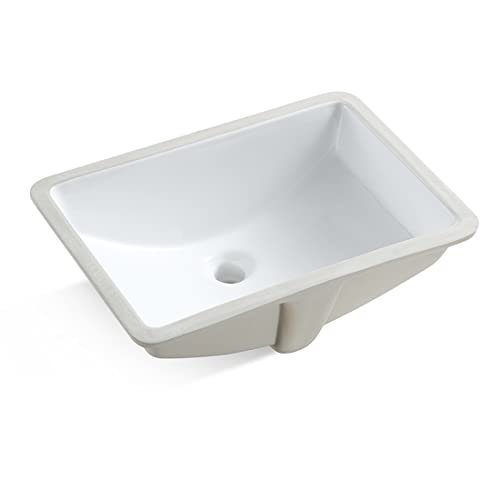
This 18-inch rectangular undermount bathroom sink combines that streamlined installation style with a deep ceramic bowl, a built-in overflow, and a glossy white finish. Its relatively compact exterior dimensions make it suitable for many standard vanities, while the 6-1/4-inch interior depth provides more usable washing space than many shallow compact basins.
Because the sink has no faucet holes, it also gives homeowners flexibility to use a counter-mounted or wall-mounted faucet depending on the vanity design.
What Is This 18-Inch Undermount Bathroom Sink?
This is a white rectangular ceramic bathroom sink designed for installation beneath a compatible countertop.
The supplied specifications include:
- Rectangular undermount design
- Built-in front overflow
- White ceramic construction
- High-gloss glaze
- Low water absorption
- No faucet holes
- Mounting hardware included
- Exterior size of approximately 18-1/8 x 13-5/8 x 8-3/8 inches
- Interior size of approximately 16-1/2 x 11-3/4 inches
- Interior depth of approximately 6-1/4 inches
The manufacturer notes that actual dimensions may vary by approximately 0.25 inch, which is important when planning a countertop cutout.
Why Choose an Undermount Sink?
The primary advantage of an undermount sink is the smooth countertop transition.
Instead of resting on top of the vanity, the basin is secured underneath it. This leaves the countertop edge exposed around the sink opening and eliminates the raised rim that can collect water, dust, and soap residue.
The result is both visually cleaner and easier to maintain.
Cleaner Countertop Lines
A rectangular undermount basin works especially well in:
- Modern bathrooms
- Transitional vanities
- Minimalist interiors
- Contemporary remodels
Its straight lines coordinate naturally with rectangular mirrors, flat-panel cabinets, and modern faucets.
Easier Countertop Cleaning
With no sink rim sitting on top of the counter, water and debris can be wiped directly into the basin.
That makes it easier to clean around:
- Toothpaste residue
- Soap
- Hair
- Water spots
This is one of the most practical reasons to choose an undermount sink rather than a drop-in model.
Compact Exterior Dimensions
The exterior measures approximately 18-1/8 inches long by 13-5/8 inches wide.
That gives the sink a relatively compact footprint while maintaining useful interior space.
It can work well in:
- Guest bathrooms
- Powder rooms
- Apartment bathrooms
- Secondary vanities
Before buying, however, always compare the complete sink dimensions with the vanity cabinet and plumbing below.
Interior Basin Size
The interior measures approximately 16-1/2 inches long by 11-3/4 inches wide.
That provides enough room for routine activities such as:
- Handwashing
- Brushing teeth
- Shaving
- Face washing
The rectangular layout also makes efficient use of the sink's overall footprint.
6-1/4-Inch Basin Depth
One of the more useful specifications is the approximately 6-1/4-inch interior depth.
A deeper bowl can help reduce splashing compared with very shallow compact sinks.
This is especially useful when paired with a moderately tall faucet.
The tradeoff is that the basin occupies more vertical space inside the vanity cabinet.
Check Cabinet Clearance
Because the sink is more than 8 inches high externally, the vanity needs enough room below the countertop for:
- Basin
- Drain
- P-trap
- Supply lines
- Mounting hardware
If the vanity includes drawers or internal shelves, confirm that they will not interfere with the sink body.
Ceramic Construction
The sink is made from high-quality white ceramic.
Ceramic is one of the most common bathroom sink materials because it provides a hard, smooth surface that handles normal water exposure well.
The glaze is designed to create:
- Low water absorption
- Easy cleaning
- Smooth appearance
- Long-lasting white finish
High-Gloss Glaze
The glossy finish gives the basin a bright, polished appearance.
It also makes routine cleaning easier because soap and other residue remain on the surface rather than soaking into the material.
A smooth glaze is particularly useful around:
- Drain area
- Overflow opening
- Faucet splash zones
Easy Everyday Maintenance
For routine cleaning, use:
- Mild bathroom cleaner
- Warm water
- Soft cloth
- Non-abrasive sponge
Avoid harsh scouring pads or abrasive powders unless specifically approved by the manufacturer.
These can dull the glossy finish over time.
Low Water Absorption
The supplied description highlights low water absorption.
That is useful because a dense glazed ceramic surface is less likely to retain moisture or staining.
It also makes the basin easier to keep hygienic during regular use.
Built-In Overflow
The sink includes a front-side overflow.
This provides a secondary drainage path if the water level rises too high.
The overflow can help reduce accidental spillover if:
- Faucet is left running
- Main drain becomes partially blocked
It is a useful safety feature, particularly in a deeper basin.
Overflow Is Not a Complete Flood Safeguard
An overflow should not be treated as perfect flood protection.
If the drain is fully blocked and the faucet delivers water faster than the overflow can remove it, the sink can still spill.
It is best understood as a backup rather than a guarantee.
Choose the Correct Drain
Because the sink includes an overflow, the drain assembly should be compatible with overflow-equipped sinks.
A non-overflow drain may not work correctly with the basin's internal overflow channel.
Check both:
- Drain diameter
- Overflow compatibility
before purchasing.
No Faucet Holes
The sink itself has no faucet holes.
That means the faucet must be installed separately through the countertop or wall.
This gives the homeowner more flexibility than a pre-drilled sink.
Counter-Mounted Faucet Options
The countertop can potentially be configured for:
- Single-hole faucet
- 4-inch centerset faucet
- Widespread faucet
depending on the available counter space.
The faucet choice should match the dimensions of the basin.
Wall-Mounted Faucet Option
A wall-mounted faucet can create an especially clean, minimalist appearance.
However, it requires more planning because the plumbing rough-in needs to be positioned accurately inside the wall.
This is usually easiest during a full bathroom renovation.
Faucet Reach Is Important
The faucet spout should direct water toward the central part of the basin.
If the reach is too short, water may strike the back wall of the sink.
If it extends too far, splashing may increase near the front.
Always compare spout reach with the final sink position beneath the countertop.
Undermount Installation
The basin mounts beneath the countertop.
This type of installation typically works best with solid counter materials such as:
- Quartz
- Granite
- Marble
- Solid surface
The exposed countertop edge around the basin opening needs to be finished properly.
Countertop Compatibility
Traditional laminate countertops may require specialized mounting systems because exposed substrate can be vulnerable to moisture.
Do not assume every countertop can support a standard undermount installation.
Verify compatibility with the countertop manufacturer or fabricator.
Mounting Hardware Included
The supplied description states that all mounting hardware is included.
That simplifies installation, but the sink still needs to be secured properly.
A ceramic undermount sink should not rely solely on sealant for structural support.
Use the recommended:
- Clips
- Brackets
- Anchors
- Support system
for the countertop material.
Accurate Cutout Measurements Matter
The product notes that actual dimensions can vary by approximately 0.25 inch.
That is important.
Ceramic sinks can have slight manufacturing variation, so final countertop fabrication should be based on the actual basin rather than only nominal dimensions.
Use the Physical Sink Before Cutting Stone
If the vanity uses quartz, granite, or another expensive countertop, the actual sink should be available before the opening is fabricated.
That helps ensure:
- Even reveal
- Proper alignment
- Correct fit
A measurement mistake in stone can be expensive to correct.
Professional Installation Can Be Worthwhile
A skilled DIYer may be able to install an undermount basin, but professional installation is often worthwhile when:
- New stone countertop is being fabricated
- Plumbing needs relocation
- Vanity clearance is tight
The sink needs to be secure, level, and properly sealed.
Undermount vs. Drop-In Sink
Undermount Advantages
- Cleaner appearance
- Easier countertop wiping
- No exposed rim
Drop-In Advantages
- Easier installation
- Compatible with more countertop types
- Cut edge is hidden
The undermount style is usually the better choice when appearance and easy cleaning are priorities.
Undermount vs. Vessel Sink
A vessel sink sits above the countertop and becomes a decorative focal point.
An undermount basin remains visually understated.
Choose an undermount sink if you want:
- Minimalist design
- More usable counter surface
- Easier maintenance
Choose a vessel sink if the basin itself is intended to be the visual centerpiece.
Rectangular vs. Oval Basin
The rectangular design provides a more contemporary appearance and makes efficient use of the available footprint.
An oval sink may feel softer and more traditional.
The right choice depends mostly on bathroom style.
Common Buying Mistakes
Not Checking Vanity Clearance
The bowl extends significantly below the countertop.
Buying a Drain Without Overflow Support
The basin has an overflow.
Choosing a Faucet Without Checking Reach
Proper spout geometry helps reduce splashing.
Fabricating the Countertop Too Early
Use the actual sink dimensions whenever possible.
Assuming Mounting Hardware Alone Solves Every Installation
Countertop material and structural support still matter.
Who Is This Sink Best For?
This sink may be a good fit for:
- Modern bathroom renovations
- Guest bathrooms
- Powder rooms
- Small to medium vanities
- Homeowners using quartz or stone countertops
- Buyers who want a deeper compact basin
It may be less suitable for extremely shallow vanity cabinets or countertops that cannot support undermount installation.
Advantages and Considerations
Advantages
- Compact rectangular footprint
- Deep 6-1/4-inch interior bowl
- White ceramic construction
- High-gloss finish
- Built-in overflow
- No faucet holes
- Flexible faucet placement
- Mounting hardware included
- Easy-clean undermount design
Potential Considerations
Faucet must be mounted separately.
Drain should be overflow compatible.
Vanity clearance must be checked.
Countertop must support undermount installation.
Actual ceramic dimensions may vary slightly.
Frequently Asked Questions
What are the exterior dimensions?
Approximately 18-1/8 x 13-5/8 x 8-3/8 inches.
What are the interior dimensions?
Approximately 16-1/2 x 11-3/4 inches.
How deep is the basin?
Approximately 6-1/4 inches.
Is it made from ceramic?
Yes.
Is it an undermount sink?
Yes.
Does it have an overflow?
Yes, on the front side.
Does it have faucet holes?
No.
Can I use a countertop faucet?
Yes.
Can I use a wall-mounted faucet?
Yes, provided the plumbing is configured appropriately.
Is mounting hardware included?
Yes, according to the supplied description.
Is it easy to clean?
The glossy glazed ceramic surface is designed for straightforward routine cleaning.
Can the dimensions vary?
The supplied information states that actual dimensions may vary by approximately 0.25 inch.
Final Thoughts
This 18-inch rectangular undermount bathroom sink offers a practical combination of compact dimensions, generous bowl depth, glossy ceramic construction, and built-in overflow protection.
Its strongest advantage is balance: the approximately 18-inch exterior size keeps the basin manageable for smaller vanities, while the 6-1/4-inch interior depth provides more usable washing space than many shallow compact sinks.
The lack of faucet holes also adds design flexibility, allowing the vanity to use either counter-mounted or wall-mounted fixtures.
The main planning requirements are countertop compatibility, cabinet clearance, drain selection, and accurate fabrication. Because ceramic dimensions may vary slightly, using the actual sink as the final cutout reference is the safest approach.
For buyers looking for a modern rectangular undermount bathroom sink with a deep ceramic basin, overflow protection, high-gloss finish, and flexible faucet placement, this model offers a clean and practical foundation for a contemporary vanity.