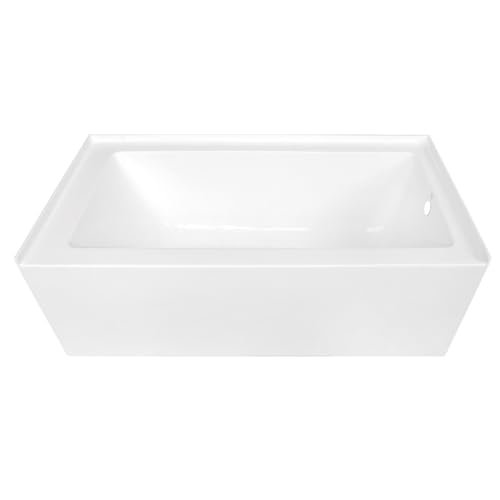
Kingston Brass Aqua Eden 60-Inch Alcove Bathtub Review: Right-Hand Drain Acrylic Tub with Deep Soaking Capacity
A good alcove bathtub needs to balance comfort, durability, installation practicality, and compatibility with the existing bathroom layout. For many remodels, a 60-inch tub remains one of the most useful choices because it fits the dimensions found in countless standard residential bathrooms while still offering enough room for everyday bathing and soaking.
This Kingston Brass Aqua Eden alcove bathtub is designed for a three-wall installation and features a right-hand drain, acrylic construction reinforced with fiberglass and resin, an integrated apron, and a tile flange for easier wall finishing. With a listed water depth of about 14 inches to the overflow and a capacity of roughly 58 gallons, it provides more soaking depth than many shallow builder-grade tubs.
Its combination of a familiar 60-inch footprint, glossy white acrylic surface, and relatively deep basin makes it suitable for family bathrooms, guest baths, and tub-and-shower renovations where homeowners want a practical replacement without moving to a freestanding layout.
What Is the Kingston Brass Aqua Eden Alcove Bathtub?
This Aqua Eden model is a standard alcove bathtub designed to fit into a three-wall enclosure.
Its key specifications include:
- 60-inch length
- 30-11/16-inch width
- Approximately 22-inch height
- 14-inch water depth to overflow
- Approximately 58.2-gallon capacity
- 95-pound listed tub weight
- Right-hand drain
- Integrated front apron
- Tile flange
- Acrylic construction reinforced with fiberglass and resin
The drain kit is not included, so plumbing components need to be selected separately.
Why the 60-Inch Size Matters
A 60-inch tub is one of the most common residential bathtub lengths.
Many homes are framed around a five-foot alcove, so choosing a replacement with the same basic footprint can simplify a renovation.
Keeping the existing length may help avoid unnecessary changes to:
- Wall framing
- Flooring
- Plumbing
- Shower surrounds
- Bathroom layout
However, length is only one dimension. Width, height, drain orientation, and wall framing still need to be checked carefully.
Right-Hand Drain Configuration
This model uses a right-hand drain.
Drain orientation is critical when replacing an existing alcove tub.
When standing in front of the tub and looking toward it, the drain is positioned on the right side.
If your current waste line is also on the right, installation may be more straightforward.
If the existing drain is on the left, the plumbing may need to be relocated, which can increase labor and cost.
Right-Hand vs. Left-Hand Drain
The two configurations are not interchangeable without plumbing changes.
Before ordering, confirm:
- Current drain location
- Overflow location
- Supply-line position
- Access beneath or behind the tub
Choosing the correct orientation can prevent unnecessary demolition and plumbing work.
Acrylic Construction with Reinforcement
The tub is made from a polyester-blend acrylic material reinforced with fiberglass and resin.
This construction combines a smooth acrylic bathing surface with a stronger structural backing.
Acrylic is commonly used in modern bathtubs because it is:
- Relatively lightweight
- Smooth
- Easy to clean
- Warm to the touch
- Resistant to everyday staining
- Capable of forming comfortable interior shapes
The fiberglass and resin reinforcement help give the shell additional rigidity.
Why Acrylic Is Popular for Alcove Tubs
Acrylic offers several advantages over heavier materials.
Compared with cast iron, it is much easier to transport and position during installation.
Compared with basic fiberglass, acrylic generally provides a more refined surface and may retain its appearance better with proper care.
For remodeling projects, the lower weight can also make handling easier in narrow hallways and staircases.
Approximate 95-Pound Tub Weight
The source lists the tub at approximately 95 pounds.
That is much lighter than many cast-iron tubs, which can weigh several hundred pounds before water is added.
The lower fixture weight can make installation more manageable, but the finished floor still needs to support:
- The bathtub
- The water
- The bather
A filled tub creates a much greater load than the empty shell alone.
14-Inch Water Depth to Overflow
The listed water depth is approximately 14 inches to the overflow.
This is one of the more important comfort specifications.
Overall tub height does not necessarily tell you how deeply you can soak. Water depth to overflow is the more useful figure.
A 14-inch depth can provide a more immersive bathing experience than shallow entry-level alcove tubs.
Approximately 58.2-Gallon Capacity
The listed capacity is about 58.2 gallons.
That means hot-water availability should be considered before installation.
A deeper tub can consume a substantial amount of hot water, especially if the user prefers a high fill level.
Before buying, consider:
- Water-heater tank size
- Recovery rate
- Tankless heater output
- Other simultaneous hot-water use
A large bathtub is only practical if the household water-heating system can support it.
Integrated Front Apron
The tub includes an integral apron on the exposed front side.
This is useful in a standard alcove installation because the front of the tub arrives already finished.
There is no need to construct a separate tiled panel or decorative surround.
An integrated apron can help reduce:
- Framing work
- Tile work
- Labor
- Installation complexity
It also gives the bathroom a clean, traditional alcove-tub appearance.
Three-Wall Alcove Installation
The tub is designed to sit between three walls.
This format is common in:
- Family bathrooms
- Guest bathrooms
- Apartments
- Tub-and-shower combinations
The back and two ends are enclosed by walls, while the apron faces the room.
This makes alcove tubs one of the most space-efficient bathtub layouts.
Integrated Tile Flange
A tile flange is included for the three-wall installation.
The flange helps manage water where the tub meets the surrounding walls.
In a properly waterproofed assembly, the wall materials overlap the flange so water is directed back toward the tub instead of behind the wall.
This is especially important if the tub is also used as a shower.
Why Waterproofing Still Matters
The tile flange is only one part of a proper wet-area installation.
A complete waterproofing system may also include:
- Cement board or approved backer
- Waterproof membrane
- Sealant
- Correct flashing details
- Proper tile installation
Poor waterproofing can allow moisture to reach wall cavities, framing, or subflooring.
Suitable for Tub-and-Shower Combinations
Because this is a three-wall alcove tub with a tile flange, it can be well suited to a combined tub-and-shower setup.
This is practical in bathrooms that need both functions but do not have enough space for a separate bathtub and walk-in shower.
A combination setup works especially well in:
- Family bathrooms
- Guest bathrooms
- Rental properties
- Smaller homes
Glossy White Finish
The tub uses a bright white acrylic surface.
White is popular because it coordinates easily with:
- Toilets
- Sinks
- White tile
- Marble-look surfaces
- Chrome fixtures
- Brushed nickel hardware
- Matte black accents
A glossy finish can also reflect light and help the bathroom feel cleaner and brighter.
Easy-Care Surface
Acrylic is generally simple to maintain.
For routine cleaning, use:
- Mild soap
- Warm water
- Soft sponge
- Microfiber cloth
Avoid aggressive scouring pads or abrasive powders.
These can scratch or dull the glossy finish.
Can Acrylic Be Repaired?
Minor acrylic surface damage can sometimes be repaired more easily than damage to some other bathtub materials.
Light scratches may be polishable, while deeper damage may require a repair kit or professional service.
The correct method depends on the severity of the defect and the manufacturer's recommendations.
Acrylic vs. Cast Iron
Both materials have strengths.
Acrylic Advantages
- Lighter
- Easier to transport
- Warmer surface feel
- Easier to repair
- More shape flexibility
Cast Iron Advantages
- Extremely rigid
- Excellent heat retention
- Very durable enamel surface
- Premium solid feel
The tradeoff with cast iron is weight and installation difficulty.
Acrylic vs. Fiberglass
Basic fiberglass tubs are often less expensive, but acrylic generally provides a smoother, more durable finish.
Acrylic usually offers:
- Better gloss retention
- Better resistance to fading
- More substantial feel
- Easier maintenance
This model combines acrylic with fiberglass reinforcement, using both materials for different purposes.
Alcove Tub vs. Freestanding Tub
Freestanding tubs are visually dramatic but require more room around the fixture.
An alcove tub is more practical when:
- Space is limited
- A shower is needed
- Existing framing already supports an alcove
- Plumbing is already positioned for a standard tub
For many renovations, retaining the alcove layout is the simpler and more cost-effective choice.
Alcove Tub vs. Drop-In Tub
A drop-in tub usually requires a custom platform or deck.
This Aqua Eden model already includes a finished front apron and is intended for direct alcove installation.
That can reduce:
- Carpentry
- Tile work
- Material cost
- Installation time
For a conventional bathroom, the apron-front alcove format is usually simpler.
Installation Planning
Before ordering, verify:
- Rough opening dimensions
- Doorway clearance
- Hallway clearance
- Drain position
- Overflow location
- Faucet placement
- Subfloor condition
- Water-heater capacity
A tub can technically fit the bathroom but still be difficult to move through the home.
Plan the delivery route before installation day.
Check the Framed Opening
Do not rely only on the dimensions of the old bathtub.
Measure the actual space between the walls.
Construction can vary, and tile or wallboard thickness may affect the final fit.
A professional installer will usually verify the rough opening before committing to the fixture.
Drain Kit Is Not Included
The source specifically notes that the drain kit is not included.
That means you will need a compatible waste-and-overflow assembly separately.
Before purchase, confirm:
- Drain connection size
- Overflow compatibility
- Finish preference
- Plumbing access
Choosing a compatible drain assembly in advance can prevent installation delays.
Professional Installation Is Often Recommended
Installing an alcove bathtub involves several trades and systems.
The job may require:
- Drain connection
- Overflow connection
- Leveling
- Structural support
- Wall waterproofing
- Faucet plumbing
- Tile or surround work
A professional plumber or bathroom installer can help reduce the risk of hidden leaks or improper support.
Common Installation Mistakes
Ordering the Wrong Drain Side
Always confirm right-hand versus left-hand orientation.
Failing to Measure the Width
This model is about 30-11/16 inches wide, not simply "standard size" in every dimension.
Forgetting the Drain Kit
It is not included.
Ignoring Water-Heater Capacity
A nearly 58-gallon tub can require substantial hot water.
Poor Waterproofing Around the Tile Flange
This can lead to hidden moisture damage.
Using Abrasive Cleaners
They can scratch acrylic.
Who Is This Tub Best For?
This Kingston Brass Aqua Eden model may be a good fit for:
- Standard 60-inch alcove remodels
- Family bathrooms
- Guest bathrooms
- Tub-and-shower combinations
- Homeowners wanting deeper soaking
- Right-hand drain layouts
It is especially practical for buyers who want a familiar alcove format with a larger soaking capacity than a basic shallow tub.
Advantages and Considerations
Advantages
- Standard 60-inch length
- Approximately 14-inch water depth
- Roughly 58.2-gallon capacity
- Acrylic construction
- Fiberglass and resin reinforcement
- Integrated apron
- Tile flange
- Right-hand drain
- Glossy white finish
- Relatively manageable 95-pound empty weight
- Suitable for three-wall installations
- Good candidate for tub-and-shower combinations
Potential Considerations
The drain kit is not included.
Right-hand orientation must match the plumbing.
The deeper capacity may require more hot water.
Acrylic needs non-abrasive cleaning.
Professional installation may be advisable.
Frequently Asked Questions
What are the dimensions?
Approximately 60 inches long x 30-11/16 inches wide x about 22 inches high.
How deep is the water?
The listed water depth is approximately 14 inches to the overflow.
What is the tub capacity?
Approximately 58.2 gallons.
How much does the tub weigh?
The listed empty weight is about 95 pounds.
Which side is the drain on?
This model has a right-hand drain.
Is the drain kit included?
No.
What material is the tub made from?
It uses acrylic reinforced with fiberglass and resin.
Does it have a front apron?
Yes.
Does it include a tile flange?
Yes.
Can it be used with a shower?
Yes, when installed and waterproofed correctly as part of a tub-and-shower system.
Is acrylic easy to clean?
Yes. Mild soap and a soft cloth or sponge are generally sufficient.
Final Thoughts
The Kingston Brass Aqua Eden 60-inch right-hand drain alcove bathtub is a practical option for homeowners who want a familiar three-wall tub layout with more soaking depth than a basic builder-grade fixture.
Its reinforced acrylic construction keeps the tub relatively manageable in weight, while the integrated apron and tile flange simplify the standard alcove format. The approximately 14-inch water depth and 58.2-gallon capacity also make it better suited to soaking than many shallow replacement tubs.
The most important things to verify are drain orientation, exact rough dimensions, drain-kit compatibility, and hot-water capacity.
For a bathroom remodel that needs a 60-inch right-drain acrylic alcove tub with a deeper basin, integrated apron, and tile flange, this Aqua Eden model offers a solid combination of practicality, comfort, and straightforward design.