Oval Ceramic Vessel Sink Review: Compact Above-Counter Bathroom Sink With cUPC Certification
A vessel sink can completely change the look of a bathroom without requiring a full vanity replacement. Instead of sitting inside or underneath the countertop, an above-counter basin becomes part of the room's design while also simplifying installation in many remodeling projects.
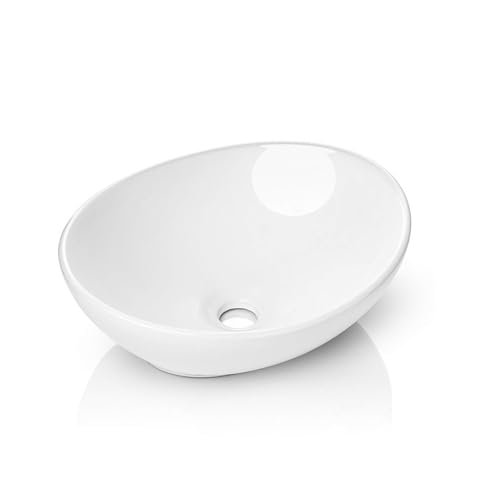
This oval ceramic vessel sink is designed for homeowners who want a compact, clean-looking washbasin for a bathroom, powder room, guest space, or even a bar area. According to the supplied product information, it combines high-density ceramic construction, a smooth non-porous finish, a standard 1.75-inch drain opening, compact 16 x 13 x 5.5-inch dimensions, and cUPC certification for the U.S. and Canadian markets.
Its strongest appeal is simplicity. The sink does not rely on unusual mounting hardware or an integrated faucet deck. Instead, it uses a straightforward above-counter installation that can work with many existing vanity configurations.
What Is This Oval Ceramic Vessel Sink?
This is an above-counter bathroom vessel sink made from high-density ceramic.
Unlike an undermount sink, which is installed beneath the countertop, or a drop-in sink, which sits partially inside a cutout, a vessel sink rests primarily above the counter surface.
The supplied specifications include:
- Oval bowl design
- High-density ceramic construction
- Smooth polished finish
- Non-porous surface
- Low water absorption
- cUPC certification
- Standard 1.75-inch drain opening
- Exterior dimensions of approximately 16 x 13 x 5.5 inches
- Above-counter installation
- Protective foam packaging
Its relatively compact footprint makes it particularly suitable for smaller vanities and powder rooms where countertop space is limited.
Why Choose an Above-Counter Vessel Sink?
Vessel sinks are popular partly because they make the sink itself a visible design element.
Instead of disappearing into the vanity, the bowl sits above the countertop and can create a more distinctive bathroom layout.
This style can work well in:
- Modern bathrooms
- Guest bathrooms
- Powder rooms
- Compact vanities
- Transitional interiors
- Bar or utility counters
It can also be useful in remodeling projects where homeowners want a noticeable visual upgrade without replacing the entire cabinet.
A Compact Size for Smaller Spaces
The sink measures approximately 16 inches wide, 13 inches deep, and 5.5 inches high according to the source.
That makes it relatively compact compared with many larger vessel sinks.
A smaller footprint can be advantageous in bathrooms where every inch of counter space matters.
For example, a narrow powder-room vanity may not have enough room for a large rectangular basin, but a compact oval sink can leave more usable countertop around the bowl.
Measure the Vanity Before Buying
Even though the sink is compact, measurements should always be checked carefully before installation.
Do not consider only the outer sink dimensions.
Also account for:
- Faucet placement
- Drain position
- Distance from the backsplash
- Distance from the front edge
- Available countertop depth
- Cabinet clearance below
A sink that technically fits on the counter can still feel cramped if the faucet or drain placement is poorly planned.
High-Density Ceramic Construction
The sink is made from high-density ceramic according to the supplied product description.
Ceramic remains one of the most common bathroom-sink materials because it combines durability, water resistance, and a smooth finished surface.
For everyday residential use, ceramic can handle regular exposure to:
- Water
- Soap
- Toothpaste
- Cosmetics
- Common bathroom cleaners
Its hard surface also gives it the familiar solid feel associated with conventional bathroom fixtures.
Smooth, Non-Porous Surface
The sink is described as having a smooth, polished, non-porous finish.
This matters because bathroom sinks are exposed constantly to residues from soap, hard water, grooming products, and toothpaste.
A smoother surface provides fewer places for residue to cling compared with rough or porous materials.
That generally makes routine cleaning easier.
Low Water Absorption
Low water absorption is another useful characteristic of glazed ceramic.
The sink does not need to absorb water to function, and limiting absorption helps the material remain stable during normal use.
It can also make the surface easier to maintain because moisture and residue remain on the glazed exterior rather than penetrating deeply into the material.
How to Clean a Ceramic Vessel Sink
Routine cleaning should usually be simple.
For most day-to-day maintenance, use:
- Warm water
- Mild soap
- A soft cloth or sponge
For more stubborn residue, use a bathroom cleaner that is compatible with glazed ceramic.
Avoid aggressive abrasive pads unless the manufacturer specifically permits them, since harsh scrubbing can eventually dull polished surfaces.
Dealing With Hard-Water Spots
In areas with mineral-heavy water, white or cloudy deposits may develop around the bowl and drain.
Regular wiping can help prevent heavy buildup.
It is generally easier to remove light mineral deposits frequently than to allow thick scale to accumulate over time.
Keeping the sink dry between uses can also improve its appearance.
cUPC Certification
One of the more important details in the source is that the sink is described as cUPC certified.
cUPC certification relates to plumbing products evaluated for use under applicable U.S. and Canadian plumbing standards.
This is more meaningful than vague claims that a sink is simply "high quality."
For homeowners, contractors, and inspectors, certification can help establish that a plumbing fixture has been evaluated against recognized requirements.
Why Plumbing Certification Matters
A bathroom sink is not merely decorative.
It becomes part of the home's plumbing system.
Certification can matter when:
- Building permits are involved
- Local plumbing codes apply
- Contractors require approved fixtures
- Inspections are expected
Always verify the actual certification marking on the product or current manufacturer documentation if code compliance is critical to the project.
Standard 1.75-Inch Drain Opening
The sink uses a 1.75-inch drain opening according to the supplied specifications.
That is a common size for bathroom vessel sinks and makes it compatible with many standard pop-up drain assemblies.
However, drain style still matters.
Before purchasing a drain, confirm:
- Opening diameter
- Sink thickness around the drain
- Whether the sink has an overflow
- Drain type
A mismatch can cause installation problems or leaks.
Check Whether an Overflow Is Present
The supplied description does not mention an overflow opening.
Many vessel sinks are manufactured without one.
If the sink has no overflow, it generally requires a drain designed specifically for non-overflow sinks.
A drain intended for a basin with an overflow may not be appropriate.
This is one of the most frequently overlooked details when purchasing vessel-sink components separately.
Faucet Placement Is Flexible
An above-counter vessel sink typically does not require the faucet to be mounted directly to the sink.
This gives homeowners flexibility in choosing between options such as:
- Deck-mounted vessel faucet
- Wall-mounted faucet
The faucet can therefore become part of the overall bathroom design rather than being dictated by pre-drilled faucet holes.
Choosing the Correct Faucet Height
Vessel sinks sit above the countertop, so a standard low bathroom faucet may not provide enough clearance.
A vessel faucet generally needs to be taller so the spout reaches comfortably over the rim.
Measure:
- Sink height
- Counter height
- Faucet spout height
- Spout reach
before buying the faucet.
Avoid Excessive Faucet Height
A faucet that is too tall can create unnecessary splashing.
The goal is to position the water stream comfortably inside the bowl without dropping from an excessive height.
Faucet placement should also aim the water toward the center or appropriate slope of the basin rather than directly at a side wall.
Above-Counter Installation
The sink's top-mount design can simplify installation compared with a large undermount sink that requires precise countertop support.
In many vessel-sink installations, the countertop primarily needs openings for:
- The drain
- The faucet, if deck mounted
The bowl itself rests above the surface.
This can make it attractive for remodeling projects.
Installation Still Requires Careful Planning
"Easy to install" should not be interpreted as meaning installation requires no plumbing knowledge.
The sink still needs:
- Correct drain alignment
- Proper sealing
- Stable countertop support
- Correct trap connection
- Leak testing
If plumbing modifications are required, professional installation may be worthwhile.
Countertop Material Matters
Vessel sinks can be installed on many solid countertop materials, including:
- Quartz
- Granite
- Solid surface
- Sealed wood
- Engineered stone
The counter needs to provide enough support and must tolerate regular water exposure.
If using wood or another moisture-sensitive material, proper sealing is essential.
Vanity Height Is an Important Consideration
One of the most commonly overlooked issues with vessel sinks is overall height.
Because the bowl sits above the countertop, installing it on a standard-height vanity can sometimes result in a sink that feels too tall.
Before installation, calculate the final rim height:
vanity height + countertop thickness + vessel sink height
With this sink measuring approximately 5.5 inches high, that additional height should be considered during vanity selection.
Good Fit for Powder Rooms
The compact dimensions make this sink especially suitable for powder rooms.
Powder rooms typically prioritize:
- Handwashing
- Compact footprint
- Visual appeal
They generally do not require the large basin capacity that might be desirable in a heavily used family bathroom.
A smaller vessel sink can therefore provide enough functionality while preserving counter space.
Good Fit for Guest Bathrooms
Guest bathrooms are another natural application.
A vessel sink can provide a more distinctive appearance without making the room overly complicated.
Because guest bathrooms often receive lighter use than a primary bathroom, a compact basin may be entirely adequate.
Possible Use in Bar Areas
The supplied product information also mentions bar applications.
A small ceramic vessel sink could potentially work in a bar or beverage-preparation area if the installation and plumbing requirements are appropriate.
However, bathroom-style vessel sinks are generally shallower than kitchen or utility sinks.
Consider how the sink will actually be used before choosing it for a non-bathroom application.
Vessel Sink vs. Undermount Sink
An undermount sink is installed beneath the countertop and provides a very clean counter line.
It also makes wiping water directly from the countertop into the basin easy.
A vessel sink, by contrast, creates a more visible design statement.
Vessel Sink Advantages
- Distinctive appearance
- Often simpler countertop cutout
- Easy to replace independently
- Works well with compact vanities
Undermount Advantages
- Cleaner countertop transition
- Easier countertop wiping
- Lower overall bowl height
- More understated appearance
The better choice depends on the bathroom design and how the sink will be used.
Vessel Sink vs. Drop-In Sink
A drop-in sink sits inside a countertop opening with a visible rim resting on the surface.
It is usually practical and straightforward to install.
A vessel sink sits much higher above the counter and creates a stronger visual focal point.
For homeowners prioritizing style and a contemporary vanity design, the vessel approach may be more appealing.
Ceramic vs. Glass Vessel Sinks
Tempered-glass vessel sinks can create a dramatic appearance, but ceramic generally offers a more traditional and forgiving surface.
Ceramic tends to:
- Hide water spots better
- Coordinate easily with toilets and tubs
- Feel familiar in bathroom interiors
Glass may require more frequent polishing to maintain a spotless appearance.
Ceramic vs. Stone Vessel Sinks
Natural stone can offer unique texture and character, but it often requires more maintenance.
Some stones need periodic sealing and can react to certain cleaning products.
Glazed ceramic is generally easier to maintain and more predictable from one sink to another.
Protective Packaging
Bathroom sinks can be vulnerable to shipping damage because ceramic is hard but brittle.
The supplied description states that this sink is packed using customized anti-collision foam.
Protective packaging is useful for minimizing:
- Edge chips
- Cracks
- Impact damage
However, the sink should still be inspected immediately after delivery.
Inspect the Sink Before Installation
Do not wait until the countertop is drilled and plumbing is ready before checking the basin.
Inspect:
- Rim
- Bowl
- Underside
- Drain opening
- Glaze
for chips or cracks.
Installing a damaged ceramic sink can make replacement far more complicated later.
Dry-Fit Everything First
Before applying sealant or permanently connecting plumbing, place the sink and faucet on the countertop.
This allows you to verify:
- Visual positioning
- Faucet reach
- Clearance from backsplash
- Counter space
- Drain alignment
Dry-fitting is one of the easiest ways to avoid an expensive installation mistake.
Plan for Splash Control
Compact vessel sinks can be more sensitive to faucet positioning.
If the faucet sends a strong stream against the side of the bowl, water may splash onto the countertop.
Splashing depends on several factors:
- Faucet aerator
- Flow rate
- Spout height
- Spout reach
- Bowl geometry
A correctly positioned faucet makes a substantial difference.
Common Mistakes to Avoid
One common mistake is selecting a faucet before measuring the sink's height. A standard faucet may sit too low to clear the rim.
Another is buying the wrong drain type. If the basin does not have an overflow, the drain should be compatible with a non-overflow sink.
Homeowners also sometimes overlook final sink height. A 5.5-inch vessel bowl can make an already tall vanity uncomfortable to use.
Finally, do not drill the countertop until the actual sink and faucet have arrived and their dimensions have been checked.
Who Is This Sink Best For?
This oval ceramic vessel sink is particularly well suited to homeowners who want:
- A compact above-counter basin
- A clean modern or transitional appearance
- Ceramic construction
- A certified plumbing fixture
- A standard drain size
- Straightforward vanity installation
Its 16 x 13-inch footprint makes it especially attractive for small vanities and powder rooms.
Who May Prefer a Different Sink?
A larger undermount or drop-in sink may be better for a busy family bathroom where users want more bowl space.
A vessel sink may also be less appropriate if the existing vanity is already tall.
Homeowners who frequently wipe large amounts of water from the countertop into the basin may also prefer an undermount design.
Advantages and Considerations
The main advantages are the compact 16 x 13 x 5.5-inch size, high-density ceramic construction, smooth low-absorption surface, cUPC certification, standard 1.75-inch drain opening, and above-counter installation.
The design is particularly useful where countertop space is limited but a vessel-style appearance is desired.
The main considerations are faucet height, final vanity height, drain compatibility, and the likely absence of an overflow opening. Those details should be verified before ordering the surrounding plumbing hardware.
Frequently Asked Questions
What type of sink is this?
It is an oval above-counter ceramic vessel sink.
What are the exterior dimensions?
Approximately 16 x 13 x 5.5 inches according to the supplied information.
Is it suitable for a small bathroom?
Yes. Its compact dimensions make it particularly suitable for powder rooms and smaller vanities.
What material is it made from?
High-density ceramic.
Is the surface glazed?
The source describes it as smooth, polished, non-porous, and low in water absorption.
Is it easy to clean?
Ceramic is generally easy to maintain with mild non-abrasive cleaners.
Is the sink cUPC certified?
Yes, according to the supplied product information.
What is cUPC?
cUPC is a plumbing-product certification associated with applicable U.S. and Canadian standards.
Does certification matter?
It may be important for code compliance, permitted renovations, or professional installations.
What size drain opening does it have?
A standard 1.75-inch opening.
Does it include a drain?
The supplied description does not state that a drain is included, so it should not be assumed.
Does the sink have an overflow?
The source does not mention one. Confirm before selecting a drain assembly.
What drain should I use if there is no overflow?
A pop-up drain designed for a vessel sink without overflow is typically required.
Does it have faucet holes?
The source does not specify faucet holes, so verify before installation. Vessel sinks commonly use a separate deck-mounted or wall-mounted faucet.
What type of faucet works best?
A vessel faucet with enough height and reach to clear the bowl is generally appropriate.
Can it be mounted on an existing vanity?
Potentially, provided the countertop has enough space and can be modified for the required drain and faucet holes.
Do I need to replace the entire vanity?
Not necessarily. One advantage of above-counter sinks is that they can sometimes be installed on an existing suitable countertop.
Is it suitable for a powder room?
Yes.
Can it be used in a bar area?
Potentially, though its compact bathroom-style dimensions should be considered.
Does ceramic chip?
Ceramic is durable during normal use but can chip or crack from strong impacts.
Should I inspect it when it arrives?
Yes. Check the basin carefully before installation.
Is protective packaging included?
The source states that the sink uses customized anti-collision foam packaging.
Is installation a DIY project?
It can be for someone comfortable with plumbing and countertop work, but professional installation may be preferable if the counter needs modification or plumbing must be relocated.
Final Thoughts
This 16-inch oval ceramic vessel sink is a practical option for homeowners who want a compact above-counter bathroom basin with a clean, versatile appearance.
Its main strengths are straightforward: high-density ceramic construction, a smooth non-porous finish, low water absorption, cUPC certification, a standard 1.75-inch drain opening, and dimensions that work well with smaller countertops.
The above-counter design can also make bathroom remodeling more flexible because the sink does not require the same type of large precision cutout as many undermount basins. That makes it particularly appealing for powder rooms, guest bathrooms, and compact vanity installations.
The most important step is planning the surrounding components correctly. Measure the vanity, verify the final rim height, choose a faucet with appropriate clearance and reach, and confirm whether the basin requires a non-overflow drain before purchasing plumbing hardware.
For buyers looking for a compact certified ceramic vessel sink that combines straightforward installation, everyday durability, and a modern above-counter appearance, this style of basin offers a sensible balance of practicality and design.