Insoma Garden Hose Timer Review: Flexible Automatic Watering for Lawns, Gardens, and Drip Systems
Keeping plants watered consistently can be difficult when schedules change, temperatures rise, or you spend several days away from home. A hose timer simplifies this routine by controlling water directly at the outdoor faucet, allowing sprinklers, soaker hoses, drip lines, and greenhouse systems to operate without daily manual input.
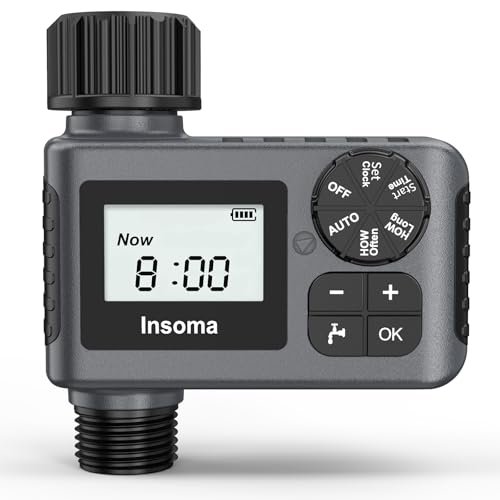
The Insoma garden hose timer combines programmable watering, manual operation, rain delay, child lock, and a large LCD display in a compact faucet-mounted controller. Its wide scheduling range supports everything from short misting cycles to long, infrequent watering sessions.
Unlike a Wi-Fi irrigation controller, this timer is programmed directly from the device. It does not require an app, internet connection, or smart-home hub, making it suitable for users who want straightforward automatic watering without additional technology.
What Is the Insoma Garden Hose Timer?
The Insoma timer installs between a faucet and a garden hose or irrigation line. Once the outdoor faucet is left open, the timer’s internal valve controls when water begins and stops flowing.
The controller allows users to configure:
- The current clock time
- Watering start time
- Watering frequency
- Watering duration
- Automatic operation
- Manual watering
- Rain delay
- Complete shutdown
This makes it useful for residential gardens, lawns, raised beds, greenhouses, gravity-fed drip systems, misting networks, and other outdoor watering applications.
Simple Dial-and-Button Programming
The timer uses a rotary dial and physical buttons rather than a complicated menu system.
To create a watering schedule, rotate the dial to each setting and adjust the displayed value. Once the clock, start time, frequency, and duration are configured, place the controller in automatic mode.
This direct interface is useful for gardeners who prefer controls they can access at the faucet without opening an app or pairing a device.
A typical schedule might water a lawn for 25 minutes every second morning. A greenhouse misting line may instead run for one minute at shorter intervals. The broad programming range allows the same timer to support very different irrigation systems.
Flexible Watering Frequency
The timer offers two primary ways to control how often watering occurs.
Cycles can repeat at intervals from approximately one minute to 23 hours and 59 minutes. Alternatively, watering can be scheduled every one to seven days.
This provides options such as:
- Every 15 minutes
- Every two hours
- Once each morning
- Every other day
- Every three days
- Once per week
Short intervals may be useful for temporary propagation or greenhouse misting. Lawns, shrubs, and established garden plants generally require less frequent but deeper irrigation.
The most appropriate schedule depends on soil drainage, weather, plant type, water pressure, and the output of the attached irrigation equipment.
Adjustable Watering Duration
Each cycle can run from one minute to 23 hours and 59 minutes.
Short watering periods may suit:
- Seedlings
- Small containers
- Misting systems
- Recently planted flowers
- Light greenhouse irrigation
Longer sessions may be appropriate for:
- Soaker hoses
- Slow drip systems
- Trees and shrubs
- Large raised beds
- Deep lawn watering
- Low-flow gravity irrigation
Runtime alone does not determine how much water reaches the plants. A high-output sprinkler may release far more water in ten minutes than a drip system delivers in an hour.
Test the connected equipment and inspect the soil before relying on a long-term schedule.
Three Watering Modes
The Insoma hose timer includes automatic, manual, and rain-delay modes. These modes allow users to modify watering temporarily without deleting the main schedule.
Automatic Watering Mode
Automatic mode follows the programmed start time, duration, and frequency.
Once activated, the timer opens and closes the internal valve without further input. This makes it useful when watering needs to continue during workdays, vacations, or early-morning hours.
Automatic operation is particularly convenient for:
- Lawn sprinklers
- Raised-bed irrigation
- Drip systems
- Soaker hoses
- Greenhouse watering
- Patio plants
The schedule should still be reviewed regularly. A program created for hot, dry weather may apply too much water after rainfall or during cooler conditions.
Manual Watering Mode
Manual mode allows water to run temporarily without changing the saved automatic program.
The manual session can be set from one minute to 23 hours and 59 minutes. After it ends, the timer returns to the original schedule.
This feature is helpful when you need to:
- Give dry plants extra water
- Test a sprinkler
- Fill a watering can
- Wash garden tools
- Flush an irrigation line
- Use the hose for another outdoor task
Because the programmed schedule remains intact, there is no need to reconfigure the timer afterward.
Rain Delay Mode
Rain delay pauses automatic irrigation for a selected period between one and seven days.
When the delay expires, the timer resumes the saved schedule automatically. This is more convenient than deleting the program every time rain is expected.
Using rain delay can help reduce:
- Unnecessary watering
- Oversaturated soil
- Runoff
- Water waste
- Irrigation costs
- Plant stress caused by excessive moisture
The timer does not appear to include automatic weather detection, so the user must activate rain delay manually.
Large LCD Display
A larger LCD screen makes the timer easier to read while entering or reviewing the schedule.
The display allows users to confirm the selected mode, clock, watering interval, and duration directly at the faucet. Clear readouts also reduce the likelihood of programming mistakes, especially when setting long or irregular schedules.
Outdoor displays can still be affected by extreme heat and prolonged direct sunlight. Installing the timer in a reasonably protected position may help preserve screen visibility and housing condition.
Child Lock Prevents Accidental Changes
The child-lock function helps protect the programmed schedule from unintended button presses.
This is useful when the faucet is accessible to children, pets, visitors, or anyone using the outdoor area. Without a lock, accidental input could alter the duration, pause the system, or leave water running longer than expected.
The lock provides additional protection but does not replace careful placement. The timer should still be installed where it is unlikely to be struck, pulled, or stepped on.
Battery-Powered Operation
The timer uses two AA 1.5-volt alkaline batteries, which are not included.
The manufacturer states that a set of batteries can power the controller for more than six months. Actual battery life depends on temperature, battery quality, valve activity, and watering frequency.
Battery operation provides several advantages:
- No outdoor electrical outlet is needed
- No extension cord is required
- The timer works during household power outages
- Installation remains simple
- The unit can be used on remote faucets
Before leaving home for an extended period, check the battery indicator and replace the batteries if their remaining life is uncertain.
IP55 Weather-Resistant Housing
The timer is described as having an IP55-rated enclosure.
This rating indicates resistance to limited dust ingress and water jets from multiple directions. It is appropriate for normal outdoor exposure, including rainfall and sprinkler splash.
However, IP55 does not mean the timer can be submerged or left in standing water.
Avoid installing it where it may be exposed to:
- Flooding
- Continuous high-pressure spray
- Deep puddles
- Pool water
- Pressure washers
- Freezing water
A small faucet cover can provide additional protection from heavy rain and direct sunlight.
Sealed Battery Compartment
A sealing ring in the battery cover helps isolate the electronic compartment from moisture.
Whenever batteries are replaced, inspect the seal before closing the compartment. Dirt, grit, hair, or a twisted gasket can reduce water resistance.
For the best seal:
- Wipe the gasket clean.
- Confirm that it sits evenly in its groove.
- Close the battery cover securely.
- Avoid pinching or stretching the seal.
- Check that the cover remains fully seated.
Removing the batteries during long-term storage can help prevent corrosion.
Reinforced Faucet Connector
The timer’s connector material includes added fiber reinforcement intended to improve strength under water pressure.
The supplied description lists an operating pressure range from approximately 7.25 PSI to 116 PSI. This broad range allows the timer to work with many household faucets and certain low-pressure irrigation setups.
Performance at very low pressure depends on the attached equipment. Gravity-fed drip systems may operate differently from standard pressurized faucets, while sprinklers generally require more pressure and flow.
Even when the timer is pressure-rated for the supply, downstream hoses, emitters, and connectors must also be compatible.
Adapter for Different Faucet and Hose Sizes
The package includes a reducing hex bushing that converts a 3/4-inch male NPT connection to a 1/2-inch female NPT connection.
This expands compatibility with certain faucets, hoses, and irrigation components that do not use the standard garden hose connection.
Thread-seal tape is also included to help seal compatible tapered pipe threads.
It is important to distinguish NPT pipe threads from garden hose threads. These thread systems are not interchangeable even when their nominal size appears similar.
Before installation, confirm the exact connector type required by the faucet and irrigation equipment.
Included Quick Connector
A quick connector is provided to simplify hose attachment and removal.
Quick-connect fittings can be convenient when the same faucet or hose is used for several tasks. Instead of repeatedly threading the hose on and off, the connector allows faster changes.
Check the fitting carefully after installation. A connector that is not fully seated may leak or separate under pressure.
Installing the Hose Timer
A typical installation involves only a few steps.
- Insert two fresh AA alkaline batteries.
- Inspect the inlet washer and connector.
- Attach the timer to the outdoor faucet.
- Install the reducing bushing only if required.
- Use thread-seal tape only on compatible threaded connections.
- Attach the hose or irrigation system to the outlet.
- Open the faucet gradually.
- Inspect every connection for leaks.
- Set the clock, start time, duration, and frequency.
- Run a short manual test.
- Activate automatic mode.
The supply faucet normally remains open so the timer can control water through its internal valve.
Using Thread-Seal Tape Correctly
Thread-seal tape can help prevent leaks on NPT-style tapered threads, but it is not required for every type of connection.
Garden hose fittings generally seal with a rubber washer rather than thread tape. Adding tape to the wrong connection can interfere with proper seating or make future removal difficult.
When using tape on compatible threads:
- Clean the threads first
- Wrap in the tightening direction
- Apply an even layer
- Keep tape away from the opening
- Avoid excessive thickness
If a hose connection leaks, inspect the rubber washer before adding seal tape.
Suitable Irrigation Applications
Lawn Sprinklers
The timer can operate a portable or stationary lawn sprinkler on a repeating schedule.
Water pressure and hose diameter affect sprinkler coverage. Test the system before choosing the final runtime.
Drip Irrigation
The controller can automate a drip network for vegetables, flowers, shrubs, or containers.
A pressure regulator and fine filter may be required to protect small drip emitters.
Gravity Drip Systems
The listed low-pressure range suggests compatibility with some gravity-fed irrigation systems. Actual performance depends on tank height, tubing diameter, valve resistance, and emitter design.
Test the timer at the intended pressure before relying on it for unattended watering.
Soaker Hoses
Soaker hoses deliver water slowly along their length and often need longer watering sessions than conventional sprinklers.
Greenhouse Misting
The short repeat intervals can support certain greenhouse misting schedules. Misting nozzles require clean water and adequate pressure to operate correctly.
Raised Beds and Flower Gardens
Automatic watering helps maintain more consistent soil moisture across vegetables, herbs, flowers, and mixed planting areas.
Pool and Outdoor Maintenance
Manual mode may also be useful for poolside cleaning, temporary hose operation, or other controlled outdoor water tasks.
Planning an Effective Watering Schedule
A good irrigation schedule is based on conditions in the garden rather than a fixed universal formula.
Consider Soil Type
Sandy soil drains rapidly and may require shorter, more frequent cycles. Clay retains moisture longer and may need slower watering to prevent runoff.
Match the Plant
New seedlings, established lawns, shrubs, and drought-tolerant plants require different amounts of water.
Observe the Weather
Temperature, wind, humidity, and rainfall all influence plant water demand.
Measure Irrigation Output
Use small containers or a flow measurement to estimate how much water the connected system delivers during each cycle.
Check the Root Zone
Surface soil may dry before deeper roots need more water. Inspect moisture below the top layer before increasing frequency.
Follow Local Restrictions
Many municipalities limit outdoor watering to certain days or times.
Tips for Reliable Automatic Watering
Test Before Leaving Home
Run several automatic and manual cycles before relying on the timer during a trip.
Check for Downstream Leaks
The timer controls water at the faucet but cannot prevent leaks from cracked hoses, loose emitters, or damaged sprinkler fittings.
Keep the Filtered System Clean
When using drip emitters or misters, add appropriate filtration if the water contains sediment.
Replace Weak Batteries Early
Fresh batteries reduce the risk of missed watering cycles during hot weather or vacations.
Use Rain Delay Proactively
Pause irrigation when rainfall has already supplied enough moisture.
Review the Schedule Seasonally
Plants typically need less water in cooler or wetter conditions.
Common Mistakes to Avoid
Leaving the Faucet Closed
The timer cannot supply water if the outdoor faucet is turned off. After testing for leaks, the faucet normally remains open.
Overtightening Connections
Excessive force can damage plastic housings, washers, adapters, or threads. Tighten only enough to stop leaks.
Confusing NPT and Garden Hose Threads
The included reducer is intended for particular threaded connections. Confirm compatibility before forcing components together.
Programming Excessive Duration
The timer supports very long watering periods, but this does not mean plants require them. Excessive irrigation can cause root damage, runoff, and wasted water.
Forgetting to Activate Rain Delay
Rain delay is manual. The timer will continue following its schedule after rainfall unless the user pauses it.
Using Damaged Batteries or Mixed Battery Types
Replace both batteries together with matching alkaline cells.
Leaving the Timer Outside During Freezing Weather
Water trapped inside the valve can freeze and crack the housing. Disconnect, drain, and store the timer before freezing conditions.
Skipping a Test Cycle
Incorrect start times, durations, or frequencies may not become obvious until plants are overwatered or left dry.
Maintenance and Storage
Routine care helps preserve reliable operation.
Recommended maintenance includes:
- Inspecting for leaks
- Cleaning inlet screens or washers
- Checking the battery seal
- Reviewing battery condition
- Testing valve opening and closing
- Cleaning dirt from the display and housing
- Inspecting adapters and quick connectors
- Revising the schedule as conditions change
Before winter:
- Turn off the faucet.
- Disconnect the timer.
- Drain all remaining water.
- Remove the batteries.
- Dry the connectors.
- Store the unit indoors.
Package Contents
The listed package includes:
- One Insoma water timer
- One roll of thread-seal tape
- One quick connector
- One instruction manual
- One reducing hex bushing
Two AA alkaline batteries are required but not included.
Advantages and Considerations
Advantages
- Direct dial-and-button programming
- No Wi-Fi, app, or hub required
- Watering intervals from one minute to seven days
- Watering duration from one minute to nearly 24 hours
- Automatic watering mode
- Manual operation without deleting the schedule
- Rain delay from one to seven days
- Large LCD display
- Child-lock function
- More than six months of stated battery life
- IP55 weather-resistant construction
- Sealed battery compartment
- Reinforced faucet connector
- Broad stated pressure range
- Includes reducing bushing and thread-seal tape
- Suitable for sprinklers, drip systems, greenhouses, and gravity irrigation
Potential Considerations
The timer does not provide app control, weather forecasting, or automatic rain detection. Rain delay must be activated manually.
The included adapter may not fit every faucet because NPT and garden hose threads differ. Buyers should verify the connection type before installation.
Actual battery life and low-pressure performance depend on usage and system conditions. The timer must also be removed before freezing weather.
Frequently Asked Questions
Does this timer require Wi-Fi?
No. It is programmed directly on the device and does not require internet access, an app, or a smart-home hub.
What batteries does it use?
It requires two AA 1.5-volt alkaline batteries, which are not included.
How often can it water?
The interval can be set from approximately one minute to 23 hours and 59 minutes, or every one to seven days.
How long can each watering cycle run?
Each cycle can be set from one minute to 23 hours and 59 minutes.
Can I use the faucet manually without deleting the program?
Yes. Manual mode operates temporarily while preserving the automatic schedule.
Does it detect rain automatically?
No automatic rain detection is described. The user must activate rain delay.
How long can rain delay last?
The normal schedule can be paused for one to seven days.
Is the timer waterproof?
It has an IP55 weather-resistance rating, but it should not be submerged or left in standing water.
What water pressure can it handle?
The listed range is approximately 7.25 to 116 PSI. The connected irrigation equipment may have a narrower pressure requirement.
Can it work with gravity-fed irrigation?
It may work with some low-pressure gravity systems, but performance depends on available head pressure and flow. Testing is essential.
What is the reducing hex bushing for?
It converts a 3/4-inch male NPT connection to a 1/2-inch female NPT connection for certain compatible plumbing or irrigation setups.
Should thread tape be used on garden hose threads?
Garden hose fittings typically seal with washers rather than tape. Use the included tape only on appropriate NPT-style threaded connections.
Can it stay outside in winter?
No. It should be disconnected, drained, and stored before freezing temperatures.
Final Thoughts
The Insoma garden hose timer provides a broad range of scheduling options in a straightforward, non-connected design. Its automatic, manual, and rain-delay modes make it adaptable to lawns, raised beds, drip systems, soaker hoses, greenhouses, and certain gravity-fed irrigation setups.
The large display and child lock improve everyday usability, while the reinforced connector, sealed battery compartment, adapter, and quick connector add installation flexibility. Its ability to run watering cycles from one minute to almost 24 hours also makes it more configurable than many basic faucet timers.
The main limitations are the absence of remote control and automatic weather adjustment. Users must monitor conditions, activate rain delay when necessary, and verify that the supplied fittings match their plumbing.
For gardeners who want flexible automatic watering without apps or network setup, this timer offers a practical balance of programmability, durability, and simplicity.