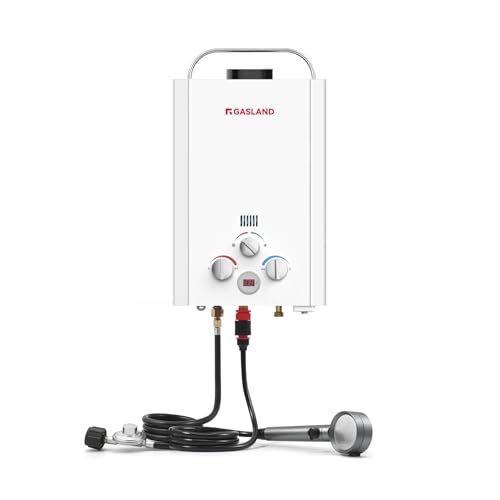
GASLAND BE158 Portable Propane Tankless Water Heater Review: 1.58 GPM, 41,000 BTU and Low-Pressure Startup
Portable propane water heaters are useful when you need hot water somewhere that does not have a conventional plumbing or electrical setup. Campsites, cabins, barns, outdoor showers, pet-washing areas, and off-grid properties can all benefit from a compact heater that runs from a standard propane cylinder and starts with relatively low water pressure.
The GASLAND BE158 portable tankless water heater is designed for exactly that type of use. According to the supplied specifications, it produces up to 41,000 BTU per hour, delivers up to 1.58 gallons per minute, operates from a standard 20-pound propane tank, and can start with water pressure as low as 3.6 PSI. Ignition is powered by two D-cell batteries, so the heater does not need a household electrical outlet for normal operation.
It also includes a digital temperature display, shower head, regulator and hose, garden-hose adapter, and several safety protections. However, it is important to understand what this product is and is not: the BE158 is intended for portable outdoor use, not as a permanently installed indoor residential water heater.
This guide explains how the GASLAND BE158 works, what its 1.58 GPM rating means in practice, where it makes sense to use it, how propane and water pressure affect performance, and which safety and winterization steps should not be overlooked.
What Is the GASLAND BE158?
The GASLAND BE158 is a portable liquid-propane tankless water heater.
Instead of storing heated water in a tank, it heats water as it passes through the unit. When sufficient water flow is detected, the gas burner ignites and transfers heat into the water stream.
When water flow stops, the burner shuts down.
This gives the user hot water on demand without waiting for a storage tank to heat up first.
The system is aimed primarily at outdoor and off-grid applications where a conventional electric or gas water-heating installation is unavailable or impractical.
Key Specifications
Based on the supplied information, the GASLAND BE158 includes the following core specifications:
- Maximum heat output of approximately 41,000 BTU/hr
- Maximum listed hot-water flow of 1.58 GPM
- Low-pressure startup at approximately 3.6 PSI
- Standard liquid propane fuel
- Compatibility with a typical 20 lb propane cylinder
- Battery-powered electronic ignition
- Two D-cell batteries required
- Digital temperature readout
- CSA certification
- Outdoor portable design
- Shower head and mounting hardware included
- Gas regulator and approximately 5-foot hose included
- Garden-hose adapter included
- One-year warranty against manufacturing defects, according to the supplied description
These specifications place it firmly in the portable outdoor shower and light-duty hot-water category.
Understanding the 41,000 BTU Output
The heater is rated at a maximum of approximately 41,000 BTU per hour.
BTU measures heat output.
The higher the available BTU rating, the more heat the heater can add to the passing water.
However, BTU alone does not tell you how hot the water will become.
Outlet temperature depends on several factors, including incoming water temperature, flow rate, propane supply, and the heater's control settings.
The 1.58 GPM Flow Rating Explained
The BE158 is rated at up to 1.58 gallons per minute.
That is enough for a modest outdoor shower, pet-washing hose, or utility-rinse application.
It is not comparable to a large whole-house tankless water heater that may support multiple fixtures simultaneously.
At 1.58 GPM, the BE158 is best thought of as a single-use portable heater.
Trying to supply several outlets at once would reduce available flow and may make temperature control less predictable.
Temperature Rise Matters More Than Flow Alone
The supplied description mentions different possible temperature-rise figures depending on operating conditions.
That is normal for a tankless water heater.
If incoming water is relatively warm and flow is low, the unit can raise the outlet temperature significantly.
If the incoming water is very cold or flow is high, the temperature rise will be smaller.
This is why a simple maximum GPM number never tells the whole story.
How Flow Affects Water Temperature
Tankless heaters must divide their available heating power across the water flowing through them.
If you reduce flow, each gallon spends more time receiving heat and the outlet temperature can rise.
If you increase flow, the same burner output is spread across more water and outlet temperature generally drops.
This relationship is especially important with small portable propane heaters.
For a warmer shower, you may need to reduce the water flow slightly.
Low-Pressure Startup at 3.6 PSI
One of the BE158's most useful features is its relatively low startup-pressure requirement.
The supplied specifications state that it can activate at around 3.6 PSI.
That can make it suitable for situations where municipal household pressure is not available.
Examples include:
- Gravity-fed water systems
- Portable pumps
- RV-style water pumps
- Campsite tanks
- Remote cabins
- Barns and outdoor washing areas
The system still requires enough pressure and flow to trigger the burner reliably.
Why Low Startup Pressure Matters Off Grid
Many tankless heaters are designed around normal residential water pressure.
That can make them difficult to use with small pumps or gravity-fed tanks.
A lower activation threshold gives the BE158 more flexibility in portable and off-grid setups.
However, actual performance will still depend on the water source and pump.
A system that barely reaches the startup threshold may cycle on and off if pressure fluctuates.
Propane-Powered Operation
The BE158 runs on liquid propane.
According to the supplied information, it is compatible with a standard 20-pound propane tank.
That is convenient because these cylinders are widely used with grills and outdoor appliances.
Propane makes the heater independent of a large electrical supply, which is one of the reasons it works well for camping and remote locations.
Battery-Powered Electronic Ignition
Ignition is powered by two D-cell batteries.
The batteries provide the electrical spark needed to light the burner when water begins flowing.
This means you do not need a household AC outlet to operate the ignition system.
The batteries do not heat the water themselves; propane provides the heating energy.
It is sensible to keep spare batteries available if the heater is being used in a remote location.
Portable Outdoor Shower Use
One of the most obvious uses for the BE158 is an outdoor shower.
With a suitable water supply, propane cylinder, and included shower head, the heater can create a simple hot-water shower system at:
- Campsites
- Cabins
- RV sites
- Hunting camps
- Beach properties
- Outdoor work areas
It can also be useful as a temporary shower during renovations or when a conventional water heater is unavailable.
Camping and RV Applications
The BE158 can make camping or RV stays considerably more comfortable when shore power or built-in hot-water systems are limited.
Because ignition is battery powered and heating comes from propane, the main infrastructure requirements are:
- A propane cylinder
- A water source
- Adequate water pressure
- Safe outdoor ventilation
This combination can be much easier to provide in remote locations than a high-current electric water heater.
Pet and Horse Washing
The supplied product description specifically mentions pet and horse washing.
That is a practical application.
Cold hose water can be uncomfortable, especially during cooler weather.
A portable propane heater allows the user to provide warmer rinse water without running permanent hot-water plumbing to a barn, kennel, or outdoor wash area.
The temperature should always be tested manually before spraying an animal.
Vehicle and Equipment Cleaning
The heater can also be useful for washing vehicles, outdoor equipment, or tools where warm water improves cleaning.
Warm water can help loosen grease and grime more effectively than cold water alone.
However, this is still a relatively low-flow heater, so it is better suited to lighter washing tasks than high-volume pressure-washing applications.
Tiny Homes, Cabins and Greenhouses
The supplied description mentions tiny homes, cabins, and greenhouses.
The BE158 may be useful in these environments if it is installed and operated in accordance with the manufacturer's outdoor-use requirements.
It should not be assumed suitable for enclosed indoor installation simply because the building is small.
Combustion appliances require proper ventilation and safe exhaust handling.
The BE158 is specifically described as a portable outdoor heater.
Important: Designed for Outdoor Use
This is one of the most important points.
The GASLAND BE158 is intended for portable outdoor use.
Propane combustion produces exhaust gases, including carbon monoxide.
Using an outdoor-rated heater in an enclosed indoor space can create a serious carbon-monoxide hazard.
Do not operate it inside a sealed bathroom, bedroom, tent, RV interior, shed, or other poorly ventilated enclosure unless the manufacturer explicitly approves such use—which is not indicated in the supplied source.
Outdoor Does Not Mean Weatherproof
The heater is described as splash-resistant enough to tolerate a little drizzle, but it should not be left exposed to sustained rain or water.
The internal components can be damaged by prolonged moisture exposure.
Use and store the heater in a dry location.
A sheltered outdoor mounting position is preferable to leaving it fully exposed to weather.
Digital Temperature Display
The BE158 includes a digital temperature readout.
This is helpful because water temperature can vary with inlet conditions and flow.
A visible display allows the user to monitor the approximate outlet temperature and make adjustments before using the water.
That is particularly important for showers, pets, children, or any situation where excessively hot water could cause burns.
Do Not Rely on the Display Alone
The display is useful, but the water should still be tested physically before use.
Tankless heaters can react to flow changes.
If another valve is opened or water pressure changes, the outlet temperature may shift.
Always verify that the water feels safe before directing it toward a person or animal.
Included Shower Head and Hardware
The supplied package includes a shower head and mounting hardware.
That makes it easier to create a simple portable shower without sourcing every component separately.
The kit also includes a garden-hose adapter, which can simplify connection to common outdoor water supplies.
The exact compatibility of fittings should still be checked before setup.
Included Propane Regulator and Hose
The heater comes with a CSA-certified propane regulator and approximately 5 feet of gas hose, according to the supplied description.
The regulator controls propane pressure before gas enters the appliance.
Proper regulator operation is essential for both burner performance and safety.
Only the specified regulator and compatible replacements should be used.
Do Not Use Teflon Tape on the Regulator Connection Unless Specified
The source includes a specific warning not to wrap Teflon tape between the gas regulator and gas inlet connection.
That instruction should be followed.
Some gas connections seal through flare fittings or other mechanical sealing surfaces rather than pipe threads.
Adding tape where it does not belong can interfere with proper sealing.
Always follow the manufacturer's exact connection procedure.
Always Test for Gas Leaks
Gas connections should be checked for leakage before operation.
Do not use an open flame to test for leaks.
Use an appropriate leak-detection method recommended by the manufacturer, such as an approved leak-detection solution.
If bubbles form or the smell of propane is detected, shut off the gas immediately and correct the connection before using the heater.
Propane Safety Basics
The propane cylinder should remain upright and stable.
Keep it away from excessive heat, ignition sources, and enclosed spaces.
Inspect the hose and regulator periodically for cracking, abrasion, or damage.
Do not operate the heater if any part of the gas system appears compromised.
CSA Certification
The product is described as CSA certified to applicable Canadian and U.S. safety standards.
That is an important consideration for a portable propane appliance.
Certification does not eliminate operational risks, but it indicates that the product has been evaluated against relevant standards.
Correct installation and outdoor use remain essential.
Overheat Protection
The heater includes overheat protection according to the supplied information.
This is designed to reduce the risk of excessive internal or outlet temperatures.
If the heater detects an unsafe condition, it may shut down or limit operation.
The owner's manual should be consulted for reset procedures and troubleshooting.
Low-Water-Flow Protection
Low-flow protection helps prevent the burner from continuing to operate when water movement falls below a safe threshold.
This is important because insufficient flow can cause water inside the heat exchanger to become excessively hot.
The system is designed to shut down rather than continue heating under unsuitable flow conditions.
Dry-Combustion Protection
The supplied source also lists dry-combustion or dry-fire protection.
This safeguards against burner operation when there is insufficient water moving through the system.
Heating a dry or nearly dry heat exchanger could damage the unit rapidly.
High-Water-Pressure Protection
The BE158 includes high-water-pressure protection.
Portable installations can sometimes be connected to pumps or pressurized water sources with varying output.
A protection system can help reduce the risk of damage if pressure becomes excessive.
Users should still stay within the manufacturer's permitted pressure range.
Flame-Failure Protection
A flame-failure device is another important gas safety feature.
If the burner flame goes out unexpectedly, the system should stop the gas supply rather than continue releasing unburned propane.
This is standard and important protection for gas-fired appliances.
Anti-Freezing Protection Needs Proper Interpretation
The source mentions anti-freezing protection, but it also clearly instructs users to drain the unit during cold weather.
That is the safer way to interpret this feature.
Do not assume the heater can simply be left full of water outdoors through freezing conditions.
Water expands when it freezes and can crack the heat exchanger or internal plumbing.
Winterization Is Essential
Before freezing weather, disconnect the water supply and drain the heater completely according to the manufacturer's instructions.
The source specifically mentions removing or opening the drain plug.
Once drained, the unit should be stored in a warm, dry location.
This can significantly reduce the risk of freeze damage.
Why Portable Tankless Heaters Are Vulnerable to Freezing
Portable heaters use compact internal waterways.
Even a small amount of trapped water can freeze and expand.
Damage may not become obvious until the unit is used again and begins leaking.
Taking a few minutes to drain it is much safer than relying on built-in protection alone.
Water Quality and Scale
Like any water heater, the BE158 can accumulate mineral scale over time.
Hard water deposits can restrict flow and reduce heat-transfer efficiency.
Portable units used with well water may also encounter sediment.
Periodic flushing and maintenance according to the manufacturer's guidance can help preserve performance.
Use a Filter if Your Water Source Is Dirty
If water comes from a portable tank, well, lake-processing system, or another source that may contain debris, pre-filtration can help protect the heater.
Sediment can clog small passages or shower-head openings.
Only use water sources appropriate for the application, particularly if the heated water will contact people or animals.
Portable Propane Heater vs. Electric Tankless Heater
A portable propane heater has a major advantage off grid: it does not require a large electrical circuit.
An electric tankless heater capable of shower flow may need a 240V high-amperage supply.
The BE158 only needs small ignition batteries because the heating energy comes from propane.
The tradeoff is combustion safety, propane storage, and strict outdoor-use requirements.
Portable Propane Heater vs. Solar Shower
A solar shower is simpler and uses no fuel.
However, it depends on sunlight and usually provides limited water volume and temperature control.
The BE158 can provide much more predictable heated water when propane and a pressurized water supply are available.
For frequent camping or off-grid use, that may justify the added complexity.
Portable Propane Heater vs. RV Water Heater
An RV water heater is typically permanently integrated into the vehicle.
The GASLAND BE158 is more portable and can be used independently.
That makes it useful for tent camping, outdoor showers, barns, cabins, and other places where a built-in RV system is unavailable.
An integrated RV heater may still be more convenient for permanent vehicle use.
Common Setup Mistakes
One common mistake is using the unit inside an enclosed space.
Another is leaving it exposed to heavy rain.
Users may also forget to test propane connections for leaks or incorrectly add sealing tape to fittings that are not designed for it.
Another major mistake is leaving water inside the heater during freezing weather.
Finally, users should not expect whole-house flow from a 1.58 GPM portable unit.
What to Check Before First Use
Before operating the BE158, verify that:
- The heater is outdoors in a well-ventilated location
- The propane tank is stable and correctly connected
- The regulator and hose are undamaged
- No gas leaks are present
- Water pressure is sufficient
- Water connections do not leak
- D-cell batteries are installed correctly
- The shower hose is secure
- The exhaust area is unobstructed
- The outlet temperature is tested before use
A careful setup is especially important with any portable gas appliance.
Is It Good for Camping?
Yes. Camping is one of the most appropriate applications.
The low-pressure startup, propane fuel, battery ignition, included shower head, and portable construction make the BE158 well suited to outdoor shower setups.
You still need a reliable water source and safe propane handling.
Is It Good for an RV?
It can be useful as an external RV shower solution.
It should not be assumed suitable for permanent installation inside an RV compartment unless explicitly approved by the manufacturer.
Use it as an outdoor-rated appliance.
Is It Good for a Cabin?
Yes, particularly a seasonal or off-grid cabin where an outdoor shower or utility washing station is needed.
Cold-weather storage and drainage are critical.
If the goal is a permanent indoor water-heating system, a properly vented appliance rated for indoor use is more appropriate.
Is It Good for a Pool?
It can be useful for rinsing off near a pool or providing warm shower water.
It should not be mistaken for a swimming-pool heater.
Heating thousands of gallons of pool water requires a completely different category of equipment.
Is It Good for Washing Horses?
Potentially, yes.
A warm rinse can be more comfortable than cold hose water.
Always check temperature manually before spraying an animal, and keep hoses and gas equipment positioned where they cannot be kicked or damaged.
Main Advantages
The strongest advantages are portability and independence from household electricity.
The 41,000 BTU/hr burner, 1.58 GPM maximum flow, 3.6 PSI low-pressure startup, propane fuel, and battery ignition make the heater useful in locations that do not have conventional utilities.
The included shower head, regulator, gas hose, and garden-hose adapter simplify setup.
Multiple safety systems and CSA certification are also positive features.
Potential Drawbacks
The BE158 is limited to relatively low flow.
It is intended for outdoor use only.
It requires a propane cylinder and careful gas handling.
It should not be left exposed to sustained rain.
The system must be drained before freezing weather.
Outlet temperature can also vary with inlet temperature, flow rate, and pressure.
For indoor whole-house hot water, a different appliance category is more appropriate.
Who Should Consider the GASLAND BE158?
The BE158 is a strong fit for users who need portable hot water outside a conventional home-plumbing environment.
It may be particularly useful for:
- Camping
- Outdoor showers
- Hunting camps
- RV exterior use
- Cabins
- Barns
- Pet washing
- Horse washing
- Vehicle cleaning
- Greenhouses
- Remote work sites
It is not intended as a direct replacement for a permanent indoor residential water heater.
Frequently Asked Questions
What is the maximum heating output?
Approximately 41,000 BTU per hour.
What is the maximum flow rate?
The supplied specification is approximately 1.58 GPM.
How much water pressure does it need to start?
Approximately 3.6 PSI according to the source.
What fuel does it use?
Liquid propane.
Can it use a standard 20 lb propane tank?
Yes. The supplied description states compatibility with a standard 20-pound cylinder.
Does it need electricity?
It does not require household AC power for ignition. Two D-cell batteries power the electronic ignition.
Does it include a shower head?
Yes.
Does it include a gas regulator?
Yes.
Does it include a propane hose?
Yes. The source lists an approximately 5-foot hose.
Does it include a garden-hose adapter?
Yes.
Does it have a temperature display?
Yes.
Can I use it indoors?
It is described as a portable outdoor-use water heater. Do not use it in enclosed spaces unless the manufacturer explicitly approves that application.
Can it be left in the rain?
It is described as splash-resistant but not designed for prolonged exposure to rain or water.
Is it CSA certified?
Yes, according to the supplied product information.
Does it have overheat protection?
Yes.
Does it have flame-failure protection?
Yes.
Does it have low-flow protection?
Yes.
Does it need to be drained in winter?
Yes. The source specifically recommends draining it and storing it in a warm, dry location before freezing weather.
Should I use Teflon tape on the propane regulator connection?
The source specifically warns not to wrap Teflon tape between the regulator and gas inlet connection. Follow the manufacturer's connection instructions.
Should I test for gas leaks?
Yes. Gas connections should always be checked for leaks before operation.
What is the warranty?
The supplied information states a one-year warranty against manufacturing defects and lifetime customer support.
Final Verdict
The GASLAND BE158 portable propane tankless water heater is a practical outdoor hot-water solution for situations where conventional utilities are unavailable.
Its combination of 41,000 BTU/hr heating power, 1.58 GPM maximum flow, low-pressure 3.6 PSI startup, standard propane-cylinder compatibility, and battery-powered ignition makes it well suited to camping, outdoor showers, cabins, barns, pet washing, and similar applications.
The included regulator, propane hose, shower head, garden-hose adapter, digital temperature display, and multiple safety protections make the package relatively complete.
The most important limitations are safety and environment. This is an outdoor-use combustion appliance, not an indoor tankless heater. It should be kept ventilated, protected from prolonged rain, checked carefully for gas leaks, and completely drained before freezing weather.
For buyers who need portable, propane-powered hot water with modest flow and minimal electrical requirements, the GASLAND BE158 is a compelling option. For permanent indoor hot water or higher simultaneous demand, a properly sized residential tankless or storage water heater is the more appropriate choice.