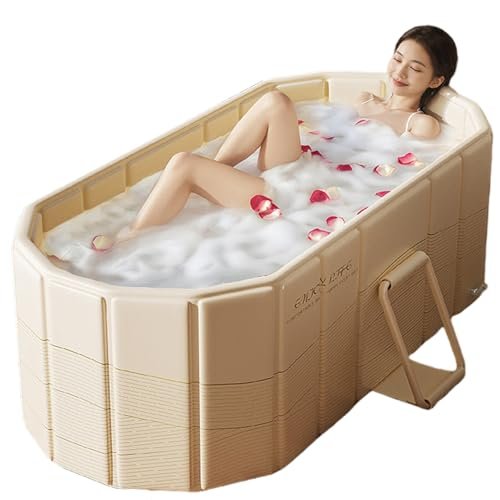
Portable Folding Bathtub Review: Full-Body Soaking for Small Spaces, Travel, Hot Baths, and Cold Plunges
Not every home has room for a permanent bathtub. Apartments, small bathrooms, rental properties, and multipurpose spaces can make a conventional tub impractical, especially when installation would require plumbing changes or a full remodel.
A portable folding bathtub offers a different solution. Instead of becoming a permanent bathroom fixture, it can be opened when needed, filled for a full-body soak, drained, folded down, and stored away afterward. That makes it appealing to people who want the relaxation of a bath without permanently giving up floor space.
The model described here is designed with a rigid plastic support shell, reinforced metal framing, a PVC surface, insulated walls, and a thermal cover. It is intended for hot baths, cold-water soaking, indoor use, and some outdoor applications.
What Is a Portable Folding Bathtub?
A portable folding bathtub is a freestanding basin designed to hold enough water for full-body soaking while remaining collapsible or foldable for storage.
Unlike an inflatable tub, this design uses structural supports and rigid components to maintain its shape.
According to the supplied product information, it includes:
- Foldable construction
- Hard plastic structural shell
- PVC surface
- Reinforced PP plastic supports
- Metal support brackets
- Five-layer insulated walls
- Thermal cover
- Large adult-friendly dimensions
- Indoor and outdoor versatility
- Compatibility with both hot and cold soaking
The main advantage is simple: you can have a bathtub when you want one and reclaim the space when you do not.
Why Choose a Folding Bathtub?
A folding bath makes the most sense when a permanent tub is unavailable or undesirable.
It can be useful in:
- Apartments
- Small bathrooms
- Rental homes
- Dorm-style living spaces
- Guest bathrooms
- Outdoor areas
For someone with only a shower, it can create an occasional soaking option without construction work.
Space-Saving Design
The ability to fold the bathtub is one of its most important practical features.
A standard bathtub permanently occupies a large section of the bathroom. A portable model can be stored after use, making it more appropriate for rooms that serve multiple purposes.
That can be particularly valuable where every square foot matters.
Fold It Away After Bathing
Once drained and dried, the tub can be folded relatively flat according to the supplied description.
Potential storage locations might include:
- Behind a door
- Inside a utility closet
- Beside a washing machine
- In a storage room
The actual folded dimensions should be confirmed before purchase if storage space is very limited.
Easier Than Installing a Permanent Tub
A conventional bathtub typically requires:
- Drain plumbing
- Water supply planning
- Structural installation
- Waterproof wall finishes
A folding tub eliminates most of that construction.
You still need a practical way to fill and drain it, but it does not become part of the building.
Sturdy Hard-Shell Construction
This model uses a rigid plastic shell rather than relying entirely on soft fabric or inflatable walls.
The supplied description references a high-strength PP plastic structure intended to reduce collapsing and improve resistance to punctures or leaks.
That can make the tub feel more stable during use than very lightweight portable bathing solutions.
Reinforced Support Structure
The tub is also described as using reinforced internal supports and metal brackets.
Those components help the walls resist outward water pressure after the bath is filled.
This matters because water is extremely heavy, and a large portable tub experiences substantial force along its sides and base.
Water Weight Is Significant
A portable bathtub may look lightweight when empty, but once filled it can weigh several hundred pounds.
One gallon of water weighs roughly 8.34 pounds.
Because the source does not provide an exact capacity, it would be misleading to calculate a precise filled weight. Still, any large adult soaking tub can become very heavy once full.
Place it only on a flat, stable surface capable of supporting the combined weight of:
- Tub
- Water
- User
Use It on a Level Surface
Uneven flooring can place extra stress on the tub structure and make entering or exiting less secure.
Set it up on a surface that is:
- Flat
- Stable
- Free of sharp objects
Avoid rough ground or debris that could damage the bottom.
Large Adult-Friendly Interior
The supplied description characterizes the tub as extra large and spacious enough for an adult to stretch out more comfortably than in compact barrel-style portable tubs.
That is an important distinction.
Some portable baths require users to sit upright with their knees bent. A longer design can provide a more traditional soaking position.
Is It Really a Two-Person Bathtub?
The source describes it as large enough for two people.
That claim should be interpreted cautiously without exact interior dimensions and weight limits.
Two-person comfort will depend on:
- User size
- Interior width
- Interior length
- Structural load capacity
Buyers primarily interested in two-person use should verify the manufacturer's exact dimensions and maximum supported load rather than relying on general marketing language.
Better for Full-Body Soaking
The elongated shape is particularly useful for users who want more than a seated soak.
Depending on body height and tub dimensions, it may allow:
- More leg extension
- Deeper immersion
- More relaxed positioning
That makes it closer in concept to a traditional bathtub than many compact portable soaking barrels.
Five-Layer Insulated Walls
The model is described as using five-layer insulated wall construction.
Insulation matters in a portable tub because the surrounding walls are relatively thin compared with a permanent insulated bathtub.
The layered design is intended to reduce heat transfer and help maintain water temperature.
Thermal Cover
A thermal cover is also included according to the source.
Covering the water can reduce heat loss from the surface, which is one of the main ways bathwater cools.
This may help during:
- Long hot baths
- Cold-water soaking
- Outdoor use
The cover should only be used as intended by the manufacturer and should never be treated as a safety cover for children.
Hot Bath Use
The tub can be used for warm or hot soaking.
This can be attractive for people who want:
- Relaxation
- A longer soak
- A bath experience in a shower-only home
Always follow the manufacturer's recommended water-temperature limits.
Portable materials may have maximum temperature specifications that differ from permanent tubs.
Cold Plunge and Ice Bath Use
The source also promotes the tub for cold-water soaking and ice-bath use.
Its insulated walls can be useful for slowing temperature change in both directions.
For cold plunging, make sure the tub is set up somewhere where condensation and overflow will not create a slip hazard.
People with cardiovascular or other health concerns should seek appropriate medical guidance before undertaking extreme cold exposure.
Indoor Use
Indoor use is likely the most practical scenario for many buyers.
A portable bathtub can work in:
- Shower rooms
- Large bathrooms
- Utility spaces
provided there is enough floor area and a safe way to manage water.
Protect the Floor
A portable tub introduces a large amount of water into a room that may not have been designed around bathtub overflow.
Before filling it, consider:
- Waterproof flooring
- Nearby drains
- Towels or mats
- Hose routing
Do not use it over surfaces that could be damaged by leaks or splashing.
Outdoor Use
The tub can also be used outdoors according to the supplied description.
That may make it useful for:
- Cold plunges
- Summer soaking
- Temporary bathing setups
Choose a clean, level surface and avoid leaving the tub exposed to harsh weather longer than necessary.
Avoid Rough Ground
Sharp gravel, branches, or uneven concrete can damage portable bathing equipment.
A protective mat underneath the tub may help reduce abrasion if the manufacturer permits it.
Filling the Bathtub
Portable tubs usually need to be filled using a:
- Shower hose
- Faucet hose
- Bucket
- Nearby water connection
Before purchasing, think about how the tub will actually be filled in your home.
A tub that fits physically may still be inconvenient if the nearest faucet cannot reach it.
Plan the Drainage Before Filling
Drainage is arguably more important than filling.
Once the tub contains a large volume of water, moving it is not realistic.
Make sure the drain hose or outlet can reach:
- Shower drain
- Floor drain
- Suitable outdoor drainage point
before filling the tub.
Never Plan to Move It While Full
A full portable bathtub should not be lifted or dragged.
The combination of water weight and movement could damage:
- Tub structure
- Flooring
- User
Drain it completely before relocating or folding it.
Easy Setup
The tub is intended to be relatively quick to unfold and prepare.
Compared with inflatable tubs, there may be no need for an air pump.
The support structure and shell are opened into position, after which the tub can be filled.
Always verify that all braces and support components are fully locked into place before adding water.
Inspect Before Every Use
Because the tub is repeatedly folded and unfolded, check it periodically for:
- Cracks
- Loose supports
- Damaged seams
- Worn drainage fittings
Do not fill the tub if any structural component appears compromised.
Cleaning and Drying
Portable tubs should be thoroughly cleaned and dried before storage.
Residual moisture can lead to:
- Odors
- Mildew
- Surface buildup
Rinse the interior after use and allow it to dry fully before folding.
Use Mild Cleaning Products
PVC and plastic surfaces may react poorly to harsh chemicals.
A mild cleaner and soft cloth are usually the safer option unless the manufacturer recommends something different.
Avoid abrasive brushes that could damage the surface.
Portable Folding Tub vs. Inflatable Bathtub
Both serve similar users, but the experience can differ.
Folding Hard-Shell Tub
Potential advantages include:
- More structural rigidity
- No inflation required
- Lower risk of air loss
- More stable walls
Inflatable Bathtub
Potential advantages include:
- Softer sides
- Very compact storage
- Often lower weight
The better option depends on whether you prioritize rigidity or minimum storage size.
Portable Tub vs. Permanent Bathtub
A permanent bath remains more convenient for frequent everyday use.
It has:
- Fixed plumbing
- Permanent drainage
- Greater structural integration
A portable bathtub is better suited to occasional soaking or homes where renovation is not practical.
Portable Tub vs. Cold-Plunge Barrel
Cold-plunge tubs are often upright and compact.
A long folding bathtub can offer a more reclined position and may work better if the same tub will also be used for hot baths.
Dedicated cold-plunge equipment may still be better for frequent cold immersion, especially if active temperature control is required.
Best Uses for This Tub
This style of portable tub is particularly useful for:
Shower-Only Apartments
It creates a soaking option without remodeling.
Rental Properties
The tub can be removed when moving.
Small Bathrooms
It can be stored instead of permanently occupying the room.
Occasional Cold Plunges
Insulated construction can make it suitable for temporary ice-bath use.
Outdoor Soaking
The portable design allows temporary use outside where conditions permit.
Common Mistakes to Avoid
Filling Before Planning Drainage
Always know where the water will go afterward.
Placing It on an Uneven Floor
The tub needs full, stable support.
Assuming It Is Easy to Move When Full
It is not. Drain first.
Folding It While Damp
Allow it to dry thoroughly before storage.
Overfilling
Follow the manufacturer's maximum fill level.
Assuming “Two Person” Guarantees Comfortable Two-Person Use
Verify actual dimensions and weight limits.
Is a Portable Bathtub Practical for Daily Use?
It can be, but convenience depends heavily on your setup.
If you need to:
- Unfold it
- Connect a hose
- Fill it
- Drain it
- Dry it
- Store it
after every bath, the process is naturally more involved than using a permanent tub.
For occasional soaking, that tradeoff may be very reasonable.
For daily bathing, a fixed tub is generally more convenient.
How to Make a Portable Bath More Convenient
Choose a storage location close to where the tub will be used.
Also plan permanent or semi-permanent access to:
- Fill hose
- Drain hose
- Non-slip mat
The less equipment you need to gather each time, the more likely you are to actually use the tub.
Safety Considerations
Portable baths need many of the same precautions as permanent bathtubs.
Water around the tub can make floors slippery.
Use care when:
- Entering
- Exiting
- Draining
Children should always be supervised around any filled bathtub or container of water.
Pros and Considerations
Advantages
- Foldable and portable design
- Suitable for small spaces
- Rigid plastic support structure
- Metal reinforcement
- Five-layer insulation
- Thermal cover
- Hot-bath capability
- Cold-plunge capability
- Indoor and outdoor versatility
- No permanent bathroom renovation required
Potential Considerations
- Requires manual filling and drainage planning
- Filled tub becomes extremely heavy
- Needs thorough drying before storage
- Exact dimensions and load rating should be verified
- Two-person comfort depends on actual interior size
- Less convenient than a permanent tub for daily use
Frequently Asked Questions
Can an adult fit in this portable bathtub?
The supplied description says it is designed for full-size adult use and provides additional length and width compared with compact portable baths.
Can two people use it?
The source markets it as suitable for two people, but exact comfort and safety depend on the tub's internal dimensions and maximum load rating.
Does it fold for storage?
Yes. Fold-flat storage is one of its main features.
Is it inflatable?
The supplied description instead emphasizes a rigid PP plastic structure, PVC surface, and metal supports.
Can it be used for hot baths?
Yes, according to the source, subject to the manufacturer's temperature limits.
Can it be used as an ice bath?
Yes. It is marketed for cold soaking as well.
Does it retain heat?
The tub is described as having five-layer insulated walls and a thermal cover intended to slow temperature change.
Can it be used outdoors?
Yes, according to the supplied product information.
Should I move it while it is full?
No. Drain the tub before moving or folding it.
How should it be stored?
Clean and fully dry it before folding, then store it in a dry location away from anything that could puncture or damage the material.
Final Thoughts
A large portable folding bathtub can be a practical solution for anyone who wants full-body soaking without committing space or money to a permanent bathtub installation.
Its most appealing features are the reinforced hard-shell construction, foldable design, larger adult-friendly shape, insulated walls, and ability to serve both as a warm soaking tub and a cold-plunge bath. Those qualities make it substantially more versatile than a simple inflatable bath.
The tradeoff is convenience. Portable tubs require more preparation, drainage planning, drying, and storage than permanent fixtures. They also become extremely heavy when filled, so stable floor support and proper placement are essential.
For people living in small apartments, rental homes, shower-only bathrooms, or spaces where a permanent tub is impractical, this style of folding bathtub provides a flexible way to enjoy full-body hot baths or cold soaks while reclaiming the floor space afterward.