Smart WiFi Touch Light Switch Review: App Control, Voice Commands, Scheduling, and Multi-Switch Grouping
A smart wall switch can be one of the simplest ways to make everyday lighting and household controls more convenient. Instead of relying only on a physical switch, a connected model can add remote access, scheduling, voice commands, and shared control through a smartphone app.
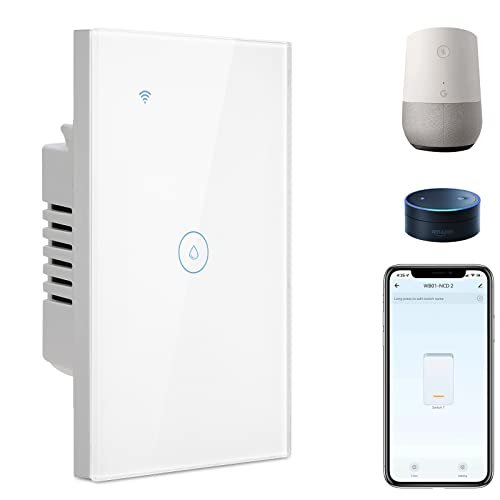
This WiFi touch light switch is designed around the Smart Life ecosystem and works with both Amazon Alexa and Google Assistant. It supports remote control, timer-based automation, grouped switches, and household sharing, making it suitable for rooms where several connected switches need to operate together.
Its functionality is straightforward, but there are important installation requirements to check first. The switch requires a neutral wire, uses 2.4 GHz WiFi, and is designed to fit a standard wall box with sufficient depth. Those details determine whether it will work in an existing electrical installation without modification.
What Is a Smart WiFi Touch Switch?
A smart touch switch replaces a conventional wall switch while adding wireless connectivity and electronic controls.
It can still be operated locally from the wall, but it also connects to a smartphone app over WiFi.
Once configured, supported functions may include:
- Remote on/off control
- Schedules
- Countdown timers
- Voice commands
- Device grouping
- Shared access
This makes it more flexible than a basic mechanical switch.
Smart Life App Control
The switch works with the Smart Life app.
After the switch is connected to the home's WiFi network, users can control it through a smartphone.
That can be useful when:
- Leaving home and forgetting a light
- Turning on lights before arriving
- Managing hard-to-reach switches
- Controlling multiple rooms from one interface
Remote access depends on both the switch and the home network remaining online.
Remote Control From Outside the Home
Once the switch is connected to Smart Life, it can be controlled through the internet rather than only while the phone is connected to the same WiFi network.
That means mobile data can be used from another location.
The supplied description mentions access over:
- 2G
- 3G
- 4G
- 5G
The mobile network itself does not communicate directly with the switch. Instead, the phone accesses the Smart Life service over the internet, while the switch remains connected to the home's WiFi network.
2.4 GHz WiFi Requirement
The switch requires a 2.4 GHz WiFi network for setup and operation.
This is common among smart-home devices because 2.4 GHz generally provides better range through walls than 5 GHz.
However, buyers should confirm that their router allows 2.4 GHz devices to connect.
What if Your Router Uses Both 2.4 and 5 GHz?
Many modern routers combine both bands under one network name.
That may work normally, but some smart devices can be easier to pair when the phone and switch are clearly connected through the 2.4 GHz band during setup.
If pairing fails, router settings may need to be checked.
Voice Control With Alexa
The switch is described as compatible with Amazon Alexa.
Once the Smart Life account is linked to Alexa, the switch can usually be assigned to:
- Rooms
- Groups
- Routines
This makes simple voice commands possible.
For example, a connected room light can be controlled without touching the switch or opening an app.
Google Assistant Compatibility
Google Assistant support provides similar functionality.
The switch can become part of a broader smart-home setup containing compatible:
- Lights
- Plugs
- Thermostats
- Other switches
This can make room-based commands more convenient.
Voice Control Is Most Useful for Routine Actions
Voice control is especially helpful when:
- Hands are occupied
- Mobility is limited
- Several devices need to be controlled together
- The switch is located far away
It is less important for complex automation, where schedules and scenes may be more useful.
Group Control
One of the stronger features is the ability to group multiple Smart Life switches together.
Instead of opening and controlling each switch individually, several can be combined into one logical group.
For example, you could create groups such as:
- Downstairs lights
- Outdoor lighting
- Bedroom lights
- Office equipment
A single command can then control the entire group.
Why Group Control Matters
Smart homes become less convenient if every device has to be controlled separately.
Grouping provides a cleaner structure.
For example, rather than turning off four individual switches before leaving home, one grouped command can switch them all off.
Household Device Sharing
The switch also supports device sharing through Smart Life.
That allows other family members or trusted users to control the device from their own phones.
This can be useful in shared households where everyone needs access to lighting controls.
Shared Control Does Not Mean Shared Account
It is generally better to use the app's sharing function rather than giving everyone the same account password.
That provides more organized access and may make it easier to remove a user later if needed.
Scheduling Function
The built-in timing function allows the switch to turn devices on or off automatically at configured times.
This can be useful for predictable routines.
Examples include:
- Turning porch lights on in the evening
- Switching decorative lights off overnight
- Turning a hallway light on before waking
- Powering an appliance only during certain hours
Automatic On/Off Scheduling
A schedule eliminates the need to remember repetitive tasks.
For example, a light could automatically turn on at 7:00 p.m. and off at 11:00 p.m. every day.
This is often more useful than manual remote control because it reduces daily interaction.
Potential Energy Savings
Scheduling can help reduce electricity use when it prevents lights or connected appliances from remaining on unnecessarily.
The actual savings depend on:
- Device power consumption
- Usage habits
- Schedule duration
A smart switch does not inherently make a device more efficient; it simply gives better control over runtime.
Standby Power Claims Need Context
The source mentions reducing wasteful standby power.
This depends on how the switch is wired and what appliance is being controlled.
Some devices consume electricity even when apparently "off," but others consume very little.
The primary energy benefit usually comes from reliably turning devices off when they are not needed.
Preventing Overcharging and Overheating
The source also suggests scheduling can help prevent overcharging or overheating.
That may be relevant to certain connected devices, but the smart switch should not be used as the primary protection system for appliances requiring dedicated thermal, charging, or safety controls.
Use equipment according to the manufacturer's intended operating method.
Touch-Sensitive Wall Control
The switch uses a touch interface rather than a conventional rocker or toggle.
This contributes to a cleaner modern appearance.
Touch controls are generally easy to wipe clean and can give a wall plate a more streamlined look.
Physical Control Still Works
A smart switch should remain usable from the wall even when:
- Phone is unavailable
- Internet connection fails
- Voice assistant is offline
The exact offline behavior should be verified for the current model, but local physical operation is an important practical feature.
Switch Dimensions
The supplied dimensions are approximately:
2.87 × 4.65 × 1.88 inches
That is useful when checking whether the switch will fit the existing electrical box and wall plate arrangement.
Wall Box Compatibility
The description states that the switch can fit a standard 2.36-inch mounting wall box.
The wall box should have a depth of at least approximately:
1.18 inches
However, physical fit depends not just on depth.
The box must also accommodate:
- Switch body
- Wire connectors
- Neutral conductors
- Grounding conductors
- Existing cable bends
A deeper box may make installation easier.
Neutral Wire Is Required
This is one of the most important requirements.
The smart switch needs a neutral wire.
Many older light-switch boxes contain only:
- Line
- Switched line
- Ground
with the neutral remaining at the light fixture rather than inside the switch box.
In that situation, the smart switch cannot be installed without wiring changes.
Why Smart Switches Need a Neutral
The WiFi radio and internal electronics need continuous low-level power even when the controlled light is off.
A neutral wire provides the return path required to power those electronics.
Without it, this particular switch will not function correctly.
Check Before Buying
Before ordering, confirm whether the wall box contains a neutral conductor.
If you are not sure, an electrician can verify it quickly.
This is preferable to purchasing the switch and discovering after opening the wall that the wiring is incompatible.
Installation Safety
A wall switch is connected directly to mains electricity.
Power should be disconnected at the correct circuit breaker before any installation work begins.
If wiring identification or circuit configuration is uncertain, use a qualified electrician.
Do Not Rely Only on Wire Color
Wire colors can be useful clues, but they are not always reliable in older or modified electrical systems.
A proper electrical test should confirm:
- Line
- Load
- Neutral
- Ground
before connections are made.
Box Space Matters
Smart switches are often deeper than ordinary mechanical switches.
An older, shallow wall box may become crowded once the larger switch and additional wire connectors are installed.
Overcrowding can:
- Make installation difficult
- Stress conductors
- Prevent the switch from seating correctly
A box upgrade may be necessary.
WiFi Signal Strength
A wall switch needs reliable WiFi coverage.
Signal can be weakened by:
- Concrete walls
- Metal boxes
- Distance from router
- Multiple floors
If the switch frequently disconnects, network placement may be the cause rather than the switch itself.
Offline Behavior
The supplied description focuses on connected operation and does not fully explain what happens during internet or cloud outages.
Typically, the physical switch should still work locally, but remote access and voice control may become unavailable.
Buyers who depend heavily on automation should verify whether schedules are stored locally or require the cloud.
Smart Switch vs. Smart Bulb
Both can make a light remotely controllable, but they work differently.
Smart Switch
Controls power at the wall.
Advantages include:
- Existing bulbs can remain installed
- Physical wall control remains familiar
- One switch can control multiple bulbs
Smart Bulb
Adds intelligence directly to the bulb.
Advantages include:
- Color control on supported models
- No switch replacement
A smart switch is often better when several bulbs share one circuit.
Smart Switch vs. Smart Plug
A smart plug is ideal for plug-in lamps and appliances.
A smart switch is designed for permanently wired lighting or compatible circuits.
Choose based on how the device receives power.
Good Uses for This Switch
This model may work well for:
- Bedroom lighting
- Hallway lights
- Living-room fixtures
- Kitchen lights
- Porch lighting in appropriate indoor installations
It may also control other compatible electrical loads within its rated capacity.
Confirm Load Compatibility
The source does not provide detailed load ratings for:
- LED wattage
- Incandescent wattage
- Motors
- Capacitive loads
Those ratings should be checked before connecting anything other than ordinary compatible lighting.
Accessibility Benefits
Remote and voice control can be especially helpful for someone who finds it difficult to move frequently between rooms.
A smartphone or voice assistant can reduce the need to physically reach every switch.
That can improve convenience without changing the basic wall controls.
Routines and Scenes
Smart Life, Alexa, and Google Home can also be used to combine the switch with other compatible devices.
For example, a "Good Night" routine might:
- Turn off selected lights
- Turn off smart plugs
- Adjust other connected devices
The exact capabilities depend on the smart-home platform.
Common Buying Mistakes
Ignoring the Neutral Requirement
This switch will not work correctly without the required neutral conductor.
Assuming 5 GHz WiFi Is Supported
The source specifies 2.4 GHz.
Not Measuring the Wall Box
Smart switches are deeper than many conventional switches.
Overcrowding the Electrical Box
Allow sufficient space for wires and connectors.
Assuming Remote Control Works Without Home WiFi
The switch must remain connected to the home network.
Who Is This Switch Best For?
This smart touch switch is a good fit for homeowners who want:
- Smart Life app control
- Alexa compatibility
- Google Assistant compatibility
- Scheduling
- Group control
- Shared household access
It is particularly suitable when the existing switch box already contains a neutral wire and sufficient space.
Who Might Need a Different Model?
A different smart switch may be preferable if:
- No neutral wire is available
- Only 5 GHz WiFi is available
- Wall box is extremely shallow
- The connected load requires specialized control
Compatibility should always be checked before purchase.
Advantages and Considerations
Advantages
- Smart Life app integration
- Remote control
- Alexa support
- Google Assistant support
- Scheduling
- Grouped device control
- Household sharing
- Modern touch interface
- Can be controlled remotely through mobile internet
Potential Considerations
- Neutral wire required
- 2.4 GHz WiFi only
- Wall-box depth must be sufficient
- Exact load ratings should be checked
- Remote features depend on network connectivity
Frequently Asked Questions
Which app does the switch use?
The supplied description identifies the Smart Life app.
Does it work with Alexa?
Yes.
Does it work with Google Assistant?
Yes.
Can I control it when I am away from home?
Yes, provided the switch remains connected to the home WiFi network and the phone has internet access.
Does my phone need to be on WiFi?
No. Once configured, remote access can use cellular data.
Does the switch support 5 GHz WiFi?
The source states that it works with 2.4 GHz WiFi.
Is a neutral wire required?
Yes.
Why does it need a neutral?
The switch's WiFi and internal electronics need continuous power.
Can several switches be controlled together?
Yes. Smart Life supports grouped control.
Can I share control with family members?
Yes.
Can I schedule the lights?
Yes.
Will it still work manually if the internet goes down?
Local wall control would normally be expected, but exact offline functionality should be verified for the current model.
What are the switch dimensions?
Approximately 2.87 × 4.65 × 1.88 inches.
What wall box size is required?
The source states compatibility with a standard 2.36-inch wall box, with at least approximately 1.18 inches of depth.
Is it suitable for old houses?
Potentially, but many older switch boxes do not contain a neutral wire. Check the wiring first.
Can I install it myself?
If you are experienced and permitted to work on mains wiring, installation may be straightforward. Otherwise, use a licensed electrician.
Final Thoughts
This Smart Life WiFi touch switch offers a useful combination of app control, voice commands, scheduling, device grouping, and shared household access.
Its strongest feature is not any single automation function but the ability to make a conventional wall-controlled circuit part of a broader connected-home system. Lights can be controlled remotely, scheduled automatically, grouped with other switches, or operated through Alexa and Google Assistant while still retaining physical wall control.
The main compatibility checks are straightforward but important: the switch requires a neutral wire, operates on 2.4 GHz WiFi, and needs enough wall-box depth to accommodate its larger electronic body and wiring.
For a home that already has compatible wiring, this type of switch can provide a practical upgrade from a conventional wall switch to a remote-controlled, scheduled, voice-enabled smart lighting system without requiring every individual light bulb to be replaced.