
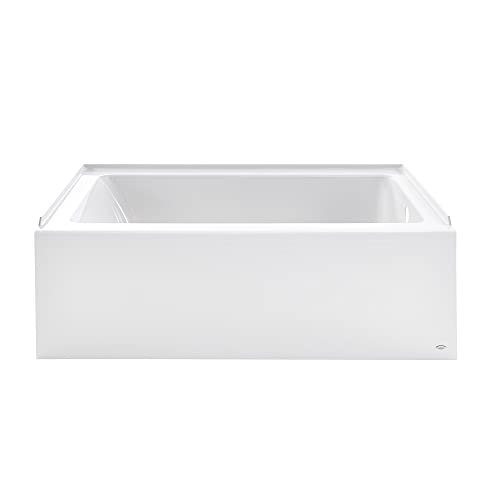
American Standard Studio 60 x 32-Inch Alcove Bathtub Review: Modern Design, Lumbar Support, and Easy-Care Acrylic
A good alcove bathtub should do more than fit between three walls. It should be comfortable enough for everyday bathing, durable enough for years of use, and straightforward enough to integrate into a remodel without creating unnecessary installation problems.
The American Standard Studio 60 x 32-inch alcove bathtub is designed around that practical formula. It combines a standard 60-inch footprint with a slightly wider 32-inch body, contoured lumbar support, acrylic construction reinforced with fiberglass, an integral front apron, and a three-sided tile flange for a more installation-friendly fit in a recessed bathroom layout.
This particular model uses a right-hand drain, which makes plumbing orientation one of the first details to verify before purchase. For homeowners replacing an existing alcove tub or planning a new tub-and-shower area, matching the drain side and rough opening correctly can save considerable work.
What Is the American Standard Studio 60 x 32-Inch Bathtub?
The American Standard Studio is a rectangular alcove bathtub intended for installation against three bathroom walls.
According to the supplied product information, it measures approximately 60 inches long, 32 inches wide, and 19 inches high.
The tub is made from acrylic reinforced with fiberglass and has a high-gloss white finish. It also includes an integral front apron and a three-sided tile or water-retention flange.
The stated capacity is approximately 52 gallons, and the listed product weight is about 60 pounds.
Standard 60-Inch Length With Extra Width
A 60-inch bathtub is one of the most common sizes used in residential alcoves.
That makes this model easier to integrate into many existing bathrooms than an oversized 66- or 72-inch tub.
The 32-inch width is also worth noting. Many basic alcove tubs are narrower, so the extra width can provide a little more shoulder and elbow room without requiring a much longer bathroom footprint.
Why Alcove Size Matters During a Remodel
A bathtub may be described as 60 inches long, but the finished opening, framing, wallboard, tile, and flange installation all affect the final fit.
Before ordering, verify:
- Stud-to-stud opening
- Drain position
- Plumbing clearances
- Finished wall thickness
Do not assume that every 60-inch bathtub is dimensionally interchangeable.
Right-Hand Drain Configuration
This model uses a right-hand drain.
Drain orientation matters because the existing waste plumbing may already be located on one side of the alcove.
If the current bathroom has a left-side drain, switching to a right-hand tub may require additional plumbing work.
Confirm Drain Orientation Before Buying
During a replacement project, determine the existing drain side before ordering.
Using the matching configuration can simplify:
- Waste connection
- Overflow plumbing
- Installation labor
If the bathroom is being completely rebuilt, the drain can be planned around the selected tub, but it is still best to settle the location before framing and flooring are finalized.
Minimalist Contemporary Design
The Studio collection uses a relatively clean, understated shape.
Rather than relying on decorative molding or traditional detailing, the tub is intended to blend into modern and transitional bathroom layouts.
The white high-gloss finish works naturally with:
- White subway tile
- Large-format porcelain
- Stone-look surfaces
- Black fixtures
- Chrome hardware
- Brushed nickel finishes
Its restrained appearance also makes it easier to update surrounding finishes later without replacing the tub.
Contoured Lumbar Support
One of the more meaningful comfort features is the built-in lumbar contour.
A bathtub can look large enough on paper but still feel uncomfortable if the back wall is too upright.
Contoured lumbar support creates a more natural reclining position and can make everyday soaking more pleasant.
Why Back Angle Matters
Comfort depends on more than tub length.
A bather's position is influenced by:
- Backrest slope
- Lumbar contour
- Basin depth
- Footwell length
A thoughtfully shaped 60-inch bath can sometimes feel more comfortable than a larger tub with a poorly designed interior.
Designed for Practical Everyday Bathing
This is not a whirlpool or spa tub.
There are no pumps, jets, heaters, or electronic systems described in the supplied product information.
That simplicity can be an advantage.
A standard soaking tub generally requires:
- Less maintenance
- No dedicated electrical circuit
- Fewer mechanical components
For households that want a dependable bathing fixture rather than a spa system, that can make long-term ownership easier.
52-Gallon Capacity
The listed capacity is approximately 52 gallons.
That gives the tub enough volume for conventional soaking without the very high water demand of some oversized freestanding baths.
Actual water usage will normally be lower because the user displaces water and the tub is not necessarily filled to maximum capacity.
Check Hot-Water Availability
Even a 52-gallon bathtub requires a meaningful amount of hot water.
If the home has a small tank-style water heater, consider whether it can comfortably provide enough hot water for a full bath.
This matters especially when:
- Other fixtures are used simultaneously
- Incoming water is very cold
- The user prefers a hot soak
Acrylic With Fiberglass Reinforcement
The tub is constructed from acrylic reinforced with fiberglass.
That combination is common in residential bathtubs because it offers a practical balance of:
- Low weight
- Structural support
- Smooth finish
- Ease of cleaning
Compared with cast iron, acrylic is significantly easier to carry and position during installation.
Why Fiberglass Reinforcement Matters
The fiberglass backing helps stiffen the acrylic shell.
That reinforcement can help the tub maintain its shape under normal use and adds structural support beneath the visible surface.
Installation still needs to follow the manufacturer's support instructions, because the tub's base must be properly seated and stabilized.
High-Gloss Surface
The surface is described as high-gloss, stain resistant, and UV stable.
A smooth glossy finish makes routine cleaning easier because soap residue and dirt have fewer textured areas to cling to.
It also contributes to the clean white appearance associated with modern bathroom fixtures.
UV-Stable Finish
The UV-stability claim is intended to indicate that the surface is designed to resist discoloration from light exposure.
That can be relevant in bathrooms with:
- Large windows
- Skylights
- Strong natural daylight
No white fixture is completely maintenance-free, but material stability can help preserve a consistent appearance over time.
Stain Resistance
The acrylic surface is also described as stain resistant.
This can make normal bathroom maintenance easier, particularly when the tub is rinsed and cleaned regularly.
Common sources of buildup include:
- Soap residue
- Hard-water minerals
- Body-care products
Routine cleaning usually prevents these from becoming difficult deposits.
How to Clean Acrylic Properly
Use a soft cloth or non-abrasive sponge with a mild cleaner suitable for acrylic.
Avoid:
- Steel wool
- Harsh scouring powders
- Coarse abrasive pads
These can scratch or dull the surface.
Acrylic tends to stay attractive longer when cleaned gently and frequently rather than aggressively after heavy buildup develops.
Integral Three-Sided Tile Flange
One of the most important installation features is the built-in three-sided flange.
In an alcove installation, the flange helps create a more water-resistant transition between the bathtub and surrounding wall system.
It sits behind the finished wall materials and helps direct moisture back toward the tub rather than into the wall cavity.
Why the Tile Flange Matters
The flange is only one part of the waterproofing system.
A proper installation should also account for:
- Backer board
- Waterproofing membrane
- Tile
- Sealant
The goal is to prevent water from reaching framing or wall cavities around the tub.
Integral Front Apron
The bathtub also has an integral front apron.
That means the visible front face is already part of the tub rather than requiring a separate framed and tiled panel.
This can simplify installation and create a clean finished appearance.
Advantages of an Integral Apron
An integrated apron can reduce:
- Carpentry work
- Tile work
- Finish-material costs
It also gives the bathtub a consistent factory-finished front surface.
For a straightforward alcove remodel, this can be more practical than a drop-in tub requiring a custom surround.
Alcove Installation
The Studio bathtub is designed for recessed installation between three walls.
This makes it well suited to a traditional tub-and-shower layout.
A typical installation requires coordination between:
- Framing
- Drain plumbing
- Water supply
- Wall waterproofing
- Tub leveling
Correct rough-in dimensions should be taken from the current manufacturer installation documentation.
Tub and Shower Combination
An alcove bathtub like this is commonly used beneath a shower.
That can make it particularly useful in bathrooms where one fixture needs to support both:
- Quick daily showers
- Occasional baths
If used as a tub-shower combination, pay close attention to wall waterproofing and the type of curtain or shower enclosure installed above it.
Shower Door Compatibility
The supplied source does not provide specific shower-door compatibility information.
If you intend to install:
- Sliding glass doors
- Pivot doors
- Fixed glass panels
verify that the tub's rim dimensions and wall system are compatible with the chosen enclosure before ordering it.
Installation Support
Acrylic tubs need to be supported according to the manufacturer instructions.
Depending on the model, this may involve specific framing or bedding requirements.
Do not assume that the tub can simply rest on the floor without additional preparation.
Proper support helps prevent:
- Flexing
- Noise
- Drain stress
Leveling Is Important
A tub that is not level can create problems with:
- Drainage
- Wall alignment
- Shower enclosure installation
Check the floor before installation and correct significant unevenness where necessary.
Protect the Tub During Construction
Once installed, cover the bathtub while surrounding tile and finish work are underway.
Construction tools, mortar, tile fragments, or metal hardware can damage acrylic.
Avoid using the new bathtub as a temporary storage bin during renovation.
Weight and Handling
The tub is listed at approximately 60 pounds.
That is relatively light compared with cast-iron bathtubs, which can weigh several times as much.
The lower weight can make:
- Delivery
- Carrying
- Positioning
easier, especially in upstairs bathrooms.
Lightweight Does Not Mean Flimsy
Acrylic is lighter because of the material itself, not necessarily because the fixture is poorly built.
The fiberglass reinforcement is intended to provide additional rigidity.
The final feel of the tub also depends heavily on proper installation and base support.
Acrylic vs. Cast Iron
Acrylic Advantages
Acrylic is generally:
- Lighter
- Easier to install
- Warmer to the touch initially
- Easier to mold into ergonomic shapes
Cast-Iron Advantages
Cast iron is:
- Very rigid
- Extremely durable
- Heavy
Cast iron can offer excellent long-term durability, but the weight makes installation more difficult.
For many residential renovations, acrylic is the more manageable material.
Acrylic vs. Enameled Steel
Steel tubs are also relatively common in alcove installations.
They can be durable and economical, but may:
- Feel colder initially
- Sound more metallic
Acrylic tends to provide a quieter and warmer-feeling bathing surface.
Alcove Tub vs. Freestanding Tub
A freestanding bathtub makes a stronger visual statement but usually requires more floor area.
An alcove tub uses wall space more efficiently.
Choose an alcove design when:
- Space efficiency matters
- The tub doubles as a shower
- Existing bathroom framing is already designed for a recessed bath
Choose a freestanding model when the bathtub itself is intended to become a major focal point.
Who Is This Bathtub Best For?
The American Standard Studio is especially suitable for homeowners who want:
- A standard 60-inch alcove bathtub
- Slightly wider 32-inch dimensions
- Right-hand drain
- Built-in lumbar support
- Easy-care acrylic
- Integrated apron
- Three-sided tile flange
It can be a strong choice for a primary bath, guest bathroom, or straightforward tub-and-shower remodel.
Who Might Prefer Another Tub?
Another model may be better if you need:
- Left-hand drain
- Whirlpool jets
- Extra-deep soaking
- Freestanding design
- Accessibility-focused low entry
The Studio is fundamentally a practical modern alcove bath rather than a specialized spa fixture.
Common Buying Mistakes
Ordering the Wrong Drain Side
Verify right-hand versus left-hand orientation before purchase.
Measuring Only the Tub Length
Check the full rough opening and width.
Ignoring Wall Waterproofing
A tile flange is helpful, but the surrounding wall assembly still needs proper waterproofing.
Using Abrasive Cleaners
These can damage the glossy acrylic surface.
Assuming All 60-Inch Tubs Are Interchangeable
Dimensions, flange locations, and drain positions can vary by model.
Advantages and Considerations
Advantages
- Familiar 60-inch alcove footprint
- 32-inch width
- Contoured lumbar support
- Acrylic with fiberglass reinforcement
- High-gloss white finish
- UV-stable surface
- Stain-resistant finish
- Integral three-sided tile flange
- Integral front apron
- Approximately 60-pound product weight
- 52-gallon stated capacity
Potential Considerations
- Right-hand drain only for this exact version
- No whirlpool or heating features
- Acrylic requires non-abrasive cleaning
- Exact rough-in should be verified before installation
- Shower-door compatibility should be confirmed separately
Frequently Asked Questions
What are the dimensions?
Approximately 60 inches long, 32 inches wide, and 19 inches high.
What is the tub made from?
Acrylic reinforced with fiberglass.
What is the stated capacity?
Approximately 52 gallons.
How much does the bathtub weigh?
The supplied product information lists approximately 60 pounds.
Is it a right-hand drain tub?
Yes.
Does it have lumbar support?
Yes. The design includes contoured lumbar support.
Does it have an integrated apron?
Yes.
Does it include a tile flange?
Yes. It has an integral three-sided tile or water-retention flange.
Is the surface stain resistant?
The supplied product information describes the high-gloss acrylic surface as stain resistant.
Is the finish UV stable?
Yes, according to the supplied description.
Does it include whirlpool jets?
No.
Does it have a heater?
No heater is described.
Can it be used as a tub-and-shower combination?
Its alcove design makes it suitable for that type of installation, provided the surrounding waterproofing and shower hardware are installed correctly.
Is professional installation recommended?
It can be installed by an experienced DIYer, but professional plumbing and bathroom installation can reduce the risk of drain, support, or waterproofing problems.
Final Thoughts
The American Standard Studio 60 x 32-inch right-hand drain alcove bathtub is a practical choice for homeowners who want a clean, contemporary tub that fits a familiar residential footprint without adding unnecessary mechanical complexity.
Its most useful features are the contoured lumbar support, slightly wider 32-inch body, fiberglass-reinforced acrylic construction, integral front apron, and three-sided tile flange. Those elements make it particularly well suited to straightforward bathroom renovations and tub-and-shower combinations.
The main consideration is installation compatibility. Buyers should verify the right-hand drain location, actual rough opening, wall system, and shower-enclosure plans before ordering.
For anyone looking for a 60 x 32-inch white acrylic alcove bathtub with a right-hand drain, lumbar support, integrated apron, and tile flange, the American Standard Studio offers a balanced combination of modern styling, comfort, and practical installation features.