Docrok Shower Squeegee Review: Stainless Steel Glass Cleaner for Shower Doors, Mirrors, Tile, and Windows
Keeping shower glass clear is often less about deep cleaning and more about what happens immediately after each shower. Water droplets left on glass can dry into visible spots, while soap residue and mineral deposits gradually create the cloudy film that makes a clean bathroom look neglected.
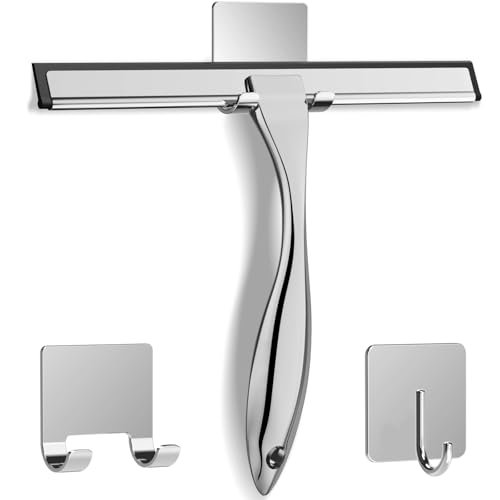
A shower squeegee offers a simple way to reduce that buildup before it has time to dry. The Docrok shower squeegee combines a stainless-steel body with a flexible silicone blade and is designed for shower doors, mirrors, tile, windows, and other smooth surfaces. It also includes adhesive storage hooks so the tool can remain within easy reach instead of disappearing into a cabinet between uses.
For households with glass shower enclosures, hard-water spotting, or large tiled surfaces, a good squeegee can become one of the easiest tools for keeping the bathroom looking cleaner between full cleaning sessions.
What Is the Docrok Shower Squeegee Designed For?
The Docrok squeegee is a general-purpose surface-drying tool rather than a chemical cleaner.
Its main features include:
- Stainless-steel construction
- Rust-resistant design
- Flexible silicone wiping blade
- Ergonomic handle
- Anti-slip grip
- Streak-reducing wiping action
- Shower-door compatibility
- Tile compatibility
- Mirror and window use
- Automotive glass use
- Adhesive storage hooks
Its primary job is to remove surface water quickly so fewer droplets are left behind to dry naturally.
Why Use a Squeegee on Shower Glass?
After a shower, the glass is usually covered in tiny water droplets.
If they evaporate in place, dissolved minerals may remain on the surface.
Over time, this can contribute to:
- Water spots
- Mineral film
- Cloudiness
- Soap-scum buildup
Using a squeegee removes much of that water before evaporation occurs.
It does not replace regular cleaning, but it can reduce how quickly visible buildup develops.
Does a Shower Squeegee Remove Soap Scum?
A squeegee can remove loose water and some fresh soap residue from the surface.
However, established soap scum is different.
Once residue has dried and hardened, it may require:
- Bathroom cleaner
- Mild descaling solution
- Manual scrubbing
The squeegee is most effective as a preventive maintenance tool rather than a substitute for occasional deep cleaning.
Streak-Free Performance
The source describes the silicone blade as designed to leave glass without streaks.
A well-fitted blade can push water evenly across the surface rather than leaving multiple wet lines behind.
Actual performance depends on:
- Blade condition
- Surface cleanliness
- Wiping angle
- Pressure
For the cleanest result, the blade should remain flat against the glass throughout each pass.
Why Silicone Works Well for Squeegee Blades
Silicone is flexible enough to conform closely to a smooth surface.
That allows the edge to move water without requiring excessive pressure.
Compared with a hard plastic edge, silicone can provide:
- Better surface contact
- Quieter operation
- Lower risk of scratching
- Smooth wiping
The blade should still be inspected periodically for nicks or deformation.
Reducing Squeaking During Use
Squeegee noise usually comes from friction between the blade and dry or partially dry glass.
To reduce squeaking:
- Use the squeegee while the surface is still wet
- Avoid excessive pressure
- Keep the blade clean
- Pull it at a consistent angle
A squeak does not necessarily indicate a defect, but smooth technique generally produces quieter results.
Stainless-Steel Construction
The body is described as being made from rust-resistant stainless steel.
That is useful in a shower environment because the tool is repeatedly exposed to:
- Water
- Humidity
- Soap
- Bathroom cleaners
Stainless steel generally handles this environment better than ordinary carbon steel.
Is Stainless Steel Completely Rust-Proof?
No stainless steel should be treated as absolutely immune to corrosion.
Long-term staining can still occur if:
- Harsh chemicals remain on the surface
- Chlorides are present
- The tool stays wet continuously
Rinsing and drying the squeegee occasionally helps preserve its finish.
Ergonomic Handle
The handle is shaped to provide a more comfortable grip during cleaning.
This matters more than it may seem.
A poorly shaped squeegee can require unnecessary wrist pressure, especially when cleaning:
- Large shower panels
- Tall mirrors
- Multiple windows
A comfortable handle makes repeated wiping easier.
Anti-Slip Grip for Wet Bathrooms
The source also describes the grip as resistant to slipping.
That is useful because hands are often wet when the tool is used.
Maintaining good control reduces the chance of:
- Dropping the squeegee
- Hitting the glass
- Applying uneven pressure
Even with a textured grip, users should avoid handling the tool with heavily soapy hands.
Best Technique for Cleaning Shower Glass
A simple technique generally works best.
Start near the top of the glass and pull the squeegee downward in smooth strokes.
Slightly overlap each pass so water is not left between strokes.
After each pass, wipe the blade with a cloth if necessary.
Working from top to bottom prevents water from running back onto already-dried sections.
Vertical vs. Horizontal Strokes
Both methods can work.
Vertical Strokes
These are usually easiest for shower doors because gravity helps move water downward.
Horizontal Strokes
These can work well on wide mirrors or windows.
The important point is consistency rather than direction.
Cleaning Tile Shower Walls
The squeegee can also be used on smooth tile.
Removing standing water from tile may help reduce:
- Water spots
- Soap residue
- Moisture accumulation
Performance will be best on flat tile with narrow grout joints.
Deep grout lines can interrupt the blade and leave some water behind.
Using It on Mirrors
Bathroom mirrors often collect:
- Condensation
- Water droplets
- Cleaning solution
A silicone squeegee can remove moisture quickly from large mirrors.
For everyday condensation, it may be faster than wiping the entire mirror with paper towels.
Window Cleaning
The tool can also be used as a window squeegee.
A typical window-cleaning process involves:
- Washing the glass with appropriate cleaner
- Loosening dirt
- Removing the liquid with the squeegee
- Wiping the blade between passes
The result depends heavily on keeping the blade edge clean.
Car Window Use
The source also lists automotive glass as a possible use.
A handheld squeegee can be useful for:
- Exterior windows
- Windshields
- Side glass
Avoid using a dirty blade on painted bodywork because grit can cause scratches.
Smooth Surfaces Work Best
Squeegees are most effective on:
- Glass
- Mirrors
- Smooth ceramic tile
- Polished stone
- Similar flat surfaces
They are less effective on:
- Heavily textured tile
- Rough stone
- Uneven mosaics
The blade needs relatively continuous contact with the surface.
Included Adhesive Hooks
The package includes two styles of waterproof adhesive hooks.
These allow the squeegee to be stored on a nearby smooth surface.
Convenient storage matters because a tool that remains within reach is much more likely to be used after every shower.
Potential locations include:
- Shower wall
- Glass enclosure
- Bathroom tile
- Kitchen backsplash
How to Install Adhesive Hooks Properly
For the strongest bond:
- Clean the mounting surface.
- Remove soap and grease.
- Dry it completely.
- Apply the adhesive firmly.
- Allow it to bond before hanging the tool if the instructions specify a curing period.
Poor surface preparation is one of the most common reasons adhesive hooks fail.
Where Adhesive Hooks Work Best
They generally perform best on:
- Glass
- Smooth glazed tile
- Polished surfaces
They may perform poorly on:
- Rough stone
- Textured tile
- Painted surfaces with weak adhesion
- Porous materials
Check the specific hook instructions before installation.
Why Convenient Storage Matters
Leaving a shower squeegee in a cabinet adds an extra step to the routine.
Mounting it directly inside or beside the shower makes it much easier to use consistently.
Consistency is important because the main benefit comes from removing water regularly rather than occasionally.
Shower Squeegee vs. Microfiber Cloth
Both can remove water, but they serve slightly different purposes.
Squeegee Advantages
- Faster on large glass panels
- Does not become saturated quickly
- Easy to rinse
- Good for repetitive daily use
Microfiber Cloth Advantages
- Reaches corners easily
- Works on textured areas
- Can polish remaining spots
Using both together can provide the best results.
Shower Squeegee vs. Daily Shower Spray
A daily shower spray uses chemistry to slow residue buildup.
A squeegee removes the actual water from the surface.
Using both may help in bathrooms with persistent mineral spotting, but many users may find that consistent squeegee use alone significantly reduces routine buildup.
Hard-Water Considerations
A squeegee is particularly useful in hard-water areas.
Hard water contains dissolved minerals that remain after droplets evaporate.
Removing the water before it dries can reduce visible spotting.
However, existing mineral scale will not disappear simply from squeegee use.
It may need to be removed first with an appropriate cleaner.
How Often Should You Use It?
For best preventive results, use the squeegee after each shower.
A quick pass over the main glass panels typically requires much less effort than removing accumulated mineral deposits later.
If daily use is unrealistic, even regular use can help.
Cleaning the Squeegee Itself
Rinse the blade periodically to remove:
- Soap
- Dirt
- Hair
- Cleaning residue
Wipe the stainless-steel body as needed.
Keeping the blade clean helps prevent streaking.
When to Replace a Squeegee Blade
The blade may need replacement if it develops:
- Cracks
- Permanent bends
- Nicks
- Hardening
A damaged edge can leave lines of water instead of creating a clean pass.
Whether the blade itself is replaceable depends on the specific model.
Common Mistakes
Using Too Much Pressure
Let the flexible blade do the work.
Using It on Dry Glass
A squeegee works best on wet surfaces.
Ignoring a Dirty Blade
Debris on the edge can create streaks.
Expecting It to Remove Old Hard-Water Scale
Existing deposits need separate cleaning.
Mounting Hooks on Dirty Tile
Adhesive requires a clean surface.
Who Is This Squeegee Best For?
The Docrok shower squeegee may be especially useful for:
- Glass shower-door owners
- Hard-water households
- Large tiled showers
- People who want easier daily maintenance
- Households with large mirrors
- Users who also need a window-cleaning tool
It may provide less benefit in showers with heavily textured walls and no glass surfaces.
Advantages and Considerations
Advantages
- Stainless-steel body
- Silicone blade
- Rust-resistant construction
- Comfortable handle
- Shower glass use
- Tile compatibility
- Mirror use
- Window use
- Automotive glass use
- Adhesive storage hooks included
- No chemicals required for daily water removal
Potential Considerations
Does not replace deep cleaning.
Existing soap scum may require cleaner.
Hard-water deposits must be removed separately.
Adhesive hooks need smooth, clean surfaces.
Textured tile can reduce blade contact.
Frequently Asked Questions
Can it be used on shower glass doors?
Yes. That is one of its primary applications.
Does it remove water spots?
It helps prevent new water spots by removing water before it dries. Existing mineral spots may require cleaning.
Can it remove soap scum?
It may remove fresh residue, but established soap scum usually requires a cleaner.
Is the body stainless steel?
Yes, according to the supplied description.
What is the blade made from?
Silicone.
Can it be used on tile?
Yes, particularly smooth tile.
Can it be used on mirrors?
Yes.
Can it be used on windows?
Yes.
Can it be used on car windows?
Yes, according to the source.
Does it come with storage hooks?
Yes. Two types of adhesive hooks are included.
Do the hooks require drilling?
No. They use adhesive mounting.
Will the hooks work on textured tile?
Adhesive hooks generally work best on smooth surfaces, so heavily textured tile may not provide a reliable bond.
Final Thoughts
The Docrok stainless-steel shower squeegee is a simple tool, but it addresses one of the most common causes of cloudy shower glass: water left to dry on the surface.
Its flexible silicone blade is designed to remove water from glass, mirrors, smooth tile, and windows with minimal streaking, while the stainless-steel construction makes it better suited to a humid bathroom environment. The included adhesive hooks also give the tool a convenient permanent storage location.
Its biggest value comes from prevention. Used regularly after showering, it can reduce the amount of water, fresh soap residue, and mineral-laden droplets left on glass, making more intensive cleaning less frequent.
For anyone looking for a stainless-steel shower squeegee for glass doors, tile, mirrors, windows, and everyday bathroom maintenance, this model provides a versatile, reusable alternative to wiping large surfaces by hand.