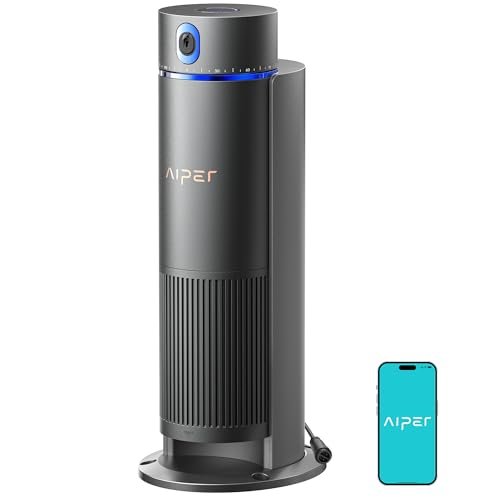
Smart Lawn Irrigation System Review: App-Controlled Watering, 4,800 Sq. Ft. Coverage, Rain Sensor, and Portable Setup
Automating lawn irrigation no longer requires installing a permanent underground sprinkler system with buried pipes, wired valves, and a dedicated controller. Portable smart irrigation systems now combine wide-area sprinkler coverage with app-based scheduling, weather awareness, and real-time monitoring, giving homeowners more control without committing to a major landscape project.
This smart lawn irrigation system is designed around that idea. According to the supplied specifications, it can cover up to 4,800 square feet at approximately 45 PSI, project water as far as 39 feet, connect through WiFi or Bluetooth, and automatically pause watering when its built-in rain sensor detects rainfall.
The system also includes app-based scheduling, watering-depth monitoring, irrigation history, portable construction, and an EvenRain watering pattern intended to distribute water more uniformly across the lawn. For homeowners who want more automation than a conventional hose sprinkler but less complexity than a professionally installed in-ground system, it occupies an interesting middle ground.
What Is This Smart Lawn Irrigation System?
This product is a portable automated lawn-watering system designed to connect smart controls with above-ground sprinkler coverage.
Unlike a conventional irrigation controller that operates buried electric valves, the system appears to integrate the sprinkler hardware and controls into a movable unit.
The supplied information highlights:
- WiFi connectivity
- Bluetooth connectivity
- Mobile app control
- Custom watering zones
- Watering schedules
- Watering-depth adjustment
- Up to 4,800 sq. ft. stated coverage
- Up to 39 ft. spray range
- Operation around 45 PSI
- EvenRain watering technology
- Adaptive re-spray
- Built-in rain sensing
- Automatic rain pause
- Remote watering
- Quick watering
- Real-time monitoring
- Irrigation-history tracking
- Portable 10.58 lb. construction
These features make it closer to a smart portable irrigation platform than a basic lawn sprinkler.
Why Smart Lawn Irrigation Can Be Useful
Traditional hose sprinklers usually require manual setup.
You place the sprinkler on the lawn, connect the hose, turn on the faucet, wait, and eventually return to shut the water off.
A smart irrigation system can automate much of that process.
Once configured, it can potentially manage:
- When watering starts
- How long watering continues
- Which areas receive water
- How much irrigation is applied
- Whether watering should pause because of rain
That reduces routine intervention while giving users more detailed control over lawn care.
App-Based Irrigation Control
The system is designed to be managed through a mobile application.
Instead of relying entirely on physical controls, users can configure watering from a smartphone.
According to the source, app controls include:
- Watering-zone configuration
- Scheduling
- Watering depth
- Manual or remote operation
- Irrigation monitoring
- Historical records
This is particularly useful for people who regularly change watering according to weather, season, or lawn conditions.
WiFi and Bluetooth Connectivity
The system supports both WiFi and Bluetooth according to the supplied description.
These two technologies typically serve different roles.
WiFi can provide remote access through the home network, while Bluetooth can be useful when standing near the irrigation system during setup or local control.
The exact functions available through each connection should be confirmed in the manufacturer's documentation.
Why WiFi Matters
WiFi connectivity can allow the irrigation system to be managed while the user is:
- Inside the home
- At work
- Traveling
- Away from the yard
That can be especially useful during changing weather conditions.
If a hot period arrives unexpectedly, a schedule can potentially be adjusted remotely instead of waiting until someone is physically at the property.
Bluetooth as a Local Connection
Bluetooth can provide an alternative local connection between the phone and irrigation system.
That may help with:
- Initial pairing
- Setup
- Local troubleshooting
However, Bluetooth has much shorter range than WiFi and should not be assumed to provide true remote access while away from home.
Up to 4,800 Square Feet of Coverage
The manufacturer states that the irrigation system can cover up to 4,800 sq. ft.
That is a meaningful amount of lawn for a portable sprinkler system.
For context, a rectangular lawn measuring approximately 60 by 80 feet would cover 4,800 square feet.
However, maximum theoretical coverage and real-world uniform irrigation are not necessarily the same thing.
Coverage Depends on Water Pressure
The stated coverage is based on operation at around 45 PSI according to the supplied specifications.
If household water pressure is lower, spray distance may decrease.
If water pressure varies while other fixtures are being used, irrigation coverage may also change.
Before relying on the maximum coverage figure, check the actual outdoor faucet pressure and flow.
The 39-Foot Spray Range
The system is described as reaching approximately 39 feet.
That can allow a single sprinkler position to cover a relatively wide area.
However, spray distance can be influenced by:
- Water pressure
- Wind
- Nozzle configuration
- Hose restrictions
- Elevation
Actual coverage should therefore be tested after installation.
EvenRain Technology
The supplied description refers to EvenRain technology, which is intended to imitate natural rainfall.
The practical goal of such a design is more uniform water distribution.
A good lawn sprinkler should avoid concentrating too much water near the sprinkler while leaving the outer edges comparatively dry.
Uniform application matters because uneven watering can create:
- Dry patches
- Overwatered areas
- Runoff
- Inconsistent grass growth
Why Even Water Distribution Matters
A sprinkler can have impressive maximum range while still performing poorly if distribution is uneven.
Coverage quality matters more than simply how far water travels.
Ideally, the lawn should receive a reasonably consistent amount of water across the irrigated area.
This reduces the need to compensate for dry spots by overwatering the rest of the lawn.
Adaptive Re-Spray and Blind Spots
The source also mentions an adaptive re-spray function intended to reduce missed areas.
The exact mechanism is not explained in enough detail to verify how this feature works.
However, the goal appears to be improving coverage where the initial spray pattern leaves gaps.
Buyers should evaluate this feature based on actual lawn shape and sprinkler behavior rather than assuming every irregular yard will be covered perfectly.
Custom Watering Zones
One of the more useful smart features is the ability to customize irrigation zones.
A lawn may contain areas with very different conditions.
For example:
- Full-sun grass dries quickly
- Shaded grass stays moist longer
- Sloped sections may experience runoff
- Newly seeded areas may need more frequent light watering
Zone-based irrigation allows those sections to be treated differently.
Why One Schedule Rarely Fits the Entire Lawn
A uniform lawn may look simple, but environmental differences can be substantial.
A south-facing section in direct sunlight can lose moisture much faster than grass shaded by trees.
Applying the same watering depth everywhere may therefore waste water in some areas while leaving others too dry.
Smart zoning can improve the match between irrigation and actual landscape conditions.
Watering Schedules
The app allows scheduled irrigation according to the source.
Scheduled watering removes the need to remember to turn the sprinkler on manually.
A practical schedule should consider:
- Grass species
- Soil type
- Season
- Recent rainfall
- Sun exposure
- Local watering restrictions
The best schedule is not necessarily the most frequent one.
Deep Watering vs. Frequent Light Watering
Established lawns generally benefit from watering that reaches deeper into the soil rather than constant shallow surface wetting.
Deeper watering can encourage roots to extend farther into the soil.
However, newly seeded lawns are different and may require lighter, more frequent moisture.
Smart scheduling is useful because it can accommodate these different stages.
Watering Depth Control
The supplied description states that users can adjust or monitor watering depth through the app.
This is potentially more meaningful than simply setting watering time.
Ten minutes of irrigation does not deliver the same amount of water with every sprinkler or water pressure.
Depth-based irrigation focuses on how much water reaches the lawn rather than how long the system runs.
Why Watering Depth Is More Useful Than Minutes Alone
Suppose one sprinkler delivers twice as much water as another.
Running both for 20 minutes would produce very different results.
Monitoring irrigation depth can provide a better indication of whether the lawn is receiving enough water.
The exact way this system measures or estimates depth should be verified, since the source does not describe the sensor methodology.
Built-In Rain Sensor
The irrigation system includes a built-in rain sensor according to the supplied information.
When rainfall is detected, the system can automatically pause scheduled watering.
This can prevent the common situation where sprinklers run during a rainstorm.
Why Automatic Rain Pause Matters
A fixed timer does not know whether the lawn already received water from natural rainfall.
Without weather awareness, irrigation can continue unnecessarily.
Rain-based pauses can help reduce:
- Unnecessary watering
- Soil saturation
- Surface runoff
- Irrigation during storms
They can also reduce the amount of manual schedule adjustment required.
Rain Sensors Are Not Perfect
A rain sensor provides useful automation, but it does not replace occasional observation.
A small amount of rain may trigger a sensor without providing enough water to reach the root zone.
Conversely, localized heavy rainfall may saturate one area while another receives less.
Use rain automation as a tool rather than treating it as a perfect measurement of soil moisture.
Weather-Smart Irrigation
The manufacturer describes the system as adapting watering according to climate conditions.
The built-in rain sensor is the clearest verified component of that functionality from the supplied information.
If the app also uses online weather data, temperature, or forecast information, those capabilities should be confirmed separately.
Do not assume broader predictive weather intelligence unless the manufacturer explicitly documents it.
Remote Watering Mode
Remote watering lets users start irrigation from the app rather than walking outside.
This can be useful when:
- Testing the system
- Adding extra water during a hot period
- Checking a newly seeded area
- Watering while away from home
Remote manual control is best used alongside—not instead of—a well-designed automatic schedule.
Quick Watering Mode
The supplied description also includes a Quick Watering function.
This likely provides a simple way to begin a temporary watering session without changing the normal schedule.
That can be useful for one-off needs.
For example, after applying grass seed to a small area, you might want a temporary watering cycle without rebuilding the weekly program.
Real-Time Monitoring
The system reports watering information in real time according to the source.
Users can monitor factors such as:
- Watering time
- Watering depth
- Current irrigation activity
This can make the system easier to supervise than a traditional timer that provides little feedback after a schedule starts.
Irrigation History
Historical watering records are another useful smart feature.
Tracking past irrigation can help answer questions such as:
- Did watering actually run yesterday?
- How long did the cycle last?
- How much irrigation was applied?
- Was watering skipped because of rain?
This can improve troubleshooting and lawn-care decisions.
Why Historical Data Can Improve Lawn Care
Without records, irrigation decisions often rely on memory.
A homeowner may think the lawn has been watered frequently enough but discover that several scheduled cycles were skipped.
Historical information allows irrigation habits to be evaluated more objectively.
Over time, schedules can be adjusted based on what actually happened.
Quick Setup Without Digging
The manufacturer claims installation can be completed in approximately 15 minutes.
The system is designed as an above-ground product, so installation avoids many of the steps required by permanent irrigation systems.
There is no need to:
- Dig trenches
- Install underground piping
- Wire valve boxes
- Hire an irrigation contractor
Actual setup time will depend on lawn layout, WiFi configuration, hose placement, and familiarity with the app.
Why Portable Irrigation Appeals to Renters
A movable system can be particularly useful for:
- Renters
- Temporary homes
- People who do not want to modify landscaping
- Seasonal watering
Because the system does not rely on buried infrastructure, it can potentially be relocated if the user moves.
Weight and Portability
The unit weighs approximately 10.58 lb. according to the supplied specifications.
That makes it portable enough to move around the yard when necessary while still being substantial enough to remain stable.
Portability can be useful when one sprinkler system needs to serve several lawn areas at different times.
Portable Does Not Mean Effortless for Every Yard
Moving an irrigation system still requires handling:
- Garden hose
- Power or battery requirements
- Placement
- WiFi coverage
A permanent in-ground system remains more convenient for large landscapes requiring many fixed zones.
The portable design is most attractive when flexibility is more important than complete automation.
Temperature-Resistant Construction
The source states that the system uses materials designed to tolerate temperature changes.
That is useful for outdoor equipment exposed to sun and seasonal conditions.
However, "temperature resistant" should not automatically be interpreted as freeze-proof.
Water trapped inside irrigation components can expand when frozen and cause damage.
Protect It During Freezing Weather
Unless the manufacturer specifically states that the system can remain water-filled during freezing conditions, winterization is advisable.
That may involve:
- Disconnecting the hose
- Draining water
- Storing the unit indoors
Rain resistance and freeze resistance are different properties.
Smart Irrigation vs. Traditional Hose Sprinkler
A basic lawn sprinkler is inexpensive and simple.
The smart system adds:
- App scheduling
- Zone control
- Rain detection
- Remote operation
- Watering history
- Depth monitoring
These features can reduce manual management.
The tradeoff is higher cost and greater dependence on electronics and connectivity.
Smart Portable System vs. In-Ground Sprinklers
An in-ground irrigation system offers excellent convenience once installed.
It can cover many permanent zones automatically and keeps most hardware hidden.
However, installation can require:
- Excavation
- Underground pipe
- Valves
- Wiring
- Professional design
A portable smart system avoids much of that complexity.
Who Benefits Most From This Type of System?
This smart irrigation system may be especially useful for homeowners who want:
- Wide-area lawn watering
- Mobile app control
- Automatic rain pauses
- No digging
- Portable installation
- Irrigation history
- More automation than a conventional sprinkler
It is particularly compelling for medium-size lawns where installing a full underground irrigation system would be excessive.
Who May Prefer an In-Ground System?
A traditional irrigation system may still be better for:
- Large properties
- Many landscaping zones
- Permanent gardens
- Commercial landscapes
- Homeowners wanting completely invisible hardware
The right choice depends on yard complexity.
Understanding the 4,800 Sq. Ft. Claim
Maximum coverage is useful as an initial reference, but lawn shape matters.
A perfectly open rectangular lawn is easier to cover than one interrupted by:
- Buildings
- Trees
- Garden beds
- Patios
- Narrow side yards
Irregular layouts may require repositioning or multiple watering zones even if their total area is below 4,800 square feet.
Wind Can Affect Coverage
Wind is another important factor often overlooked when evaluating sprinklers.
A 39-foot spray can be distorted significantly in windy conditions.
This can cause some lawn sections to receive less water while others receive too much.
Watering during calmer periods generally improves uniformity.
Early Morning Watering
Early morning is often a practical time for lawn irrigation because:
- Wind may be lower
- Evaporation is reduced compared with midday
- Grass can dry afterward
Local climate and watering regulations should still guide scheduling.
Avoid Excessive Nighttime Moisture
Watering late at night can leave grass wet for extended periods in some climates.
That may not be ideal for every lawn.
The best timing depends on local humidity, temperature, and turf conditions.
Soil Type Matters
Different soils absorb and retain water differently.
Sandy Soil
Water drains quickly and may need more frequent irrigation.
Clay Soil
Water infiltrates more slowly and may require shorter cycles to reduce runoff.
Loamy Soil
Typically offers a balance between drainage and moisture retention.
Smart scheduling is most effective when adjusted to the actual soil.
Watch for Runoff
Even a sophisticated irrigation system can apply water faster than soil can absorb it.
If water begins flowing onto sidewalks or driveways, reduce watering duration or divide the total irrigation into shorter cycles if the system supports it.
The goal is to move water into the root zone rather than across the surface.
Common Setup Mistakes
Assuming Maximum Coverage at Any Pressure
The 4,800 sq. ft. figure is tied to appropriate water pressure.
Ignoring Wind
Wind can distort spray patterns significantly.
Setting Schedules Without Checking Soil
Automation should reflect actual moisture conditions.
Relying Entirely on Rain Detection
Occasional lawn inspection is still important.
Placing the System Where WiFi Is Weak
Remote functions depend on stable connectivity.
Forgetting Winterization
Outdoor water equipment can be damaged by freezing.
Best Practices for Initial Setup
When first installing the system, start with a simple irrigation plan.
Test its spray pattern and identify where water actually lands.
Check for:
- Dry zones
- Overspray
- Runoff
- Excessive overlap
Then refine zone boundaries and schedules in the app.
It is better to adjust based on real observation than to rely exclusively on theoretical coverage.
Monitor the First Few Weeks
Smart irrigation works best when the initial schedule is treated as a starting point.
Watch the lawn for signs of:
- Drying
- Persistent wetness
- Runoff
- Uneven growth
Use irrigation history and real-world lawn conditions together to improve the schedule.
Potential Advantages
This system's strongest features are its wide stated coverage, app-based control, built-in rain sensing, portable construction, watering-depth management, and historical irrigation tracking.
It provides many of the control features associated with more elaborate irrigation systems without requiring permanent underground installation.
Potential Limitations
Performance depends on:
- Water pressure
- WiFi coverage
- Lawn geometry
- Wind
- Spray placement
The claimed 4,800-square-foot maximum should therefore be viewed as a best-case capacity rather than guaranteed uniform coverage for every property.
The mechanisms behind adaptive re-spray and watering-depth measurement are also not described in enough technical detail to evaluate independently.
Frequently Asked Questions
How much lawn can the system cover?
The manufacturer claims up to 4,800 square feet under suitable operating conditions.
What water pressure is used for the stated coverage?
Approximately 45 PSI, according to the supplied description.
How far can it spray?
Up to approximately 39 feet.
Does it use WiFi?
Yes.
Does it also support Bluetooth?
Yes, according to the source.
Can I control it through an app?
Yes.
Can I set watering zones?
Yes.
Can I create watering schedules?
Yes.
Can I adjust watering depth?
The supplied information says yes.
Does it have a rain sensor?
Yes, a built-in rain sensor is listed.
Will watering stop when it rains?
The system is described as automatically pausing irrigation during rainfall.
Does it track irrigation history?
Yes.
What information can I monitor?
The source mentions watering time, watering depth, and historical irrigation activity.
What is Remote Watering?
It allows irrigation to be started from the app.
What is Quick Watering?
It appears to provide a temporary watering mode without rebuilding the normal schedule.
How long does installation take?
The manufacturer claims around 15 minutes, though actual setup time will vary.
Does installation require digging?
No, according to the supplied information.
Does it require a professional installer?
The product is designed for DIY setup.
How much does it weigh?
Approximately 10.58 pounds.
Can it be moved around the yard?
Yes. Portability is one of its intended advantages.
Is 4,800 sq. ft. coverage guaranteed?
No. Pressure, wind, lawn shape, and other conditions can affect actual coverage.
Is it suitable for an irregular lawn?
Potentially, especially if the app's zoning functions can accommodate the layout, but irregular shapes may require repositioning or additional watering passes.
Is it freeze-proof?
The supplied information only refers to temperature-resistant materials. Freeze-safe operation should not be assumed without explicit manufacturer confirmation.
Should I still monitor my lawn?
Yes. Smart irrigation can automate watering, but soil and plant conditions should still be checked periodically.
Final Thoughts
This smart lawn irrigation system offers an appealing alternative for homeowners who want intelligent watering without installing a permanent underground sprinkler network.
Its combination of WiFi and Bluetooth connectivity, app-controlled zones and schedules, up to 4,800 sq. ft. stated coverage, a 39-foot spray range, built-in rain sensing, watering-depth management, real-time monitoring, and irrigation history gives it significantly more functionality than a conventional portable lawn sprinkler.
The portable 10.58-pound design is another important advantage. It can potentially be installed quickly, moved when necessary, and used without excavation or professional irrigation work.
The main consideration is that smart features cannot overcome basic hydraulic and environmental limitations. Actual coverage depends on having adequate water pressure, suitable placement, manageable wind, and a lawn layout that matches the sprinkler's pattern. The 4,800-square-foot figure should therefore be treated as an upper-end specification rather than a guaranteed result for every yard.
For homeowners with a medium-size lawn who want automated scheduling, weather-aware watering, remote control, and wide-area coverage without digging up the landscape, this type of smart portable irrigation system can provide a practical bridge between a basic hose sprinkler and a fully installed in-ground irrigation system.