Aeotec SmartThings Water Leak Sensor Review: Zigbee Leak Detection With Temperature Monitoring and Smart Automations
A water leak sensor is most valuable when it detects a problem early enough for you to act before moisture spreads. That can mean catching a slow drip under a sink, a washing-machine leak, or excess water around a refrigerator supply line before it damages flooring, cabinetry, or nearby electronics.
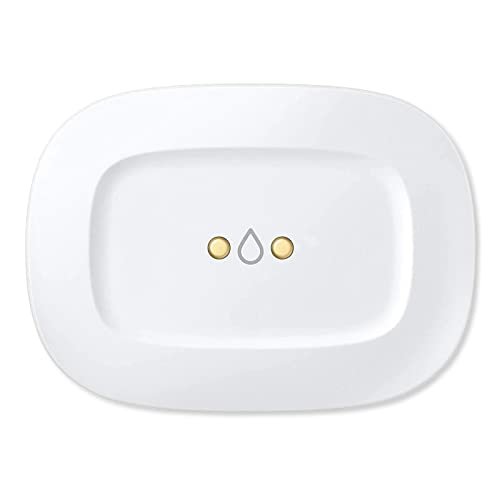
The Aeotec SmartThings Water Leak Sensor is designed for that kind of early warning. It detects excess water or moisture, monitors temperature, and connects through a compatible Zigbee smart-home hub. When paired with the SmartThings ecosystem, it can send phone alerts and trigger automations involving other connected devices.
That last point is important. The sensor itself does not physically shut off water, but it can become part of a broader protection strategy if you pair it with compatible valves, sirens, lights, or smart switches.
What Is the Aeotec SmartThings Water Leak Sensor?
The Aeotec sensor is a compact indoor smart-home device built around two main functions:
- Water and moisture detection
- Temperature monitoring
It communicates over Zigbee rather than connecting directly to WiFi.
According to the supplied information, it works with the Aeotec Smart Home Hub, Samsung SmartThings Hub Gen 3, and other compatible Zigbee hubs.
Why Zigbee Matters
Zigbee is commonly used for low-power smart-home sensors because it is designed for short, efficient wireless messages rather than high-bandwidth data.
For a leak detector, that makes sense.
The sensor mainly needs to report events such as:
- Water detected
- Temperature changed
- Battery status
- Device state
This allows it to operate without maintaining a direct WiFi connection.
A Hub Is Required
The most important setup requirement is that the sensor needs a compatible smart-home hub.
It is not a standalone direct-to-WiFi leak detector.
That means buyers should confirm compatibility before ordering.
If you already use SmartThings, this is relatively straightforward. If you do not, the hub becomes an additional purchase and setup consideration.
Leak and Flood Detection
The sensor is intended to detect excess water or moisture in locations where leaks are likely.
Common placement areas include:
- Under sinks
- Near washing machines
- Behind refrigerators with water lines
- Near dishwashers
- Around water heaters
- Utility rooms
The sensor only detects water that physically reaches its sensing area, so placement is critical.
Best Placement Strategy
Do not simply place the sensor near a plumbing fixture.
Think about where leaking water would actually travel first.
Look for:
- Low spots
- Floor slope
- Cabinet edges
- Appliance feet
- Pipe entry points
A correctly positioned sensor can react much earlier than one placed several feet away from the likely leak path.
Under-Sink Monitoring
Under-sink cabinets contain several possible failure points, including:
- Faucet supply hoses
- Shutoff valves
- Drain traps
- Dishwasher connections
A sensor placed near the lowest point can help identify leaks that would otherwise remain hidden behind cabinet doors.
Laundry Room Monitoring
Washing machines are another strong use case.
Leaks can originate from:
- Supply hoses
- Drain hoses
- Internal pumps
- Connections
Because washing-machine failures can release water quickly, early detection is useful.
Refrigerator Water-Line Monitoring
Refrigerators with ice makers or water dispensers often use small supply lines.
Those connections can leak slowly and remain unnoticed behind the appliance.
A compact sensor can provide an additional warning layer in that area.
Temperature Monitoring
The Aeotec sensor also tracks temperature.
The supplied description lists an operating range of approximately 32°F to 104°F.
Temperature monitoring can be useful in areas where unusual heat or cold may matter, such as:
- Basements
- Utility rooms
- Rooms near exterior walls
It adds environmental awareness beyond simple leak detection.
Temperature Monitoring Is Not Freeze Prevention
The sensor can report abnormal temperatures, but it does not heat pipes or otherwise prevent freezing.
Its role is informational.
If the temperature drops into a concerning range, a SmartThings automation can notify you or trigger another compatible device.
SmartThings Alerts
When connected through SmartThings, the sensor can generate phone notifications.
This is useful when nobody is physically near the leak.
Remote alerts allow you to learn about the event while:
- At work
- Traveling
- Away from home
- Managing another property
The exact notification behavior depends on the SmartThings app and your configured automations.
Local Light or Siren Alerts
The supplied description also mentions the ability to use light-up or siren alerts.
That generally means the leak sensor can be incorporated into routines that activate compatible smart devices.
For example, a leak event could trigger:
- Smart siren
- Smart light
- Notification
- Other connected automation
This gives the system more flexibility than a sensor with only a built-in buzzer.
Automatic Water Shutoff Through Smart Automation
The sensor itself does not close a valve.
However, if you have a compatible smart water shutoff valve in the same ecosystem, you can potentially create an automation that closes it when water is detected.
This changes the system from simple detection to active mitigation.
Why Automatic Shutoff Can Help
A notification is useful only if someone can respond quickly.
If the property is empty, a compatible automatic valve can react without waiting for human intervention.
That may help reduce continued water flow from:
- Burst supply line
- Appliance hose
- Plumbing failure
The exact setup depends on the shutoff device and SmartThings compatibility.
Shut Down Electronics During a Leak
The supplied description also mentions shutting down electronics automatically.
This can be useful when water is detected near connected equipment.
For example, a SmartThings routine could potentially switch off a compatible smart outlet or device.
That said, electrical safety should not depend exclusively on a consumer smart-home automation. Proper electrical protection, grounding, and circuit design remain more important.
Water Leak Sensor vs. Automatic Shutoff System
These are not the same thing.
Leak Sensor
The Aeotec sensor:
- Detects moisture
- Sends alerts
- Can trigger automations
Automatic Shutoff Valve
A smart valve:
- Physically stops water flow
The best protection can come from combining both.
Zigbee Wireless Range
The supplied description lists a Zigbee range of roughly 50 to 130 feet, depending on the building.
Real-world range can vary substantially because wireless signals are affected by:
- Walls
- Concrete
- Metal
- Appliances
- Building layout
Zigbee mesh networks can sometimes improve coverage when other powered Zigbee devices are present.
Hub Placement Matters
If the sensor will be used in a basement or far corner of the house, test the signal before finalizing placement.
A device may be physically close to a leak source but too far from the Zigbee network to communicate reliably.
This is especially relevant in houses with:
- Thick masonry
- Multiple floors
- Mechanical rooms
- Metal equipment
Indoor Use Only
The sensor is intended for indoor use.
That means it should not be installed outdoors or exposed permanently to weather unless the manufacturer explicitly supports that environment.
Suitable indoor locations include:
- Bathrooms
- Kitchens
- Basements
- Laundry rooms
- Utility rooms
Battery Included
The supplied package includes a battery.
That means the sensor can be installed without running electrical wiring.
Battery-powered operation also makes placement more flexible.
Battery condition should still be monitored periodically so the sensor does not silently stop working.
Battery Maintenance
A smart leak detector is easy to forget once installed.
That is exactly why periodic checks matter.
At intervals, verify:
- Battery status
- Zigbee connection
- SmartThings notification
- Automation behavior
A safety device should not simply be assumed to be functioning indefinitely.
Test the Sensor After Installation
After pairing the device, perform a controlled test according to the manufacturer's instructions.
Confirm that:
- Water detection works
- Phone notification appears
- SmartThings routine triggers
- Siren or light automation works
- Shutoff valve closes if configured
Testing is especially important after changes to the hub or smart-home network.
Aeotec Sensor vs. Basic Audible Water Alarm
A basic water alarm may cost less and require no hub.
Basic Alarm Advantages
- Simple setup
- No smart-home ecosystem
- Usually lower cost
Aeotec Advantages
- Remote notifications
- Temperature monitoring
- Smart automations
- Zigbee integration
- Potential valve control
The Aeotec sensor is more useful if you already have a compatible smart-home system.
Aeotec vs. WiFi Leak Sensors
Direct WiFi sensors connect to the router individually.
Zigbee sensors connect to a hub.
Zigbee Advantages
- Lower power consumption
- Smart-home mesh integration
- Centralized automation
WiFi Advantages
- No dedicated Zigbee hub if the device supports direct WiFi
- Simpler ecosystem for some users
The better choice depends on your existing setup.
SmartThings Ecosystem Advantages
If you already use SmartThings, the sensor can become part of broader routines.
For example:
- Leak detected → close smart valve
- Leak detected → sound siren
- Leak detected → turn lights red
- Temperature low → send notification
That flexibility is one of the main reasons to choose an ecosystem-based sensor rather than a standalone alarm.
Common Installation Mistakes
Buying Without a Compatible Hub
This sensor requires hub infrastructure.
Poor Placement
Water must physically reach the sensing area.
Ignoring Zigbee Range
Signal quality matters.
Never Testing Automations
A routine that was not tested should not be assumed to work.
Treating Smart Automation as a Substitute for Electrical Safety
Smart devices are supplementary, not replacements for proper safety systems.
Common Buying Mistakes
Assuming the Sensor Automatically Shuts Off Water
It needs a separate compatible valve for that.
Assuming It Connects Directly to WiFi
It communicates through Zigbee and a hub.
Ignoring Indoor-Only Use
It is not intended for exposed outdoor conditions.
Buying It Without Considering Existing Ecosystem Compatibility
It is most useful when integrated with SmartThings or another supported Zigbee platform.
Who Is the Aeotec Water Leak Sensor Best For?
It may be a strong choice for:
- Existing SmartThings users
- Homes with Zigbee networks
- Basement monitoring
- Laundry rooms
- Kitchens
- Utility areas
- Buyers who want automation beyond simple alerts
It may be less appealing for someone who wants a completely standalone detector with no hub.
Advantages and Considerations
Advantages
- Water leak detection
- Temperature monitoring
- SmartThings integration
- Zigbee connectivity
- Remote alerts
- Automation support
- Can trigger compatible valves or electronics
- Battery included
- Compact indoor design
- Compatible with Aeotec and selected SmartThings hubs
Potential Considerations
Requires a compatible hub.
Does not shut off water by itself.
Range depends on building construction.
Indoor use only.
Smart automation reliability depends on the broader hub and network setup.
Warranty and Package Contents
The supplied description lists a one-year limited warranty.
The package includes:
- Water leak sensor
- Battery
- Quick-start guide
- Safety guide
Current warranty terms should be confirmed for the exact product and region.
Frequently Asked Questions
Does the Aeotec sensor detect water leaks?
Yes.
Does it send phone notifications?
Yes, through the SmartThings ecosystem when properly configured.
Does it monitor temperature?
Yes.
What is the operating temperature range?
The supplied description lists approximately 32°F to 104°F.
Does it require a hub?
Yes.
Which hubs are supported?
The source mentions the Aeotec Smart Home Hub, Samsung SmartThings Hub Gen 3, and other compatible Zigbee hubs.
Does it connect directly to WiFi?
No. It is a Zigbee device that communicates through a compatible hub.
Can it automatically shut off water?
Not by itself. It can be used in automations with compatible smart shutoff devices.
Can it trigger a siren?
Yes, through compatible SmartThings automations.
Can it shut off electronics?
Potentially, if those electronics are connected through compatible smart devices and the automation is properly configured.
What is the wireless range?
The supplied description lists approximately 50 to 130 feet, depending on building construction.
Is it suitable for outdoor use?
No. It is intended for indoor use.
Is a battery included?
Yes.
What warranty does it have?
A one-year limited warranty is listed.
Final Thoughts
The Aeotec SmartThings Water Leak Sensor is most useful for homeowners who already have, or plan to build, a SmartThings-based smart-home system.
Its core leak-detection function is straightforward, but the real value comes from integration. The sensor can provide remote alerts, monitor temperature, trigger lights or sirens, and potentially work with compatible water shutoff valves or smart switches.
The tradeoff is that it depends on a compatible Zigbee hub. Buyers looking for a completely standalone leak alarm may find a simpler product more appropriate.
For users already invested in SmartThings, however, the Aeotec sensor offers a flexible way to add smart water leak detection, temperature monitoring, remote notifications, and automated responses around sinks, appliances, basements, and other high-risk areas.