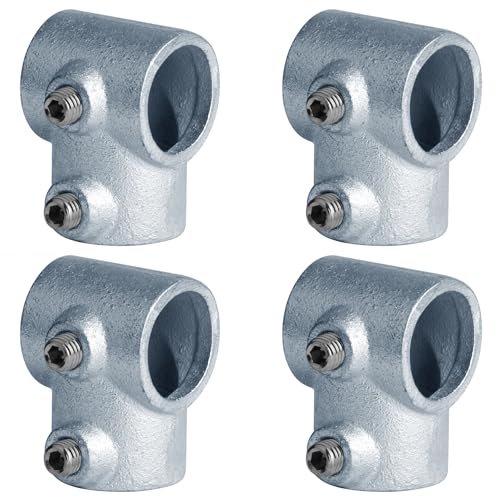
1-Inch Galvanized Pipe Clamp Fitting Review: A Durable Connector for Structural Pipe Projects
Whether you're building industrial-style furniture, installing safety railings, creating shelving, or assembling a custom pipe framework, choosing the right pipe fittings is just as important as selecting the pipe itself. A high-quality clamp fitting provides a secure connection while simplifying assembly, allowing projects to be completed without welding or specialized fabrication equipment.
This 1-inch galvanized pipe clamp fitting is designed for use with standard galvanized steel pipe that has an outside diameter of approximately 1.315 inches, making it suitable for a wide range of residential, commercial, and DIY structural applications.
If you're planning a pipe-based project, here's what you should know before purchasing this type of clamp fitting.
What Is a Pipe Clamp Fitting?
A pipe clamp fitting is a mechanical connector used to join or secure metal pipe sections together.
Unlike threaded couplings or welded joints, clamp fittings hold pipe in place using mechanical fasteners, making installation quicker and allowing structures to be modified or disassembled later if needed.
These fittings are commonly used in projects where:
- Strength is important
- Welding is impractical
- Adjustability is desirable
- Modular construction is preferred
Because they require only basic hand tools, clamp fittings are popular with both professionals and DIY builders.
Understanding Nominal Pipe Size
One of the most common sources of confusion when purchasing pipe fittings is the difference between nominal pipe size and actual pipe dimensions.
Although this fitting is marketed as a 1-inch fitting, it is not intended for pipe with a 1-inch outside diameter.
Instead, it is designed to fit:
- Nominal pipe size: 1 inch
- Actual outside diameter: approximately 1.315 inches
This sizing convention is standard for galvanized steel pipe and many structural pipe systems.
Before ordering, always measure the outside diameter of your pipe rather than relying solely on its nominal size.
Durable Ductile Cast Iron Construction
The fitting is manufactured from ductile cast iron, a material widely used for structural pipe connectors because of its combination of strength and durability.
Compared with standard gray cast iron, ductile cast iron offers improved:
- Impact resistance
- Tensile strength
- Load-bearing capability
- Resistance to cracking
These characteristics make it well suited for structural frameworks that experience regular use or moderate mechanical loading.
Electro-Galvanized Finish for Corrosion Resistance
Outdoor and industrial projects often expose metal components to moisture and changing weather conditions.
To improve corrosion resistance, this fitting features an electro-galvanized surface coating.
Galvanization helps protect the underlying metal by reducing the likelihood of:
- Rust formation
- Surface corrosion
- Moisture damage
- Premature deterioration
While galvanized coatings improve durability, projects exposed to marine environments or highly corrosive conditions may require additional protective measures.
Heavy Wall Thickness for Added Strength
The fitting incorporates a wall thickness of approximately 4.6 mm, contributing to its structural rigidity.
A thicker fitting generally provides several advantages:
- Improved load distribution
- Greater resistance to deformation
- Better durability under repeated use
- Increased confidence in structural applications
The appropriate load capacity depends on the complete structure, pipe material, fasteners, and installation method rather than the fitting alone.
Common Applications
Pipe clamp fittings are used in a wide variety of construction and fabrication projects.
Popular applications include:
- Industrial shelving
- Clothing racks
- Safety railings
- Workshop benches
- Greenhouse frames
- Display structures
- Pipe furniture
- Storage systems
- Handrails
- Equipment supports
Because clamp fittings allow structures to be assembled without welding, they are often chosen for projects that may require future expansion or modification.
Advantages of Clamp Fittings Over Welding
For many DIY builders, clamp fittings provide a simpler alternative to welded steel construction.
Some of the key benefits include:
Easier Installation
Assembly generally requires only common hand tools rather than specialized welding equipment.
Modular Construction
Structures can often be disassembled, relocated, or expanded without cutting metal components.
Reduced Fabrication Time
Mechanical assembly is typically faster than preparing and welding steel joints.
Cleaner Appearance
Properly installed clamp fittings provide a professional industrial look that complements exposed pipe designs.
Installation Tips
Accurate installation helps maximize both safety and structural performance.
Before assembling your project:
- Measure the pipe's outside diameter carefully.
- Confirm compatibility with nominal pipe sizing.
- Tighten fasteners evenly.
- Ensure pipes are fully inserted into the fitting.
- Inspect all connections before placing the structure into service.
Following the manufacturer's installation recommendations is essential, particularly for structural or safety-related applications.
Maintenance and Long-Term Care
Although galvanized fittings require relatively little maintenance, periodic inspection helps ensure continued performance.
For outdoor installations:
- Check for corrosion annually.
- Tighten fasteners if necessary.
- Clean accumulated dirt and debris.
- Inspect structural connections after severe weather.
- Replace damaged components promptly.
Routine maintenance can significantly extend the lifespan of pipe structures.
Advantages and Potential Limitations
Every structural fitting is designed for specific pipe dimensions and applications.
Advantages
- Durable ductile cast iron construction
- Electro-galvanized corrosion-resistant finish
- Heavy-duty wall thickness
- Suitable for modular construction
- No welding required
- Professional industrial appearance
- Compatible with standard nominal 1-inch galvanized pipe
Potential Considerations
- Fits pipe with an actual outside diameter of approximately 1.315 inches rather than exactly 1 inch.
- Pipe must be measured before purchase to ensure compatibility.
- Load capacity depends on the complete structure, not the fitting alone.
- Outdoor installations may benefit from periodic inspection in harsh environments.
Understanding these requirements helps ensure proper fit and reliable long-term performance.
Frequently Asked Questions
Will this fit a pipe with a 1-inch outside diameter?
No. It is designed for nominal 1-inch galvanized pipe, which has an actual outside diameter of approximately 1.315 inches.
Why is nominal pipe size different from the actual diameter?
Nominal pipe sizing is an industry standard based on historical pipe dimensions and internal diameter rather than the outside diameter. Measuring the outside diameter is the most reliable way to confirm compatibility.
Can it be used outdoors?
Yes. The electro-galvanized finish provides corrosion resistance suitable for many outdoor applications, although routine inspection is recommended in harsh environments.
Is welding required?
No. Clamp fittings are designed for mechanical assembly using fasteners, eliminating the need for welding in many projects.
What projects are these fittings commonly used for?
They are frequently used for shelving, pipe furniture, railings, greenhouse frames, workshop equipment, industrial displays, and other structural pipe assemblies.
Final Thoughts
This 1-inch galvanized pipe clamp fitting provides a strong, reliable connection for a wide variety of structural pipe projects. Manufactured from durable ductile cast iron and protected by an electro-galvanized finish, it offers the strength and corrosion resistance needed for many indoor and outdoor applications while allowing assembly without welding.
The most important consideration before purchasing is verifying pipe compatibility. Because it is designed for nominal 1-inch pipe with an actual outside diameter of approximately 1.315 inches, taking accurate measurements beforehand helps ensure a proper fit. For builders creating shelving, furniture, handrails, or custom industrial frameworks, this style of clamp fitting offers an efficient and dependable solution that combines durability with straightforward installation.