240-Foot Drip Irrigation Kit Review: Customizable Watering for Gardens, Raised Beds, and Greenhouses
Keeping a garden consistently watered can be time-consuming, especially when plants are spread across raised beds, containers, flower borders, or greenhouse rows. Hand watering may work for a small space, but it often produces uneven coverage and requires constant attention during hot or dry weather.
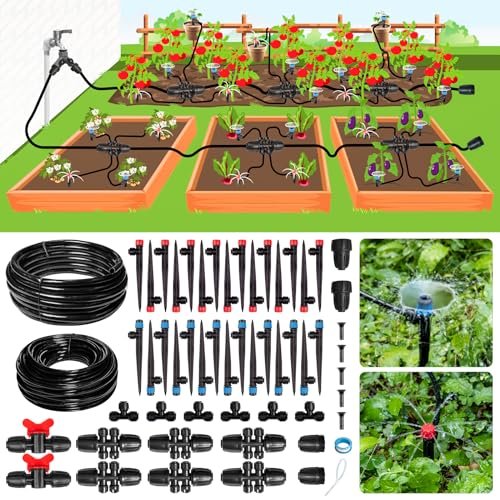
This 240-foot drip irrigation kit is designed to automate and simplify garden watering. It includes main supply tubing, smaller distribution lines, quick-connect fittings, faucet adapters, and two types of adjustable emitters. The system can be configured as one larger irrigation network or divided into two smaller zones.
For gardeners who want to deliver water closer to plant roots while reducing overspray and unnecessary runoff, this kit offers a flexible alternative to traditional sprinklers.
What Is Included in the Drip Irrigation Kit?
The kit provides the basic components needed to create a custom low-volume watering system.
It includes approximately:
- 40 feet of main supply tubing
- 200 feet of 1/4-inch distribution tubing
- Two faucet connectors
- Four-way connectors
- Tee fittings
- Drip emitters
- Vortex-style sprayers
- Additional installation accessories
The 40-foot main line can be used as one continuous supply tube or divided into two shorter sections. This allows the system to serve two separate garden areas from different outdoor faucets or from a suitable split water source.
The 200 feet of smaller distribution tubing carries water from the main line to individual plants, containers, or planting zones.
Quick-Connect Design Simplifies Installation
Some irrigation fittings can be difficult to install because the tubing must first be heated or softened. This kit uses upgraded connectors designed to attach directly to the 1/4-inch tubing.
The quick-connect approach makes it easier to assemble:
- Four-way branches
- Tee connections
- Drip emitters
- Vortex sprayers
- Individual plant lines
This design can save time during setup and makes the system more accessible to homeowners who have never installed drip irrigation before.
Connections should still be pushed together firmly and checked under pressure before the system is left unattended.
How a Drip Irrigation System Works
A drip irrigation system distributes water through a network of tubing and small emitters.
The main tube carries water from the faucet through the garden. Smaller branch lines then direct water toward individual plants or groups of plants. At the end of each line, an emitter controls how water is released.
Depending on the selected outlet, water may be delivered as:
- A slow drip
- A narrow stream
- A small spray pattern
- A circular vortex pattern
By placing the emitters close to the root zone, the system concentrates water where plants can use it instead of spraying large areas of soil, pavement, or foliage.
Designed for Efficient Garden Watering
Drip irrigation can be more efficient than overhead watering when the system is properly designed and maintained.
Because water is delivered close to the base of each plant, less may be lost through wind, surface runoff, or evaporation. The product description estimates water savings of up to 80%, although actual savings depend on the previous watering method, system layout, pressure, climate, and irrigation schedule.
A well-configured drip system can help:
- Reduce unnecessary water use
- Limit overspray onto paths and structures
- Maintain more consistent soil moisture
- Target individual plants
- Reduce time spent hand watering
Efficiency depends on running the system only as long as necessary. Leaving a drip system on for excessive periods can still waste water and oversaturate the soil.
Coverage for One Large Area or Two Smaller Zones
The kit is designed to cover up to approximately 250 square feet when configured as one long irrigation network.
It may also be divided into two systems covering about 120 square feet each, depending on the layout, pressure, emitter spacing, and available flow.
This flexibility makes the kit suitable for properties with separate watering areas, such as:
- A vegetable garden and greenhouse
- Front and backyard flower beds
- Two raised-bed groups
- Patio containers and landscape plants
- Separate rows of shrubs or fruit plants
Before cutting the tubing, sketch the proposed layout and measure the distance between the faucet, main lines, and plant locations.
Reinforced Main Tubing for Better Pressure Handling
The main tubing has been upgraded to tolerate higher water pressure than lighter distribution tubing.
This is important because the supply line carries water to the entire network. A weak or collapsing main tube can reduce flow to downstream emitters and make the system difficult to balance.
Even with reinforced tubing, a pressure regulator may be necessary. Residential faucets can supply more pressure than many drip irrigation components are designed to handle.
Excessive pressure can cause:
- Tubing to separate from fittings
- Emitters to spray too forcefully
- Uneven flow
- Leaks at connectors
- Premature component wear
Check the manufacturer's operating requirements and add a compatible regulator if needed.
Two Emitter Styles for Customized Watering
The kit includes two types of watering outlets: stream-style drip emitters and vortex-style sprayers.
Stream Drip Emitters
The kit includes approximately 15 stream-style emitters.
These are useful for delivering concentrated water to individual plants, trees, shrubs, containers, or specific root zones. They may be appropriate where water should remain close to the soil rather than covering a broader area.
Typical uses include:
- Tomato plants
- Pepper plants
- Young trees
- Shrubs
- Large containers
- Individual ornamental plants
Vortex Sprayers
The kit also includes approximately 15 vortex-style emitters.
These produce a broader watering pattern and may be useful for clusters of plants, groundcover, flower beds, or small sections of densely planted soil.
Typical uses include:
- Flower borders
- Herb beds
- Seedling areas
- Greenhouse rows
- Closely spaced vegetables
- Small landscape zones
Using both outlet types allows the system to serve plants with different watering needs.
Adjustable Flow for Different Plants
Not every plant needs the same amount of water.
Large shrubs and fruiting vegetables may require deeper watering than herbs, seedlings, or drought-tolerant flowers. Adjustable emitters allow the user to increase or reduce the output at each location.
This makes it possible to create a mixed irrigation network where:
- Thirsty plants receive more water
- Young plants receive gentler flow
- Containers receive controlled watering
- Established shrubs receive longer or higher-volume irrigation
- Sensitive areas avoid excessive saturation
Adjustment should be based on soil moisture rather than appearance alone. Sandy soil drains quickly, while clay soil may hold water for much longer.
Suitable Applications
Raised Garden Beds
The main line can run beside or between raised beds, with distribution tubing branching to individual plants or rows.
Vegetable Gardens
Drip emitters can target crops while keeping pathways and unused soil relatively dry.
Greenhouses
The system can reduce the daily workload of watering pots, benches, and planting rows.
Flower Beds
Vortex sprayers can provide broader coverage for closely planted flowers, while stream emitters can target larger specimens.
Patio Containers
Individual lines can be routed to pots, planters, and hanging baskets located near a suitable water source.
Shrubs and Young Trees
Emitters can be positioned around the root zone to encourage deeper watering.
Planning the Irrigation Layout
A successful system begins with a clear layout.
Identify the Water Source
Confirm the faucet location and measure the distance to the planting area.
Group Plants by Water Needs
Plants with similar moisture requirements should ideally share the same zone.
Position the Main Line
Route the larger supply tubing through the center or edge of the garden to minimize the length of branch lines.
Plan Each Branch
Determine which plants need individual emitters and which areas can share a small spray pattern.
Check Elevation Changes
Significant slopes can produce uneven pressure. Plants at lower elevations may receive more water than those uphill.
Leave Room for Expansion
Avoid cutting every line to the shortest possible length. A little extra tubing makes future adjustments easier.
Basic Installation Process
A typical installation follows these steps:
- Unroll the tubing and allow it to relax before assembly.
- Connect the main line to the outdoor faucet using the appropriate adapter.
- Add a pressure regulator or backflow device if required.
- Route the main tubing through the irrigation area.
- Cut and connect branch lines using the tee and four-way fittings.
- Run the 1/4-inch tubing to each plant or watering zone.
- Attach the selected emitters.
- Secure the tubing in place with stakes if available.
- Turn on the water gradually.
- Inspect every connection for leaks.
- Adjust the emitters to balance flow.
- Flush the system before closing or capping the line ends.
Testing the system before burying or covering tubing makes corrections much easier.
Tips for Better Performance
Use a Pressure Regulator
Stable low pressure helps protect fittings and promotes more consistent emitter output.
Install a Filter
Small emitters can clog when water contains sediment, rust, or mineral particles. An upstream screen filter can reduce maintenance.
Flush the Lines
Before attaching all emitters, briefly run water through the tubing to remove installation debris.
Keep Tubing Out of Direct Stress
Avoid sharp bends, heavy foot traffic, mower paths, and areas where tools may damage the line.
Water Early in the Day
Morning irrigation generally reduces evaporation and allows plants to absorb moisture before afternoon heat.
Check Soil Moisture Regularly
Automated watering should be adjusted according to rainfall, season, plant growth, and soil conditions.
Common Installation Mistakes
Building Too Many Branches from One Line
Every emitter reduces available flow. An oversized network may produce weak or uneven watering at the far end.
Mixing Very Different Plants in One Zone
Plants with incompatible water requirements can be difficult to manage on the same schedule.
Skipping Pressure Control
High faucet pressure can force tubing off connectors and damage emitters.
Failing to Flush the System
Small pieces of soil or plastic can clog outlets immediately after installation.
Placing Emitters Too Close to Stems
Water should usually be directed toward the active root zone rather than kept against the plant stem, where constant moisture may encourage rot.
Assuming Every Emitter Delivers the Same Flow
Pressure differences and adjustment settings can create uneven output. Observe each outlet during testing.
Maintenance Requirements
Drip irrigation systems require periodic inspection, especially during the growing season.
Routine maintenance includes:
- Checking for loose connections
- Cleaning clogged emitters
- Flushing the main and branch lines
- Inspecting tubing for cracks or animal damage
- Repositioning emitters as plants grow
- Adjusting watering duration seasonally
- Draining or storing vulnerable components before freezing weather
If an emitter stops flowing, remove it and rinse it before replacing it. Persistent clogging may indicate that the water supply needs better filtration.
Advantages and Considerations
Advantages
- Includes 240 feet of irrigation tubing
- Can create one large system or two smaller zones
- Quick-connect fittings simplify assembly
- No tubing heating required for many connections
- Two emitter styles support different watering patterns
- Adjustable flow helps accommodate different plants
- Upgraded main tubing improves durability
- Suitable for gardens, greenhouses, raised beds, and containers
- Can reduce overspray and manual watering time
- Compatible with future automation through a separate hose timer
Potential Considerations
The stated coverage and water savings depend on layout, pressure, soil, and plant requirements. Large or complex gardens may need additional tubing, fittings, pressure regulation, or separate zones.
The kit does not eliminate maintenance. Small emitters can clog, connections can loosen, and schedules must be adjusted as weather and plant needs change.
Frequently Asked Questions
How much area can the system cover?
The product description estimates coverage of up to approximately 250 square feet as one system or two areas of around 120 square feet each. Actual coverage depends on layout and water pressure.
Can the kit be divided into two systems?
Yes. The 40-foot main line can be divided, and two faucet connectors are included for separate installations.
What size is the distribution tubing?
The connectors and emitters are designed to attach directly to 1/4-inch irrigation tubing.
Do the tubes need to be heated before installing fittings?
The upgraded quick-connect components are designed to connect without heating or softening the tubing.
Can the water flow be adjusted?
Yes. The included stream and vortex emitters allow users to tailor water delivery to different plants and areas.
Does the kit include an automatic timer?
The description identifies it as an irrigation kit but does not clearly state that a timer is included. A separate hose timer may be needed for fully automatic scheduling.
Can it be used with high household water pressure?
A compatible pressure regulator is advisable when the faucet pressure exceeds the recommended range for the tubing and emitters.
Is it suitable for trees?
It can be used for young trees and shrubs, but larger trees may require several emitters or a dedicated higher-capacity irrigation layout.
Can the tubing be buried?
Some irrigation tubing can be covered with mulch or lightly buried, but connectors and emitters should remain accessible for inspection and maintenance. Follow the manufacturer's installation recommendations.
Final Thoughts
This 240-foot drip irrigation kit provides a flexible starting point for gardeners who want more precise watering without installing a permanent underground system. Its long tubing runs, quick-connect fittings, dual faucet adapters, and adjustable emitter styles make it suitable for raised beds, vegetables, flowers, greenhouses, containers, shrubs, and other landscaped areas.
The kit's main strength is customization. It can be arranged as one broad network or divided into two independent systems, allowing the layout to match the property rather than forcing every plant into the same watering pattern.
Careful planning, pressure regulation, filtration, and routine inspection are essential for consistent performance. When properly installed, the system can reduce manual watering, limit overspray, and deliver water closer to the roots where plants can use it most effectively.