Quick-Connect Drip Irrigation Kit Review: Flexible Watering for Gardens, Raised Beds, and Greenhouses
Keeping plants consistently watered can become difficult when a garden contains different crops, containers, flower beds, and growing zones. Hand watering takes time, while conventional sprinklers often soak pathways, leaves, walls, and empty soil along with the plants that actually need moisture.
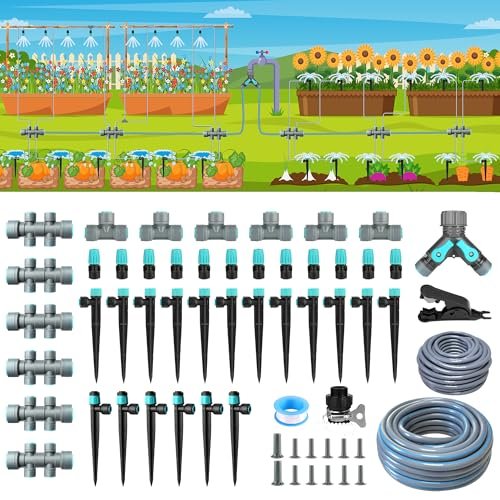
This quick-connect drip irrigation system offers a more targeted approach. It combines 33 feet of 1/2-inch PE main tubing with 197 feet of 1/4-inch PVC distribution tubing, creating a flexible 230-foot network for delivering water throughout a garden. Quick-connect fittings simplify assembly, while three adjustable emitter styles make it possible to tailor the output for individual plants, dense beds, or mist-loving areas.
The system is especially suitable for raised beds, greenhouses, vegetable gardens, courtyards, flower beds, and container collections where plants may have very different watering requirements.
Why Choose a Drip Irrigation System?
A drip irrigation system carries water through a network of tubing and releases it close to the plants. Instead of spraying a large area from above, it directs moisture toward selected root zones.
This approach can help reduce:
- Water wasted on walkways and unused soil
- Overspray onto buildings and fences
- Uneven hand watering
- Time spent moving hoses
- Soil erosion caused by strong water streams
- Unnecessary moisture on plant foliage
Drip irrigation does not automatically guarantee lower water use. Efficiency still depends on correct emitter placement, pressure control, watering duration, and regular inspection. However, a properly configured system gives gardeners much greater control over where the water goes.
What Is Included in the Irrigation Kit?
The system includes two tubing sizes that perform different roles.
The larger 1/2-inch PE tubing acts as the main supply line. It carries water from the faucet through the primary section of the garden. The smaller 1/4-inch PVC tubing branches away from that line and delivers water to individual plants or irrigation zones.
The included tubing consists of:
- 33 feet of 1/2-inch PE main hose
- 197 feet of 1/4-inch PVC distribution tubing
The kit also includes quick-connect components, a Y-shaped water distributor, and three types of adjustable watering outlets.
This combination allows users to build one extended network or create separate branches for different planting areas.
Quick-Connect Fittings Simplify Assembly
Traditional drip irrigation fittings can be frustrating to install. Some require substantial force, while others work best only after the tubing has been warmed or softened.
This system uses quick-connect interfaces intended to reduce that effort. The tubing can be inserted directly into compatible fittings without complicated tools or plumbing experience.
The quick-connect design is useful for assembling:
- Main supply lines
- Branch tubing
- Y-shaped divisions
- Emitters
- Misting nozzles
- Additional watering zones
Although the fittings are designed for easy installation, every connection should be tested before the system is left operating unattended. Tubing that is not fully inserted may separate when pressure is applied.
Y-Shaped Water Distributor for Multiple Zones
The included Y-type distributor divides the water supply into two branches.
This allows the system to irrigate separate sections of a garden from one water source. For example, one branch could serve a greenhouse while the other waters outdoor raised beds.
Creating separate branches can also improve organization when watering plants with different needs. One side may use mostly slow emitters for vegetables and shrubs, while the second branch supplies misting nozzles for seedlings or delicate plants.
Whether both branches can operate effectively at the same time depends on available water pressure, flow rate, hose length, and the number of installed outlets.
Three Adjustable Watering Options
Different plants and layouts require different watering patterns. This kit includes three emitter types so the system can be adapted instead of relying on a single output style.
Stream Emitters for Targeted Root Watering
Stream emitters deliver water toward a concentrated area. They are useful when moisture needs to reach a specific plant rather than spread across an entire bed.
They may work well for:
- Tomato plants
- Peppers
- Shrubs
- Young trees
- Large containers
- Individual ornamentals
- Widely spaced vegetables
Position the emitter near the active root zone rather than directly against the stem. As plants mature, the outlet may need to be moved farther outward to continue watering the expanding roots.
Vortex Emitters for Broader Coverage
Vortex emitters distribute water over a wider circular area. They can serve small groups of plants or densely planted beds where a single narrow stream would not provide enough coverage.
They may be suitable for:
- Flower beds
- Herb gardens
- Closely spaced vegetables
- Groundcover
- Nursery areas
- Mixed planting zones
The adjustable design allows the flow to be reduced or increased according to soil conditions and plant requirements.
Misting Nozzles for Fine Spray Applications
Misting nozzles release a finer spray than conventional drip emitters.
They may be useful for:
- Seedlings
- Greenhouses
- Propagation areas
- Hanging plants
- Humidity-loving plants
- Light cooling during hot conditions
Misters generally require clean water and stable pressure. Their small openings may clog more easily than larger emitters, so upstream filtration is particularly valuable.
Fine mist is also more affected by wind and evaporation. Outdoor misting should therefore be positioned carefully.
Flexible Layout for Different Garden Spaces
The combination of one main line and many feet of distribution tubing allows the system to be customized for irregular garden layouts.
Potential applications include:
Raised Beds
The main line can run beside several beds, with smaller branches entering each one. Individual emitters can then be placed beside each plant or row.
Vegetable Gardens
Stream emitters can target widely spaced crops, while vortex outlets serve denser planting sections.
Greenhouses
The system can route water to pots, benches, grow bags, and planting rows without requiring a permanent commercial irrigation installation.
Flower Beds
Adjustable outlets make it easier to serve a mixture of annuals, perennials, and ornamental shrubs.
Courtyards and Patios
The smaller tubing can reach container plants without requiring a separate hose for every pot.
Small Landscaped Areas
The system may be used around shrubs, young trees, borders, and decorative garden sections.
Durable PE and PVC Tubing
The kit uses PE for the main hose and PVC for the smaller distribution tubing.
PE tubing is commonly used for irrigation supply lines because it is lightweight, flexible, and suitable for outdoor water distribution. PVC micro-tubing provides easy routing between the main line and individual emitters.
The materials are described as weather-resistant and reusable. However, outdoor durability still depends on climate, exposure, and installation.
Tubing should be protected from:
- Sharp tools
- Vehicle traffic
- Lawn mowers
- Excessive stretching
- Animal damage
- Prolonged high heat
- Freezing water
- Unsupported tension at fittings
Covering tubing with mulch can improve appearance and reduce direct sunlight exposure, but connectors and emitters should remain accessible for maintenance.
Detachable Emitters Make Maintenance Easier
The watering outlets can be removed for cleaning, adjustment, or repositioning.
This is valuable because small irrigation components may eventually collect:
- Sediment
- Mineral deposits
- Algae
- Soil particles
- Organic debris
When an emitter becomes blocked, removing and rinsing it is often faster than replacing an entire section of tubing.
Detachable components also make it easier to redesign the system as plants grow or garden layouts change.
Planning the Irrigation Network
A few minutes of planning can prevent uneven flow and unnecessary tubing cuts.
Map the Planting Area
Sketch the location of the faucet, beds, containers, greenhouse, and individual plants.
Group Similar Plants
Plants with similar water needs should ideally share the same branch or watering schedule.
Route the Main Line First
Position the 1/2-inch tubing so that it passes near the largest number of planting areas. Shorter branch lines generally produce a cleaner layout and less pressure loss.
Choose the Correct Emitter
Use concentrated streams for individual plants, vortex emitters for broader zones, and misting nozzles only where fine spray is appropriate.
Account for Elevation
Significant slopes can make water distribution uneven. Lower outlets may receive more pressure than those positioned uphill.
Avoid Excessive Branching
Every additional outlet consumes part of the available water flow. A system with too many emitters may perform poorly at the far end.
Basic Installation Process
A typical installation can be completed without specialized plumbing equipment.
- Unroll the tubing and allow it to straighten.
- Connect the Y distributor to the water source.
- Attach the 1/2-inch main tubing.
- Route the main line through the garden.
- Add quick-connect branch fittings where needed.
- Run 1/4-inch tubing to each plant or zone.
- Attach the selected emitters or misting nozzles.
- Secure the tubing with stakes if available.
- Open the water slowly.
- Inspect every fitting for leaks.
- Adjust each outlet.
- Flush the lines before final use.
Testing the complete system before concealing the tubing makes it much easier to correct poor connections or uneven flow.
Pressure Regulation Is Important
Household faucets can supply more pressure than small drip fittings and emitters are designed to handle.
Excessive pressure may cause:
- Tubing to separate from connectors
- Emitters to spray too aggressively
- Leaks around fittings
- Uneven output
- Premature wear
- Damage to delicate plants
A compatible pressure regulator can create more stable operation. An upstream filter is also recommended when the water contains sediment or mineral particles.
Neither component is clearly identified in the supplied description, so buyers should verify whether they are included or need to be purchased separately.
Adding a Timer for Automatic Irrigation
The product is described as an automatic irrigation system, but an electronic or mechanical watering timer is not specifically listed among the included components.
Without a timer, the network still distributes water efficiently, but the faucet must be turned on and off manually.
A separate hose timer can automate watering schedules. Useful timer features may include:
- Multiple start times
- Adjustable duration
- Manual watering
- Rain delay
- Separate outlet control
- Battery status indicator
Before connecting a timer, confirm that it supports the required flow rate, pressure, and thread type.
How to Balance Water Flow
When several emitters operate simultaneously, outlets near the water source may release more water than those at the far end.
To improve balance:
- Reduce the output of the closest emitters
- Increase the output of distant emitters
- Use shorter branch lines
- Divide a large network into separate zones
- Remove unnecessary connectors
- Confirm that the main line is not kinked
- Use pressure regulation
- Avoid running too many misters at once
After adjustment, inspect the soil around each plant rather than judging the system only by the visible spray.
Watering Tips for Healthier Plants
Water According to Soil Conditions
Sandy soil drains quickly, while clay holds moisture longer. The same schedule will not work equally well in both.
Irrigate Early in the Day
Morning watering usually reduces evaporation and allows plants to absorb moisture before afternoon heat.
Adjust as Plants Grow
A young plant requires a different emitter position and watering volume than a mature one.
Reduce Watering After Rain
Automatic systems should not continue operating unchanged through wet weather. Use a timer with rain delay or temporarily close the system.
Check Below the Surface
The top of the soil may look dry while the root zone remains moist. Inspect several inches below the surface before increasing irrigation.
Common Installation Mistakes
Using Too Many Emitters on One Branch
An overloaded line may produce weak, uneven output. Split the system into smaller sections when necessary.
Skipping a Filter
Misters and adjustable emitters contain small passages that can clog easily.
Installing Emitters Directly Against Stems
Constant moisture around stems or trunks can contribute to rot. Place outlets closer to the active root zone.
Cutting Tubing Before Finalizing the Layout
A dry layout should be completed before permanent cuts are made.
Ignoring Leaks at Quick-Connect Fittings
Easy installation does not eliminate the need for inspection. Every connection should be checked under operating pressure.
Leaving the System Exposed to Freezing Weather
Water trapped inside the tubing and emitters can freeze and damage components. Drain or store vulnerable sections before winter.
Maintenance Requirements
A drip irrigation network should be inspected regularly throughout the growing season.
Maintenance may include:
- Flushing the tubing
- Cleaning emitters
- Replacing damaged lines
- Tightening loose fittings
- Removing mineral deposits
- Checking for insect or animal damage
- Repositioning outlets
- Adjusting flow settings
- Draining the system before freezing temperatures
A sudden reduction in flow often indicates a clogged emitter, restricted line, dirty filter, or pressure problem.
Advantages and Considerations
Advantages
- Approximately 230 feet of total tubing
- Includes both 1/2-inch and 1/4-inch lines
- Quick-connect fittings simplify assembly
- Y-shaped distributor creates multiple branches
- Three adjustable watering outlet styles
- Suitable for targeted drip, broader spray, and misting
- Customizable for different plant types
- Detachable emitters support cleaning and reuse
- Useful for gardens, greenhouses, raised beds, and containers
- Can be paired with a separate timer
- Requires no advanced plumbing experience
Potential Considerations
A timer, water filter, and pressure regulator may not be included. These components can be important for reliable automatic operation.
Available pressure and flow will limit how many emitters can run effectively at the same time. Large gardens may need several zones rather than one long network.
Misting nozzles are also more vulnerable to clogging and wind than standard drip emitters.
Frequently Asked Questions
How much tubing is included?
The kit includes approximately 33 feet of 1/2-inch PE main tubing and 197 feet of 1/4-inch PVC distribution tubing.
Do the fittings require tools?
The quick-connect components are designed for simple assembly without complex tools or specialist experience.
What emitter types are included?
The system includes stream emitters, vortex emitters, and misting nozzles.
Can the system water different types of plants?
Yes. The adjustable outlets allow different water patterns and flow rates to be used throughout the same network.
Is a timer included?
A timer is not specifically listed in the description. A separate hose timer may be required for scheduled automatic watering.
Can it be used in a greenhouse?
Yes. The system is suitable for greenhouse rows, pots, seedling areas, and other controlled growing spaces.
Does it need a pressure regulator?
A regulator may be necessary if household water pressure is higher than the fittings and emitters can safely handle.
Can the emitters be cleaned?
Yes. The detachable design allows the outlets to be removed, rinsed, and reused.
Can the system be divided into multiple zones?
The Y distributor creates separate branches, but larger installations may require additional valves, connectors, or timers for independent zone control.
Can the tubing be covered with mulch?
The tubing may generally be placed beneath mulch for protection and appearance, but fittings and emitters should remain accessible.
Final Thoughts
This quick-connect drip irrigation kit offers a flexible way to automate and organize watering across gardens, raised beds, greenhouses, flower beds, courtyards, and container collections. Its long tubing network, simple fittings, Y-shaped distributor, and three adjustable emitter styles make it adaptable to plants with very different moisture requirements.
Its strongest advantage is versatility. Gardeners can use narrow streams for individual crops, broader vortex patterns for planted beds, and fine mist for seedlings or greenhouse applications.
Reliable performance still depends on thoughtful layout, adequate pressure, clean water, and routine maintenance. Buyers should also verify whether a timer, filter, and pressure regulator are included. When configured correctly, the system can reduce hand watering, improve coverage, and deliver water closer to the plants that need it most.