WINTEMP WN18 Electric Tankless Water Heater Review: 18kW, 240V, WiFi Control and 4.3 GPM Output
Switching from a traditional storage-tank water heater to an electric tankless model can save space and provide hot water on demand, but the electrical requirements are much more demanding than many buyers expect. Before choosing a unit, the most important questions are not about WiFi control or compact dimensions—they are whether your electrical service, wiring, breakers, water flow, and desired temperature rise can support it.
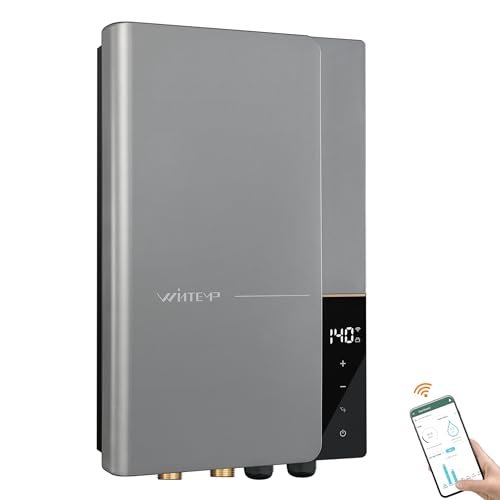
The WINTEMP WN18 is an 18kW, 240V electric tankless water heater designed for residential use. According to the supplied specifications, it can deliver up to 4.3 gallons per minute, uses a 3/4-inch NPT water connection, and requires two 40-amp double-pole breakers with two 8/2 AWG copper circuits with ground. The manufacturer also recommends a 200-amp household electrical service.
Its main appeal is continuous on-demand heating in a compact wall-mounted package. It also includes self-regulating power control, WiFi temperature adjustment, and several built-in safety protections. However, the actual number of showers or fixtures it can support depends heavily on incoming groundwater temperature and required temperature rise.
This guide explains what the WN18 can realistically do, what installation involves, how to interpret the 4.3 GPM rating, and what to check before deciding whether an 18kW electric tankless heater is appropriate for your home.
What Is the WINTEMP WN18?
The WINTEMP WN18 is an 18-kilowatt electric tankless water heater.
Unlike a conventional water heater that stores 30, 40, or 50 gallons of hot water in a tank, a tankless unit heats water as it passes through the appliance.
When a hot-water fixture opens, the heater detects flow and energizes its heating elements. When water stops flowing, the heating system shuts down.
This means there is no large reservoir that has to remain hot throughout the day.
Key WINTEMP WN18 Specifications
The supplied product information lists the following specifications:
- Heating power: 18kW
- Voltage: 240V
- Maximum current: approximately 75 amps
- Breakers: 2 × 40A double-pole
- Recommended wiring: 2 × 8/2 AWG with ground
- Maximum advertised flow: 4.3 GPM
- Water connections: 3/4-inch NPT
- Dimensions: approximately 9.7 × 14 × 3.4 inches
- Installation: wall mounted
- Remote control: WiFi
- Certification: ETL, according to the supplied information
These electrical requirements deserve as much attention as the heating performance.
The 18kW Power Rating Explained
An 18kW heater can consume up to approximately 18,000 watts while operating at full output.
At 240 volts, that corresponds closely to the supplied maximum current figure of about 75 amps.
That is a substantial electrical load.
For comparison, this is not the type of appliance that can simply be plugged into a standard household outlet or connected to an ordinary 20-amp water-heater circuit.
It requires dedicated high-current wiring and breaker capacity.
Why the Electrical Requirements Matter So Much
The heater's performance depends directly on having the electrical infrastructure necessary to deliver its full 18kW output.
The source calls for two 40-amp double-pole breakers.
Each circuit must also use appropriately sized conductors as specified by the manufacturer and applicable electrical code.
If your electrical panel lacks enough free breaker spaces or service capacity, upgrading the panel or household service could become part of the project.
That can significantly change the total installation cost.
Recommended 200-Amp Household Service
The product information recommends a 200A household electrical service.
That recommendation should not be ignored.
An 18kW heater can draw roughly 75 amps while producing hot water. At the same time, a home may also be running air conditioning, an electric range, dryer, EV charger, pool equipment, or other large electrical loads.
Whether a specific home can safely support the heater should be determined through a proper electrical load calculation rather than simply checking the number printed on the main breaker.
Do Not Assume a 200A Panel Automatically Means It Fits
Having a 200-amp main service does not guarantee that there is enough available capacity for an additional 75-amp continuous load.
Existing demand matters.
A home with several large electric appliances may already be using much of the available service capacity.
A qualified electrician can evaluate:
- Existing service size
- Panel capacity
- Breaker space
- Existing load calculation
- Wire routing
- Local code requirements
This should happen before the heater is purchased if installation feasibility is uncertain.
What Does 4.3 GPM Really Mean?
The WN18 is advertised with a maximum hot-water output of approximately 4.3 gallons per minute.
That sounds like enough for multiple fixtures, but flow ratings on tankless heaters need context.
An electric tankless heater can only raise the temperature of a certain amount of water by a certain number of degrees.
The colder the incoming water is, the less flow the heater can deliver at a comfortable shower temperature.
Temperature Rise Is the Key Calculation
Imagine that incoming water is 70°F and you want 105°F shower water.
The heater needs to raise the temperature by 35°F.
That is a moderate temperature rise, so a relatively high flow rate may be possible.
Now imagine incoming water is 45°F and you still want 105°F water.
The heater must produce a 60°F rise.
At that larger temperature difference, the same 18kW heater cannot heat as much water per minute.
This is why one maximum GPM number should never be treated as universal performance.
Warm Climates Favor Electric Tankless Heaters
Electric tankless systems generally perform better in warmer climates because incoming groundwater temperatures are higher.
When water enters the heater relatively warm, less energy is required to reach a comfortable shower temperature.
That allows more flow at a given 18kW power level.
In colder regions, the same heater may support fewer simultaneous fixtures.
Is 4.3 GPM Enough for a Shower?
For one normal residential shower, an 18kW heater may be entirely adequate under suitable incoming-water conditions.
Many showerheads use significantly less than 4.3 GPM.
The question becomes more complicated when several fixtures run simultaneously.
For example, if someone takes a shower while another person runs a sink or another shower, the total hot-water demand may exceed what the heater can raise to the desired temperature.
Can It Run Two Showers at Once?
Possibly under favorable conditions, but it should not be assumed.
Two 2.0 GPM showers would create approximately 4.0 GPM of demand.
That is near the unit's advertised maximum output.
If incoming water is warm and the desired outlet temperature is moderate, that may be achievable.
If the incoming water is cold, the heater may need to reduce flow or fail to maintain the desired temperature at both fixtures.
For reliable whole-house sizing, temperature-rise performance charts are more useful than the maximum GPM figure alone.
The "2–3 Usage Points" Claim Needs Context
The manufacturer describes the WN18 as suitable for approximately two to three points of use.
That may be reasonable if those fixtures have relatively low combined flow.
For example, a shower plus bathroom sink is very different from:
- Two showers
- Shower plus bathtub filler
- Dishwasher plus shower
- High-flow kitchen faucet plus shower
Fixture count alone is not enough.
Combined GPM is what matters.
Endless Hot Water Does Not Mean Unlimited Capacity
One of the biggest advantages of tankless heating is that it does not run out of stored hot water.
As long as the heater has electricity, water flow remains within its capacity, and the water supply continues, it can keep heating continuously.
However, "endless" does not mean unlimited flow.
If you ask the unit to heat more water than 18kW can handle, the outlet temperature may fall.
This distinction is fundamental when sizing any tankless water heater.
Automatic Power Modulation
The WN18 uses self-regulating technology intended to adjust electrical power based on water flow and incoming temperature.
That is a useful feature.
Instead of running at full 18kW whenever water flows, the heater can reduce power when less heating is needed.
For instance, a low-flow handwashing faucet may require far less energy than a full shower.
Modulation helps the heater match output to actual demand.
Stable Water Temperature
Electronic modulation is also intended to improve temperature stability.
The heater monitors variables such as:
- Incoming water temperature
- Flow rate
- Selected outlet temperature
It then adjusts heating output to maintain the target temperature as closely as possible.
That can reduce the hot-and-cold fluctuations associated with poorly controlled heaters.
Flow Changes Can Still Affect Performance
No tankless heater can ignore physics.
If total flow suddenly increases beyond the heater's heating capacity, the system may not maintain the same outlet temperature.
A well-designed control system can react quickly, but it cannot create more than 18kW of heat.
This is why correct sizing remains more important than control sophistication.
No Preheating Required
A storage water heater must maintain a reservoir of hot water.
A tankless heater activates when hot water is requested.
That means you do not need to wait for a tank to recover after someone has used a large volume of hot water.
However, you may still experience a brief delay while water already sitting in the plumbing between the heater and fixture clears out.
Tankless heating does not eliminate pipe travel time.
Why Hot Water May Not Be Instant at the Faucet
Even if the heater begins producing hot water immediately, the hot water still has to travel through the pipes.
If the bathroom is far from the heater, several seconds of cold or lukewarm water may come out first.
A recirculation system can address that issue, but one is not described as part of the WN18.
So "instant heating" means the heater does not need to preheat a tank—not that hot water appears instantly at every faucet.
Energy Efficiency
Tankless water heaters can reduce standby heat losses because they do not keep a large tank of water hot 24 hours a day.
The WN18 also modulates its power according to demand.
When no water is flowing, the heating elements do not need to consume energy for active water heating.
That can improve efficiency compared with some traditional electric storage systems.
Be Careful With Percentage Savings Claims
The supplied listing claims extremely high energy savings and up to a 60% reduction in electricity costs compared with conventional tank water heaters.
Those figures should be treated as marketing claims rather than universal expectations.
Actual savings depend on:
- Previous water-heater efficiency
- Household hot-water use
- Local electricity price
- Incoming water temperature
- Set temperature
- Plumbing losses
- Usage patterns
A household that already has a modern, well-insulated electric tank may see very different savings from one replacing an old inefficient unit.
Tankless Does Not Automatically Mean Lower Utility Bills
A tankless heater eliminates storage losses, but heating a gallon of water by a certain temperature rise still requires roughly the same fundamental amount of thermal energy.
The savings largely come from avoiding standby losses and managing energy more precisely.
If household members take much longer showers because hot water no longer runs out, total energy consumption can actually increase.
Behavior still matters.
Compact Wall-Mounted Design
The WN18 measures approximately 9.7 inches wide, 14 inches high, and 3.4 inches deep.
That is dramatically smaller than a conventional tank water heater.
The compact wall-mounted design can free valuable floor space.
This can be particularly useful in:
- Apartments
- Utility closets
- Small homes
- Workshops
- Condos
- Remodels with limited mechanical space
Space savings are one of the clearest benefits of tankless technology.
"90% Less Space" Should Be Viewed as Approximate
The source claims roughly 90% less space than a traditional tank heater.
The exact percentage depends on what tank model is being compared.
The general point is valid: an 18kW wall-mounted electric heater occupies much less physical volume than a conventional cylindrical storage tank.
3/4-Inch NPT Water Connections
The heater uses 3/4-inch NPT connections according to the supplied specifications.
That is a common connection size for residential water-heating equipment.
Proper pipe sizing matters because restricted plumbing can reduce flow and affect heater performance.
If existing lines are undersized, simply installing a high-flow heater will not magically create better flow.
WiFi Remote Control
The WN18 includes WiFi functionality that allows temperature settings to be adjusted remotely.
This can be convenient when the heater is installed in a utility closet, basement, garage, or other location that is not easily accessible.
Instead of physically reaching the front controls, users can make adjustments through the supported connected interface.
Is WiFi Necessary?
No.
WiFi control is a convenience feature, not a core water-heating requirement.
The most important qualities of a tankless heater remain:
- Correct sizing
- Electrical compatibility
- Temperature stability
- Flow performance
- Serviceability
- Safety
WiFi should be considered a useful bonus rather than the main reason to select a water heater.
Installation Location
The compact design provides installation flexibility, but the unit cannot simply be mounted anywhere.
The location still needs to account for:
- Electrical circuits
- Water piping
- Service clearances
- Moisture exposure
- Freezing risk
- Local code
- Manufacturer mounting requirements
A wall location that looks convenient may become expensive if two new high-current circuits must be routed a long distance to reach it.
Electrical Installation Is Not a Basic DIY Project
Installing an 18kW, 240V appliance that can draw about 75 amps is very different from installing a faucet or plugging in a small appliance.
This project involves high-current branch circuits and panel work.
Unless you are appropriately qualified and local regulations allow it, electrical installation should be handled by a licensed electrician.
Incorrect wiring can create serious shock, overheating, and fire hazards.
Two 40-Amp Double-Pole Breakers
The WN18 requires two separate 40A double-pole breakers according to the supplied specifications.
That means the electrical panel needs four breaker spaces if standard full-size breakers are used.
Some panels may allow compatible tandem or quad configurations, but that depends on the panel design and local code.
Breaker availability should be checked before purchase.
8/2 AWG Wiring With Ground
The source specifies two runs of 8/2 AWG cable with ground.
The exact conductor requirement should always follow the current installation manual and local electrical code.
Wire sizing can depend on conductor material, insulation rating, installation method, ambient temperature, run length, and applicable code provisions.
Do not substitute smaller wiring based on guesswork.
Voltage Matters
The heater is designed for 240V operation.
It cannot simply be connected to a standard 120V household circuit.
The heating elements require the proper line-to-line voltage to produce their rated output.
Incorrect supply voltage may prevent proper operation or damage equipment.
Dry-Fire Protection
The WN18 includes dry-fire protection according to the source.
Dry firing occurs when heating elements energize without sufficient water flowing through the heater.
That can cause rapid overheating and damage.
A protection system designed to prevent heating without adequate flow is therefore an important safety feature.
Overheat Protection
Overheat protection is also listed.
This is intended to shut down or limit heating if internal temperatures exceed safe operating conditions.
Such safeguards are especially important in a high-power electric water heater.
Leakage Protection
The heater is described as having leakage protection.
The exact implementation should be confirmed in the technical manual.
Regardless of onboard safeguards, proper grounding, breaker protection, plumbing, and code-compliant installation remain necessary.
Built-in safety features should supplement—not replace—correct infrastructure.
ETL Certification
The supplied product information states that the WN18 is ETL certified.
ETL listing indicates that a product has been evaluated against applicable safety standards by a recognized testing organization.
Buyers should verify that the certification applies to the exact model being purchased.
Local inspectors may also require specific listing information during installation.
Water Quality and Scale
Hard water is an important consideration for any tankless water heater.
Mineral deposits can build up inside heat exchangers and water passages over time.
This can reduce heating efficiency and restrict flow.
Periodic descaling may therefore be necessary, particularly in areas with high mineral content.
Why Tankless Units Need Flushing Maintenance
Unlike a large tank where scale settles partly at the bottom, a tankless heater moves water through relatively narrow heating passages.
Deposits on those surfaces can interfere with heat transfer.
Many owners periodically circulate a manufacturer-approved descaling solution through the heater.
Follow WINTEMP's maintenance instructions for the correct procedure and interval.
Install Service Valves if Appropriate
When local practice and manufacturer guidance allow, isolation and service valves can make future maintenance much easier.
They allow the heater to be separated from the home's plumbing so a descaling solution can be circulated through the unit.
Planning for service access during installation is much easier than adding it later.
Freeze Protection
The source does not provide enough detail to claim that the WN18 can safely tolerate freezing conditions.
Like other water-containing appliances, it should generally be protected from freezing unless the manufacturer specifically states otherwise.
Water trapped inside a frozen heater can expand and damage internal components.
Garages, exterior walls, cabins, and seasonal properties deserve special attention.
Electric Tankless vs. Electric Tank Heater
A conventional electric tank heater has several advantages.
It generally requires much less instantaneous electrical current and can supply several fixtures simultaneously from stored hot water.
It may also be easier to install in homes with limited panel capacity.
The WN18's advantages are compact size, no storage-tank depletion, and reduced standby losses.
The best choice depends on electrical infrastructure and hot-water demand.
Electric Tankless vs. Gas Tankless
Gas tankless heaters can often produce higher whole-house flow rates because gas burners can deliver much more heating power without requiring enormous electrical service.
However, gas units require fuel supply, combustion venting, and potentially more complex installation.
An electric unit like the WN18 avoids combustion and venting.
That can make it attractive where adequate electrical capacity is already available.
Electric Tankless vs. Heat Pump Water Heater
A heat pump water heater can be much more energy efficient in the right environment, but it still uses a storage tank and requires physical space.
It can also cool and dehumidify the room around it.
The WN18 takes the opposite approach: very compact, high instantaneous electrical demand, and no stored hot-water reserve.
These are fundamentally different solutions.
Is the WN18 Suitable for a Whole House?
Potentially for a smaller household or warm-climate home with moderate simultaneous hot-water demand.
An 18kW unit may work very well for a shower plus smaller fixture under favorable conditions.
It may be undersized for a large household that regularly runs multiple showers, a high-flow bathtub filler, dishwasher, and sinks simultaneously.
Whole-house suitability should be determined from expected GPM and required temperature rise.
Is It Good for a Bathtub?
A bathtub can be demanding because tub fillers often have higher flow rates than showerheads.
If the filler flows faster than the heater's capacity at the required temperature rise, the water may not reach the desired temperature.
A slower fill rate can solve the heating issue but increases the time needed to fill the tub.
Buyers planning to supply a large bathtub should size carefully.
Is It Good for One Shower?
This is one of the more natural applications for an 18kW model.
A single modern shower typically presents a manageable flow demand, especially in moderate or warm incoming-water conditions.
Even so, actual performance depends on inlet temperature and shower flow rate.
Is It Good for Two Bathrooms?
The number of bathrooms alone does not determine suitability.
What matters is whether fixtures will be used simultaneously.
Two bathrooms where only one shower runs at a time may be manageable.
Two simultaneous showers during a cold winter may be a very different situation.
Common Buying Mistakes
The biggest mistake is choosing a tankless heater based only on advertised GPM.
The second is ignoring electrical service requirements.
Another common error is assuming "endless hot water" means unlimited simultaneous flow.
Buyers may also underestimate installation cost if the electrical panel needs upgrades.
Finally, hard-water maintenance is often forgotten until performance begins declining.
What to Check Before Buying
Before purchasing the WN18, verify:
- Household electrical-service capacity
- Available breaker spaces
- Feasibility of two 40A 240V circuits
- Required wiring route
- Incoming water temperature
- Desired outlet temperature
- Maximum simultaneous fixture flow
- 3/4-inch plumbing compatibility
- Installation clearances
- Local permit requirements
- Water hardness
These checks matter far more than WiFi capability or appearance.
Main Advantages
The WN18's strongest advantages are its compact size and on-demand operation.
An 18kW heating system can provide continuous hot water for appropriately sized residential demand without storing a large tank.
Power modulation can improve temperature control and reduce unnecessary energy use at low flow.
The 4.3 GPM advertised maximum provides useful capacity in favorable temperature conditions.
WiFi control adds convenience, while dry-fire, overheat, and leakage protections provide additional safeguards.
Potential Drawbacks
The electrical demand is substantial.
Two 40A double-pole circuits and heavy-gauge wiring may require significant electrical work.
The advertised 4.3 GPM cannot be expected at every temperature rise.
Savings claims may vary greatly by household.
Hard water can require periodic descaling.
And a unit sized too small for the household's simultaneous flow will not deliver the expected comfort, regardless of its smart controls.
Frequently Asked Questions
How powerful is the WINTEMP WN18?
It is rated at 18kW.
What voltage does it require?
240 volts.
How much current can it draw?
The supplied specifications list a maximum of approximately 75 amps.
What breakers are required?
The source specifies two 40A double-pole breakers.
What wiring is specified?
Two runs of 8/2 AWG with ground are listed in the supplied information. Final installation should follow the current manual and electrical code.
Is a 200A electrical service required?
The manufacturer recommends a 200A household supply. Actual suitability should be determined by an electrical load calculation.
What is the maximum flow rate?
The advertised maximum is approximately 4.3 GPM.
Will it always deliver 4.3 GPM of hot water?
No. Available hot-water flow depends on incoming temperature and desired temperature rise.
Can it supply a shower?
Yes, potentially very well when properly sized for the incoming water temperature and shower flow.
Can it supply two showers?
Possibly under favorable conditions, but it depends on combined GPM and temperature rise.
Does it run out of hot water?
There is no storage tank to deplete. It can heat continuously as long as demand stays within its capacity.
Does it provide instant hot water at the faucet?
It heats on demand without tank preheating, but water still has to travel through the pipes to the fixture.
What size are the water connections?
3/4-inch NPT.
What are the dimensions?
Approximately 9.7 inches wide × 14 inches high × 3.4 inches deep.
Does it have WiFi control?
Yes, according to the supplied specifications.
Does it use electricity when no water is flowing?
The heating elements do not need to actively heat water when there is no demand, though the electronics may still use a small amount of standby power.
Does it need maintenance?
Yes. Periodic inspection and, in hard-water areas, descaling may be necessary.
Is it ETL certified?
The supplied product description states that it is ETL certified.
Does it have dry-fire protection?
Yes, according to the source.
Does it have overheat protection?
Yes.
What is the warranty?
The supplied information states a two-year return and exchange warranty, along with ongoing technical support. Current terms should be verified before purchase.
Final Verdict
The WINTEMP WN18 18kW electric tankless water heater is a compact, high-power option for homes that want on-demand hot water without a bulky storage tank.
Its key strengths are the 18kW heating capacity, advertised 4.3 GPM maximum flow, self-regulating power control, compact wall-mounted design, 3/4-inch connections, WiFi control, and multiple safety protections.
The most important limitation is electrical infrastructure. A heater drawing roughly 75 amps is a major household load, and the required two 40A 240V circuits can make installation much more involved than the appliance's compact size suggests.
The 4.3 GPM figure also needs to be interpreted correctly. Real hot-water output depends heavily on the temperature of the incoming water and the temperature you want at the fixture.
For a properly sized home—especially one with relatively warm incoming water and moderate simultaneous demand—the WN18 can provide a space-saving alternative to a conventional electric tank heater. For larger households, colder climates, or homes with limited electrical capacity, a higher-output system or different water-heating technology may be the better fit.